Category Archives: Politics and government

Unconventional

“This was the bursting of the dam of potential trouble that had been building for years. The collapse of families and communities leaves in its wake unsocialized young people…[who are the products of] a tsunami of wishful thinking that washed across the West, saying that you can have sex without the responsibility of marriage, children without the responsibility of parenthood, social order without the responsibility of citizenship, liberty without the responsibility of morality, and self-esteem without the responsibility of work and earned achievement.” Lord Jonathan Sacks, chief rabbi of the United Hebrew Congregations of the Commonwealth, writing in the Wall Street Journal in 2011, (as quoted in “The Handwriting on the Wall “, George Weigel, “Fragility of Order,” Ignatius Press, 2018)

Kenosha Sunset

Rabbi Sacks was commenting upon the violent 2011 riots that swept major British cities in August of 2011 after the shooting of a black man, Mark Duggan, by police. Looting expensive shops, destroying whole sections of London by fire, pelting police with thrown objects, and burning buildings and cars, the rioters distinguished themselves with their viciousness, not unlike Milwaukee, Seattle, Chicago, Portland, New York,  and now Kenosha.

I am reminded of some of the peaceful demonstrations and some of the riots in 1968 here in the United States, in Chicago, but quickly metastasizing across many campuses and cities. Protests with many of the same causes began with signs, marches, speeches with hand-held amplifiers, prayers, chants, and songs: legitimate issues of concerned citizens that needed redressing and attention. Demonstrations of the heartfelt passions of citizens then too were co-opted by bad actors, many of whom had a Marxist agenda. They too diverted the protests into looting, riots, and violence, planting social unrest, fear, and chaos. Social unrest that manipulation of the media feeds by design; far Left activism grasps for power as is its nature.

Disillusionment with leaders like those from the Weather Underground[i] and Black Liberation Army drove some, maybe many, of my naïve, romantic, deceived, and idealistic generation to opt out of continuing to battle for necessary reform, retreating into a dope smoking perpetual “summer of love” haze or other more comforting options like joining the cadre of the privileged Baby Boomer generation repurposed into the unprecedented opulence of eighties greed and material acquisitions. Swap that VW bus with the tie die paint job and hand painted protest signs for the Benz, vegan restaurants, and health spas.

Bob Dylan, bard of the Sixties, wrote many protest songs in the sixties that became anthems for the civil rights and anti-war protests. “Blowin’ in the Wind,” “Masters of War,” “A Hard Rains a gonna Fall,” and others. As he matured in his experience, genius, and craft, Dylan regretted some of them and the purpose to which they were put by others. He saw them as less nuanced and more simplistic than the understanding of the culture into which he grew later, and he was disappointed by their exploitation. He said this in interviews and in some of his later songs, most notably in “My Back Pages:”[ii]

Half-wracked prejudice leaped forth, “rip down all hate, ” I screamed

Lies that life is black and white spoke from my skull, I dreamed

Romantic facts of musketeers foundationed deep, somehow

Ah, but I was so much older then, I’m younger than that now….


A self-ordained professor’s tongue too serious to fool

Spouted out that liberty is just equality in school

“Equality, ” I spoke the word as if a wedding vow

Ah, but I was so much older then, I’m younger than that now.

“When I was at the Academy,” I said, “we had to read about it (Battle of Waterloo). The Duke’s[iii] army was full of riffraff, a lot of them had been grabbed off the street by press gangs, a lot of them let out of prison to fight.”

Virgil nodded, watching the horsemen.

“So,” I said. “Somebody asks the Duke before the battle how he feels about his army. And he says, ‘I don’t know if they will scare the French, but they scare the hell out of me.”  Robert Parker, “Resolution,” G.P. Putnam’s Sons, London, 2008

Kenosha Sunrise

The words “unconventional” and “convention” as well as “convent,” and even the derivation “coven” originate in Latin roots that mean “coming together.” Some irony exists in what political conventions have become: gatherings of the like-minded to feed division. The latest iterations, even with the COVID remote restrictions, were no exception, and there are far too many examples to cover in a blog post.

We will benefit from looking at just one.

The Democrat party convention avoided discussion of its complicity with, tacit approval of, and even advocacy for two notable and unpopular instances of violence. The tame press corps did nothing to call them to account. No surprise the Republicans sought to exploit the vulnerability.[iv]

The first instance was to ignore almost entirely the riots, looting, chaos and violence that still is rolling like a stormy tide over city streets, destroying businesses already barely surviving from COVID stress, invading residential neighborhoods, and attacking police with thrown rocks, improvised explosives and vision damaging lasers. Very few Americans irrespective of their positions on the protest issues support the violence, yet the party remains mute, fearful lest they displease the most radical elements of their base.

The second ignored violence was worse. The Biden/Harris ticket is the most radical ever of any major political party in support of abortion “rights.” Even with Roe v Wade and other Supreme Court decisions usurping all legislative prerogatives and costing the lives of sixty million tiny Americans, upping the toll remains high on the list of Democrat priorities. The Democrat platform supports abortion for any reason at any stage in human gestation up to and even past birth as well as pushing for government funding for these grotesque procedures.

Kamala Harris, when she was Attorney General in California, conspired with Planned Parenthood to prosecute and bankrupt David Daleiden[v], who published undercover videos revealing Planned Parenthood’s illegal sale of fetal body parts for profit[vi]. Harris has openly stated she favors prosecuting pro-life activities as hate speech. The convention tried to project her as moderate.

Only 17% of Americans support this radical position. Over 75% support at least some restrictions after the first trimester. Sadly, many Americans believe those restrictions are in place and are dismayed when they learn they are not. No dismay at the Democrat party, however. Their political war chest is well provisioned with funds from the wealthy abortion lobby and its allies.

In the closely scripted theatrics of the 2020 convention, they thoroughly avoided mention of the extreme methods to which they subscribe. No doubt, polling, focus groups, and highly paid consultants advised a low profile on that one. The consultants were right to try and hide the agenda; they were tragically wrong on the unfiltered agenda’s intended purpose.

Those who foolishly sought power by riding the back of the tiger ended up inside.” John F. Kennedy, Presidential inaugural address, 1960

[i] Patrisse Cullors, co-founder of Black Lives Matter, spoke openly on tape of her and fellow founders being ‘trained Marxists.’ They were protégés of former Weather Underground member, Eric Mann. The Weather Underground was a Marxist terrorist organization with a string of convictions for cop killing, armed bank truck robberies and murders. Their name was derived from a line from the Bob Dylan song Subterranean Homesick Blues:  “Don’t need a weather man to know which way the wind blows.”

[ii]My Back Pages,” Thirtieth Anniversary concert with Dylan, Eric Clapton, Tom Petty, Roger McQuinn and others.

[iii] Duke of Wellington, who’s British forces defeated Napoleon at Waterloo, ending a bloody war and ending the string of victories for the “Le Petit Caparal” and his aspirations for empire.

[iv][iv] Four speakers at the Republican convention were explicit in this: Daniel Cameron, Attorney General of Kentucky, Abby Johnson, former Employee of the year at Planned Parenthood who now directs an organization dedicated to helping employees of that organization to extricate themselves, and Sister Dede Byrne, surgeon, retired Army Colonel and now a member of a religious order dedicated to serving the poor. Perhaps most moving was Ann Dorn, widow of retired police captain David Dorn, who went to his friend’s small store in St. Louis to try and protect it from looters. He was murdered, and his murderers posted his killing on Facebook.

[v] Webinar on Daleiden persecution by Harris from Thomas More Society, which defends religious freedom and pro-life work. https://youtu.be/tHH9Y40jikE

[vi] Watch the videos yourself and make up your mind if disclosing the illegal Planned Parenthood activity merited coverage by Daleiden. http://www.centerformedicalprogress.org/cmp/investigative-footage/
4 Comments

Filed under Politics and government

Lil’ Rhody Part 2

“Be thankful we’re not getting all the government we’re paying for.” Will Rogers

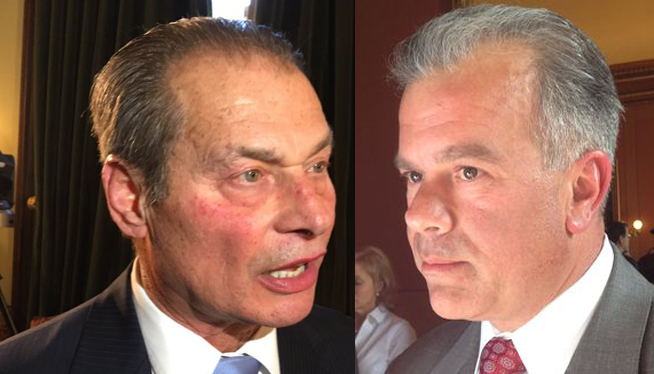
Senate President Ruggerio and House Speaker Mattiello (from WPRO 2015)

The last post ended with Rhode Island’s colorful rogue, Buddy Cianci, long time Providence mayor and failed gubernatorial candidate. This time up, the current gray denizens inhabiting the Rhode Island statehouse make their appearance. Long dominated by the Democrat Party, Rhode Island politics are inbred and clubby on a need to know basis. Outsiders and voters don’t need to know.

Much has been written about ‘deep state’ bureaucracy in Washington: privileged, secretive and shielded from view, intensely ideological, entitled, entrenched, metastasizing relentlessly and ruthless in its self-regard and self-preservation.  Each state has its own version; Rhode Island is no exception.

When Rita worked as Executive Director of Rhode Island Right to Life, she was a registered lobbyist and stalked the corridors of the statehouse discussing pending legislation relevant to her organization with state reps and senators and occasionally governors and Federal reps and senators.  On one of her first visits to the Statehouse, Rita was anxious to learn the ways of the labyrinth.  She went to the office of a friend, who was office manager to the Democrat Senate Majority Leader, who eventually quit under a cloud. Under a cloud is how many incumbents reluctantly fade away in Rhode Island.

While she was there, a confidant of her friend and recently in her probationary period as a new state employee, rushed through the door and breathlessly exclaimed, “I got my benefits!” She had the enthusiasm of someone who just hit the lottery. And in a way, she had. Lifetime health care and pension benefits, and even though grossly underfunded by a legislature reluctant to disclose the full costs of employee sinecures to the voters, the promise was at least there for permanent security. “I got my benefits!” translated as “I am now deeply ensconced in the elite cadre of protected forever state workers!” Or in short, “Hallelujah, hallelujah, there is a God!![i]

After Rita left her friend’s office, she made her way down the stairs past another public employee sitting at a naked desktop in an empty corridor waiting for his benefits. On his desk was nothing: no phone, no computer, no paper, not even a magazine. He did not look embarrassed or bored or apologetic to be doing absolutely nothing. He was friendly in an offhanded, distracted way and seemed confident that there would be no negative repercussions for his lack of productive work. These things will work themselves out. Eventually. No one had asked him to do anything or defined his job for him, but his paycheck would clear on Friday – the reward for shoe leather expended in some key office holder’s campaign no doubt. Thus, were Rita’s first lessons in Rhode Island state governance completed.

Please understand there are many highly skilled professionals who work hard every day as public employees, and we are fortunate they do, especially in jobs protecting the environment, clean air and water, health and safety. But there are others who tarnish the great ones, which should offend the productive workers and the voters.

“One who deceives will always find those who allow themselves to be deceived.” Niccolo Machiavelli

Last post Rhode Island was lauded as the ‘Most Peaceful’ state in the country. Lil’ Rhody shows on some other lists. It ranks sixth highest in total tax burden on its citizens[ii], not a great surprise as all the others at the top are similarly Democrat controlled. Democrats are the party of coercive government solutions to social problems, irrespective of evidence that the state can positively influence them. The Law of Unintended Consequences is as real as gravity, especially when complicated with vote pandering and political posturing. Rhode island is well situated as well in the top tier of public employees per capita[iii].

In a couple of other categories, though, Rhode Island does not sit on the top of the pyramid. In the annual CNBC study of the states that grow jobs and induce new businesses to move in, Rhode Island climbed a notch or two out of the cellar a year ago, but for 2019 dropped into its accustomed spot, fiftieth out of fifty.[iv] We bleed jobs in Rhode Island, and subsequently we hemorrhage population and are in danger of losing one of our two House of Representative seats. More alarming, what we are losing is our young people, so the population demographic is aging. The state spends lavishly to educate our young and hosts several excellent universities, but their graduates head to Texas, Arizona, North Carolina or even neighboring Massachusetts for far better job prospects.

Anyone who has driven Rhode Island potholed roads and over or under its rusted steel and pitted concrete bridges is not surprised at another national ranking. Again, fiftieth out of fifty for infrastructure[v]. That’s right. Sixth in tax burden, fiftieth in infrastructure and business development. Taxpayer money is sucked into the spongy conduits of government: nepotism and connected public jobs, underfunded and unaffordable pension plans for public employees and underwriting bonds for ill advised, but politically attractive private businesses like Curt Schilling’s sports video games debacle. The black hole at the center of our Milky Way galaxy is more attractive as an investment.

The legislative session for 2018-2019 slowly ramped up after the fund-raising gatherings called “times” and the election furor subsided. Obviously, the most urgent priority for legislators must have been lowering taxes for its beleaguered constituents and addressing the sorry business environment and dangerous bridge situation. Maybe in a happier parallel universe. In Rhode Island, this past session was dominated by authorizing open season on our tiniest and most vulnerable human beings. Urged on by prominent media outlets in the state like the Providence Journal and local TV stations, after several months of contentious hearings, and through the contrivance of previously professed pro-life Speaker of the House Nicholas Mattiello, Senate President Dominick Ruggerio and enthusiastic abortion advocate Governor Gina Raimondo, the Reproductive Privacy Act was passed. Pink shirted screaming bullies shouted down committee hearings and briefly invaded the Senate President’s office. They picketed the homes of swing committee members and with van mounted loudspeakers called them out as hating women to their neighbors and children.

The various backroom Machiavellian maneuvers are beyond the scope of this post.  Attached is a more detailed history for any more curious (or masochistic) readers.[vi]  Some brief clarifying notes:

  • The bill mimics one written by lawyers hired by NARAL and Planned Parenthood, which funded and organized pink shirted assault and publicity. It mirrors similar bills passed in Vermont and New York. The Reproductive Privacy bill had little to do with privacy (it couldn’t have been more public) and nothing to do with reproduction. On the contrary; its singular focus was on violently inhibiting it.
  • It allows abortion for any reason in any form up to the moment of birth. 73% of voters oppose such late term abortions, but the supporters want no restrictions. The bill prohibits any rules regarding abortion clinics, including authorizing some who are not doctors to perform them.
  • Several times the bill was stopped in committee votes, only to be resurrected by its proponents in backroom manipulations. At one point, in violation of Senate rules, the chairperson of the Senate Judiciary Committee which heard all the late-night testimony, when it became apparent the bill would be defeated again, unilaterally switched it to another committee stacked in its favor that heard no testimony. That was only one instance of several similar moves that kept the bill alive.
  • After a Senate hearing killed one version of the bill, the pink shirts stormed the Senate President’s office demanding that he intervene despite his long professed pro-life stance. Viewers of the evening news were treated to the sight of him with face frozen in fear being escorted from his office by Capital Police[vii].

In my youth a young Democrat Senator, John F Kennedy, launched his career with his wartime heroics and the publication of his Pulitzer Prize winning book about major political figures in American history from all parties who risked their political fortunes and lives to stand up for what was right. “Profiles in Courage” once defined what Democrat politics stood for. There were very few profiles in courage in the Rhode Island statehouse this year. Cowards who feared losing their privileges and influence or their gavel collapsed under pressure and sanctioned sacrifices of babies to a culture obsessed with pleasure and irresponsibility regarding its consequences.

“The promise given is a necessity of the past; the word broken is a necessity of the present.”  Niccolo Machiavelli

[i] Retiree benefits were altered for those retiring after 2008, capping state reimbursement for health care after 65 to 80% of costs. Prior to that, retired state employees with long service would receive 100%.

[ii] https://wallethub.com/edu/states-with-highest-lowest-tax-burden/20494/

[iii] https://www.governing.com/gov-data/public-workforce-salaries/states-most-government-workers-public-employees-by-job-type.html

[iv] https://www.cnbc.com/2019/07/09/why-rhode-island-is-the-worst-state-for-business-in-2019.html

[v] https://www.forconstructionpros.com/asphalt/news/21017738/all-50-states-ranked-by-worst-crumbling-infrastructure

[vi] See the attached synopsis of the history of this bill. Link to document.

[vii] https://www.facebook.com/WPRI12/videos/watch-senate-president-dominick-ruggerio-had-to-be-escorted-from-his-office-as-p/442724003171604/


2 Comments

Filed under Politics and government

Weltschmerz

“In the groves of their academy, at the end of every vista, you see nothing but the gallows.” Reflections on the Revolution in France, Edmund Burke, 1790

In the seventeenth century the French author Francois de La Rochefoucauld famously wrote that hypocrisy is the tribute vice pays to virtue. I wonder if the hypocrites who prompted the quote cared whether they were caught out. Recent events in the Rhode Island legislature indicate that the current batch of hypocrites want only to avoid a memorable line that will make the Providence Journal or WPRI in the five o’clock news and show up in their opponent’s talking points in the next election. Little heed seems to be paid to how conspicuous is their cynical hypocrisy to listeners, only matters if it will cost them votes. Hypocrisy is expected, even celebrated, if it’s sufficiently clever and the goals align with the progressive vision.

A Providence legislator, Dan McKearnan, speaking on the floor of the House said that his “deep faith” (Catholic} informed his advocacy and that he trusted women to “make holy choices.” Holy choices. The choices they would make when the legislation passed would be to kill or not to kill their offspring, to “terminate” their pregnancy, which the legislation (H5125a,) sanctioned up to the moment of birth. Forty weeks. Full term, a full four months past viability. A fetus one second, someone’s baby the next. Or someone’s tiny corpse.

In a television news debate on the bill that has passed the House and is waiting Senate action, Rabbi Sarah Mack stated that the bill was a victory for freedom and rightly favored “existing life.” Existing life. Must have cut those boring embryology courses in school. Every major embryology text marks conception as the beginning of human life.  So, science was not her strength, but did she sleep in when they covered Jeremiah 1:5? “Before I formed you in the womb, I knew you; before you were born, I set you apart.” Perhaps Rabbi Mack stayed too late at lunch playing bridge in the dining commons when her professor taught Isaiah 49:1. “The Lord called me from the womb, from the body of my mother He named my name.” Or returned late from Fort Lauderdale on spring break when they reviewed the exegesis on Psalm 139:13. “For you formed my inward parts; you knitted me together in my mother’s womb. I praise you, for I am fearfully and wonderfully made.” She said, and rightly so, that it was not right that religion should dictate legislation. However, when legislation first ignores science and then fails to make a moral judgment informed by a conscience formed by faith or justice or reason or protection of the most vulnerable, well, that’s a sadder tale.

“We have obligations to mankind at large, which are not in consequence of any voluntary pact. They arise from the relation of man to man, and the relation of man to God, which are not matters of choice.” Edmund Burke

The bill was named the Reproductive Privacy Act, which is a further irony in that it is concerned with not with “reproduction,” but with its lethal inhibition. The “privacy” allusion is a tip of the hat to Roe v. Wade, which cited privacy as the foundation for usurping every state’s authority and instantly negated all legislation controlling abortion. The slippery ground for a privacy foundation was created by citing the Griswold v. Connecticut contraception case. One of the most infamous passages in Supreme Court history proposed this nonsense: “The foregoing cases suggest that specific guarantees in the Bill of Rights have penumbras, formed by emanations from those guarantees that help give them life and substance.  Various guarantees create zones of privacy.” So, the Supreme Court decision that has spelled doom for sixty million pre-born Americans is sustained by a gauzy contrivance of emanations, penumbras and zones of privacy, suspended on a spider’s web.

A second spider’s web, upon which hangs the first, is the blind certainty that supports the progressive enterprise: the myth of human perfectionism – that progress is linear and will always move us closer towards some ideal future where human frailty and tendency towards prejudice, violence, using others for personal gain or pleasure will diminish to nothing as enlightened (and coercive) governance leads us to the promised land. Just the history in our own times, especially in the century immediately preceding this one, when various Utopian ideologies delivered the bloodiest hundred years in human history. The twentieth century alone provides the evidence that such beliefs are at best naïve, and at worst deliberate utilitarian delusions in pursuit of a totalitarian agenda.

The natural heir to that bloody century is our own. War, oppression, human trafficking are obvious and persistent horrors. Far worse is the dehumanization of a whole class of human beings, and it has wrought the highest tally, the single highest cause of death in the world and in our country last year that overwhelms the toll of any other. Disease, war, murder, terrorism, cancer, starvation, unclean waters are eclipsed in their body counts. Simply pronounce that yet-to-be-born humans are not human, and we contrive a cardboard culture that promises human fulfillment based on the lie of autonomy. We will secure economic futures built on killing our own children, feed our worst self-absorbed selves, and let it metastasize[i]. The largest single cause of death in the world in 2018 was abortion – 42 million, with over a million of those tiny victims in our own country.  Eleven million and counting rapidly year to date this year.[ii] We masquerade it as medical care, yet once exposed to the light sickens all who see it.[iii] Set up the kill and call it freedom, call it liberation, even call it virtue. “Weep not for me, (mothers of Jerusalem), weep for yourselves and for your children.”

“The Future is, of all things, the thing least like eternity. It is the most completely temporal part of time—for the Past is frozen and no longer flows, and the Present is all lit up with its eternal rays. Hence the encouragement we have given to all those schemes of thought such as Creative Evolution, Scientific Humanism, or Communism, which fix men’s attention on the Future, on the very core of temporality. Hence nearly all vices are rooted in the Future. Gratitude looks to the Past and love to the Present; fear, avarice, lust, and ambition look ahead.” C.S. Lewis, The Screwtape Letters, (New York: Macmillan Co.,1943), p.xv

[i] For a good article on the metastasis, see in this week’s Public Discourse, the article by Anthony Esolen: When Reason Does Not Suffice: Why Our Culture Still Accepts Abortion https://www.thepublicdiscourse.com/2019/04/50665/

[ii] From the Worldometers site.

[iii] From the true story of Abby Johnson, former employee of the year and director of a Texas Planned Parenthood facility. In “Unplanned” she tells her story. Here is the pivotal scene that changed her life. Watch it reflect. https://youtu.be/Z9bMwP2CLP8


6 Comments

Filed under Faith and Reason, Politics and government

Confirmation Bias

“Good sense is the most evenly distributed commodity in the world, for each of us considers himself to be so well endowed therewith that even those who are the most difficult to please in all other matters are not wont to desire more of it than they have.” Discourse on Method,  Rene Descartes

Surveys taken during the mercifully terminated election cycle concluded that fifty nine percent of us believe the economy is getting worse, sixty four percent are convinced the American Dream of working hard and getting ahead is dead, and for eighty nine percent of us, at least once a week something in the news makes us truly angry. Yet the overall unemployment (those without jobs who want them and those who have given up looking) stands at 9.5%, down from 17.1% during the depths of the Great Recession. Inflation adjusted median income (not average, so it is not skewed by the ultra large and small) has fallen to $56,516 from its peak in 2000 of $57,909, and is up substantially from 1985, when we got along with less ($48,720).  By inflation adjusted, we mean the annual income is stated as if costs had remained par with the beginning of the tracking, so that the numbers reflect a true increase in median buying power. While a slight decrease in sixteen years is not good, neither is it disaster: we have stayed about even with increasing costs, and greatly improved our situation in the last thirty years.

Just a few more statistics.  Please keep your eyes from glazing over if you can.  The middle class has shrunk from 59% to 50% from 1981 until 2015 (oh my, the middle class is dying).  Are the inhabitants of the lost nine percent living under bridges and rummaging in dumpsters as the twenty-four-hour news cycle may have you believing? The reality is a bit different. Although the so called lower middle class has grown from 26% to 29%,  the higher income upper class has grown from 15% to 21%. The rich have gotten richer, and there are more poor, but again the news is mixed. Two thirds of the diminishing middle class moved up a notch, while one third went backwards. Not that statistics make those who have fallen behind feel any better (perhaps even worse), but as John Adams famously said, “Facts are stubborn things.”

Difficult challenges remain ahead: promised benefits to those who contributed much for their whole working lives like Social Security and Medicare are in jeopardy, and while annual deficits began to diminish, overall national debt has doubled yet again in the last eight years to a daunting $18 trillion. Undocumented immigrant workers must be resolved; they came here illegally, but without them not much would be constructed, mowed, cleaned or harvested. An implacable murderous cadre derived from a worldwide huge, heretical sect that preaches conversion by the sword and a brutal unforgiving sharia law enforced to the death. Radical Islam wants us dead. The political courage and will to fix these has not been apparent of late, but that does not preclude the rise of necessary leadership and the willing compromises of the rest of us from remedies.  However, our immediate prospects are not as dire as most believe.

So why are we so angry and depressed as a culture? So divided? So unwilling to participate in reasonable problem solving and positive communication? And so entrenched in shouting across an unbridged chasm with vitriol, condemnation and accusations of stupidity expressed as superficially clever bumper sticker slogans and insulting memes? Neither side of the chasm is guiltless in this regard as we all Facebook and Twitter away, while congratulating our associated true believers with “Likes,” laughing emoticons and clichéd internet shorthand acronyms.

“A nation divided against itself cannot stand.” Abraham Lincoln

franklin-jefferson-adamsToo many aspects of this destructive phenomenon to explore in a blog post, but we can look at one: what the shrinks call “confirmation bias “– that damnable tendency to filter new information per our preconceived ideas.  We believe readily everything negative about those whom we judge harshly and remain resolutely tone deaf to everything negative on our side of the big chasm. The converse also applies: we believe nothing positive of the devils on the other side and every scintilla of remotely encouraging news about our guy (or girl).

 In short we believe ourselves to be right (or else why would we believe it?), but we lose our way and become mired in the sludge of our willingness to demean those with whom we disagree. They are morons, evil and better off dead. We not only disagree, we condemn in the basest terms possible.  If Benjamin Franklin, John Adams and Thomas Jefferson, who disagreed on many issues about the structure of a new nation, had not worked so very hard to overcome profound differences, we might still be singing “God Save the Queen.”

Why can’t we sit down with a cup of coffee or an adult beverage or break some bread, put on our big boy pants as Tom Hanks recently suggested and be willing to engage in rational polite discussion to present and defend our side and to listen in good faith to those with whom we differ?  No vitriol, no accusations of imbecility or demonic possession, just a conversation. Maybe we can all expand our little gray cells and comprehension, and while we may not end up in agreement in every regard, there is a chance we can understand the other a bit better. In that we may begin to forge a way ahead we can all live with.  To yell from the sidelines and hope our leaders of one stripe or another fail us once again is like hoping the driver of the bus we are all on drives off a cliff. Can we leave behind our compulsion to please our likeminded fellows, and stop poisoning political speech? Perhaps we can find both useful discourse and real solutions.

“Persuasion is achieved by the speaker’s personal character when the speech is so spoken as to make us think him credible. We believe good men more fully and more readily than others: this is true generally whatever the question is, and absolutely true where exact certainty is impossible and opinions are divided.” Aristotle

3 Comments

Filed under Culture views, Politics and government

Spiders and Such

“He fancied he had seen the festering truth that lies at the heart of all bureaucracies: his report, he decided like all reports and all decisions could probably wait until next week.   Bureaucracy, Fyodor Dostoevsky

Help

Walking into an unlit, dank, dirt floored cellar brings with it an irrational foreboding. When my face runs into several spider webs, the distasteful sensation of clinging suffocation comes with an urge to panic, to abandon my exploration and frantically rub off the sticky filaments. My imagination jumps unbidden to a twitching in unseen regions of the webs, movement with weight and purpose, significant arachnids – fetid with predatory fangs, and my eyes feel vulnerable.

Walking into the Department of Motor Vehicles for a simple transaction like registering a vehicle and picking up license plates brings with it a sense of foreboding as well. How long will this take?  How much will it cost? How unpleasant will the experience be?  Can I wipe away the clinging after effects without getting bitten? This week, an experience reinforced the dread, emblematic of what entrenched bureaucracy can inflict upon the innocent.  Well, pretty much innocent.

The first step was positive: five minute wait to the check in desk, then the unraveling began. A pleasant woman looked over my prepared paperwork and declared it complete and ready to get in line for a take a number wait. Then she checked her DMV records and discovered a tax block on new or renewed registrations from my old hometown–speed bump. I went back to my truck and unsheathed my trusty smartphone.  A quick search got me the phone number for the City of Providence Tax Collector’s Office; I called it four times. Each time it rang fifteen times or so with no capacity for voicemail and hung up on me.  Undaunted, I went on their website.  Found my records, and they showed back excise taxes due on my old car from 2015 and 2016. Apparently when I changed my address for the registration, the DMV hadn’t notified the City of Providence. They had done so for Rita’s car, but not mine. The Post Office had stopped forwarding my mail, and I was unaware of the problem.

Since I had lived in Middletown for those years, I didn’t owe the taxes, but if I was to get my plates that day, which I needed to do, the easier course was to pay them, release the block and fight it out another day. Back on my phone on the website, I was maneuvering to pay the bill with a credit card on my phone.  I entered my address as asked, but it would not accept the payment because it wanted my old Providence address.  Joseph Heller wrote about this bureaucratic predisposition and named it for our times: Catch 22. My old address would qualify me to pay, but my credit card required my current address.  Tried calling them again-same result. Put my smartphone away and started my truck to drive the forty five minutes to Providence. One must maintain commitment to the task.

Three visits to two offices and a trip to my bank to get a certified check later (the City of Providence accepts credit cards on their website, but has no machines in the collector’s office), I was able to pay the bill.  I was told there was one more line to endure, so I brought the paid receipt ten feet to another caged station, waited again and begged for the release from the tax block at the DMV—actually I sang a couple of lines from the old Engelbert Humperdinck recording, “Please Release Me.”  The clerk laughed, indulged me and worked her magic on their operating system. Dunkin Donuts drive through for sustenance fortified me for the forty five minutes back to the DMV in Middletown.

I stood in the line this time for ten minutes at the check in booth. A new clerk stamped her  imprimatur on my paperwork, found no tax block and issued my number: A342. With a heart full of hope, I consigned myself to the oak benches cleverly designed for discomfort with fifty others, heard them announce A328 and judged myself nearing the finish line. As it turned out there were “C” and “E” numbers too.  Two hours later, my number was called. With hat in hand and with bated breath, I went to yet another stand up booth with a barrier and presented myself with a clean slate. It took another fifteen minutes or so while she left to search for the right plates, took my sales tax and fees and printed out my new registration. I dragged myself home six hours after I ran to the registry to get my plates. Talked to my daughter and her beautiful girls out in the yard under the old sugar maple tree and began my recovery.


“The only thing that saves us from the bureaucracy is its inefficiency.”  Eugene McCarthy


Climbing-mountain-of-paperMy brother has been trying to help my ninety five year old mother obtain some help with her ever increasing need for nursing care from Mass Health (the model for Obamacare). He had to fill out a thirty eight page form. I called him, thinking that in his email he had to be exaggerating for effect.  Nope. Greg tried three times over two days to fax it to them. He got receipts certifying thirty eight pages had gone through without error each time. When he called them time after time, they said they never got it.  He persisted (necessary family trait dealing with government agencies) and held someone on the phone while he faxed it again, and they acknowledged that they had it. Over eighty years of paying taxes (her Social Security benefits are taxed), and she would need thirty eight pages to get some help. Without assistance from her family, she would not have a chance.

All the functionaries in my tale were courteous, most with smiles and wanting to help. No doubt the various managers and government agencies spent hugely on mandatory customer service training for their clerks after years of bad press about arrogant and unresponsive bureaucrats. Not the people anymore, but the fault is in the nature of the institution. Bureaucracies are terribly good at a few things: self perpetuation and clothing themselves in myriad rules that once set are holy; making new rules, arcane and impossible to understand; propagate like lab mice the detailed, redundant forms with jot and tittle pitfalls; and metastasizing like a malignancy.

The failures and flaws of Obamacare[i] reveal themselves as it settles in:  one third of the country with only one or no ACA exchange options in 2017; 16 to 23% increases in premiums in many regions this year; doctors retiring or cutting back due to the bureaucracy and rules to see more patients for whom they can possibly give quality care. I lost my doctor of over fifteen years because he ended his PCP practice to limit his work to cardiology. Joe told us he couldn’t see as many patients as the enforced standards mandated and still personalize, make more human and competently care for them without fear of making a terrible error. He is a superb care provider. I told him I would see him again when my heart gives out. Of course, not to worry, the government solution is what will invariably be the progressive government solution: more government bureaucracy and a single payer system. To be assured medical care will be less responsive, will engender multiple lines of the vacant-eyed disconsolate, and deliver poorer care with stacks of forms. Picture the DMV with physician assistants, computer diagnosis of our symptoms and clerks—lots of clerks with smiley faces and customer service certificates of training in their booths.


“If you’re going to sin, sin against God, not the bureaucracy.  God will forgive you but the bureaucracy won’t.  Hyman Rickover


[i] Experts Predict Sharp Decline in Competition across the ACA Exchanges.  Avalere, Health care analysis and think tank.

2 Comments

Filed under Politics and government

The Blare of the Brass Trump

“There are two sides to a trumpeter’s personality.  There is the one that lives only to lay waste to the woodwinds and strings, leaving them lying blue and lifeless along the swath of destruction that is the trumpeter’s fury.  And then there’s the dark side.” Anonymous

TrumpMuch has been written of the Trump phenomenon, about ignorant, angry, racist voters who have taken more than enough and can’t take anymore. Far deeper and more intransigent than that, I’m afraid. The glib Donald proposes no real or even thoughtful solutions – only simplistic pandering, and he displays little depth of knowledge in any of the subjects about which he harangues. How is a privileged narcissist, a vain bully whose signature is insult and schoolboy humiliation of anyone who voices even minor criticism, successfully pretending as a “tell it like it is” savior of the common man? What vein is he mining?

Peggy Noonan this weekend starts the conversation best, I think, in her Wall Street Journal column, and I recommend it to you: “Trump and the Rise of the Unprotected.” She writes that the divide between the “protected” (well to do, influential, comfortable and safe) and the “unprotected” (everybody else) has widened to nearly unbridgeable and is intolerably frustrating to those on the vulnerable side. Noonan suggests that the protected includes most politicians, academia, the majority of both conservative and progressive media, the educated and the wealthy – defined as anyone not constantly worried about paycheck to paycheck necessities for their families.

The protected have no insight into what the majority of people deal with on Monday morning or in middle of the night sweats; the unprotected are in frigid water without a lifeboat while the Titanic goes down. The elite have for the most part abandoned public schools for their own children except for lip service to the teacher’s union. They converse smugly among themselves about the witlessness of the average person along with some occasional painless and riskless tsk, tsking about minorities and the disadvantaged, who need to be rescued by the government or free enterprise or some combination thereof. The protected and unprotected stand on the precipices of opposite sides of a canyon and shout bumper sticker slogans at each other.

Trumpism is not a joke, much as we wish it was, and neither is it an eruption without a cause. We can see it as the other side of the same coin as Obamaism. We long for a demagogue to lead us out of the bewilderment of our own inability to grasp what’s really going on. We are awash in information and immediacy of communication and bereft of understanding and wisdom, overloaded with bits of knowledge, and unable to piece together a meaningful picture of the whole. So we grasp at the self-serving kindness of strangers and fantasize that the expert, the manager, the technocrat can pick their way through the obstacles that no one else understands and bring us safely home.

“The vast accumulations of knowledge – or at least information – deposited by the nineteenth century have been responsible for an equally vast ignorance. When there is so much to be known, when there are so many fields of knowledge in which the same words are used with different meanings, when everyone knows a little about a great many things, it becomes increasingly difficult for anyone to know whether he knows what he is talking about or not. And when we do not know, or when we do not know enough, we tend always to substitute emotions for thoughts.” T.S. Eliot, from the essay, “The Perfect Critic”

G.K. Chesterton wrote over a century ago in his brilliant short essay on juries, “The Twelve Men,” [i] The Fabian argument of the expert, that the man who is trained should be the man who is trusted would be absolutely unanswerable if it were really true that a man who studied a thing and practiced it every day went on seeing more and more of its significance. But he does not. He goes on seeing less and less of its significance. In the same way, alas! we all go on every day, unless we are continually goading ourselves into gratitude and humility, seeing less and less of the significance of the sky or the stones.”

Our culture is in great danger of intellectual and moral surrender to the expert, to the manager whom we believe knows all and can fix all, like Donald Trump, or for that matter, Barack Obama. We retreat from an overwhelming onslaught of data and information and cede authority to those longing to assume it. We flee into distractions, entertainments and the frivolous because we fear we cannot bear or understand what it is we need to understand and to bear. Mistaking management for leadership, we willingly turn over our governance to those we hope see the light that we do not.

“Trumpet players see each other, and it’s like we’re getting ready to square off and get into a fight.” Wynton Marsalis


[i] See free online version of Chesterton’s collection, “Tremendous Trifles” from the Gutenberg Project: http://www.gutenberg.org/files/8092/8092-h/8092-h.htm#link2H_4_0012

12 Comments

Filed under Culture views, Politics and government

A Wilderness of Error

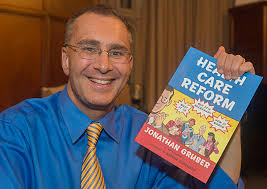
Jonathan Gruber explains what's best for us

“The right thing can seem so wrong and the wrong thing seem so right that we easily become lost, to use Poe’s exquisite phrase, in a wilderness of error.” A Dancer in the Dust, Thomas H. Cook

Unless you have been visiting abroad, say in the Galapagos, you read about or watched Jonathan Gruber, an author of Obamacare. If you have been in the Galapagos, here is a two minute synopsis: Grubergate in Two Minutes from “American Commitment.” Former Speaker of the House, Nancy Pelosi, crowed once that the bill would have to be passed before we knew what was in it. This was not due solely to the closed door machinations and deals, cobbling together a bill meant to be ironed out in joint committee, but frozen, partially done, by the election of Scott Brown. Nor was it due entirely to being over 2,500 pages long and spawning tens of thousands of pages of regulations. The great majority of Americans and American legislators didn’t know what was in it because a.) Obamacare ACA was calculated to obfuscate, and b.) We were “too stupid” to understand it anyway, which was, after all, just as well. As Dr. Gruber clarified to his elite colleagues in academia, “Lack of transparency is a huge political advantage.”

“Speak boastfully no longer, nor let arrogance issue from your mouths.” 1 Samuel 2:3

Obamacare with all its errors in design, the subterfuge in its passage into law and its flawed implementation is a model of progressive mischief, but the ACA is also a metaphor for far more dangerous myopia. Lest we be mistaken, the hubris of the progressive “expert” knows few boundaries. The progressive is willing and able to take us where we ought to go, whether, or perhaps especially, when we do not know enough to want to go there. From their perspective, a stupid and ignorant electorate is best able to be led by those fully prepared to lead them. “Progressive” has become a self-contained oxymoron.

“The trouble is that we always define ‘forward’ as moving in our direction…but not everyone can, and not everyone should.” A Dancer in the Dust, Thomas H. Cook

Norman Angell wrote “The Great Illusion” in 1909 and was awarded the Nobel Peace Prize for his work in 1933. His premise was that large scale war in modern times was futile because of the complex economic interdependence of all the major nations; the cost even for the winners would be too great. His work particularly influenced English leadership, convincing them that even the “Hun” would not be so foolish. They remained in hope almost to the day German troops invaded Belgium and headed towards Paris. Treaty bound to Belgium, the United Kingdom watched as they were inexorably drawn into the beginning of World War I, the bloodiest war in human history until that time. The infirmity of purpose that encouraged the Kaiser was repeated with Neville Chamberlain’s vacillations twenty five years later prior to World War II. Adolph Hitler read the signs of his enemy’s hopeful delusion and warmed up with Austria and Poland before striding down the ChampsÉlysées. The butchery exceeded its predecessor. And so it goes.

For leaders to misunderstand their enemies by trusting optimistic and irresolute illusion kills faith in that leadership as well as the best of the youth under its stewardship.

“In the month of August 1914, there was something looming, inescapable, universal that involved us all. Something in that awful gulf between perfect plans and fallible men that makes one tremble.” Barbara Tuchman, “The Guns of August”

This week we were entertained with the administration’s attempt to placate the offended leaders of almost all major nations. The president once again led from behind by failing to send an appropriate level of representation to the solidarity march of those leaders in Paris after the Charlie Hebdo radical Jihadist attack. To make up for the gaffe, Secretary of State John Kerry gave a stiff hug to Francoise Hollande, the French Premier, and Kerry doubled down by bringing along a grinning James Taylor to sing his sappy “You’ve Got a Friend”. Bad sixties coffee shop folk singing to sooth all insults. If we hadn’t been inured to such awkwardness with six years of this tomfoolery, it would be embarrassing. Now it seems like just another day at the White House. One wag suggested in lieu of Taylor, it should have been Judy Collins with “Send in The Clowns.”

The relevance is not only the tone deafness, but the worldview, the progressive desire to see things as they would hope them to be, irrespective of how they are. Whether Hillary is entreating us to empathize with the Jihadists, Howard Dean denying that the Paris murders were carried out by Muslims or Barack Obama persisting in calling the Fort Hood killings “workplace violence” and Jihadist butchery as “radical extremism” not necessarily unlike  Timothy McVeigh or the demented Jim Jones.

Jihadist violence is inherent, and if we refuse to acknowledge that there is a war, we are probably losing. Releasing Gitmo Islamists who immediately resume killing us or negotiating with Iran over their nuclear ambitions are all of a piece. To the committed Jihadist, there is one dichotomy: dar al-Islam (The House of Islam) and dar al-harb (The House of War), the realm of peace and Islam, and the realm of war: that is everybody else. Leaving the rest of us alone, peaceful coexistence and religious tolerance is as impossible and foreign to them as government by, of and for the people, as constitutional law is to sharia, as democracy is to the Caliphate. Conversion or the sword are the options.

 “And fight with them until there is no more fitna (disorder, unbelief) and religion should be only for Allah!”  Quran (8:39)

“And kill them wherever you find them, and turn them out from where they have turned you out. And Al-Fitnah [disbelief] is worse than killing…  Quran (2:191-193)

4 Comments

Filed under Background Perspective, Politics and government

Ponderings and Conundrums – musings on a cold winter day

“To understand the workings of American politics, you have to understand this fundamental law:  Conservatives think liberals are stupid.  Liberals think conservatives are evil.”  Things That Matter, Charles Krauthammer (reprinted from the Washington Post, July 26, 2002

When we discuss economics, politics or social trends at family gatherings, in the coffee break room or with friends during holiday gatherings, the polarity seems more intense every year, not less.  Talk flows back and forth with hammer blows of conflicting facts and less and less listening from either side.  How do we resolve the seemingly irresolvable?  How do we compromise on issues built on inviolate, but contradictory core values?

The progressive decries the widening gap between the rich and the poor, which is undeniable.  But over nine million formerly well paying industrial blue collar jobs have fled to emerging second and third world countries, and with production goes innovation.  Those nine million jobs have been replaced for the most part by service sector jobs or retail, and rare is the instance that those relatively low skill jobs pay anywhere near as much as a trained machine operator or union car assembler.  The gap grows, but it is facile to make the assumption that the exploitive business owner shoulders all the blame.  We who benefit from lower prices at the cash register vote with our wallets and with the unintended consequence of hurting the highly paid, middle class blue collar worker.

Textile mill of the early twentieth century in New EnglandDemonstrations at Walmart to pay its workers more than the current average $17,500 sound rational on MSNBC.  The underlying economics that drive the decisions by management to set wages are more complicated.  Stocking shelves at Walmart with made in China or Mexico sweaters cannot pay as much as practiced loom operators knitting those sweaters once made in the former textile mills of the Blackstone River Valley in Massachusetts and Rhode Island.  Raising the minimum wage reduces hiring and harms the opportunity of those with few skills entering the workforce, where they will learn how to show up on time, to work diligently and improve their proficiency.

If Walmart decided tomorrow to raise the pay and benefits of all their workers $6,000 per year, it would no longer produce a profit for its owners and would not be viable as an ongoing business, having insufficient resources to compete, replace trucks and pay the light bills.  If they raised their prices to accommodate the higher pay, the customers would soon be over at BJ’s or K-Mart buying their Chinese made sweaters and jeans where shelves are stocked and cash registers staffed with lower paid workers.  Or consumers would buy fewer sweaters because they can’t afford the higher prices.

Raising the minimum wage to a “living wage” is terrific as a campaign slogan, but implementation without repercussions is a tricky business.  NAFTA is a two edged sword.

“Cowboys games at AT&T Stadium can consume up to 10 megawatts of energy, more than is used in three hours by the 3.7 million residents of Liberia.” Kevin Kerr, Sports Illustrated 12/30

American “exceptionalism” is a commendable slogan and core belief as well, but can our citizens reasonably expect that having 4.5% of the world’s population and consuming one-third of the world’s paper, a quarter of the world’s oil, 23 percent of the coal, 27 percent of the aluminum, and 19 percent of the copper is sustainable in a global economy with the other 95.5% wanting their fair share of resources?  Do we believe it is prudent governance to hinder development of domestic sources of oil through fracking while continuing dependence for oil on those who hate us?  Does it make sense to hinder a pipeline from our closest neighbor and ally, which own of the third largest reservoir of oil reserves in the world?  Do we really believe this will prevent Canada from selling this oil?  The oil will be sold, and likely to those who burn it far less efficiently and cleanly than our more closely regulated industries and vehicles.  Does this truly advance the cause of fewer hydrocarbons poisoning the atmosphere?

“I have seen great intolerance shown in support of tolerance.” Samuel Taylor Coleridge

Under the flag of “diversity,” the personal freedom in Western culture and in the United States has been under attack for nearly fifty years:  especially the freedom to live out religious beliefs that do no harm.  Jack Phillips, a baker in Colorado, politely declined the business of a same-sex couple who wanted to buy a wedding cake.  The Left espouses diversity of belief and practice except when it comes to anyone who disagrees with the tenets of their own secular faith.  Rather than simply going to another baker (of whom there are many), the couple sued Mr. Phillips and received a court judgment.  He was fined.  If he refuses to pay the fine or bake a cake, he can be sent to jail.   This is not discrimination in the workplace or hiring practices or bullying or any of the other injustices that have been redressed in the courts.  Jack Phillips chose not to participate by baking a cake and was punished by the court.  How soon will churches be forced to perform marriages that violate their core beliefs?  Will those churches have to get out of the civil marriage business, as the Catholic Church was forced out of the adoption business, closing down the largest adoption provider in the country?

The American Civil Liberties Union recently sued a Catholic hospital to force it to perform abortions.  The Left for years had a mantra stating that, “If you don’t like abortion, don’t have one.”  Apparently that doesn’t hold true if a hospital chooses not to perform one.

“I’ve always felt that a person’s intelligence is directly reflected by the number of conflicting points of view he can entertain simultaneously on the same topic.” Abigail Adams

Mrs. Adams was a superb communicator married to a superb communicator.  Their letters to one another are a priceless legacy.  She was also a lot smarter than most, including most especially me.  I have a difficult time, as do many, trying to “entertain simultaneously conflicting points of view.” – More than ever when those points of view are almost fundamentally irreconcilable.  Compromise may not be possible.  e.g.  How do we reconcile an issue when one group sees only “women’s reproductive rights” (who can oppose someone’s constitutional rights?), and the opposition sees murdered babies who merited protection and nurture?   A Solomonic solution is not possible.

How do we reconcile political viewpoints when the Attorney General lets slide Black Panthers caught on video tape intimidating voters at polling places, and then goes hard after the Little Sisters of the Poor for upholding their rights of personal conscience against the Obamacare monolith mandating abortifacient drug coverage?  How do we find compromise when one side is convinced the opposition is naïve and a little stupid, and the other side sees their opponents as evil incarnate?  How do we reconcile opposing views in which one side perceives exponentially expanding government both in size and scope as a grave danger and the other envisions it as the road to Utopia? There remains little common ground upon which to stand.

This post started with a Charles Krauthammer quote, and it will end in one from a 2012 Washington Post column reprinted in “Things That Matter.”  Read the book.

“(President Obama and progressives are) equating society with government, the collectivity with the state.  Of course we are shaped by our milieu.  But the most important influence on the individual is not government.  It is civil society, those elements of the collectivity that lie outside government:   family, neighborhood, church, Rotary club, PTA, the voluntary associations that Tocqueville understood to be the genius of America and source of its energy and freedom.

Moreover, the greatest threat to a robust, autonomous civil society is the ever-growing Leviathan state and those like Obama who see it as the ultimate expression of the collective.”

20 Comments

Filed under Culture views, Politics and government

Off the Rails

“The only way to be sure of catching a train is to miss the one before it.”  G.K. Chesterton

train tracksThroughout my nearly forty years in the lumber business, I have taken on many responsibilities from time to time.  One of the sidebars that intrigued me was my industry’s sometimes shaky marriage with railroads.  Demurrage charges accrue when the local railroad sets a car of freight on our siding to be unloaded, and the receiving yard takes too long to unload the product and release the car back for pickup.  Demurrage fines can be dear, railroads are enthusiastic to assess them, and the owners of lumber companies hold managers accountable for expediting unloading to avoid them.

Western fir plywood is still a frequent rail traveler, although in times past before manufactured engineered wood products came to the fore, Canadian or West Coast Douglas Fir timbers rode the rails and landed in one yard or another every day.  Now like most things, the set and release are done on line, but I remember often calling a bored dispatcher in some remote dingy railroad office to let them know to pick up their empty.  We kept a careful log in a three ring binder tracking car numbers, dates in and out, product and related purchase orders to the mills to document not infrequent disputes over charges — especially during the reign of the late, unlamented federally run Conrail.

“If you board the wrong train, it is no use running along the corridor in the other direction.”  Dietrich Bonhoeffer (Lutheran theologian and member of German Resistance, murdered by the Nazis)

When diesel was cheap in the seventies, many small railroads lost a lot of business to more flexible trucking companies.  In bankruptcy or near bankruptcy, some of the well connected owners of these railroads lobbied the government hard to bail them out, which, of course, it did, nationalizing the operations of poetically nostalgic names like Erie Lackawanna and Lehigh & Hudson River.  $7.65 billion later and losing nearly a million dollars a day, it was privatized by President Reagan and sold to Norfolk Southern and CSX.  Both companies to this day are chugging along with multibillion dollar annual profits.  Shares for both are trading near their all time highs.

The complexities undergirding their success are beyond the scope of a blog post, the obvious point is that private business out performs the bureaucratic, cholesterol clogged arteries of government run enterprises.  Profit, necessary cost efficiencies and the capital magnet of profitable companies drive success.  Self perpetuating bureaucracy, less than accountable cost structures and the ability to either print or borrow unlimited funds drive more Kafkaesque fiefdoms.

As the rollout of Obamacare continues to make bad news, we are reminded of other train wrecks of Federal programs.  We have yet to see the “rest of the story” when the mandate for small businesses is finally allowed to kick in.  The administration illegally breaks off pieces of the unmanageable bill and postpones other parts time and again to time the next disaster until after the election cycle.  But I suppose pain delayed and deferred is better than immediate suffering.

“Neither a wise man nor a brave man lies down on the tracks of history to wait for the train of the future to run him over.”  Dwight D. Eisenhower

What has me worried next is the nationalization of medical records set for October go live, part of the Patient Protection and Affordable Care Act (the irony in the bill’s name is beyond imagination).  The story this week of Target’s insecure records that resulted in somewhere between 70 and 110 million customers gives us pause.  Credit card numbers, PIN authorization codes, names, addresses and even email addresses were hacked.  Presumably Target has the most up to date security for these records available, but…..

Another story this week told of the vulnerability of offsite access to databases through Virtual Private Networks.  In recent weeks we’ve read of NASDAQ and Snapchat being hacked.  None of these companies lack Information Technology sophistication or concern for the privacy of their records.  Target is thought to be an inside job.  As Edward Snowden showed with his million plus record theft of our country’s deepest secrets, all it takes is one person with an agenda and a grudge.

Do we think that every county hospital and doctor’s office with access to a national database will have the security and IT capability of NASDAQ or Target?  The national database of medical records will tell who has AIDS, who has been treated for STDs, who has struggled with depression or bulimia or had an abortion or breast enhancing surgery, which job applicant has an expensive history of drug use or cardiac problems, members social security numbers – all of it will be there.  The intention to make more accessible and easily transferable all of our health records may or may not be benign to our brave new world, but it will undoubtedly leave us vulnerable.

“Concentrated power is not rendered harmless by the good intentions of those who create it.” Milton Friedman (Nobel Memorial Prize winning economist)

This week we are told that the administration finally chose not to renew the contract to the Canadian company, CGI Group, which was hired to oversee key aspects of the egregious healthcare.gov rollout.  Nobody got fired, including the inept Secretary of HHS, Kathleen Sibelius. Hundreds of millions were spent with CGI, who’s Executive Vice President, Tony Townes-Whitley, went to Princeton with Michelle Obama, belonged to the Princeton Black Alumni association with her and donated to the Obama campaign – a fortuitous coincidence no doubt.  Now after one of the most visible IT debacles in history, they don’t get their contract renewed.  No penalties, no claw back, no anything.

The House of Representatives on Friday passed the Health Exchange Security and Transparency Act with all Republicans and 67 Democrats.  The bill would require the health exchanges to notify victims of identity or information theft within the exchanges.  The administration lobbied Democrats hard to vote against it.  The self proclaimed most transparent administration in U.S. history opposes the Security and Transparency bill and threatens to veto it if enough Democrats in the Senate are persuaded by their nervous constituents to join their House colleagues.

As dear Alice wondered after going down the rabbit hole, it gets curiouser and curiouser!

 “This train don’t carry no con men, this train;

This train don’t carry no con men, this train;

This train don’t carry no con men,

No wheeler dealers, here and gone men,

This train don’t carry no con men, this train.”  This Train is Bound For Glory, Woody Guthrie

Leave a comment

Filed under Politics and government

Stone-enders

Eleazer Arnold's Splendid Mansion

Eleazer Arnold’s Splendid Mansion

Walking through Lincoln Woods, we emerged onto Great Road in Lincoln, RI.  Looking for a place to warm up, we happened upon Arnold House and took the short tour with a member of the historical society.  It was built in 1693 and originally called by the local residents “Eleazer’s Splendid Mansion” after its first owner and builder, Eleazer Arnold, who farmed the surrounding 140 acres.  His splendid mansion even after additions over the years is insignificant compared to the overwrought and pretentious McMansion of the early twenty first century. Gracefully proportioned lines fit perfectly with a New England landscape.  “Stone-enders” modeled the former homes in western England of the seventeenth century immigrants.  The west end of those houses consists of three feet of four to fourteen inch stones laid tightly and mortared together; the remainder of the structure was wood post and beam framed with wooden pegs and hand forged nails.  Leaded glass windows were small to be more easily defensible from indigenous raiders and to limit winter air leaks around the glass.  Many of the original wide pine boards, the oak carrying beams and three fire scorched stone fireplaces with their stone hearths are still in place.

The massive stone end is coated on the exterior with local white limestone mortar and tapers from bottom to top, providing vents for multiple walk in fireplaces – one on each floor.  The west end orientation in England presented a staunch bulwark to retain heat and defeat the prevailing winds.  In Lincoln, the stone faces to the west as well, paying no heed to the fiercest storms in New England blowing in from the northeast.  Even though the Arnolds had lived in early Rhode Island for over twenty years, apparently common sense and local conditions had little chance against traditional practices.  The Rhode Island stone-ender is a metaphor for the human condition of “this is the way we do it because this is the way it is done.”

“The pessimist complains about the wind; the optimist expects it to change; the realist adjusts the sails.”  William Arthur Ward

Returning back through the New England woods, I was struck by the persistence of this metaphor in many aspects of our culture and especially in government.  The “audacity of hope” is a conspicuous illustration.  In 2008 Barack Obama railed against the dysfunction in Washington that he was going to remedy. Two groups were singled out: “the typical politician playing the same old tired cynical games,” craving reelection fund money and the oft maligned lobbyists who used “money and influence (to) drown out people’s voices.”  Reiterating this catchphrase incessantly, he boasted that his campaign had not taken a dime from lobbyists or Political Action Committees. He would shun special interest donations to his campaign and find his money from “the working men and women who dug into what little savings they had to give five and ten dollars to this cause.  Supporters had an opportunity to rally around, “Not this year.  Not this time!”[1]  Together with Obama, they could build “a nation healed.  A world repaired. And an America that believes again.” Thrilling and “fundamentally changing America” with “hope and change.”

“Hope is a soufflé that doesn’t rise twice.”  Bill Galston, Deputy Assistant on Domestic Policy to President Clinton and Senior Fellow of the Brookings Institute

This glittering vision was built on carefully parsed sentences that skirted the truth.  He broke George W. Bush’s fund raising records by a large margin.  Bush’s money came from big fossil fuel energy, the defense industry and doctors.  Obama did collect from his little guys and his website; however the foundation of his finances came from Wall Street, Silicon Valley and lawyers.  His largest contributors were corporations, large universities, government agencies, their employees and the immediate family of owners or employees; among them were University of California, Goldman Sachs, JP Morgan Chase, Microsoft, Google, IBM, General Electric, Morgan Stanley and the U.S. Government (especially the Department of Justice).  Millions also were raised by “bundlers” in frequent fundraisers attended by President, and from Planned Parenthood and the unions, especially the Service Employees International Union.   Not their lobbyists, but direct from the source.  One of the most influential lobbyists on K Street in Washington is Tony Podesta.  He said, “Obama doesn’t really mean it, and we’re not taking any of it personally.  We’ll be back to business as usual after the election.”  This proved prophetic understatement.

Another prominent lobbyist put it this way: Obama talks about special interests and their hired guns, but then he only bans the hired guns.  “It was like boycotting a criminal lawyer, then going partying with the defendant.”  The access to the White House by these bundlers and companies is well documented – not quite sleeping in the Lincoln bedroom, but immediate admittance nonetheless.

The dirty little truth about most legislation on the federal and state level is that it is usually written by staffers and lobbyists in small ad hoc committees.  Much of the convoluted 2,400 page Obamacare Affordable Care bill was drafted on behalf of the administration by the staff of retiring Democrat Senator Max Baucus, who over the years received $3.8 million in health care industry campaign contributions.  In order to secure sufficient Democrat support in both houses, it was necessary to forge two major agreements with the interests that provide the money for the new reality of “perpetual campaigns.”  The first deal was cut with the health care industry shutting down any one payer government competition and conscripting for the insurance companies millions of new subscribers.  The second one guaranteed “big pharma” would not face government negotiations for lower Medicare drug costs and banned importation of competitive Canadian products.  Without these arrangements, costing taxpayers billions, the ACA Obamacare bill never would have been enacted.  A senior advisor to the president was heard to say, “Obama has just caved without firing a shot.”

Timothy Geithner, Treasure Secretary at the time, wrote the white paper upon which much of the second major piece of Obama’s first term was based, the Dodd-Frank banking regulation bill,  which enshrined in law the “too big to fail” protections for big banks and financial institutions.  During the writing of this bill, Mr. Geithner met or spoke with Lloyd Blankfein, CEO of Goldman Sachs, the second largest campaign contributor, thirty eight times, eight times as often as he met with either Harry Reid or Nancy Pelosi.  And so it goes.

 A cynic might say that the Barack Obama of Valerie Jarrett, Rahm Emmanuel, Rod Blagojevich and the old Daley Chicago machine is a clever charlatan, well trained in Illinois money and power politics.  Or is it that his aloof (some would contend disinterested) and inexperienced management style left him defenseless to the big money ways of Washington?  Like a man in a dream standing on the beach watching his youthful ideals drown, and wondering why he had forgotten how to swim.

“He is trying to recapture his innocence, yet all he succeeds in doing is to inoculate the world with his disillusionment.”  Henry Miller


[1] Many of these quotes are taken from “Time to Start Thinking – America in the Age of Descent” 2012 Grove Press by Edward Luce 2012.  Mr. Luce is a long time journalist with the Financial Times of London.

5 Comments

Filed under Politics and government