
“Memory is the basis of individual personality, just as tradition is the basis of the collective personality of a people. We live in memory and by memory, and our spiritual life is at bottom simply the effort of our memory to persist, to transform itself into hope, the effort of our past to transform itself into our future.” Miguel de Unamuno
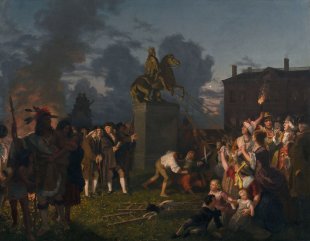 [i]As regular readers surely know by now, I have long had more interest in the postmodern, post Christian culture than I do in short term or medium-term politics and ideological culture wars, which are symptoms, not etiology.
Prompting this post was the death of Milan Kundera and an article I read this past week that was the fourth in a series of articles from Dr. David Ellis (can find them all in the footnote if you are curious)[ii]. They reminded me of my encounters with the philosophy of Herbert Marcuse, who was one of the progenitors of wokeism, deconstructionism, and the erosion at the base of Western culture.
Marcuse was an icon to the tuned in, dropped out, and get-high flower children of the sixties, a sort of godfather to the mobs of the Chicago riots, Black Panthers, etc. He was a guiding light to critical theory, although it’s more by osmosis and momentum now as he is, I imagine, mostly unread today except by wonks like me. His polemics were an extension and adaptation of Marxist economic theory, of substructure and superstructure, of the unending tension between oppressed and oppressor or slave and master. For Marx the superstructure of stock markets, banks, private property, and industrial development was engineered to shelter the substructure of the masters of capitalism and their wealth.
Marcuse expanded master/slave, oppressor/oppressed theory to encompass other identity groups and out of that mire grew many of the current offshoots of critical theory and the victim groups of black, Latino, feminists, LGBQT+ and other proliferating identity politics subgroups. According to the Marcuse view of things, they are ‘oppressed’ and suppressed by the substructure of ignorant white nationalists and Christian moralists who maintain brutal control through the elaborate superstructure of evil Western culture.
Under the heading of “ideas have consequences, but they take a while” he led the way. Marcuse pontificated, we absorbed. Marching along we cobbled together how we are to think and speak, seeding in the irreconcilable divisiveness that has crushed all opposition by the assumption of power and usurpation of language.
I remember nodding my foolish, naïve head while reading and underlining Marcuse in the late sixties along with the occasionally compelling writing of Huey Newton, Eldridge Cleaver, Ramparts Magazine, and others of the Chicago Eight ‘persecuted heroes’ like Abbie Hoffman, Jerry Rubin, and David Dellinger arrested after the Chicago riots ersatz revolution.
As a simple tree climber, I found old Herb tough sledding, arcane and dense and almost unreadable, but so as not to fall behind, I dutifully slogged through it. We denigrated any heretics who resisted and still believed in the critical importance of the family as the structural foundation block of society, traditional morality, and, of course, anything at all to do with religion. All such beliefs were tools of the slave master to rob the oppressed of their due, which was pretty much anything they could liberate or loot. To steal something from the man was to liberate it. Sound familiar?
Marcuse saw the deconstruction of tradition and the foundations of Western culture as a holy mission, but with no God to temper means and methods. His morality was based on the good being equivalent to that which bolstered self-gratification. His philosophy and morality justified (among other things) the sexual revolution and a relentless anger bent on destroying what he saw as the repression of various self-defined groups of the oppressed. A quote from Dr. Ellis’s linked article catches the spirit of Marcuse, “Forgiveness, he (Marcuse) claims, robs a society of the energy it needs to achieve structural change toward a non-repressive, fully humanist hegemony. Past social grievances cannot be put to rest. Rather, they need to be remembered, amplified, and made presently meaningful to mobilize oppressed groups to overcome the culture of self-sublimation.”
No, no, it is righteous anger and violent revolt that will make right all the injustice, and so it goes.
Wokeism is the most persistent delusion in my memory, a kind of impervious enigmatic gnosis, non-verifiable outside of echo canyon with no need to justify itself. Any dissent or even honest questions about its premises are evidence of the doubter’s complicity in the hegemony of the privileged, most especially in any trappings of Christian philosophy or morality. The bulwark of identity politics is the co-opting of language and smashing of civil discourse and reasoned debate. Here there is no objective truth or reality against which to measure competing visions and understandings of the culture and the universe. Here there is only subjective interpretation, the primacy of “lived experience,” and Nietzsche’s will to power with the near monolithic support of complicit academia, politicians, and friendly media to carry along the message. Dissent is judged as not just wrongheaded, but evil.
Dr. Matthew Petrusek states the case well in his just published book, “Evangelization and Ideology: How to understand and respond to the political culture:” [iii] See the link to the book in the footnote.
“Imagine possessing the power to advance your political goals simply by incanting a spell-like litany of endlessly ambiguous terms that supply immediate and unquestionable moral supremacy over your ideological rivals — words li “anti-racism,” intersectionality,” homo” and or “transphobia,’ “white privilege,” “misgendering,” “patriarchy,” “triggering,” ” diversity,” “equity,” “and “inclusion.” Imagine being able to assert that mere disagreement with your self-defined “community’s” political position is itself proof of your critic’s intellectual confusion and moral corruption. Imagine society granting you the authority to proclaim that your self-described “lived experience” can trump all contrary evidence and that the declaration, “This is our truth” is sufficient to supply you with fawning media coverage, lavish corporate sponsorship, and even civil legislation to protect and advance your political aims. Imagine a world with no objective rationality below and only a utopian intersectional sky above., a world in which winning an argument is as simple as silencing your opponents and silencing your opponents is as simple as calling them dirty names.” (Quoted from the beginning of Chapter 8)
So, we are caught on the horns of a dilemma seemingly without escape. Either we capitulate, swallowing whole the hard lump of wokeism dogma without exception and proffering no reasoned dissent or question, or we are post-haste consigned to the basket of deplorables because any disagreement is indisputable confirmation that we belong in the refuse pile. Pretty good deal rhetorically for the architects of the ideological trap that snags us.
“Tradition is not the worship of ashes, but the preservation of fire. ‘ – Gustav Mahler
In the early seventies I was Chairman of the Mount Vernon Conservation Committee back when there were conservationists and conservation was honorable. The state of Maine needed to protect the beauty and purity of its many lakes, ponds, and streams. At that time, there were still many old camps along the shores of the lakes which had septic systems to dispose of gray water and black water that flushed it all with a straight pipe into the water some distance from shore. They would draw their supply water from the same lake but wisely locate the intake pipe some distance away from the discharge. No surprise that some of the lakes and ponds without adequate sources and outlets to maintain a constant flow of water would experience lush water plant growth and algae blooms as they were well supplied with abundant organic nutrients to feed on.
The Maine legislature passed a law stipulating that unless local authorities devised a comprehensive shoreland zoning ordinance, all the shores of the lakes in the town would be designated as ‘resource protection’ areas, and no development of any kind would be permitted. It fell to the conservation committee to make the recommendations to the town’s zoning board as to which parts of the shores of the ten lakes and ponds either fully or partially within the town borders could be developed and to what degree. Resource protection was appropriate in some areas: which parts could sustain limited and carefully defined development for camps, docks, swimming beaches, and boat launches depended upon criteria including soil type, slope of the land, and depth of the soil to bedrock.
Zoning was, as you might imagine, a volatile issue for the many landowners with dreams of their perfect home with a perfect view. State mandates and zoning were viewed by some as an illegal seizure of private property. We spent the better part of two canoeing seasons cruising around the lakes, taking soil samples, poring over topographical maps, determining slope and soil types, and drawing lines as to which areas could safely be built upon, what set back requirements were needed, land clearing standards, and other such considerations. Many wonderful hours without monetary compensation were more than compensated for by the peace and pleasure of exploring the open waters.
‘Conservationist’[iv] implies conserving that which is valuable, in this case the protection of wild land, flora, and fauna. When the broader definition of conserving was found uncomfortable for some, the awkward word was jettisoned along the way and ‘conservationist’ morphed into ‘environmentalist’ one day when I wasn’t looking. The new word had other implications and connotations, including rebellion against the evil of the oppressive capitalists and exploiters.
Conservation presupposes that there is something worth conserving, both in the physical environment and in the cultural environment. Preserving the first truths of the culture is what Marcuse, wokeism, and Marcusian fellow thinkers despise with an implacable hatred.
What I and many others understand as worthy of protection and passing down to our children and grandchildren to preserve and protect what is best in our country and civilization, is anathema to the deconstructionist. Without the tradition and culture that they despise, we are unmoored, cut loose, adrift in a sea of subjectivism, uncertainty, personal preference, the power of the loudest voice, and morality as self-gratification, which is just where they want us.
An apt metaphor of a country and culture without tradition is a man losing his memory, suffering from dementia. As his memory fades away, so does his identity, his personality, his unique understanding of what is valuable and should be preserved, of what’s real and not real, his guidelines, and his very self. Frustration, denial, alienation, and anger regularly accompany dementia. We are living in a kind of deliberately imposed cultural dementia. I think these tragic maladies are abundant in much of public discourse now.
“The first step in liquidating a people is to erase its memory. Destroy its books, its culture, its history. Then have somebody write new books, manufacture a new culture, invent a new history. Before long that nation will begin to forget what it is and what it was… The struggle of man against power is the struggle of memory against forgetting.” Milan Kundera, French and Czech writer, former Communist and subsequent outspoken Communism critic, who passed away last week in Paris
[i] Image courtesy of Wikimedia with permission from New York Historical Society, Johannes Adam Simon Oertel: Pulling Down the Statue of King George III
[ii] https://open.substack.com/pub/newsuffrage/p/marcuses-logic-of-gratification-wrathenvy/
[iii] ,“Evangelization and Ideology: How to understand and respond to the political culture,” Dr. Matthew R Petrusek, 2023, Word on Fire Press. https://www.amazon.com/-/he/Matthew-Petrusek/dp/1685780105
[iv] The conservationist of the sixties and early seventies was a throwback, readers of Rachel Carson, Aldo Leopold, and Lewis Thomas. I grew up one, impassioned lover of all things wild and untamed. Of course, being a conservationist had all the panache and glamor of an entomologist. Then again, Albert Kinsey who help transform the sexual mores of four generations by fashioning himself as an enthusiastic participant in, self-styled expert of, and cheerleader for the sexual revolution. He was by education and degrees an entomologist. We are all his bugs pinned to the board with his deadly needles.
 Quo Vadis Blog