
“People want to go out and travel around and meet cool people. I could just go and live in Vermont, but is that what I really want?” Tom Brady
 Two recent stories connect obliquely in noteworthy testimony to our troubled times. [i] The first is national, the second is in our neighborhood in Vermont.
The first was the release of the Surgeon General’s report on the epidemic of loneliness afflicting our country, especially our young people. Dr. Vivek Murthy issued a detailed report on the dangers of loneliness and how it is epidemic in the U.S.[ii] The crisis was exacerbated by COVID lockdowns, but the statistics precede the pandemic by a decade at least. Dr. Murthy warns that loneliness is as injurious to health and lifespan as smoking fifteen cigarettes a day. Why not twelve or a two-pack a day habit? How that was ascertained so exactly I’ll leave to the actuaries, but the loneliness epidemic, its effect on mental health, alienation, multiplied depression diagnoses and other mental illnesses, most markedly in the elderly and the young, is well documented.
Assuredly, the fragmentation and isolation of social media contributed, but Facebook only friends that we rarely see face to face seems to be a symptom, not a cause. COVID lockouts fanned the flames, however the fire of alienation and isolation was already a four-alarm blaze and had broken through the roof.[iii]
The Surgeon General report and numerous articles responding to it recommend reaching out to others, making a phone call, stopping by for a visit, just saying hello at the supermarket, and the same articles bemoan the melting away of the ad hoc organization of our shrinking live social relationships that formerly knit us together. The decline of churches, fraternal organizations, neighbors who knew one another, circles of friends, and most of all the dissolution and atomization of families. Renowned Catholic author and astute cultural commentator, Anthony Esolen, has written extensively about the dissolution of our roots and this ever-worsening postmodern and post Christian phenomena. He renamed the cultural tsunami called the Sexual Revolution, “the Lonely Revolution.” Aptly named.[iv]
Dr. Mary Eberstadt in her eye-opening new book “Adam and Eve After the Pill Revisited,” [v]suggested this about some of the underlying causes of the deepening epidemic:
“Abortion, fatherlessness, divorce, single parenthood, childlessness, the imploding nuclear family, the shrinking extended family— all these phenomena have something in common. They are acts of human subtraction. Every one of them has the effect of reducing the number of people to whom we belong, and whom we can call our own. Psychologist Harry Harlow’s deprivation experiments on rhesus monkeys are remembered today for the lifelong consequences those creatures suffered when separated from their mothers, siblings, and the rest of monkey society. When Western man looks in the mirror today, does he see their damaged ghosts standing beside him? [vi]
Outside the consciously religious communities of the counterculture, generational reality for almost everyone else in the West can be summarized in one word: fewer. Fewer brothers, sisters, cousins, children, grandchildren. Fewer people to play ball with, or talk to, or learn from. Fewer people to celebrate a birth; fewer people to visit one’s deathbed. Splitting the human atom into recreation and procreation has produced a love deficit.”
“The tragedy of modern man is not (only) that he knows less and less about the meaning of his own life, but that it bothers him less and less.” – Václav Havel
A major contributor to the crisis to which Dr. Eberstadt alluded is the dissolution of mom, dad, and children core families; the family falling apart, the epidemic divorce rate, proliferation of single parent homes, and cohabitation without the commitment of marriage have all added their increments to alienation and loneliness.
James Wilson likened it to Disraeli’s comment about the two nations in Great Britain, only Wilson’s analogy was not to rich and poor like Disraeli, but to those in America with intact families and those without. The outcome for the two nations is vastly different. The increased poverty rate, lower educational levels attained, higher prison incarceration rates and lack of future security for children without two parent families are well documented.
Exacerbating the divide is the lack of understanding between the two groups. Wilson quoted from Disraeli’s book [vii]“Two Nations:” Between these two nations Disraeli described, there was “no intercourse and no sympathy” — they were “as ignorant of each other’s habits, thoughts, and feelings, as if they were…inhabitants of different planets.”[viii]
But take heart, in another recent story, Vermont has come up with a prescription and solution for loneliness. One of nine states that currently sanctions medically assisted suicide, this week in our second story, Vermont expanded its market and became the first state to overtly abandon its residency requirement for one to avail themselves of the service.[ix] The state that gave us Uncle Bernie comes through.
A whole new revenue stream of tourism has some competitive advantages: one-way tickets, limited hotel time, and if you buy the full package, a small crop-duster will spread your ashes – a well-oiled ride into total annihilation and oblivion. Quickly forgotten nothingness. Fly in a living human being, fly out scattered dust on grey granite ledge. Permanent loneliness.
And we look everywhere to ease our loss. To fill the hole. And we often look in the wrong places. Like a robot programmed to provide AI answers to life’s most vexing problems.
“The glory of God is man fully alive, but the life of man is the vision of God.” St. Irenaeus
Where are the right places? This is not a saga of alienated despair, but I hope a prompt to go to the light. The antidote, and I would suggest the only antidote to loneliness, is to fall deeply in love with Love itself. No one person, no matter how perfect in our lives, can fill the hole entirely – it is too great a burden and an impossible load to place on another person’s (or even groups of persons) shoulders.
The great crisis in our culture that leaves us unmoored and adrift is anthropological and epistemological in nature. We have been busily cutting lines for a couple of hundred years, mooring lines that ordered our lives to objective truth, family, and clarity of understanding reality and our place in it. The pace of line cutting accelerated with social media, with the internet, with the lonely revolution, and with an inflexible materialism that convinced us the only solutions were in science and technology, empirical observation, and algorithms.
When truth and morality become subjective and are not givens to be discovered, learned, and conformed to, then we are left each to our own myopic and pitifully inadequate reality. As has been written, “change comes very slowly, then all at once.” How unnerving it is to live in a time of “all at once.”[xi]
From Bishop Robert Barron’s recent book on Eucharistic Revival, “This is My Body:” “Why is the tree of the knowledge of good and evil forbidden to them (Adam and Eve)? The fundamental determination of good and evil remains, necessarily the prerogative of God alone, since God is, himself the ultimate good. To seize this knowledge, therefore, is to claim divinity for oneself—and this is the one thing that a creature can never do and thus should never try. To do so is to place oneself in a metaphysical contradiction, interrupting thereby the loop of grace and ruining the sacrum convivium (sacred banquet). Indeed, if we turn ourselves into God, then the link that ought to connect us to God, to the rest of creation is lost, and we find ourselves alone.”
Upon even a modicum of reflection, can we deny that our valorization of self and the attendant subjectivity of values through our emotions have replaced the study of and discovery of the objective values inherent in our nature? Can we deny that this inward focus has formed us in the epidemic of disorientation, alienation, and loneliness?
Yet, we have an innate capacity to relate, to never be lonely even when we are alone on a desert pilgrimage. Fashioned uniquely imago Dei, we have a “Capax Die” in our hearts, a capacity for God, which is either our greatest gift or a terrible hole that we try to fill with distractions, entertainments, work, human praise and honor, wealth, and pleasure in all its guises, none of which is up to the task. All of these frantic substitutes can be addictive and thus crave ever greater doses to achieve ever diminishing highs.
“At the sight of the crowds, (Jesus’) heart was moved with pity for them because they were troubled and abandoned, like sheep without a shepherd.” Matthew 9:36
The greatest robbery and lie that bedevils us is the calumny that faith in a loving God is merely human wish fulfillment, a fantasy, or worse, a man-made set of laws and strictures to our freedom. Freedom we define not to do what is right and thus fulfilling, but freedom as license to do what the vagaries of our self-focused will would have on any given weekend. At the epicenter of that claustrophobic, trapped license is our will, our own ego, our impossibly incapable imagination and pride, ever searching for a fulfillment that is beyond its capacity.
There is a capacity beyond ourself wired into our nature as imago Dei, and it is always urgently seeking fulfillment, a restlessness built in, a hunger waiting for nurture. “Oh Lord, our heart is restless, and it will not rest until it rests in You.”[xii] Not a void, that hole in our hearts, endlessly yearning, but a gift – our greatest gift.
The solution to human loneliness is readily at hand. For those who have experienced it, and it is an open invitation to all that are human. Faith is a personal encounter, a relationship, a falling in love. And like all the most important relationships in our lives, answering the invitation is a surrender, a trust, a dialogue for life, a letting go.
This Capax Dei is not a design flaw, rather it is the keystone needing to be dropped into place to hold together the magnificent arch of our life, integral as though to a cathedral straining upwards, out of ourselves. Not a missing piece, but our Source and our Culmination. This hole is not a vacancy or a void, but our meaning and purpose waiting to be realized.
Most days of the week we are nurtured here in our small parish; the hole in our heart is filled in around the edges at Mass, a mini retreat where the Gospel is read, we are fed with a short meditation, and then a miracle occurs in the Consecration and feeding us with the Body and Blood of Jesus. Breaking open scripture and breaking of the bread. Every day, a quick quarter mile stroll from our home, a meditation, a mystery, a quieting of our souls, a miracle, and a Meal. Metanoia one tiny increment a day. Healing, ineffable peace.
Metanoia not as a superficial change of direction or a few quarrelsome habits, but a deep transformation of self. Not pride, but humility. Acknowledging that there is a God, and that we are not Him.
Jesus as our eyes and ears with everyone we meet. Seeing Jesus in every human being, and in ourselves. In our hearts, in our minds, on our tongue in every conversation. That is the reality we yearn for.
Meditation, mystery, miracle and Sacred Meal, every day. Maranatha. Come, Lord Jesus, come. Fill the hole in my heart.
“Where there is no love, put love, and you will find Love.” St. John of the Cross
[i] Image is The Disappointed Souls (Les âmes déçues) by Ferdinand Hodler, 1892 [Kunstmuseum Bern, Switzerland]
[ii] Health and Human Services release on the “devasting impact of the loneliness epidemic.”
[iii] Google “epidemic of loneliness” and get 88 million hits in half a second.
[iv] One example of Dr. Esolen’s work from Touchstone Magazine, “All the Lonely People.”
[v] A full-throated recommendation for Dr. Eberstadt’s latest. A social scientist, her observations and insight into our current state is well worth your time. “Adam and Eve After the Pill Revisited.” (Kindle link). Get your hands on this book.
[vi] For a good summary of the sociological roots of our sorry state, read James Wilson’s address from 1997, “Two Nations” “We live in a nation confident of its wealth and proud of its power, yet convinced that this wealth cannot prevent and this power cannot touch a profound corrosion of our cultural soul. We are materially better off than our parents but spiritually worse off.”
[vii] From Mary Eberstadt’s article in National Affairs as above, “Two Nations.” “More than a century and a half later, Wilson argued, the United States had also become “two nations,” but the dividing line was no longer one of income or social class. Instead, it had become all about the family — specifically, whether one hailed from a broken or intact home. “It is not money,” he observed, “but the family that is the foundation of public life. As it has become weaker, every structure built upon that foundation has become weaker.”
[viii] Wilson called attention to what he saw as a national catastrophe in the making: the creation of generations of young men unhabituated to responsibility and protecting others.
[ix] One of many articles on progressive Vermont opening the way for out of staters to have ready access to offing themselves.
[x] Image from a REUTER article on the AI solution in a Beijing Buddhist temple – A robot at the end of your pilgrimage journey to truth.
[xi] St. Pope JPII wrote extensively on the contemporary subjectivizing of moral truth and the emotive mode of diminishing even the idea of an objective truth in a morass of radical individualism. Two recent articles by retired Archbishop Charles Chaput express this far better than I could hope to, writing about Veritas Splendor and Fides et Ratio.
https://open.substack.com/pub/whatweneednow/p/believe-so-that-you-may-understand
https://open.substack.com/pub/whatweneednow/p/the-splendor-of-truth-and-why-it
[xii] Well known quote from “Confessions” St. Augustine.
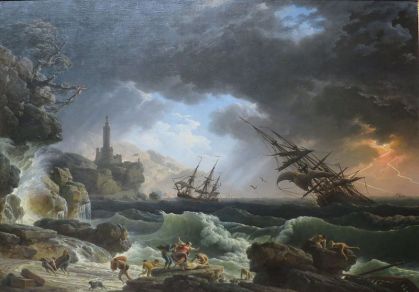 In 1997 Sebastian Junger published his first major book.
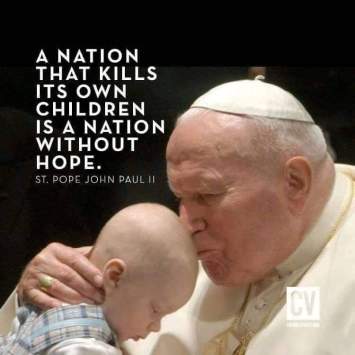 Proponents dearly love to frame the conversation in superficially clever emotional terms (“Keep your rosaries off our ovaries.” Or “Our bodies, Ourselves.”) or some version of freedom necessary for women to succeed or marginalizing the pro-life position as religious ‘extremism.’ They decline the opportunity to conduct a reasoned moral argument. The syllogism looks like this: A.) It is always morally repugnant, and no justification exists to deliberately attack and destroy innocent human life. B.) A fetus is just another word for small developing human being. Therefore, C.) Deliberate killing of a human fetus is morally repugnant. No religion is required for the propositions or the conclusion. Some prominent atheists are pro-life advocates with arguments based on logic, science, and the existence of objective truth that is knowable.
 Quo Vadis Blog