
“Music is a higher revelation than all wisdom and philosophy.” Ludwig van Beethoven
 The relationship between music and mathematics and the universe is mysterious. We can start with an ancient theory and wander around a bit. Bear with me, and we’ll see where this goes.
Pythagoras intuited that musical harmony is related to mathematical ratios. He became curious about the relationship of sound to ratios when he noted the varying tones of different size hammers on an anvil as he walked by a metal forging shop.
The ordered harmonic series (1, 1/2, 1/3, 1/4, etc.) describe how vibrating strings of differing lengths or columns of air with dissimilar spacing from the end of a flute to the holes can produce sounds that are pleasing to the human ear when the increments of the strings or spacing are in simple ratios. Math in this curious way affects responses in the human brain and interpretation of sounds; harmony is pleasing to a human mind. Thus, ratios are pleasing to the mind in a not immediately obvious way.
Later, Pythagoras named his related theory the “Music of the Spheres” based on the ratios he observed in the period of the movements of celestial bodies—the Sun, Moon, and planets. Perhaps, he surmised, like musical instruments, these ratios create a form of music, although this music is beyond normal hearing.
Pythagoras concluded that numerical relationships governed the movements of the cosmos and thus created harmonies. He theorized that the regular motions and the predictable periods of the celestial bodies corresponded to specific musical notes or harmonies, forming a grand cosmic symphony, reflecting the harmony and order in the universe. Because this celestial music is everywhere all the time, this “music” is not a sound that can be heard or distinguished.
“Music of the Spheres” influenced both scientific and philosophical thought for centuries, blending ideas from astronomy, mathematics, and metaphysics; the universe functions according to rational principles, connecting the structure of the universe to music, beauty and order through mathematical harmony.
“The miracle of the appropriateness of the language of mathematics for the formulation of the laws of physics is a wonderful gift, which we neither understand nor deserve.”……”The enormous usefulness of mathematics in the natural sciences is something bordering on the mysterious.” Eugene Wigner’s[i] “The Unreasonable Effectiveness of Mathematics in the Natural Sciences”
In his 1960 essay, “The Unreasonable Effectiveness of Mathematics in the Natural Sciences,” physicist Eugene Wigner wondered why mathematics is so successful in describing physical reality, even in areas when there is no obvious reason for it to apply so precisely. The unexpected effectiveness of mathematics to the natural sciences suggests something profound about the nature of the universe. Applicable in physics, astronomy, cosmology, chemistry, and even biology, this inexplicable precision of math to explain the workings of nature indicates that the universe is structured toward a mathematical order and contains a relationship somehow open to human cognition and suggests a metaphysical truth.
In his book, “Is God a Mathematician,” [ii]Mario Livio reasoned that mathematics has a dual nature. Mathematical concepts are devised by humans (e.g. the development of the calculus or complex numbers), but because these concepts appear to describe the universe so accurately, he asked if we are discovering pre-existing truths? He speculated about a both/and understanding – both invention and discovery: humans devised mathematical language to communicate the ideas, but the uncanny applicability of these concepts to describe the universe suggests they tap into something deeper and fundamental about the universe itself.
Many books, articles, and essays followed to the present day[iii], and an ongoing debate ensued. Is the language of advanced mathematics, beyond most of us, and the esoteric domain of brilliant knowledgeable physicists and mathematicians, the key to understanding and explaining the universe we observe? Is math a very clever invention of human beings or is the language of mathematics discovered as a deeper truth about how preexisting reality is ordered?
When (and if) we move into a next level of understanding, will the universe be understood in a “theory of everything” that can only be described mathematically in arcane terms, unserviceable to the intuitive natural understanding of almost all of us, including me?
Is math a genius language humans invented to communicate a sublime reality we have yet to discover fully?
“Music’, said Arkady, ‘is a memory bank for finding one’s way about the world.” Bruce Chatwin, The Songlines
In Bruce Chatwin’s gifted hybrid non-fiction novel,” The Songlines”, he chronicles what he discovered during his time with a Russian friend and the aboriginal people in the trackless outback of Australia. He learned to sing the songs they have used for centuries that create a map of their environment they can navigate. But “Songlines” are more than that.
Aboriginal people of Australia use these songs to map their environment and navigate vast landscapes, however “Songlines” or “dreaming tracks,” are also infused with the aboriginal spirituality. Their myths teach that the land was sung into existence by ancestral beings during the Dreamtime. We were all sung into being, what a marvelous image!
Each song corresponds to a specific journey taken by one of these ancestors, describing the geographical features, flora, fauna, and waterholes along the way. By singing the song, an aboriginal person walks the land spiritually and historically as well, retracing the steps of their ancestors. The song encodes and preserves vital information about the landscape that allows the singer to find their way across otherwise featureless terrain.
The land is not only a physical place; it’s alive with history, legend, and meaning. A “Songline” connects the singer to the land, the people, and their ancestral history. As Chatwin presents it, the songs are more than maps—they are a way of experiencing and interacting with the world, where the act of singing creates a profound connection to the earth and its stories.
Just as Pythagoras understood in ancient Greece, music is imbued mysteriously with the innermost workings of the universe; he could describe music with math for pitch, harmony, rhythmic patterns, and tempo. And as the aboriginal people understand, music connects us to our universe with innate, mysterious, intuitive bonds that open wide mind, imagination, spirit, and soul.
 Music, too like math, is a wonderous alchemy of human cognition and the universe. In a sense, the universe only exists because someone is there to perceive it. Human creativity and genius took the stuff of the universe – wood, metal, reeds, strings, felt hammers, and more – fashioned and refined and tuned a vast diversity of instruments which enhanced and added complexity to the marvel of human voice and created sound images that reflect our universe with inexhaustible variety.
As we wonder how the abstractions of math are a profound bridge between the capabilities of the human spirit and the nature of this miracle of a universe we inhabit, may we ask the same question about music? Is music invented or discovered? Is there some magical mixture made possible by the nature of the universe and the nature of the human being perceiving and imagining it, who then communicates in astonishing ways? And does music itself describe the universe in mysterious ways that we intuit, but struggle to articulate?
Is music a genius language humans invented to communicate a sublime reality we have yet to discover fully?
“Without music, life would be a mistake.” Friedrich Neitzche
One regular Wednesday in 1273 Naples, a priest was saying his customary daily Mass. However, he was not only a priest, although that was central to all he thought and did.[iv] Thomas Aquinas has been called the ‘bridge between antiquity and modernity’ who integrated the wisdom of ancient philosophy with Christianity, arguably the preeminent mind of the 13th century, and one of the greatest minds in history. His unfinished Summa Theologiae alone would have secured his place in Western history, but he wrote many volumes more. He read widely and studied the Church fathers, Plato, Aristotle, and other ancient philosophers, Jewish rabbinic writers like Maimonides, and Islamic scholars like Averroes. His works are considered formational to Western civilization and of surpassing clarity and beauty.
He is renowned for his practice of stating the position of his interlocutors most coherently; Thomas answered after summarizing an opposing argument in its strongest terms and reasoning, oftentimes better than proponents articulated their ideas. [v]Aquinas’s works and methods are studied carefully and marveled at seven hundred years later concerning a wide range of topics including the existence of God, the nature of faith, and natural law as an objective foundation for morality. His brilliance on these inquiries and many other topics is unequaled to this day.
That Wednesday, however, as he sometimes became awed during the Consecration of the Blessed Sacrament and unique presence of God, St. Thomas Aquinas was moved to tears and struck dumb for a considerable time with a mystical vision. At the conclusion of Mass that day, he was asked by his secretary Reginald if he was going to return to his writing in the afternoon as was his custom. “No,” he replied. “All that I have written appears to be as so much straw after the things that have been revealed to me,” Thomas said.
He never wrote another word and died a few months later, perfectly at peace. Many have speculated on his vision that day. Was it Jesus Himself speaking? Some have said it was a beatific vision of heaven.
Thomas loved music as an expression of worship and his love of God[vi]. I like to think his vision was heard as well as seen. Perhaps it was a music that conveyed the Beatific Vision and a mystical full comprehension of Creation and God. We will never know, but my hope and whimsical belief is that such a vision entailed music. Whether Gregorian chant or Bach or Beethoven or Chopin or Coldplay or Coltrain or more likely something beyond our imagination will never be known this side of the eschaton, but I happily imagine beautiful music, music that conveys perfect joy, hope, peace, understanding, and Love without any lack or further longing.
“Give thanks to the LORD on the harp;
with the ten stringed lyre chant his praises.
Sing to him a new song;
pluck the strings skillfully, with shouts of gladness.”
Psalm 33: 2-3
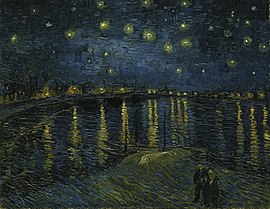 The human person has a curious capacity for wonder. The universe is filled with persistent, unexplainable beauty, but why are we capable of noticing and being awestruck by this chain of astonishment? Chaotic, yet ordered; incomprehensible, yet intelligible, we seem to be created, our brains seemingly wired to appreciate it all. How marvelous is our capacity to wonder and to be in wonder. To be amazed and deeply longing simultaneously for a fulfillment unknown. Why is this so?
We are often overwhelmed with loud modern discordant cacophony, but we hear best in silence. The small quiet voice Eijah heard in the cave, God not in fire or earthquake or wind, but a “light, silent sound.”[vii]
Silence, but not complete silence. A whisper. Pythagoras’s “Music of the Spheres” – omnipresent, but unheard until we do hear it, and it has nothing to do with natural acuity of hearing. The beatific vision of complete and sudden insight that is perhaps what Thomas Aquinas heard – peace and joy with all made clear through a new music previously unimagined, but immediately recognized, discovered, as if we had been expecting that ineffable beauty all our lives. [viii]
Why when we in hope discover this music in which we answer all our questions, have we been expecting this Music of the Spheres all our lives – this Beatific Vision heard best as a whisper in silence, a vision, a moment that changes everything? Robert Cardinal Sarah in his book ‘The Power of Silence Against the Dictatorship of Noise” suggests that we will find and hear this vision into the infinite because we are created Imago Dei – In the Image of God. Thus, this expectation found in silence that is not quite silent is in the human heart from its creation. “I am speaking…about an interior state. It is not enough to be quiet either. It is necessary to become silence. For, even before the desert, the solitude, and the silence, God is already in man. The true desert is within us, in our soul….The Father waits for his children in their own hearts.” [ix]
So, dear readers, this music, this vision found in silence is within each of our hearts, waiting to be discovered. I wish us all fair winds and following seas as we set sail to find it, and we don’t have to leave our homes for the journey.
“At present we see indistinctly, as in a mirror, but then face to face. At present I know partially; then I shall know fully, as I am fully known.” 1 Corinthians 13:12
[i] The Unreasonable Effectiveness of Mathematics in the Natural Sciences
[ii] “Is God a Mathematician?” Mario Livio, Simon and Schuster Paperbacks, 2009
[iii] Full disclosure. A quick survey, all beyond my math and physics knowledge. If you are curious, here are a few more:
Roger Penrose’s “The Road to Reality” (2004): Penrose, a renowned physicist and mathematician, explores the deep connection between mathematics and the physical universe. He discusses how mathematics seems to have a unique status in physics, suggesting that mathematical truths exist in a Platonic realm of reality and that the physical universe somehow “taps into” this realm. The book is over a thousand pages long with over 10,000 formulas to support his hypothesis. Good luck.
In his book “Our Mathematical Universe” (2014), cosmologist Max Tegmark proposes that the universe itself is mathematics. Is everything in the universe, including matter and consciousness, describable by mathematical structures? According to this view, the universe’s deep mathematical nature is not just a coincidence but a fundamental aspect of reality.
Carlo Rovelli’s “Reality is Not What It Seems” (2016): Rovelli, a theoretical physicist, explores quantum gravity and the nature of space and time. Rovelli touches on how our understanding of reality has increasingly become a question of mathematical description, especially in the context of quantum mechanics and general relativity.
[v] Unlike so much of what we read today as reasoned debate is trivial and merely mocking strawman positions not actually held by their proponents. Much as employed in what the new atheists like Richard Dawkins and Sam Harris have written about God and their version of theology and faith. Thomas Aquinas stated the opposition better than they did and addressed the strongest arguments.
[vi] Saint Thomas Aquinas wrote five Eucharistic hymns, and four of them are included among the liturgical texts for the Feast of Corpus Christi.
[viii][viii] All images are public domain: Harmony of the Spheres from Thomas Stanley’s “History of Philosophy” 1655;
NASA Hubble image of a galaxy 240 million light years away;
Starry Night Over the Rhone (La Nuit étoilée) by Vincent van Gogh, 1888 [Musée d’Orsay, Paris]
[ix] “The Power of Silence Against the Dictatorship of Noise,” Robert Cardinal Sarah with Nicolas Diat, 2017, Ignatius Press
 Quo Vadis Blog