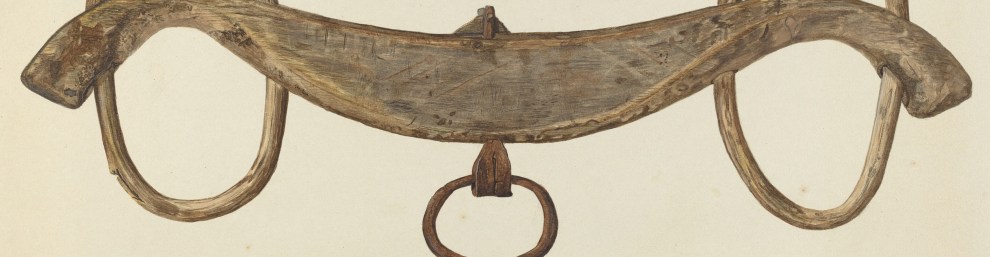
“No one is without their difficulties, whether in high or low life, and every person knows best where their own shoe pinches.” From Letters of Abigail Adams
Once in a galaxy far, far away in a time long, long ago, I would be sent to help in staffing an elaborate exhibit for my company at a large annual contractor’s trade show along with four gazillion other suppliers, software providers, and manufacturers of construction material and equipment of every kind. For anyone who has had that experience, there are two ways of doing such work: complaining, hiding, and sitting or enthusiastic, diligent, and extroverted effort. The latter is far preferable, and the time can be enjoyable, meeting old friends and making new ones. But it’s hard on the feet, since if I wasn’t on a shift to work in the booth, I was walking the floor to learn something new about my industry and make new contacts. As Coach Bill Belichek was fond of telling us, “First, do your job.”
One year, I made the disastrous mistake of forgetting to pack my broken in comfortable shoes, usually Rockport’s. The evening that I flew in, I realized my error and knew I couldn’t work the booth in my old travelling running shoes. No one ever does well in borrowed shoes broken in by someone else, so I needed replacements. Las Vegas has no shortage of stores in which we can recover from forgotten essentials. Bought a new pair of shoes. Paid a hard price in blisters over the following two days. Bought Band-Aids and lumbered on.
Shoes that fit well, are well broken in, and support you are important to do your job whether you are a lumberman, a tree climber, a waiter or a healthcare worker. They are important for your health.
“Put your neck under her (wisdom’s) yoke and let your souls receive instruction; it is to be found close by. See with your own eyes that I have labored but little and found for myself much serenity.” Sirach 51: 26-27 (New Revised Standard Version, Catholic Edition)
Good yokes are essential for successful plowing and harrowing oxen teams. They were designed and custom built to be light and perfectly fitted to the specific team of oxen using it. Hastily or ineptly made yokes hamper the function of the team, gall and blister the necks of the animals, slow things down just as ill fitted shoes slow us down. In Biblical times wooden yokes would be carefully carved and fitted from Palestine oak or terebinth or wild olive wood.
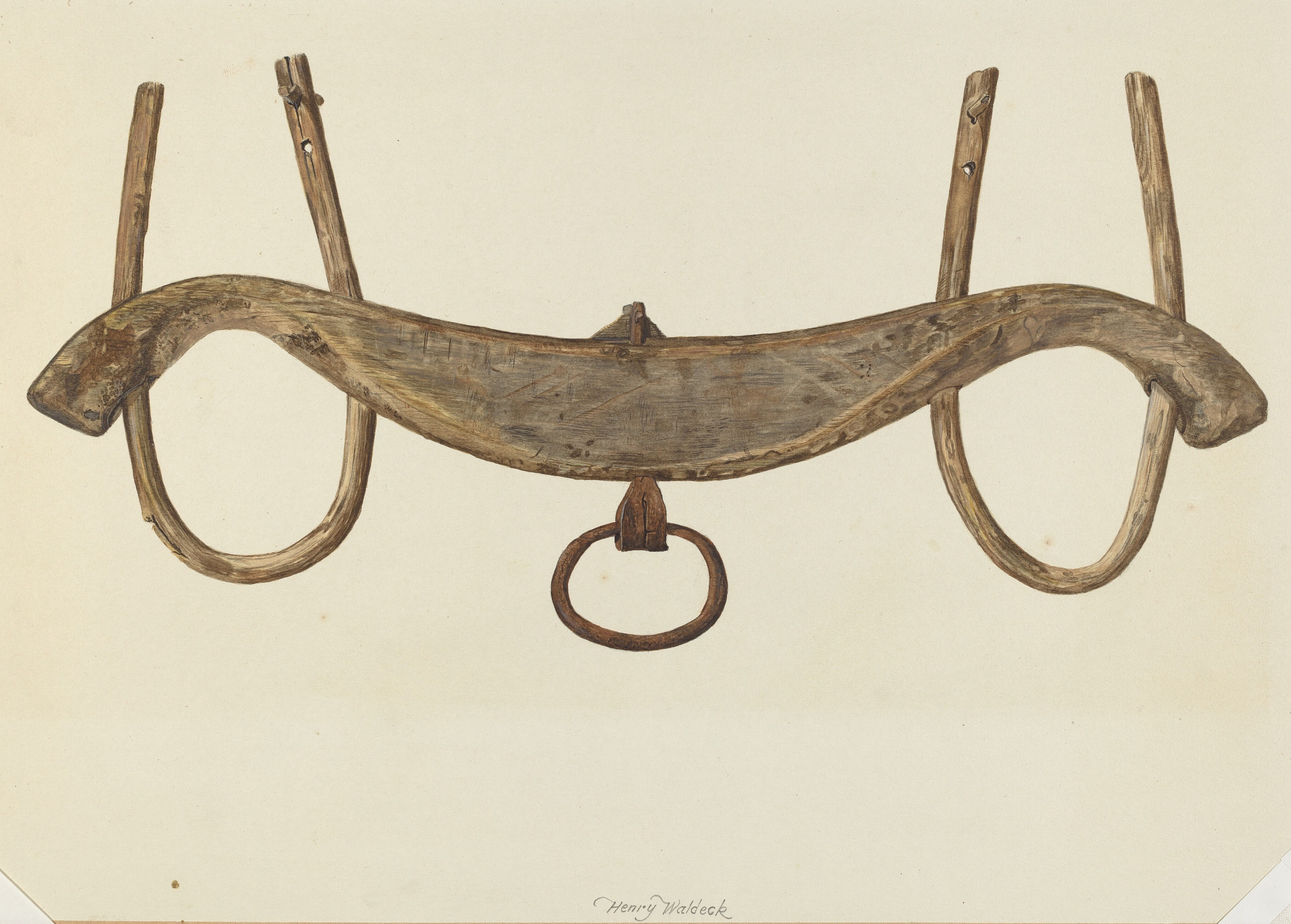
The Old Testament has important passages relating to yokes. Jeremiah the prophet encouraged the survivors exiled in Babylon to be patient and wear the yoke of Babylon because it was a time of chastisement given to them by God to guide them to reconcile and return to the faith of their ancestors from their abandonment of God and the false worship of strange gods. Help build the city of their exile, plant gardens. Bloom where God planted them. To emphasize his prophecy, Jermiah began to wear a wooden yoke.
Hananiah the false prophet perhaps tried to please the people. He said, no, no, break your yoke. Two years and Nebuchanezzar will fold. Dramatically, he removed the wooden yoke from Jeremiah’s neck and broke it. Get yourselves free. You don’t have to change your ways. There is no objective truth to which we must learn to conform. We make our own truth. We all have heard this exhortation somewhere around here too. It is integrated into the social imagination of our times.
Jeremiah responded that if Hananiah lived, then his prophecy was a true one, but unfortunately for Hananiah it was not. The Lord told Jeremiah the wooden yoke would be replaced by an unbreakable iron yoke. Seventy years passed between the destruction of the temple by the Babylonian army and when the Second Temple was reconstructed after Cyrus and Persia conquered Babylon and allowed the exiles to return to Jerusalem. Hananiah died seven months after his false prophesy. Those who listened to his siren song did not make their burdens light.
“Take my yoke upon you and learn from me; for I am gentle and humble in heart, and you will find rest for your souls. For my yoke is easy, and my burden is light.” Matthew 11:29-30 (NRSVCE)
Jewish followers who heard Jesus in the first century would have been familiar with what a yoke meant – both in agricultural practice and as a metaphor. Jesus was a téktōn, as was his stepfather Joseph. Téktōn was the word to describe what Joseph did for a living and what he trained his son to do. Most often interpreted in English translations of the Bible as “carpenter,” as in the bumper sticker “My Boss is a Jewish carpenter.”
In the original Greek, téktōn had a broader connotation and could mean stone carver or craftsman or master builder as well as a skilled carpenter, someone who built necessary things with great skill, experience, and patience. Our word for technology is partially derived from a related Greek word, téchnē, which means craft, art or skill. Technology was originally the study of such things.
A carpenter in ancient Israel could specialize in doing many things from helping frame the forms for a Roman aqueduct, constructing the roofs of houses, and building fine wood furniture to making light, well fitted yokes for agricultural oxen teams. Some ancient legends held that Jesus was a highly sought after wooden yoke maker.
The téktōn making premium yokes would harvest the wood themselves, selecting and cutting the tree needed. Tree cutter and yoke maker were one.[i] A skilled yoke maker would be in constant demand, have a backlog of work, and be well respected.
Jesus understood yokes.
“The good man, though a slave, is free; the wicked, though he reigns, is a slave…” St. Augustine, City of God
We all wear a yoke of our own choosing; we might even make our own. Our yoke is chosen, but not optional. As Bob Dylan sang, “you gotta serve somebody.”
Most of our homemade yokes are some derivation or combination of the big four false idols of happiness: honor, wealth, pleasure, and power[ii]. At first it is a comfortable yoke, pleasant even, feels good. All four false idols are addictive. None of them is inherently evil. I remember a line from the old PBS “Endeavor” series where the senior inspector cautions his young protégé about alcohol, but it can apply to any of the four idols as well. “Liquor can be a pleasant companion, but it is a lousy master.”
Indulgence in our fab four is temporarily satisfying. But the threshold of satisfaction rises with each momentary jolt of happiness. Each momentary happiness requires more of the same to achieve the same or less fleeting emotional contentment. I want. I got. Wonderful! Need more. Got my great job. Need a bigger one. Got the girl. Need another one. Got them to do what I wanted them to do. Need them to do it again, harder. Got that incredible high. Gotta go higher. Climbed the hill. Need the mountain. Got the Benz. Need the red Lamborghini. Won that tournament. Next year it’ll be the major leagues. We love applause, praise, and the recognition that we exist and mean something.
The yoke that Jesus made is entirely other, a yoke of humility. A yoke that leads and pulls gently but supplies power as well as direction. Wearing the yoke that is easy, relieves our existential burden, and gives us the peace that leads us home. Leads away from our temporary home restricted by time and place to the home we are hardwired to yearn for. We are not created for permanent residence on this planet, no matter how beautiful. “You made us for Yourself, and our heart is restless until it rests in you.” “It is the nature of love to bind itself.”
“The revolt against vows has been carried in our day even to the extent of a revolt against the typical vow of marriage. It is most amusing to listen to the opponents of marriage on this subject. They appear to imagine that the ideal of constancy was a yoke mysteriously imposed on mankind by the devil, instead of being, as it is, a yoke consistently imposed by all lovers on themselves….
“They have invented a phrase, a phrase that is a black and white contradiction in two words—‘free-love’—as if a lover ever had been, or ever could be, free. It is the nature of love to bind itself, and the institution of marriage merely paid the average man the compliment of taking him at his word….
“Modern sages offer to the lover … the largest liberties and the fullest irresponsibility; but … They give him every liberty except the liberty to sell his liberty, which is the only one that he wants.”
G. K. Chesterton, “A Defence of Rash Vows,” in The Defendant (1901)
Freedom does not escape from all burdens and is not a license to do whatever is momentarily pleasing. Aided by faith through hard practice, freedom is rather a slow building deposit of the ability and the capacity to love: freedom not to merely please our impossibly fragile and bottomless egos, but freedom to do what is right, to learn patience, prudence, and virtue. Most importantly, freedom is learning to love. Freedom to become the creature we were created to be, a human person capable of living within the innermost community of the Love of our Creator: Father, Son, and Holy Spirit in intimate friendship. We are possessed of a ‘telos,’ have a purpose worth living for, a purpose with no limit. A yoke that saves us.
“And we are put on earth a little space,
That we may learn to bear the beams of love.” William Blake
[i] I have handmade simple furniture (practical, not elegant) and cut trees and run lumberyards and heated our home with cut firewood. I’ve relied on the shade of trees and the oxygen they give forth which replenishes the air I breathe. Wood has been integral to my livelihood and my life. There is a meditative and peaceful aspect to working with wood: the feel, smell, beauty, and certainty. The most useful, versatile, and beautiful of renewable resources.
[ii] As described by St Thomas Aquinas and more recently written about extensively by Dr. Arthur Brooks who teaches the always overbooked course on happiness at Harvard University. They are the prime motivators and temptations of our lives. Centuries apart, but human nature is not changed by advanced technology.


Jack, it’s high time you went national… world wide. It turns out that you are a genius with “the essay” form . The world needs to hear what you have to say! Let me add this: Congrats on not moaning the negative. We all know what’s wrong. What we need is to be reminded that there is the right… and here it is! Thanks. This one is outstanding! Send it to a national publication… a secular publication.
LikeLike
Father Joe,
Thank you for your kind words, but I think your friendship outruns your editorial discretion. This is a pleasurable hobby blog that I enjoy and nothing more. But that is a gift. The best part is staying in touch with folks I care about, who live a good distance away, including you. The comments and the emails that ensue from posts lead to other exchanges which I most treasure. I don’t think any major journals are tracking my posts. ; )
Talk soon. We are due a trip up to Portland this fall sometime. A coffee in your flat or in the great cafe in the next block are always delightful.
LikeLiked by 1 person