Category Archives: Culture views

Sagging Bridges

“We all want progress. But progress means getting nearer to the place where you want to be. And if you have taken a wrong turning then to go forward does not get you any nearer. If you are on the wrong road progress means doing an about-turn and walking back to the right road and in that case the man who turns back soonest is the most progressive man.” C.S. Lewis, “The Case for Christianity”


When we first moved to Aquidneck Island[i] in Narragansett Bay, a local carpenter working with me on home renovations told me he had not been off the island for ten years-he had everything he needed here, why waste his time going over bridges? Having lived in four states and traveled in at least forty others, I thought that was ridiculous. After seven years in this beautiful place, I gradually have become more empathic with his perspective. Indeed, why waste my finite time? However, we occasionally really do need to get to other places.

Absent a seaworthy boat or some flying lessons that leaves three avenues: the Mount Hope Bridge into Bristol, the Sakonnet River Bridge into Tiverton, and the Newport Pell Bridge into Jamestown. Our tiny state of Rhode Island is only thirty-seven miles wide and forty-eight miles long, but it has four hundred miles of seashore with its many inlets, islands, and bays small and large.  Surrounded by the Tohu wa-bohu,[ii] bridges are not a trivial concern.

Late last year, Providence and all of Rhode Island suffered some of the worst traffic snarls in my memory when the cantilevered Washington Bridge on I 195 was first shut down and then severely restricted after a young engineer making a routine inspection discovered that one of its supports was rusting out, separating, and shifting each time a load hit it. Our forty-five-minute trip to Heritage Ballet with granddaughters became a dispiriting hour to an hour and a half without notice, and life changed around here. Only the diligence, then alarm, of a single engineer averted structural failure with dozens of cars dumped into the Providence River on the main access to the city from the southeast, and a terrible body count. Years of desultory inspections and shoddy practices led to the failure of a few large bolts and imminent collapse. Or was the original design with its vulnerability to a few bolts rusting out the underlying cause of the misery and potential tragedy?

Panorama of Francis Scott Key Bridge Collapse

Francis Scott Key Bridge Collapse  James Rajda  IStock

[iii]A few months later in March, a giant cargo ship lost power and the ability to turn in Baltimore Harbor and drifted at around 8 mph into one of the supports of the Francis Scott Key Bridge. Underlying that immediate cause was a faulty design concept that neglected to protect against an inadvertent collision.

I asked my friend ChatGPT about the power of a ninety-five-ton vessel loaded with an additional 4,700 twenty-foot ten-ton containers. It quickly came back with the calculations confirming the Dali struck one of the bridge’s supports with a kinetic energy impact of about 16.3 billion foot pounds. How would that compare to a fully loaded 18-wheeler at 80,000 pounds, I asked. Comparable, indeed, Chat told me, if the truck was travelling at 436 miles per hour.  That would do it, I said. Chat agreed with its customary understated lack of humor. A major link to the city was destroyed, and the whole necessary commerce of the harbor was lost for months. Six men were killed who were maintaining the bridge. Some of the bodies were ever recovered. Only good fortune timed the collision to occur during the predawn and not when hundreds of commuters were crossing it.

Was the electrical fault cursing the Dali with a total loss of control the sole proximate cause of the crisis, or was the design and structure of the bridge built in 1977 the true source of the collapse? Federal standards were put in place in 1991 requiring fenders or “dolphins” be built to divert and protect bridge supports from errant giant cargo ships. Existing bridges were ‘grandfathered’ in. Only 34% of bridges in use over American navigable rivers and harbors under which commercial seagoing vessels travel every day protect the structural supports that hold them up.

The Newport Pell Bridge, which is the heavily travelled only bridge on the south end of our island with access to Route 95 south to New York and beyond, is one of them, and of a similar design to the now destroyed Francis Scott Key Bridge. Every day we see the large container ships, tankers, and cruise ships in Newport navigating under the bridge.

There are far more critical bridges than those spanning rivers. Some connect us along more profound ways. Or don’t. We can look at how they are supported and how the supports are holding up.

“If you see somebody, would you send ’em over my way?

I could use some help here with a can of pork and beans.”  John Prine, “Knockin’ on Your Screen Door.


Slowly, inexorably, the unkempt premises of our youth develop into how we think, and the murky waters of the fishbowl in which we swim limits what we see. What we know. What we think we know. Our assumptions about what is real. C.S. Lewis once wrote, “The future is something which everyone reaches at the rate of sixty minutes an hour, whatever he does, whoever he is.”  Thus, it is for us all, and it is beneficial for all to squint through the walls of the bowl from time to time.

 Recent polls confirm that 25% of voters hate and distrust both major candidates in this year’s elections, the highest “double hater” rate in forty years. How ever did we come to this? What divides us is embedded more deeply than two unlikeable politicians. And far less amenable to a quick fix or the next election or better candidates.

 MAGA vs wokeism in our hardened silos. Both sides regularly post memes of their opposition depicted as ignorant, compliant sheep. Can we all be ruminating, cud chewing, herbivores in adjoining pastures suffering through a drought?  Maybe.

Both the MAGA true believers and the woke minions arose from the assumptions and ideas of Enlightenment philosophers and classical liberalism. The same soil raised both grain and weeds, with the weeds stipulated by the other side. When the liberal ideology of democracy, individualism, and liberty seemingly triumphed over the other more baleful ‘isms’ of the twentieth century, our assumptions and premises hardened. We determined that liberalism[iv] and liberal democracy were not only the most just expression of government and philosophy yet devised by human beings, but the only just one, the ultimate end of progress, what we all should and must aspire to. Coloring outside those lines is unrealistic and traitorous. The water in our fishbowl. To think otherwise is to question our most fundamental assumptions.

Consider that both MAGA advocates and the wokeism cancel culture may seem like the basic divide in our culture but have both arisen from the same premises. The definition of the terms of those premises have rusted out from when they were conceived. Liberty and individualism as the basis of human happiness have evolved, moved on, remade themselves predetermined by their headwaters.

Happiness is no longer understood in the context of the preliberal Aristotelian concept of discovering and learning an objective and common goodness and virtue, then living our lives congruent with that. The closer we get to the ideal, the happier we are due to our unchangeable nature. No, happiness has become the unfettered freedom to do what we want to do, our emotional and ephemeral and shifting desires.

Liberty has ceased to be the freedom to do what we ought. “Ought” is no longer a broadly accepted concept – what C.S. Lewis named the “Tao,” the vestigial collective conscience of commonly held beliefs about the good, the true, and the beautiful: what it means to be good wired into our nature. No, liberty has devolved into the absolute freedom to do what we want, when we want  – with the one provision that we don’t harm anyone else. What quickly is exposed as a fantasy of impossible harmlessness is fated to be a perpetual struggle of conflicting wills, leaving us atomized and alone, bewildered and hostile. Without a common ground of what we should be, how do we negotiate a just solution? Or any solutions?

The leftward interpretation of that new definition of freedom tends to be limited to all things pleasurable, especially relating to sexual expression and to avoidance of pain. For those on the right, while paying minimal homage to something called “family values,” the new understanding of freedom tends toward all things economic and unrestricted capitalism resulting in ever more disparity between those that got it, and those that don’t. Freedom means financial freedom. But left and right are merely different interpretations of where classical liberalism led us.

The philosophical supports of liberal democracy and classical liberalism have rusted out from the vulner-abilities of their model. The fenders and dolphins that would protect them have been neglected. Or forgotten entirely.

“When he woke she was leaning against his shoulder. He thought she was asleep but she was looking out the plane window. We can do whatever we want, she said.    

 No, he said. We can’t.”           Cormac McCarthy, “The Passenger”

The authors of our Declaration of Independence and Constitution understood that the sustainability of our whole project of a democratic republic would succeed or fail on the common beliefs and shared values of its citizens, and if those shared values evanesced, it would collapse.[v] Yet, those common beliefs and shared values are not passed along by government; they are learned in organized or informal associations, churches, and most importantly in families. Passed down in a thousand conversations and experiences one person at a time. All of these fenders and protections of associations, faith, and family have degraded in an accelerated fashion over our lifetimes due to the same foundational principles of individualism, materialism, and the primacy of will.

The evidence of that change is all around us and was exposed clearly in a 2023 Wall Street Journal poll that compared the highest values of our citizenry in 1998 and where they shifted in twenty five years. To recap the key findings:

Patriotism: The importance of patriotism has decreased significantly, with only 38% of respondents in 2023 considering it very important, down from 70% in 1998.

Religion: The value placed on religion has also diminished, with 39% of respondents in 2023 viewing it as very important, compared to 62% in 1998.

Community Involvement: The significance of community involvement fell dramatically, with only 27% considering it very important in 2023, compared to 47% in 1998.

Having Children: The importance of having children dropped from 59% in 1998 to 30% in 2023. That is reflected in a birth rate well below replacement, a potential demographic winter, a still prevalent popular misbelief of overpopulation, and the difficulty of funding the social safety net of things like social security and Medicare because of an aging population and not enough workers contributing to keep them solvent.

The family is in such a crisis that over 50% of kids are raised by single parents or unmarried parents with the least affluent and educated among us suffering the most loss. Having children should be seen as an indicator of hope and confidence in the future. No kids indicates a debilitating skepticism about where we are headed.

Money: Conversely, the importance of money increased from 31% in 1998 to 43% in 2023. When hope is lost, financial security is perceived as more important.

The sacrifice and common vision of the founders of our country have given away to subjective and fungible aspirations that find little reason to cohere, and many reasons to pursue their own indulgence.

“Read not to contradict and confute, nor to believe and take for granted….but to weigh and consider.”

 Francis Bacon[vi]

Six years ago, Dr. Patrick Deneen, political philosopher and political science professor at Notre Dame, published a book of powerful and disturbing insight, “Why Liberalism Failed.”  It has been positively and thoughtfully reviewed by such diverse thinkers as Barack Obama and  Rod Dreher as ideas well worth considering. He pleased and distressed readers from both sides of the aisle, sometimes both in the same reader. A great debate ensued across many platforms.  Summarizing it in a blog post is nigh on impossible, but for this some relevant points give us plenty to think about.

To summarize the many ideas worth your attention, a reductionist, and inadequate summary of complex ideas follows below. Much better if it tempts you into buying the book or taking a trip to the library. The footnotes in this post that contain quotes that are worth your scrutiny. Better yet, read the book and some of the abundant commentary with a quick search.

Patrick Deneen critically examined the liberal political philosophy that has dominated Western societies for centuries. Deneen argues that liberalism, both in its classical and progressive forms, is inherently flawed and has led to many of the social, political, and economic crises we face today.

Liberalism contains internal contradictions that make it unsustainable in the long run. While it promotes individual freedom, that same perceived freedom simultaneously undermines the communal bonds and social structures necessary for maintaining that freedom.  The emphasis on individual autonomy and rights has eroded traditional communities and institutions. This has led to social fragmentation, weakening the societal fabric that supports a functioning democracy.

Liberalism’s promotion of market-based economies has resulted in significant economic disparities. The focus on individual success has led to a concentration of wealth and power, exacerbating social inequalities. The liberal pursuit of endless economic growth and consumption also has contributed to environmental degradation. The prioritization of human dominion over nature has led to ecological crises that threaten the planet.

Liberalism’s emphasis on personal choice and freedom has led to political polarization and a breakdown in civil discourse. The lack of a shared moral framework has complicated attempts to address collective challenges effectively, leading to many impasses, obstructing civil discourse, and mutual understanding across ideological lines.  We have busily been building our own tower of Babel for decades.

Does anyone doubt that is the situation we find ourselves in?

The liberal embrace of technological advancement, without sufficient ethical thinking, has resulted in technology dominating human life. We face concerns about privacy, autonomy, and the role of technology in shaping human values.

And most troubling of all, the focus on individualism has led to a loss of shared purpose and meaning. As traditional sources of identity and community have weakened, people have struggled to find a sense of belonging. Deneen calls for a rethinking of political philosophy that goes beyond liberalism. He advocates for a return to more localized, community-oriented ways of life that prioritize human relationships, ethical considerations, and environmental stewardship.

Deneen’s book argues that the very principles that undergird liberalism have sown the seeds of its failure, leading to widespread social, economic, and environmental issues. He urges a reconsideration of our political and social structures to foster a more sustainable and cohesive society. A longer quote from the book is included in the footnotes and expands the basic concepts of the book.[vii] I recommend them to you.

“Perhaps above all, liberalism has drawn down on a preliberal inheritance and resources that at once sustained liberalism but which it cannot replenish. The loosening of social bonds in nearly every aspect of life—familial, neighborly, communal, religious, even national—reflects the advancing logic of liberalism and is the source of its deepest instability. …. Liberalism has failed—not because it fell short, but because it was true to itself.” Patrick Deneen, “Why Liberalism Failed”

We drive over our sagging bridges without hesitation or any concern that they may collapse into the water. Roman culture lasted for well over a thousand years, and her citizenry had little cause to think it wouldn’t last for another thousand. Her citizens had no fears that it would crumble under its own internal contradictions, flaws, hedonism, complacency, and hubris. But collapse it did. There are lessons there.

The ideas to think about here are that perhaps the central supports of liberalism have rusted out since the founding of the American republic. Reflecting on that potential for collapse under its own weight, what adjustments or profound changes need to be thought about as we move into the twenty first century after its first twenty five years. Changes in society; changes in our local support social groups; changes in ourselves.

Changes that may fall upon us whether we are prepared to understand or deal with them. Like the gravity against which bridges struggle to withstand, they have their own inevitability.[viii]

“The truth is like a lion; you don’t have to defend it. Let it loose; it will defend itself.”  St. Augustine

[i] Aquidneck Island consists of the original settlements of Portsmouth, where we live. It was founded in 1638, and Newport was founded in 1639 to our south. After many territorial disputes between the busy port city of Newport and more rural Portsmouth, a permanent resolution was agreed upon by founding the appropriately named Middletown in 1743. The island is only five miles wide and fifteen long, but sometimes it’s just hard to get along. Separate governments still exist for all three – two towns and a small city of long distinction.

[ii] The Tohu wa-bohu is the ancient Hebrew term for the sea and symbol of the formless and terrifying emptiness and confusion, the chaos without God before He formed the earth. When Jesus calmed the sea for the terrified disciples in the New Testament, it told of both a literal event and a symbol for God’s power and providence.

[iii] Image copyright from IStock and photographer James Rajda with permission

[iv] In this context, liberalism refers to classical liberalism as expressed by John Locke, not liberalism as restricted to the progressivism it connotes for the most part in contemporary understanding.

[v] Founding Fathers and the Concept of Virtue:

John Adams famously wrote, “Our Constitution was made only for a moral and religious People. It is wholly inadequate to the government of any other”. He believed that the success of the American republic depended on the virtue of its citizens.

Thomas Jefferson also emphasized the importance of education and the cultivation of virtue. He believed that an informed and virtuous citizenry was essential for the functioning of a democratic society. He was a Deist, not a Christian like Adams, but he believed that natural rights were given by God, however he defined that, and not subject to denial by men or law: We hold these truths to be self-evident, that all men are created equal, that they are endowed by their Creator with certain unalienable Rights, that among these are Life, Liberty and the pursuit of Happiness.

James Madison acknowledged the need for checks and balances within government to mitigate the effects of human frailty but also stressed the importance of civic virtue.

Thus, citizens being formed in the virtues like prudence, self-sacrifice even to giving their lives and fortunes, temperance, right judgment, and a commonly held understanding of objective good were essential to the sustainability of a democratic society.

[vi] Saw this quote posted by a dear friend, Father Joe McKenna. Francis Bacon is considered the inventor of the scientific method.

[vii]  Some quotes from the book, “Why Liberalism Failed:”

“A main result of the widespread view that liberalism’s triumph is complete and uncontested—indeed, that rival claims are no longer regarded as worthy of consideration—is a conclusion within the liberal order that various ills that infect the body politic as well as the civil and private spheres are either remnants of insufficiently realized liberalism or happenstance problems that are subject to policy or technological fix within the liberal horizon. Liberalism’s own success makes it difficult to sustain reflection on the likelihood that the greatest current threat to liberalism lies not outside and beyond liberalism but within it. The potency of this threat arises from the fundamental nature of liberalism, from what are thought to be its very strengths—especially its faith in its ability of self-correction and its belief in progress and continual improvement—which make it largely impervious to discerning its deepest weaknesses and even self-inflicted decline. No matter our contemporary malady, there is no challenge that can’t be fixed by a more perfect application of liberal solutions.

      These maladies include the corrosive social and civic effects of self-interest—a disease that arises from the cure of overcoming the ancient reliance upon virtue. Not only is this malady increasingly manifest in all social interactions and institutions, but it infiltrates liberal politics. Undermining any appeal to common good, it induces a zero-sum mentality that becomes nationalized polarization for a citizenry that is increasingly driven by private and largely material concerns. Similarly, the “cure” by which individuals could be liberated from authoritative cultures generates social anomie that requires expansion of legal redress, police proscriptions, and expanded surveillance. For instance, because social norms and decencies have deteriorated and an emphasis on character was rejected as paternalistic and oppressive, a growing number of the nation’s school districts now deploy surveillance cameras in schools, anonymous oversight triggering post-facto punishment. The cure of human mastery of nature is producing consequences that suggest such mastery is at best temporary and finally illusory: ecological costs of burning of fossil fuels, limits of unlimited application of antibiotics, political fallout from displacement of workforce by technology, and so forth. Among the greatest challenges facing humanity is the ability to survive progress.

      Perhaps above all, liberalism has drawn down on a preliberal inheritance and resources that at once sustained liberalism but which it cannot replenish. The loosening of social bonds in nearly every aspect of life—familial, neighborly, communal, religious, even national—reflects the advancing logic of liberalism and is the source of its deepest instability. The increased focus upon, and intensifying political battles over the role of centralized national and even international governments is at once the consequence of liberalism’s move toward homogenization and one of the indications of its fragility.”

[viii] I enthusiastically recommend a more recent Substack post by N.C. Lyons on a different aspect of the same issues.

“Autonomy and the Automaton”   Here’s a quote to get your attention:

“The paradox is this: we subsist under an increasingly totalizing and oppressive managerial regime, in which a vast impersonal hive-mind of officious bureaucrats and ideological programmers aims to surveil, constrain, and manage every aspect of our lives, from our behavior to our associations and even our language and beliefs. This rule-by-scowling-HR manager could hardly feel more collectivist – we’re trapped in a “longhouse” ruled over by controlling, emasculating, spirit-sapping, safety-obsessed nannies. Naturally, our instinct is to sound a barbaric yawp of revolt in favor of unrestrained individual freedom. And yet, as I’ve endeavored to explain several times before, it is also a kind of blind lust for unrestrained individualism that got us stuck here in the first place.

The paradox is that the more individuals are liberated from the restraints imposed on them by others (e.g. relational bonds, communal duties, morals and norms) and by themselves (moral conscience and self-discipline), the more directionless and atomized they become; and the more atomized they become, the more vulnerable and reliant they are on the safety offered by some greater collective. Alone in his “independence,” the individual finds himself dependent on a larger power to protect his safety and the equality of his proliferating “rights” (desires) from the impositions of others, and today it is the state that answers this demand. Yet the more the state protects his right to consume and “be himself” without restraint, the less independently capable and differentiated he becomes, even as his private affairs increasingly become the business of the expanding state.”


3 Comments

Filed under Culture views

Phubbing Along

“I read for a living, and I fully confess that when I’m reading, I have to put my iPhone on the other side of the room. Otherwise, its presence always suggesting that something very interesting must be going on in my pocket. How does the phone truly operate in our minds?” Jonathan Haidt, from an interview with David Remnick in an article in New Yorker, Jonathan Haidt Wants You to Take Away Your Kid’s Phones”

“Hi, my name is Jack, and I am a phubber.”

Teens in circle holding smart mobile phones - Multicultural young people using cellphones outside - Teenagers addicted to new technology concept

IStock Getty Images

What’s a phubber? Someone addicted to “phubbing, first coined as a word in 2012 by the McCann Group, an advertising  firm in Australia as part of a “Stop Phubbing Campaign.”  Unfortunately for most of us, it was ignored. “Phubbing” is a combination of “phone” and “snubbing.” The miserable practice of ignoring the one you’re with for the omnipresence of those you are not with but remotely connect with our smartphones. “You are not enough to keep my attention; I’ve got to check this text, respond to this compelling ping. This addictive Facebook or Instagram or TikTok post is beckoning to direct me to something to indoctrinate or sell me or just suck my time. No excuse.  Just checking out.”

 “And if you can’t be with the one you love, honey,

Love the one you’re with…” Stephen Stills, “Love the One You’re With,”

                                                                       Crosby, Stills, and Nash

Of course, I don’t want to be in a Phubber’s Anonymous group, or suffer an intervention, or invite a sponsor to  hold me accountable. I’m perfectly content to feed my addiction. Except I’m not. It makes me lonely, vaguely dissatisfied, restless, alienated when I find myself scrolling Instagram pictures or YouTube short sports videos or a Facebook feed. Or accumulated texts and emails from a dozen subscription sources. At least it’s not TikTok accumulating my interests and data to the CCP. Forfeit is a quick hour of my increasingly finite time as it slips by like a bucket full of water with a hole in it. Irretrievably gone. Put the thing away, will ya?  All the algorithms conspire to be ingeniously addictive. You know it’s not good for you, right? We can feel it in our bones like tumors or osteoporosis. But when the urge starts up, and the thing beckons, we go there.

Need to do something. I’m admitting I’m addicted. I’ve done an inventory and come up short. I’m not sure what the program believes the formless ‘higher power’ to be, but I know what God means to me, and I can pray about this and ask for help. I have started down the path to better mental health, but I expect the claws to keep trying to pull me back.

“From 2003 to 2022, American adults reduced their average hours of face-to-face socializing by about 30 percent. For unmarried Americans, the decline was even bigger—more than 35 percent. For teenagers, it was more than 45 percent.”  Derek Thompson, “Why Americans Stopped Hanging Out – And Why It Matters.” From ‘The Ringer’ podcast.

Anxiety, suicidal ideation, depression, loneliness, and alienation have been on the rise for years and are  frequently written about, especially with the young – documented unprecedented levels requiring treatment. In this new era of instant connectedness, we are becoming more unconnected than ever before. But we persist in our ill-conceived faith that technology will solve our problems and cure our ills.

Recently a new bot was introduced from the AI platform Digi – an AI companion in an X post in December. Twenty-three million views. Click the link of the Pixar female image below and see what you think of the sample in the X, formerly-known-as-Twitter, post.  The solution to human loneliness in a lonely time?  A Disney quality animation bot. Just in time. The Pixar female image is reassuring as she promises that I am the most interesting person she’s ever met. So happy someone finally thinks so.

Our faith in our devices and connecting to the greater world informs us that everyone must benefit from the computer in our pocket and a satellite hookup to all the knowledge in the world. The prevailing narrative is we are liberating humankind with this technology. A story last week might give us pause as to how prepared most human beings are for the benefits.

The story was circulating in various news agencies about colonizing with the universal blessings of the computer in our pockets.  Elon Musk is one such evangelist for salvation through technology. Last September a major donor hooked up a remote Amazon tribe to Musk’s Starlink network of 6,000 satellites. The donor has hopes to enable 150 remote tribes to do the same. They will all have phones in their pockets too. If they have pockets.

The 2,000 member Marubo tribe, who live along the Ituí River, are already hooked up and tuned in. Access to the world. And the world’s ways. The chief says his youth, especially the boys, are not only hooked up, but hooked. On phone time. On porn. On violent video games. Learning from the Western ways, the boys have become much more sexually aggressive and experimenting with the kinky stuff they had never conceived of before.

Some quotes from the interviews in the  NY Times article that spawned the internet conversation: “When it arrived, everyone was happy,” Tsainama Marubo, 73, told The New York Times. “But now, things have gotten worse. Young people have gotten lazy because of the internet, they’re learning the ways of the white people.”

“Everyone is so connected that sometimes they don’t even talk to their own family.”

“It changed the routine so much that it was detrimental.”

“In the village, if you don’t hunt, fish and plant, you don’t eat. Some young people maintain our traditions,” TamaSay Marubo, 42, added. “Others just want to spend the whole afternoon on their phones.”

 It appears that I am not alone as a phubber, and the addiction is ready to rewire any of us without regard to where we live, who our tribe is, or what else we should be doing. The unreality of screen connectedness beckons insistently to us all.

“If one thinks that existence itself has no ultimate ground of intrinsic meaning or value, if reality is not perceived as good in itself outside of one’s own manipulation of it, nothing can be truly celebrated, even if one energetically pursues temporary diversions and pleasures.”  Dr. Daria Spezzano, “Thomas Aquinas, The Nones, and the Dones,” The New Ressourcement, Vol 1, No 1, Spring 2024. After the thoughts of Josef Peiper “In Tune With the World,” 1999, South Bend, IN

1 Comment

Filed under Culture views, Personal and family life

Viability

“Whatever else anything is, it ought to begin by being personal.”  Kathleen to Joe (Meg Ryan to Tom Hanks) in “You’ve Got Mail.

chicken or eggA friend told us recently about this meme on Facebook with a simple picture of an egg and the caption, “In Alabama, this is a chicken.”[i] A spirited discussion ensued with some friends about the controversial Alabama Supreme Court decision concerning the nature of embryos and the ethics of ‘in vitro’ fertilization (IVF)[ii].
This led to another friend reminding us of a story from 1979 in nearby Newport that was covered extensively in local news. We were living in Maine at the time and were unaware of the tragedy. A woman she knows well was rear ended in her car. She survived, but her baby was killed. The baby was still in utero, and the mom was within a few days of her due date nine months into her pregnancy. The controversy ensued when the devastated woman pursued the case as a wrongful death caused by vehicular homicide. After a wrenching public trial, the driver of the other car that caused the death was found innocent of that charge, not because he didn’t cause the accident, but because the baby in the mom’s womb according to the court did not meet the requirements to be protected as a human being.

At issue in both controversies is “when does a human being qualify as a human being deserving of the protection of law all of us enjoy and count upon?” Science is clear and uncontroversial in every embryology textbook in every medical school: at conception, a new human is created, with a complete genome unique in all of history. When the sperm’s DNA merges with the DNA of the egg, the resulting zygote contains within itself all that is necessary to produce first the zygote, then the blastocyst, then the embryo, then the baby (or fetus, which just means ‘little one’.)[iii] Thus is initiated the biological wonder of an unbroken continuum that does not cease maturing for the rest of her life.[iv]

Viability means “ability to live,” the root of which, derives from the Latin “vita,” which means life. “Vita” is the same root of many other English words like “vital,” vivacious,” “vitamin,” “revive,” and “survive.” The connotation ascribed to viability in a fetus is one that can survive outside the womb. This connotation is arbitrary as a legal status. No newborn infant can long survive without continued nurture and protection, a fact well known in ancient Rome where unwelcome or imperfect infants were exposed on a rock to die. An infant is viable, so is the preborn baby.  So is the zygote, the blastocyst, and the embryo – viable within the protection and nurture of a woman’s womb – but viable, nonetheless. The continuum of every life, if uninterrupted by disease or mishap or violence is built into the first instant of the creation of the new genome and cell.

Viability outside the womb is the line many have decided to draw concerning when a fetus is a human, a line coming increasingly earlier in a pregnancy.  A baby born at 22 weeks gestation or 18 weeks early at 14 ounces has survived birth and prospered[v] into toddlerhood. Why not make heartbeat or the pulsing of heart tissue the standard? Or implantation of the placenta in the wall of the uterus? Or “quickening?”  Or birth? Or, as some have proposed, such as Dr. Peter Singer, three months after birth? All have their merits and devotees. For that matter, why is vivaciousness off the table? We all like cute babies. Maybe only cute babies are human?  

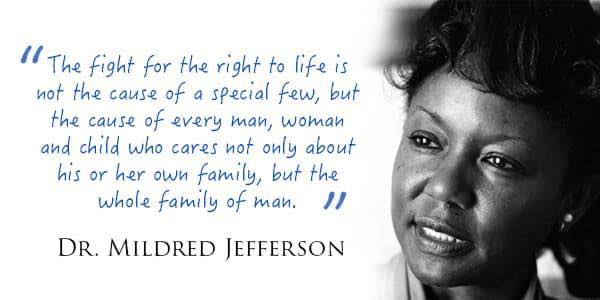
The whole debate is arbitrary, a philosophical and ethical debate, not a scientific question, which is askedMildred Jefferson quote 1 and answered by the science of embryology. Advancing technology has provided another compelling proof, the visual, emotional confirmation of ultrasound images, which have in many ways changed the discussion. No one ever looked at the live images of a developing human being in their womb and thought, “This is a fetus made up of ‘meat Legos’** or an undifferentiated clump of tissue with which (because I have the power), I can do anything I want.” No, no – they put the images up on their refrigerator with magnets in wonder and joy. This is my baby.

The debate grows ever more bitter and emotional, and no court decision or legislation is going to settle the matter definitively. The public debate is mirrored internally in every human heart and mind, and it is there it will be settled for society. But there is an objective truth with which every conscience must contend. And everyone knows it.

“I shall be telling this with a sigh

Somewhere ages and ages hence:

Two roads diverged in a wood, and I—

I took the one less traveled by,

And that has made all the difference.” Robert Frost, “The Road Not Taken”

Human beings don’t have reproductive systems: we each have half a reproductive system. One half of cell-flashhumans are female. One half are male. Science informs us in the instant a human sperm enters a human egg, there is a flash of light, and in 2016, a lab in Northwestern University filmed it, something to do with the zinc released from the egg.[vi] That flash occurs once in every human life and signals the very beginning of a life that a few hours later when the DNA merges contains all the genetic information necessary to create and develop our mature form. Every tiny increment along our way is human life.

An old series of memes tells us that no one has ever been heard to say on their deathbed that they wished they had spent more time at work (or watching television or death scrolling TikTok). I suggest as an analogue a series of questions each one of us will ask. Or should.

  • Do we want to treat life as a commodity to be frozen, collected, and selected for gender or eye color or possible defect? Or is it our obligation to respect the embryo as a unique and natural to be expected consequence of the total self-giving and loving act between a man and a woman committed for life to one another?[vii] Between a lab or a wedding bed?
  • In the case of abortion, do we choose a nursery or a medical waste bucket? A swaddling cloth or stainless steel? Nurture or disposal?
  • Do we want to objectify human life or treasure it as precious?
  • Do we want to base our decisions on fear, pure self intersest, and despair or hope, self sacrifice, and love?
  • Do we want to be givers of life or bringers of death?

In this context, where do we, (you and I), draw the line between when life is cherished, protected, and nurtured and when it can be discarded as imperfect, too expensive, too frightening, too disruptive, too damn inconvenient?  

Where do you draw the line?  Where do you come down – at how many weeks gestation or stage of development along the continuum? Then each of us needs to justify that position and understand why we hold it.

For me, the known science is sufficient. Not what the social and entertainment media and our culture inculcate in us, but what reason and conscience tells us is true.

It seems to me these are important questions. Not to be given a cursory dismissal with a cutesy, superficially clever meme, trivializing what is solemnly important and redefining anthropology – what it means to be a human being. We owe to ourselves an honest appraisal of what we believe, and why.

“I became a physician in order to help save lives. I am at once a physician, a citizen, and a woman, and I am not willing to stand aside and allow the concept of expendable human lives to turn this great land of ours into just another exclusive reservation where only the perfect, the privileged, and the planned have the right to live.”  Dr. Mildred Jefferson, mentor and much missed friend.


** “Meat legos” is a creative term from Mary Harrington’s blog and her post here in the Reactionary Feminist. She coined the descriptive “meat Legos matrix” as a name for that aspect of our destructive  postmodern culture of radical self invention wherein we harbor an unjustified or delusional optimism that through technology we can enjoy complete freedom to be almost anything, including treating our bodies as disembodied objects of our imagination. The term has gained great currency in the two years since she invented it. “Meat Legos” graphically recognizes an unprecendented shift in human anthropology uhheard of for all of history and calls into question all our basic assumptions about what a human being is, what our purpose is, and the nature of the mind/body synthesis. 


[i] The meme is wrong on many levels. One of them is that an egg or a chicken is not a human being, which is profoundly different. A non-fertilized egg is breakfast. A fertilized egg is a future Sunday dinner.

[ii] The case was a wrongful death civil suit filed by a couple who had preserved frozen “spare” embryos at the IVF clinic they had used. The embryos were destroyed by another disturbed patient who broke into the clinic’s freezer and pulled out a handful produced by the couple who sued him. Burning his hand on the cryogenically frozen embryos, he dropped them, and they were killed. The court found that frozen embryos were human and qualified the case as a wrongful death suit and negligent homicide. The case was not about whether IVF was licit, but about the nature of a human embryo.

[iii] “The best single sperm moves inside the egg and a zygote is formed,” says Dr. Richlin. The zygote phase lasts for around four days; it eventually turns into a blastocyst, and then an embryo.” (From: https://www.parents.com/what-is-a-zygote-7112279#)

[iv] Excellent animated video on fetal development from fertilization to birth: https://babyolivia.liveaction.org/ or some more detailed information here:  https://www.britannica.com/video/192622/Human-embryonic-development-birth-fertilization

[v] One of several articles about this baby: https://www.businessinsider.com/baby-born-at-22-weeks-weighed-14-ounces-2022-8#

[vi] https://www.sciencealert.com/scientists-just-captured-the-actual-flash-of-light-that-sparks-when-sperm-meets-an-egg

[vii] What is the nature of the act? What is its telos or purpose? Unitive and procreative or purely recreational?  Should a pro choice understanding come earlier in the proceedings? Is there a responsibility in choosing to participate in the baby making act?

5 Comments

Filed under Culture views

Big Waves Break Twice

“And when the last law was down, and the Devil turned ’round on you, where would you hide, Roper, the laws all being flat?” as spoken by St. Thomas More, “Man for All Seasons,” Robert Bolt

Sachuest Beach Surfers endRita and I will often walk Sachuest Beach. Sometimes we sit at Surfer End and pray or watch the surfers or the waves on a smaller wave day. We have been transfixed watching them build with the wind far out into the bay. As they approach the shore, the larger ones will break twice: once about fifty feet out and a second time when gravity again overcomes momentum and the top curls over very near shore.
Thousands of gallons cascade over suddenly with a noticeable thump that can be heard and felt up on the seawall. Why anyone would ever bring a sound maker to a beach has always been a mystery to me. Just the waves please. Breaking. Breaking. For a million years.

Recently the big ones breaking twice set me thinking about Brown v Board of Education and the more recent Dobbs v Jackson Women’s Health Organization Supreme Court decision. Both were big waves that broke twice.

“To separate children from others of similar age and qualifications solely because of their race generates a feeling of inferiority as to their status in the community that may affect their hearts and minds in a way unlikely ever to be undone.” Chief Justice Earl Warren about Brown v Board of Education

In 1954 Brown v Board of Education overturned Plessy v Ferguson in 1896 that enforced separate but equal segregation, zealously guarded practices mostly in the South. For fifty-eight years, segregation held sway. Separate facilities for black folks: lunch counters, bus seats, restrooms, hotel accommodations, sports teams, and most damningly, schools.

In Plessy, the Court held that “separate but equal” satisfied the Constitution and the Fourteenth Amendment. But “separate but equal” was separate only.  Equal was a far piece off. In Brown, justice finally prevailed.

A quick and just overturning of a gravely mistaken Supreme Court decision half a century ago, and all was set right overnight. Not exactly. The wave breaks twice. Those of us of an age will never forget the interim.

For the next decade or more, the battle raged with the Federal government stepping in many times to enforce integrated facilities when the various states refused to comply. Democrats pushed hard back for many years to sustain the old “Jim Crow” laws that stifled opportunities for minorities. Opportunities to ride at the front of the bus, opportunities to drink from the same water fountain, opportunities to eat at the same counter in the cafeteria or restaurant, opportunities to an equal education in the same school or college as white kids. Blood was shed. Dr. Martin Luther King and others were shot, hung, burned, and martyred to the cause of equality of rights and opportunity. “We Shall Overcome” was sung by Joan Baez on the steps of the Lincoln Memorial and on the march to Selma, Alabama with Dr. King and became an anthem most of us knew well. The “I Have a Dream” speech on the Lincoln Memorial steps in 1963 can still bring chills almost another sixty years later.

The wave breaks twice, and it’s a brutal turmoil under the swelling surface.

“Like the infamous decision in Plessy v. Ferguson, Roe was also egregiously wrong and on a collision course with the Constitution from the day it was decided. We hold that Roe and Casey must be overruled. The Constitution makes no reference to abortion, and no such right is implicitly protected by any constitutional provision…” Majority opinion in Dobbs v Jackson

As it was with Plessy, so it is with Roe. A gravely flawed decision from nearly fifty years before was justly undone. The second break is building. The segregationists brought out the dogs. The abortion lobby and their political allies are hard at it now with different dogs. This time many states are passing laws and trying to protect those who have no voice, while the Feds are working for the abortion lobby. The Feds have largely ignored almost two hundred attacks on churches and crisis pregnancy centers from vandalism to fire-bombing since the preliminary Dobbs decision was illegally leaked to a complicit press.[i] Those praying and holding signs at abortion clinics have not been so lucky. For them, it’s been predawn arrests in front of their families by heavily armed Department of Justice and FBI storm troopers.[ii] The confusion, draconian policies, and rhetoric we read and see every day is the interim as it was in those fifteen years following Brown v Board of Education. For us, it’s just the beginning.

Perhaps at some future point, a case will be adjudicated about the personhood of the pre-born human being. The science of embryology is settled without exception about the human nature of the fetus with her unique and complete genome. The sticking point is ideological and philosophical, not scientific. When does a developing human being gain the protection as persons under the law? When in the continuum of human development should the dividing line between life and extinction be drawn? Or do we simply ‘follow the science’ and protect innocent human life during its most vulnerable period from the start?

“The person—especially a woman—may be disillusioned by the fact that over time a man’s affection turns out to be only, so to speak, a cover for desire or even for an explicit will to use. Both a woman and a man may be disillusioned by the fact that the values attributed to the beloved person turn out to be fiction. Because of the dissonance between the ideal and the reality, affective love is sometimes not only extinguished but even transformed into affective hatred.” – Karol Wojtyla, Love and Responsibility

The false binding of abortion to the freedom of women has made this discussion most knotty. Once the argument is framed as chattel or forced pregnancy, the humanity of the fetus is quickly pushed to the back of the bus.

What if we considered the discussion from the other side of the mirror, a changed vantage point? What if the sexual revolution has brought about a new type of enslavement for women? Perhaps if men were held accountable more explicitly for their participation in the baby making act, this deeper joint responsibility would allow the developing human to become once again hallowed and an invitation to nurturing, not destruction. Three generations of aggressive and irresponsible sperm donors have risen like specters from the sexual revolution. Women, rather than gaining freedom, are held primarily responsible for an unplanned pregnancy[iii]. The hook up culture assumes hooking up as an expectation, but if the baby making act makes a baby, well, the mom better take care of things because she blew the protection, right? And the kid is thrown into the soul blasted bargain.

Section 17 of Pope St Paul VI’s famous (or infamous according to your light) “Humanae Vitae” accurately foretold the predictable outcome of ubiquitous contraception as a proposed solution to this changed expectation, unprecedented in the history of our culture as a norm. “Not much experience is needed to be fully aware of human weakness and to understand that human beings—and especially the young, who are so exposed to temptation—need incentives to keep the moral law, and it is an evil thing to make it easy for them to break that law. Another effect that gives cause for alarm is that a man who grows accustomed to the use of contraceptive methods may forget the reverence due to a woman, and, disregarding her physical and emotional equilibrium, reduce her to being a mere instrument for the satisfaction of his own desires, no longer considering her as his partner whom he should surround with care and affection.”

One-night stands or a few weeks hook up became far too common, and the surrounding “with care and affection” often was a forgotten victim, along with the baby. Has this been a ‘freedom’ or an impoverishment for women? Does any woman, no matter how frightened and abandoned and alone, in her heart of hearts want to destroy the baby in her womb?

The momentum shift jerked the culture off its center of gravity, and the tilted axis left men, women, and developing babies profoundly undone.

“Love consists of a commitment which limits one’s freedom – it is a giving of the self, and to give oneself means just that: to limit one’s freedom on behalf of another. Limitation of one’s freedom might seem to be something negative and unpleasant, but love makes it a positive, joyful and creative thing. Freedom exists for the sake of love.” Karol Wojtyła, Love and Responsibility

[i] https://www.catholicnewsagency.com/news/256390/2023-witnessed-continued-attacks-on-pro-life-pregnancy-centers-churches

[ii] https://www.heritage.org/crime-and-justice/commentary/fbi-justice-department-twist-federal-law-arrest-charge-pro-life

[iii] After forty years of Rita and I involved in helping women in this predicament, the guy walking or threatening to walk if the woman becomes pregnant is commonplace. The expectation of the man to “do the right thing” is a quaint and naive anachronism.

1 Comment

Filed under Culture views, Faith and Reason

Deconstruction

“Memory is the basis of individual personality, just as tradition is the basis of the collective personality of a people. We live in memory and by memory, and our spiritual life is at bottom simply the effort of our memory to persist, to transform itself into hope, the effort of our past to transform itself into our future.” Miguel de Unamuno

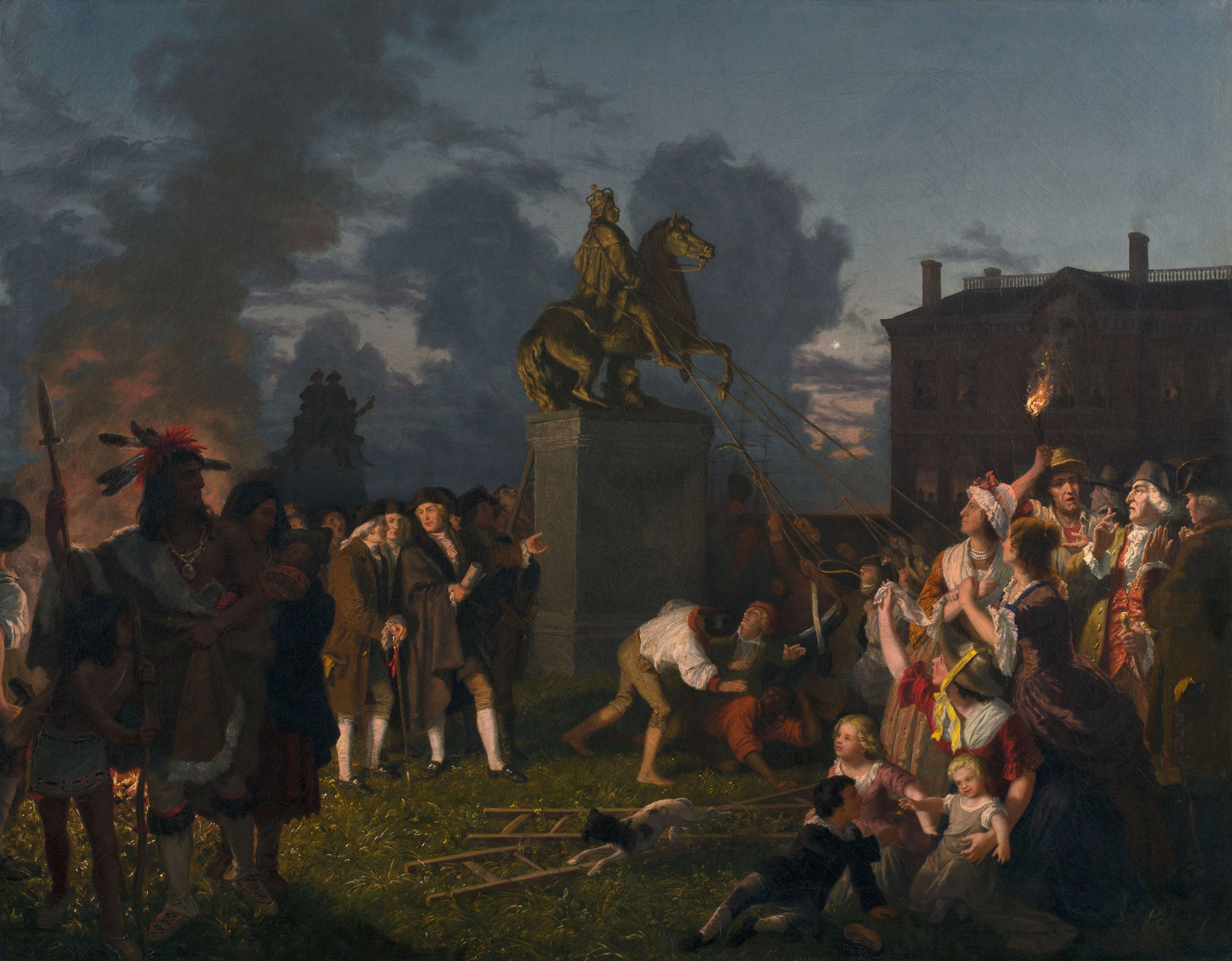
Johannes_Adam_Simon_Oertel_Pulling_Down_the_Statue_of_King_George_III,_N.Y.C._ca._1859[i]As regular readers surely know by now, I have long had more interest in the postmodern, post Christian culture than I do in short term or medium-term politics and ideological culture wars, which are symptoms, not etiology.

Prompting this post was the death of Milan Kundera and an article I read this past week that was the fourth in a series of articles from Dr. David Ellis (can find them all in the footnote if you are curious)[ii].  They reminded me of my encounters with the philosophy of Herbert Marcuse, who was one of the progenitors of wokeism, deconstructionism, and the erosion at the base of Western culture.

 Marcuse was an icon to the tuned in, dropped out, and get-high flower children of the sixties, a sort of godfather to the mobs of the Chicago riots, Black Panthers, etc. He was a guiding light to critical theory, although it’s more by osmosis and momentum now as he is, I imagine, mostly unread today except by wonks like me. His polemics were an extension and adaptation of Marxist economic theory, of substructure and superstructure, of the unending tension between oppressed and oppressor or slave and master.  For Marx the superstructure of stock markets, banks, private property, and industrial development was engineered to shelter the substructure of the masters of capitalism and their wealth.

Marcuse expanded master/slave, oppressor/oppressed theory to encompass other identity groups and out of that mire grew many of the current offshoots of critical theory and the victim groups of black, Latino, feminists, LGBQT+ and other proliferating identity politics subgroups. According to the Marcuse view of things, they are ‘oppressed’ and suppressed by the substructure of ignorant white nationalists and Christian moralists who maintain brutal control through the elaborate superstructure of evil Western culture.

Under the heading of “ideas have consequences, but they take a while” he led the way. Marcuse pontificated, we absorbed. Marching along we cobbled together how we are to think and speak, seeding in the irreconcilable divisiveness that has crushed all opposition by the assumption of power and usurpation of language.

I remember nodding my foolish, naïve head while reading and underlining Marcuse in the late sixties along with the occasionally compelling writing of Huey Newton, Eldridge Cleaver, Ramparts Magazine, and others of the Chicago Eight ‘persecuted heroes’ like Abbie Hoffman, Jerry Rubin, and David Dellinger arrested after the Chicago riots ersatz revolution.

As a simple tree climber, I found old Herb tough sledding, arcane and dense and almost unreadable, but so as not to fall behind, I dutifully slogged through it. We denigrated any heretics who resisted and still believed in the critical importance of the family as the structural foundation block of society, traditional morality, and, of course, anything at all to do with religion. All such beliefs were tools of the slave master to rob the oppressed of their due, which was pretty much anything they could liberate or loot. To steal something from the man was to liberate it. Sound familiar?

Marcuse saw the deconstruction of tradition and the foundations of Western culture as a holy mission, but with no God to temper means and methods. His morality was based on the good being equivalent to that which bolstered self-gratification. His philosophy and morality justified (among other things) the sexual revolution and a relentless anger bent on destroying what he saw as the repression of various self-defined groups of the oppressed. A quote from Dr. Ellis’s linked article catches the spirit of Marcuse, “Forgiveness, he (Marcuse) claims, robs a society of the energy it needs to achieve structural change toward a non-repressive, fully humanist hegemony. Past social grievances cannot be put to rest. Rather, they need to be remembered, amplified, and made presently meaningful to mobilize oppressed groups to overcome the culture of self-sublimation.”

No, no, it is righteous anger and violent revolt that will make right all the injustice, and so it goes.

Wokeism is the most persistent delusion in my memory, a kind of impervious enigmatic gnosis, non-verifiable outside of echo canyon with no need to justify itself. Any dissent or even honest questions about its premises are evidence of the doubter’s complicity in the hegemony of the privileged, most especially in any trappings of Christian philosophy or morality. The bulwark of identity politics is the co-opting of language and smashing of civil discourse and reasoned debate. Here there is no objective truth or reality against which to measure competing visions and understandings of the culture and the universe. Here there is only subjective interpretation, the primacy of “lived experience,” and Nietzsche’s will to power with the near monolithic support of complicit academia, politicians, and friendly media to carry along the message. Dissent is judged as not just wrongheaded, but evil.

Dr. Matthew Petrusek states the case well in his just published book, “Evangelization and Ideology: How to understand and respond to the political culture:” [iii]  See the link to the book in the footnote.

“Imagine possessing the power to advance your political goals simply by incanting a spell-like litany of endlessly ambiguous terms that supply immediate and unquestionable moral supremacy over your ideological rivals — words li “anti-racism,” intersectionality,” homo” and or “transphobia,’ “white privilege,” “misgendering,” “patriarchy,” “triggering,” ” diversity,” “equity,” “and “inclusion.” Imagine being able to assert that mere disagreement with your self-defined “community’s” political position is itself proof of your critic’s intellectual confusion and moral corruption. Imagine society granting you the authority to proclaim that your self-described “lived experience” can trump all contrary evidence and that the declaration, “This is our truth” is sufficient to supply you with fawning media coverage, lavish corporate sponsorship, and even civil legislation to protect and advance your political aims. Imagine a world with no objective rationality below and only a utopian intersectional sky above., a world in which winning an argument is as simple as silencing your opponents and silencing your opponents is as simple as calling them dirty names.”   (Quoted from the beginning of Chapter 8)

So, we are caught on the horns of a dilemma seemingly without escape. Either we capitulate, swallowing whole the hard lump of wokeism dogma without exception and proffering no reasoned dissent or question, or we are post-haste consigned to the basket of deplorables because any disagreement is indisputable confirmation that we belong in the refuse pile. Pretty good deal rhetorically for the architects of the ideological trap that snags us.

“Tradition is not the worship of ashes, but the preservation of fire. ‘ – Gustav Mahler

In the early seventies I was Chairman of the Mount Vernon Conservation Committee back when there were conservationists and conservation was honorable. The state of Maine needed to protect the beauty and purity of its many lakes, ponds, and streams. At that time, there were still many old camps along the shores of the lakes which had septic systems to dispose of gray water and black water that flushed it all with a straight pipe into the water some distance from shore. They would draw their supply water from the same lake but wisely locate the intake pipe some distance away from the discharge. No surprise that some of the lakes and ponds without adequate sources and outlets to maintain a constant flow of water would experience lush water plant growth and algae blooms as they were well supplied with abundant organic nutrients to feed on.

The Maine legislature passed a law stipulating that unless local authorities devised a comprehensive shoreland zoning ordinance, all the shores of the lakes in the town would be designated as ‘resource protection’ areas, and no development of any kind would be permitted. It fell to the conservation committee to make the recommendations to the town’s zoning board as to which parts of the shores of the ten lakes and ponds either fully or partially within the town borders could be developed and to what degree.  Resource protection was appropriate in some areas: which parts could sustain limited and carefully defined development for camps, docks, swimming beaches, and boat launches depended upon criteria including soil type, slope of the land, and depth of the soil to bedrock.

Zoning was, as you might imagine, a volatile issue for the many landowners with dreams of their perfect home with a perfect view. State mandates and zoning were viewed by some as an illegal seizure of private property. We spent the better part of two canoeing seasons cruising around the lakes, taking soil samples, poring over topographical maps, determining slope and soil types, and drawing lines as to which areas could safely be built upon, what set back requirements were needed, land clearing standards, and other such considerations. Many wonderful hours without monetary compensation were more than compensated for by the peace and pleasure of exploring the open waters.

‘Conservationist’[iv] implies conserving that which is valuable, in this case the protection of wild land, flora, and fauna. When the broader definition of conserving was found uncomfortable for some, the awkward word was jettisoned along the way and ‘conservationist’ morphed into ‘environmentalist’ one day when I wasn’t looking. The new word had other implications and connotations, including rebellion against the evil of the oppressive capitalists and exploiters.

Conservation presupposes that there is something worth conserving, both in the physical environment and in the cultural environment. Preserving the first truths of the culture is what Marcuse, wokeism, and Marcusian fellow thinkers despise with an implacable hatred.

What I and many others understand as worthy of protection and passing down to our children and grandchildren to preserve and protect what is best in our country and civilization, is anathema to the deconstructionist. Without the tradition and culture that they despise, we are unmoored, cut loose, adrift in a sea of subjectivism, uncertainty, personal preference, the power of the loudest voice, and morality as self-gratification, which is just where they want us.

An apt metaphor of a country and culture without tradition is a man losing his memory, suffering from dementia. As his memory fades away, so does his identity, his personality, his unique understanding of what is valuable and should be preserved, of what’s real and not real, his guidelines, and his very self.  Frustration, denial, alienation, and anger regularly accompany dementia.  We are living in a kind of deliberately imposed cultural dementia. I think these tragic maladies are abundant in much of public discourse now.

“The first step in liquidating a people is to erase its memory. Destroy its books, its culture, its history. Then have somebody write new books, manufacture a new culture, invent a new history. Before long that nation will begin to forget what it is and what it was… The struggle of man against power is the struggle of memory against forgetting.”  Milan Kundera, French and Czech writer, former Communist and subsequent outspoken Communism critic, who passed away last week in Paris


[i] Image courtesy of Wikimedia with permission from New York Historical Society, Johannes Adam Simon Oertel: Pulling Down the Statue of King George III

[ii] https://open.substack.com/pub/newsuffrage/p/marcuses-logic-of-gratification-wrathenvy/

[iii] ,“Evangelization and Ideology: How to understand and respond to the political culture,” Dr. Matthew R Petrusek, 2023, Word on Fire Press.  https://www.amazon.com/-/he/Matthew-Petrusek/dp/1685780105

[iv] The conservationist of the sixties and early seventies was a throwback, readers of Rachel Carson, Aldo Leopold, and Lewis Thomas. I grew up one, impassioned lover of all things wild and untamed. Of course, being a conservationist had all the panache and glamor of an entomologist. Then again, Albert Kinsey who help transform the sexual mores of four generations by fashioning himself as an enthusiastic participant in, self-styled expert of, and cheerleader for the sexual revolution. He was by education and degrees an entomologist. We are all his bugs pinned to the board with his deadly needles.

3 Comments

Filed under Culture views

Unspeakable Violence

“Like apes, we breed, sleep, and die. Yet like God we say, “I am.” We are ontological oxymorons.” Peter Kreeft, Jesus-Shock

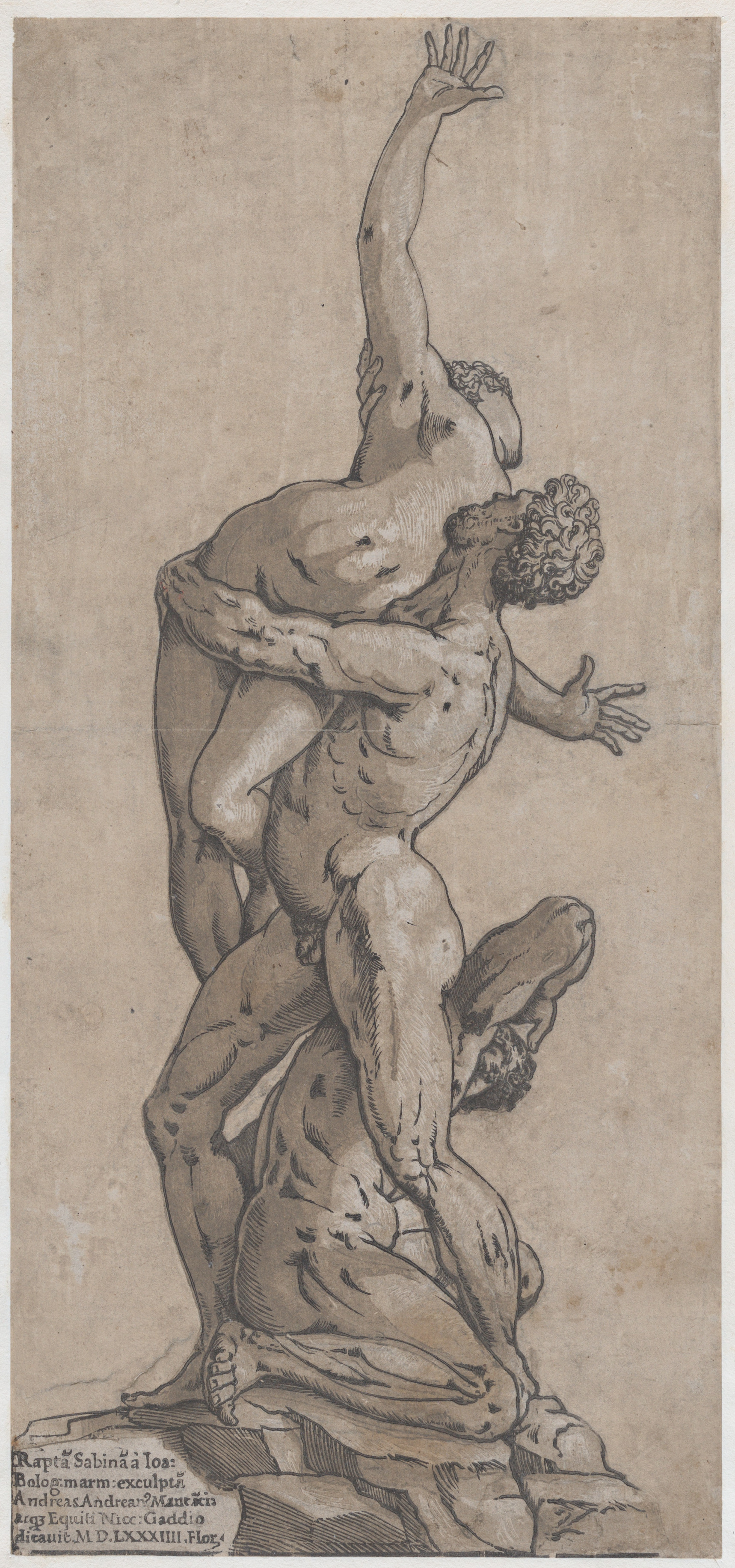
[i]Sexual violence against enemies has been a fixture of warfare for thousands of years, and it continues Rape_of_a_Sabine_Woman_MET_DP875548unabated by the supposed niceties of modernity. Violence as violation and humiliation is not new, nor has it been abandoned as a tool of intimidation, terror, revenge, and subjugation. Rape of men, women, and children; force-marching publicly naked citizens and defeated enemies as tools of degrading your enemy sexually has been a particularly vile method of emphasizing dominance and victory. [ii]
Rape has been used to complete the “disappearance” of an entire people from their native ethnicity to vanish into the progeny of the conquerors. Kill (or castrate) all the males, most women past fertility, and children, then impregnate the remaining women and repopulate the defeated city with a whole new generation.

Castration of men, cutting the breasts off women, and forcing captured men to rape both men and women continue to be instruments of subjugation – statements of control and loss and ruin. No sexual equipment, no children. No breasts to feed them, and no children. Reducing conquered people to permanent sterility and defeat. [iii] A quick search turns up examples in more recent times in Myanmar[iv] and Sierra Leone.  [v]

St. Pope John Paul commented on pornography as treating human beings as “ambulatory meat.” Perhaps such a perfect description of dehumanizing men and women is applicable in this context as well. Such awful violence utterly denies the individual dignity and spirit of the person, treating human persons as prey to be savaged at will –a terrible slavery and violence imposed most brutally against the most intimate and tender of human vulnerabilities.

****************************************************************

A short caveat and preface to what follows: what was formerly named “gender identity disorder” became “Gender Dysphoria,” and is now routinely called in complicit media “transsexualism,” as though that is possible. Whatever it is named, it is a real, frightening and terribly challenging condition for those afflicted. Those who suffer from this affliction deserve acceptance, tolerance, kindness, and love from any of us meeting and interacting with these precious and vulnerable human persons. Prejudice and bigotry, ill treatment and bullying against those folks are dreadful cruelties and ought to be punished severely and perpetrators ostracized.

But there is another kind of cruelty, one obscured by millions, perhaps billions, of dollars and fawning press coverage. Not the savagery and hot blood of war, but the cold, clinical, disinterested violence of a surgeon’s scalpel.

“But I paid $5,000 to be made into a woman. This would mean I’m not really a woman. I’m just a guy with a mutilated penis.”  “Ms.” Garrison, South Park [vi]

Layla Jane, Keira Bell, Chloe Cole.[vii] Three names we probably will not read often in the New York Times or hear on CNN, yet they may well represent the thin edge of the wedge that will split the fault in our ideological fantasy. They are young women who regret their decisions to ingest puberty blockers and powerful synthetic hormones and fell victim to prosperous and now numerous “transition clinics” which sliced off their healthy young breasts when they were too young to consent to a man seducing them into sex without committing statutory rape, too young to buy cigarettes from a store clerk in a 7-Eleven, too young to acquire licenses to marry, too young to get their ears pierced without parental consent, too young to vote, too young to buy alcohol, too young to go to R rated movies, too young to drive a car legally, too young to get an aspirin from the school nurse without a legal sign off note from home.  Too young.

These courageous young women are separately suing three different thriving transgender practices which robbed them of the capability ever to nurse a baby along with some or all the rest of the “treatments” that permanently disfigured them.  Three quotes synopsize their cases from the articles linked to their names in the footnotes.

 “I should have been challenged on the proposals or the claims that I was making for myself,” (Keira) said. “And I think that would have made a big difference as well. If I was just challenged on the things I was saying.”

“I don’t think I should have been allowed to change my sex before I could legally consent to have sex,” Layla said. “I don’t think I’m better off for the experience, and I think transition just completely added fuel to the fire that was my pre-existing conditions.”

“These butchers have gone unquestioned and unchallenged for too long. My goal in this lawsuit is to set a precedent that will change the landscape for these barbaric processes and to create a pathway for other de-transitioners to seek justice,” said (Chloe) Cole.  Here is a link to an full interview with Chloe: Detransition – the wounds that won’t heal.

The incoherence of policy that allows these things with or without parental complicity is evident in a recent Connecticut child protection state law forbidding marriage for anyone below the age of eighteen in the same state that allows if not outrightly encourages teens of the same age to “transition” [viii] from their biological sex determined at conception. Connecticut absurdly fabricates the oxymoron in their laws which assert that a child is incapable of choosing a marriage partner with whom they will presumably engage in sex yet is perfectly competent to choose to get themselves cut up to be rendered permanently sterile and lose the ability to engage in sex to procreate and physically nurture their own children without even more bizarre surgery and contortions.

One of my daughters when she was three or four told us she wanted to be an airplane when she grew up. I thought that was a laudable ambition with some potential wonder filled soaring, however we never pursued any experimental surgery to attach alerions and engines to the kid. She outgrew the desire and now has five beautiful children, a great husband, and a couple of degrees. I am thankful we never got those wings sewn on. Tragically, for too many children, surgeons will hack away their ability to procreate their own kids.

A blog post is far too meager a venue to investigate the efficacy and long-term outcomes of these procedures chosen by adults[ix]; this is about protecting children from their own fears and insecurity before they are ready to understand and deal with them as grown-ups. In their position paper “Gender Dysphoria in Children”, the American College of Pediatricians stated, “Experts on both sides of the pubertal suppression debate agree that within this context, 80 percent to 95 percent of children with GD accepted their biological sex by late adolescence.”[x]

Further confusion gets mixed into this muddled dog’s breakfast when ideological bias suppresses detailed studies such as well-recognized Northwestern University professor of psychology Dr. Michael Bailey’s study of social contagion in Rapid Onset Gender Dysphoria.[xi] The publisher took it down when the trans activists lit up the place. Similarly, Brown University physician and professor Dr. Lisa Littman’s study of the same subject was withdrawn from publication when it challenged the “narrative;”; she was subsequently fired by Brown.[xii]

We have lost our grip on the reality that a person born with XX chromosomes in every cell in her body cannot ‘become’ a man, nor can a person born with XY chromosomes in every cell in his body ‘become’ a woman. Certainly, it has been demonstrated that they can embark with the enthusiastic help of those enriching themselves by performing the procedures to become, well, someone else – sterile, patched together, perhaps ruined physically, and sentenced to ingesting powerful synthetic expensive and dangerous hormones for the rest of their lives to sustain the illusions, sad effigies, and tragic collateral damage in the culture wars.

Radical, enduring, ill advised, medical intervention on young people signifies more than just another delusion in our ideological debate; this is emblematic of what is at stake: nothing less than a redefining of what it means to be male and female, what it is to be human, an error of ontology and anthropology, no mere political disagreement. Such practices oppose the common sense and wisdom any carpenter or store clerk possesses without hesitation. Of course, we don’t cut the kids up.

 “The ideal subject of totalitarian rule is not the convinced Nazi or the convinced Communist, but people for whom the distinction between fact and fiction (i.e., the reality of experience) and the distinction between the true and the false (i.e., the standards of thought) no longer exist.”  Hannah Arendt, The Origins of Totalitarianism, page 474

Let me suggest a thought experiment from a waking dream I had last week as applicable to the whole alphabet proliferation of LGBQT+, Et cetera. Before anyone writes me a hostile email, I plead nolo contendere to an accusation of being a troglodyte. Guilty as charged.

Semi awake I thought of being challenged with the stakes being my entire future and life. I envisioned four items: a piece of 1 x 3 pine about 3 feet long with a perpendicular pencil line drawn about a third in from the end, a claw hammer, a handsaw, and some 6 penny nails. The task was to cut the board at the pencil line and nail the resulting two pieces into a simple cross. I needed to figure out the proper use of the tools and nails based on their design. Their function was inherent in their design, their nature should direct me in their suitable employment.

I thought I could turn the hammer claw side down, if I chose to, and whack away at the board somewhere near the pencil line until it weakened enough to be snapped apart in rough splintered ends. That would work. Then I could hold the nails head side down and use the saw handle to attempt to bang them into the two crossed pieces of smashed 1 x 3 until the nails bent or broke and the saw was bent and probably ruined.

Or I could study and understand the nature of the tools. The balanced flat heavy head of the hammer, the perfect set of the teeth and sharpness of the saw blade, and the penetrating pointed end of the nails. I could place the thumb of my left hand immediately next to the pencil line, carefully draw the saw blade back against the edge of the board guided by the edge of my thumb and proceed to cut a smooth kerf in the wood exactly along the line until the 1 x 3 was separated into two neat pieces. Placing the pieces at a right angle to one another, I could hold the nails one at a time with the pointed end down perpendicular to the top piece of wood, set the nail with one tap to hold it firm and put it away with a couple of well- placed practiced strokes of the hammer. Mission accomplished.

Our bodies are created with purpose obvious in their design and morphology. Male and female they are created, a perfect design for balance, complementarity, and the perpetuation of our species. Any other use of them sexually is a distortion and can leave us bent and probably ruined. Sterile. Dead ended like a salt sea at the final destination of a river with no outlet.

 Dr. Anthony Esolen described our peril succinctly and accurately in a worthy article, which is a must read, referenced below in the footnote.[xiii]. Excerpted from the beginning and the end of his essay: “What is at stake in our current controversies regarding male and female? Nothing less than creation itself.” ….… “It is the tired old lie, in a new and grotesque form: “You shall be as gods.” And it repudiates the fount of all revelation: “In the beginning, God created the heavens and the earth.” And that, as I said, is at stake—everything.”

As Tiny Tim would remind us, “May God bless us everyone.”

“At the sight of the crowds, his heart was moved with pity for them because they were troubled and abandoned, like sheep without a shepherd. Then he said to his disciples, “The harvest is abundant, but the laborers are few, so ask the master of the harvest to send out laborers for his harvest.”  Matthew 9: 37-38

[i] Image – Rape of the Sabine Woman, Andrea Andreani  (1541–1623), Chiaroscuro woodcut from three blocks in grey/brown, donated to Wikimedia Commons open source as part of a project by the Metropolitan Museum of Art.

[ii] Rape as an ancient weapon of war or this: Sexual Assault of Women in Ancient Rome

[iii] Sexual violence against men in war.

[iv] https://www.pbs.org/wgbh/frontline/article/a-soldier-cut-off-her-breast-rohingya-survivors-recount-atrocities/

[v] https://www.un.org/africarenewal/magazine/january-2005/sexual-violence-invisible-war-crime

[vi] Not for the kids and brutal but expresses epigrammatically the inherent paradoxes and delusions of our time. Clip from South Park. Trigger warning, not for those weak of stomach. https://youtu.be/0dD7w7F0a3Q

[vii] Layla Jane, Keira Bell, Chloe Cole. Each name has a link attached with some coverage of their lawsuits.

[viii] Connecticut State Department of Education Guidance on Civil Rights Protections and Supports for Transgender Students.

[ix] The most comprehensive study on the outcomes of these drugs and surgery was stated in a Swedish investigation of hundreds of post-surgery gender dysphoric adults. “Persons with transsexualism, after sex reassignment, have considerably higher risks for mortality, suicidal behaviour, and psychiatric morbidity than the general population. Our findings suggest that sex reassignment, although alleviating gender dysphoria, may not suffice as treatment for transsexualism, and should inspire improved psychiatric and somatic care after sex reassignment for this patient group.”

[x] Gender Dysphoria in Children, American College of Pediatricians, citing Cohen-Kettenis PT, Delemarre-van de Waal HA, Gooren LJ. The treatment of adolescent transsexuals: changing insights.

[xi] My Research on Gender Dysphoria Was Censored, but I Won’t Be.  Free Press. https://www.thefp.com/p/trans-activists-killed-my-scientific-paper.

[xii] Parent reports of adolescents and young adults perceived to show signs of a rapid onset of gender dysphoria.  See also these articles on the subversion of ‘go where the facts lead’ science in these articles:  https://skepticalinquirer.org/2023/06/the-ideological-subversion-of-biology/   and https://crisismagazine.com/opinion/psychology-has-been-hijacked-by-gender-activists

[xiii] Crisis Magazine, Materialists against the Material World, Anthony Esolen, June 22, 2023

3 Comments

Filed under Culture views

Capax Dei

“People want to go out and travel around and meet cool people. I could just go and live in Vermont, but is that what I really want?”  Tom Brady

The Disappointed SoulsTwo recent stories connect obliquely in noteworthy testimony to our troubled times. [i] The first is national, the second is in our neighborhood in Vermont.

The first was the release of the Surgeon General’s report on the epidemic of loneliness afflicting our country, especially our young people. Dr. Vivek Murthy issued a detailed report on the dangers of loneliness and how it is epidemic in the U.S.[ii] The crisis was exacerbated by COVID lockdowns, but the statistics precede the pandemic by a decade at least. Dr. Murthy warns that loneliness is as injurious to health and lifespan as smoking fifteen cigarettes a day. Why not twelve or a two-pack a day habit? How that was ascertained so exactly I’ll leave to the actuaries, but the loneliness epidemic, its effect on mental health, alienation, multiplied depression diagnoses and other mental illnesses, most markedly in the elderly and the young, is well documented.

Assuredly, the fragmentation and isolation of social media contributed, but Facebook only friends that we rarely see face to face seems to be a symptom, not a cause. COVID lockouts fanned the flames, however the fire of alienation and isolation was already a four-alarm blaze and had broken through the roof.[iii]

The Surgeon General report and numerous articles responding to it recommend reaching out to others, making a phone call, stopping by for a visit, just saying hello at the supermarket, and the same articles bemoan the melting away of the ad hoc organization of our shrinking live social relationships that formerly knit us together. The decline of churches, fraternal organizations, neighbors who knew one another, circles of friends, and most of all the dissolution and atomization of families. Renowned Catholic author and astute cultural commentator, Anthony Esolen, has written extensively about the dissolution of our roots and this ever-worsening postmodern and post Christian phenomena. He renamed the cultural tsunami called the Sexual Revolution, “the Lonely Revolution.” Aptly named.[iv]

Dr. Mary Eberstadt in her eye-opening new book “Adam and Eve After the Pill Revisited,” [v]suggested this about some of the underlying causes of the deepening epidemic:

“Abortion, fatherlessness, divorce, single parenthood, childlessness, the imploding nuclear family, the shrinking extended family— all these phenomena have something in common. They are acts of human subtraction. Every one of them has the effect of reducing the number of people to whom we belong, and whom we can call our own. Psychologist Harry Harlow’s deprivation experiments on rhesus monkeys are remembered today for the lifelong consequences those creatures suffered when separated from their mothers, siblings, and the rest of monkey society. When Western man looks in the mirror today, does he see their damaged ghosts standing beside him? [vi]

Outside the consciously religious communities of the counterculture, generational reality for almost everyone else in the West can be summarized in one word: fewer. Fewer brothers, sisters, cousins, children, grandchildren. Fewer people to play ball with, or talk to, or learn from. Fewer people to celebrate a birth; fewer people to visit one’s deathbed. Splitting the human atom into recreation and procreation has produced a love deficit.”

“The tragedy of modern man is not (only) that he knows less and less about the meaning of his own life, but that it bothers him less and less.” – Václav Havel

A major contributor to the crisis to which Dr. Eberstadt alluded is the dissolution of mom, dad, and children core families; the family falling apart, the epidemic divorce rate, proliferation of single parent homes, and cohabitation without the commitment of marriage have all added their increments to alienation and loneliness.

James Wilson likened it to Disraeli’s comment about the two nations in Great Britain, only Wilson’s analogy was not to rich and poor like Disraeli, but to those in America with intact families and those without. The outcome for the two nations is vastly different. The increased poverty rate, lower educational levels attained, higher prison incarceration rates and lack of future security for children without two parent families are well documented.

Exacerbating the divide is the lack of understanding between the two groups. Wilson quoted from Disraeli’s book [vii]“Two Nations:” Between these two nations Disraeli described, there was “no intercourse and no sympathy” — they were “as ignorant of each other’s habits, thoughts, and feelings, as if they were…inhabitants of different planets.”[viii]

But take heart, in another recent story, Vermont has come up with a prescription and solution for loneliness. One of nine states that currently sanctions medically assisted suicide, this week in our second story, Vermont expanded its market and became the first state to overtly abandon its residency requirement for one to avail themselves of the service.[ix] The state that gave us Uncle Bernie comes through.Bejing temple has Buddhist robot to answer life's hard questions REUTERS-Kim Kyung-Hoon

A whole new revenue stream of tourism has some competitive advantages: one-way tickets, limited hotel time, and if you buy the full package, a small crop-duster will spread your ashes – a well-oiled ride into total annihilation and oblivion. Quickly forgotten nothingness. Fly in a living human being, fly out scattered dust on grey granite ledge. Permanent loneliness.

And we look everywhere to ease our loss. To fill the hole. And we often look in the wrong places. Like a robot programmed to provide AI answers to life’s most vexing problems.

“The glory of God is man fully alive, but the life of man is the vision of God.” St. Irenaeus

Where are the right places? This is not a saga of alienated despair, but I hope a prompt to go to the light. The antidote, and I would suggest the only antidote to loneliness, is to fall deeply in love with Love itself. No one person, no matter how perfect in our lives, can fill the hole entirely – it is too great a burden and an impossible load to place on another person’s (or even groups of persons) shoulders.

The great crisis in our culture that leaves us unmoored and adrift is anthropological and epistemological in nature. We have been busily cutting lines for a couple of hundred years, mooring lines that ordered our lives to objective truth, family, and clarity of understanding reality and our place in it. The pace of line cutting accelerated with social media, with the internet, with the lonely revolution, and with an inflexible materialism that convinced us the only solutions were in science and technology, empirical observation, and algorithms.

When truth and morality become subjective and are not givens to be discovered, learned, and conformed to, then we are left each to our own myopic and pitifully inadequate reality.  As has been written, “change comes very slowly, then all at once.” How unnerving it is to live in a time of “all at once.”[xi]

From Bishop Robert Barron’s recent book on Eucharistic Revival, “This is My Body:” “Why is the tree of the knowledge of good and evil forbidden to them (Adam and Eve)? The fundamental determination of good and evil remains, necessarily the prerogative of God alone, since God is, himself the ultimate good. To seize this knowledge, therefore, is to claim divinity for oneself—and this is the one thing that a creature can never do and thus should never try.  To do so is to place oneself in a metaphysical contradiction, interrupting thereby the loop of grace and ruining the sacrum convivium (sacred banquet). Indeed, if we turn ourselves into God, then the link that ought to connect us to God, to the rest of creation is lost, and we find ourselves alone.”

Upon even a modicum of reflection, can we deny that our valorization of self and the attendant subjectivity of values through our emotions have replaced the study of and discovery of the objective values inherent in our nature? Can we deny that this inward focus has formed us in the epidemic of disorientation, alienation, and loneliness?

Yet, we have an innate capacity to relate, to never be lonely even when we are alone on a desert pilgrimage. Fashioned uniquely imago Dei, we have a “Capax Die” in our hearts, a capacity for God, which is either our greatest gift or a terrible hole that we try to fill with distractions, entertainments, work, human praise and honor, wealth, and pleasure in all its guises, none of which is up to the task. All of these frantic substitutes can be addictive and thus crave ever greater doses to achieve ever diminishing highs.

“At the sight of the crowds, (Jesus’) heart was moved with pity for them because they were troubled and abandoned, like sheep without a shepherd.” Matthew 9:36

The greatest robbery and lie that bedevils us is the calumny that faith in a loving God is merely human wish fulfillment, a fantasy, or worse, a man-made set of laws and strictures to our freedom. Freedom we define not to do what is right and thus fulfilling, but freedom as license to do what the vagaries of our self-focused will would have on any given weekend. At the epicenter of that claustrophobic, trapped license is our will, our own ego, our impossibly incapable imagination and pride, ever searching for a fulfillment that is beyond its capacity.

There is a capacity beyond ourself wired into our nature as imago Dei, and it is always urgently seeking fulfillment, a restlessness built in, a hunger waiting for nurture. “Oh Lord, our heart is restless, and it will not rest until it rests in You.”[xii] Not a void, that hole in our hearts, endlessly yearning,  but a gift – our greatest gift.

The solution to human loneliness is readily at hand. For those who have experienced it, and it is an open invitation to all that are human. Faith is a personal encounter, a relationship, a falling in love.  And like all the most important relationships in our lives, answering the invitation is a surrender, a trust, a dialogue for life, a letting go.

This Capax Dei is not a design flaw, rather it is the keystone needing to be dropped into place to hold together the magnificent arch of our life, integral as though to a cathedral straining upwards, out of ourselves.  Not a missing piece, but our Source and our Culmination. This hole is not a vacancy or a void, but our meaning and purpose waiting to be realized.

Most days of the week we are nurtured here in our small parish; the hole in our heart is filled in around the edges at Mass, a mini retreat where the Gospel is read, we are fed with a short meditation, and then a miracle occurs in the Consecration and feeding us with the Body and Blood of Jesus. Breaking open scripture and breaking of the bread. Every day, a quick quarter mile stroll from our home, a meditation, a mystery, a quieting of our souls, a miracle, and a Meal.  Metanoia one tiny increment a day. Healing, ineffable peace.

Metanoia not as a superficial change of direction or a few quarrelsome habits, but a deep transformation of self. Not pride, but humility. Acknowledging that there is a God, and that we are not Him.

Jesus as our eyes and ears with everyone we meet. Seeing Jesus in every human being, and in ourselves. In our hearts, in our minds, on our tongue in every conversation. That is the reality we yearn for.

Meditation, mystery, miracle and Sacred Meal, every day. Maranatha. Come, Lord Jesus, come. Fill the hole in my heart.

“Where there is no love, put love, and you will find Love.”  St. John of the Cross

[i] Image is The Disappointed Souls (Les âmes déçues) by Ferdinand Hodler, 1892 [Kunstmuseum Bern, Switzerland]

[ii] Health and Human Services release on the “devasting impact of the loneliness epidemic.”

[iii] Google “epidemic of loneliness” and get 88 million hits in half a second.

[iv] One example of Dr. Esolen’s work from Touchstone Magazine, “All the Lonely People.”

[v] A full-throated recommendation for Dr. Eberstadt’s latest. A social scientist, her observations and insight into our current state is well worth your time. “Adam and Eve After the Pill Revisited.”  (Kindle link).  Get your hands on this book.

[vi] For a good summary of the sociological roots of our sorry state, read James Wilson’s address from 1997, “Two Nations” “We live in a nation confident of its wealth and proud of its power, yet convinced that this wealth cannot prevent and this power cannot touch a profound corrosion of our cultural soul. We are materially better off than our parents but spiritually worse off.”

[vii] From Mary Eberstadt’s article in National Affairs as above, “Two Nations.”  “More than a century and a half later, Wilson argued, the United States had also become “two nations,” but the dividing line was no longer one of income or social class. Instead, it had become all about the family — specifically, whether one hailed from a broken or intact home. “It is not money,” he observed, “but the family that is the foundation of public life. As it has become weaker, every structure built upon that foundation has become weaker.”

[viii] Wilson called attention to what he saw as a national catastrophe in the making: the creation of generations of young men unhabituated to responsibility and protecting others.

[ix] One of many articles on progressive Vermont opening the way for out of staters to have ready access to offing themselves.

[x] Image from a REUTER article on the AI solution in a Beijing Buddhist temple – A robot at the end of your pilgrimage journey to truth.

[xi] St. Pope JPII wrote extensively on the contemporary subjectivizing of moral truth and the emotive mode of diminishing even the idea of an objective truth in a morass of radical individualism. Two recent articles by retired Archbishop Charles Chaput express this far better than I could hope to, writing about Veritas Splendor and Fides et Ratio.

https://open.substack.com/pub/whatweneednow/p/believe-so-that-you-may-understand

https://open.substack.com/pub/whatweneednow/p/the-splendor-of-truth-and-why-it

[xii] Well known quote from “Confessions” St. Augustine.

2 Comments

Filed under Culture views, Faith and Reason

One Legged Sandpipers, Unicorns, and Other Curiosities

“The last word in ignorance is the man who says of an animal or plant: ‘What good is it?”  Aldo Leopold

White Rumped sandpiper

Thanks to Florian Hoelzl from Pixabay

Not to be forgotten is the synchronized flight of fifteen or twenty sandpipers skimming the breakers on Sachuest Beach. Such harmonized movement in sudden waves of perfect unison is called a murmuration[i]. I’ve seen a very large murmuration in the late summer migration of tree swallows over the berry bushes in the nearby wildlife refuge – hundreds of them dancing in flawless synchrony.

The sandpipers are fascinating to watch feed as the waves break on the shore. They hunt by sight for small invertebrates and bugs. Very quick to find their prey, they spot what we can’t see between the waves, running rapidly on tiny legs moving almost too fast to distinguish. Back and forth, along with their fellows in the flock, in and out of the water. Quickly out as the water recedes from one wave, dipping their short beaks into the wet sand to pluck out a small morsel, and retreating to the beach ahead of the next one but sometimes lingering if the water is still shallow enough. Suddenly at some unvoiced notice, together they will take instant flight and together swoop and turn west, south, changing directions in perfect unison and swoop to another hunting ground farther up the beach after a thirty second wonder of grace and speed.We learned something new last winter about sandpipers.

We were walking in January in bitter cold clothed in down and knit caps. The sandpipers were feeding. As we approached them, we watched one broken bird hopping on one leg. Very fast. Just about keeping up with his not disabled brothers. We asked each other what catastrophe could have hacked off its leg. Wondered how it could survive. Marveling at its iron will, balance, and persistence. On another walk, we started noticing other crippled fast hoppers. What terrible predator specialized in sandpiper legs? Perhaps a sandpiper trap set by wanton boys? What an unjust wild tragedy!

When we asked one of the curators in the small wildlife museum at the head of the beach, he laughed. When it gets bitter New England cold, and the saltwater temperature hovers just above freezing (about 28 Fahrenheit), their little fast legs get cold. The sandpiper will alternate curling one leg up into their bodies to conserve energy while they dip into the water to get some lunch and stay alive another day. Then hop crazily forward to keep up with the flock. No cruel leg eating predator. No nasty trapper. Adaptation and survival. Not the weakest of the group, but the strongest.

“Well, now that we have seen each other,” said the Unicorn, “if you’ll believe in me, I’ll believe in you. Is that a bargain?”  Lewis Carroll, Alice’s Adventures in Wonderland

The COVID (SARS-CoV-2) virus is a primitive organism well adapted to invade human tissue and spread easily. Perhaps ‘organism’ might be a bit of a stretch, but its RNA structure does replicate itself once insinuated into a human cell and pilfers the requisite makings from the host cell and replicates and replicates. The virus replicates very efficiently, devouring its host and filling the host cells until they burst and disperse more viruses to invade more cells.

SARS-CoV-2 gets its marching orders from 30,000 base pairs of nucleic acid molecules in its RNA genome, which sounds like a

SARS-COV-2

niaid.nih.gov/rocky-mountain-laboratories

lot, but they are as nothing compared to what is found in one human cell. It’s not much more than voracious genes. Without getting too far into the bramble patch, nucleic acid pairs make up the DNA and RNA strings which comprise the genes of all living things.

To put some perspective into the primitive nature of this troublesome virus, there are 23 chromosomes and about 20,000 genes in the human genome in every human cell. Each chromosome contains between 50 to 300 million base pairs for a total of around 3.2 billion pairs. Thus, the COVID demon virus in the simplest terms is about 1/1,000 of one percent as complex genetically as a human being – barely classifiable as something truly alive. A lot of trouble for a tiny particle so small that the sharp head of a pin could hold about 15,000 of them. The little miseries have caused over 760 million confirmed cases of COVID and nearly 7 million deaths worldwide.[ii]

The origin of this rapidly mutating plague is a hotly debated topic. No one wants the blame for this baby. The two most popular theories, ignoring alien invasion, are a human caused lab experiment gone bad and a naturally occurring virus in bats or bat dogs that jumped the gap to mutate into being able to infect human beings. One major firestorm of the controversy is the unresolved contradiction between what the National Institute of Health (NIH) in chorus with Anthony Fauci and the Centers for Disease Control (CDC) told us from the beginning and what the Department of Energy and FBI is telling us now.

Complicating the discussion is that the NIH and CDC have good reason to sustain the natural mutation zoonotic theory. The technical term for it is CYA. The alternative ‘escaped from the lab’ theory means the NIH grants through an intermediary to the Wuhan labs to develop gain-of-function SARS viruses created the thing that killed us after the ‘secure’ labs proved not to be so secure, including geographical coincidence for the first outbreak that supports the errant Wuhan lab Frankenstein creation theory of the virus.

A brief synopsis in an extensive, well documented article in “The Biologist’s Guide to Life” by Alex Washburne is all I have room for. If you would like to read a lot of his detail, there is the link to the article in the footnote.[iii]  He presents compelling evidence that unique features of the virus are unlikely coincidences in nature, but highly probable occurrences in lab created, enhanced viruses. They have to do with the benignly named “furin cleavage sites (FCS).” In the footnote below, there is an excerpt from Washburne’s article that explains some of the detail.

FCS are a possible smoking gun. The gain-of-function genetic biologists at Wuhan most likely inserted a piece of genetic instruction that enabled a bat virus to cleave to and enter a human cell efficiently. They fabricated a chemical lock and key opening on the surface of the virus that hitherto did not exist and enabled it to get past the outer membrane of a human cell. Presto, it was in.[iv]  It escaped out into the surrounding community presumably carried by a careless lab worker, and as they say in the UK, “Bob’s your uncle.” Oops.

As Dr. Alina Chan, who is a molecular biologist at Harvard and MIT, famously Tweeted about covered up COVID origins by the CDC and the unique furin cleavage site, “Put it this way, it is as if these scientists proposed to put horns on horses and 2 years later a unicorn shows up in their town. When they discover this unicorn and describe it to the public, they talk about every other feature except for the horn.” She makes a strong argument.[v]

“At the heart of liberty is the right to define one’s own concept of existence, of meaning, of the universe, and of the mystery of human life.”  Justice Anthony Kennedy, Casey v Planned Parenthood

unicorn-beautiful-wild-ID50870985 BeyondthesurfaceA third curiosity in this collection of apparently unrelated curiosities.
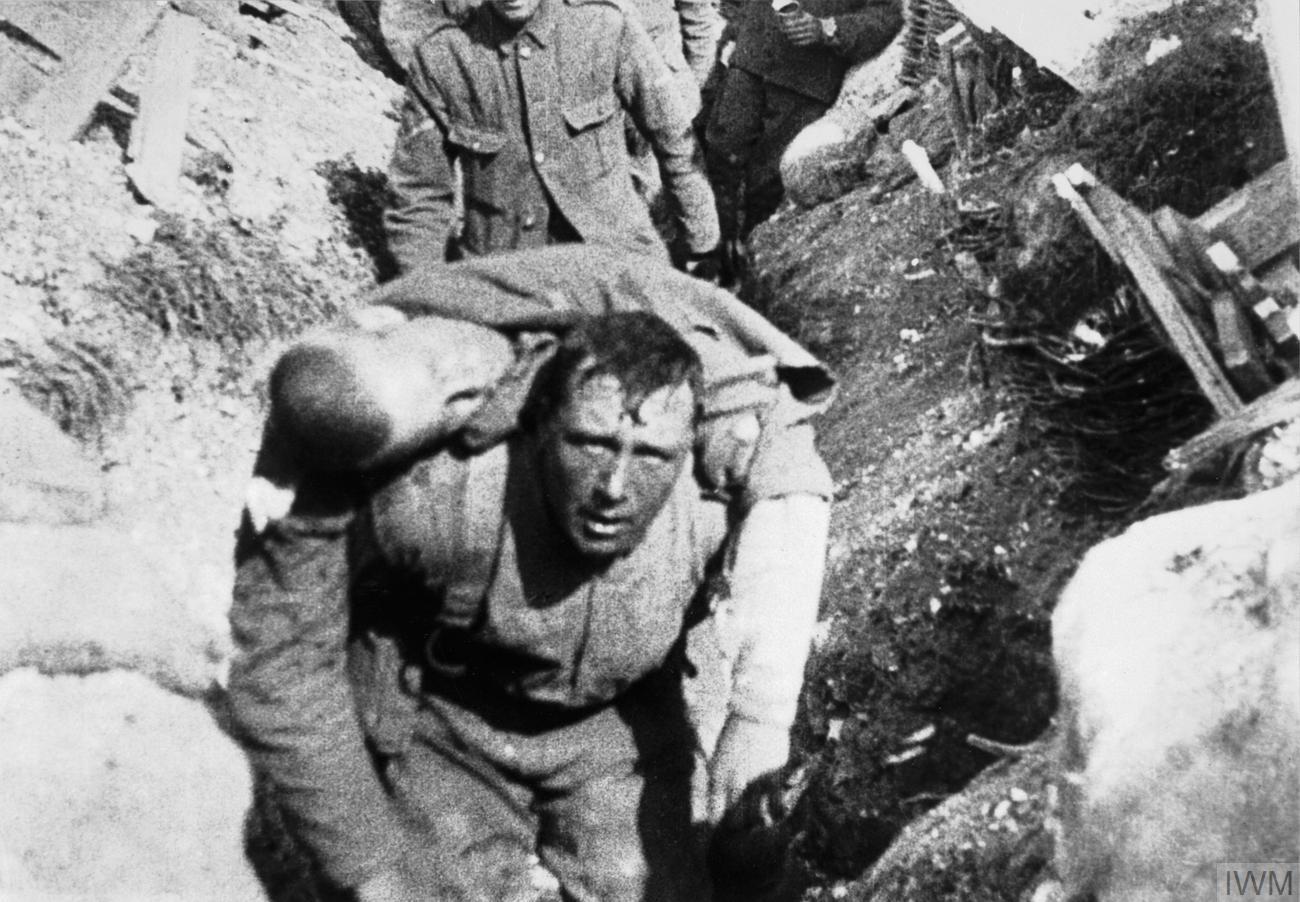
Recently I attended a RI House hearing on a bill to authorize making every RI taxpayer complicit in abortions for any stage of fetal development. As regular readers can probably assume, my short testimony was two minutes in opposition (the limit they set, especially for dissenters to the narrative).  I wrote a local letter to the editor that more fully describes the hearing if you have interest.[vi]

For the purposes of this post, here is a quote from my letter on one testimony in favor of the bill, “the glibness, smugness, and condescension of some of the testimony from academics and even ministers (was obvious). One particularly annoying discourse was another commonly promoted hypocrisy: the depersonalization of the unborn baby. When one started in about the absence of “ontological personhood” in the preborn, eyes glazed over.

With other issues, such as climate change, many of these same folks are quick to charge dissenters as ‘science deniers.’ In the debate over pre-born lives, their advocacy for science disappears as they ignore every embryology text in the land that demonstrates new human life is formed upon conception with her own unique DNA and is on a sure continuum to adulthood if uninterrupted by disease or violence. They understandably prefer to wax eloquently about ‘ontological personhood.’”

A characteristic of every war and injustice is that first the opposition or the minority to be oppressed must be depersonalized. Whether it’s the “gooks” or the “nigras” or the “fetal material,” first comes the theft of their humanity, then comes the degradation and death.

So how are these related in any way: a one-legged sandpiper, unicorns, the origins of a plague, and abortion?

Good question. You can decide whether there are any connections to be made.

Lack of knowledge in pitying the poor disabled sandpiper had me suggesting faulty hypotheses about malefactors and predators. Ignorance and assumption is not a preferred strategy to discover the truth, but it served me well for a while. Asking questions of someone who knew something real about the phenomenon soon disabused me of my ignorance and set us on a path to discover truth.

When government officials assume no one will question their self-serving explanations of what caused the disease they used to usurp almost unprecedented control of our daily lives and the economy, that’s a fabrication of a different order.

And when advocates of intentionally ending the lives of our tiniest and most vulnerable human beings obfuscate the true nature of their bloody deeds with philosophical discussions worthy of beer fueled sophomores ruminating in late night dorm sessions, my God, that’s a unicorn of a different color.

When we decide that we can arrogate to ourselves the definition of what’s good and what’s evil; when we decide we can create our own subjective reality, rather than discover what is objectively true, the ironies pile up like sundry flotsam, like green plastic bags of dog excrement, beer cans, and broken beach toys caught up in the accumulated red tide washed up after a storm on Sachuest Beach. Ironies and lies and confusion and death.  We aspire to be God, and we are not up to the job.

“You will not certainly die,” the serpent said to the woman. For God knows that when you eat from it your eyes will be opened, and you will be like God, knowing good and evil.” Genesis 3:4-5

[i] I love the word “murmuration.” Related to “murmur” from the Latin “murmurāre” meaning to murmur, a low indistinct sound like a room full of people talking from a distance. Thought to be onomatopoeic originally. i.e. the word sounds like what it is. Thought to become associated with flocking birds, especially starlings which make a lot of noise when they are flocking and moving together.

[ii] COVID stats from the World Health Organization. To avoid sidetracking this discussion into tedious and unresolvable arguments, here is the link without comment about their reliability or what remains of the credibility of the WHO. For the purposes of this post, we can agree that COVID and the damn COVID virus has caused us much turmoil, sorrow, pain, and loss of every kind: friends, loved ones, multiple small businesses that we enjoyed and held someone’s dreams and hopes, and, or course, our freedom.

[iii] https://alexwasburne.substack.com/p/the-case-for-a-lab-origin-of-sars/

[iv] From the above referenced article by Alex Wasburne: “From the very first SARS-CoV-2 genome published from Wuhan, its genome was not like other SARS coronaviruses. In the middle of the Spike protein, there was a 12 nucleotide insertion referred to as the “Furin Cleavage Site” or FCS for short. The DNA sequence for this site was:

R1—CCU-CGG-CGG-GCA—R2

where R1 and R2 indicate the rest of the SARS-COV-2 genome on either side of the FCS (in other words, ignore the R1 and R2, let’s focus on the letters in the middle). Most of the SARS genome differs from close relatives by single mutations – an A where a close relative has a G, a C where a close relative has an A, and so on. The entire 12-nucleotide Furin cleavage site in SARS-CoV-2, however, is not found in any other SARS coronavirus.

Where did this insertion come from?

Furin cleavage sites were subjects of niche virological interest prior to COVID-19 because they are found in other viruses, including other very distant coronaviruses like MERS-CoV. A virus entering a cell has to do a sort of lock-and-key handshake with the host cell, and human cells have different ‘locks’ than bat cells. Furin cleavage sites, however, can make it much easier for viruses to “unlock” human cells. In Jargon, furin cleavage sites can facilitate receptor binding and reduce the barrier to entry, one of the main molecular biological hurdles that often prevents pathogens from entering a new host. Because the FCS is found in some viruses, and because it allow a virus to unlock human cells, researchers wondered in 2018: what would happen if we put a furin cleavage site in a bat SARS-CoV? Would it be better able to infect human cells?”

I enthusiastically suggest you check out and subscribe to Alex Wasburne’s Substack site using the link in the previous footnote.  I shamelessly purloined this long quote, but the original has a lot more detailed and understandable explanation well worth your time along with many other posts of great interest.

I don’t know Mr Wasburne and this is not a paid endorsement. 😁 Just a recommendation from which I believe you will benefit.

[v] She co-authored a book on the subject. “Viral: The Search for the Origins of COVID-19.” Here is a summary she wrote with a link to the book: https://ayjchan.medium.com/the-evidence-for-a-natural-vs-lab-origin-of-covid-19-6946407f3310

[vi] https://eastbayri.com/stories/letter-taxpayer-funded-abortion-hearing-was-kabuki-theater,111349?

1 Comment

Filed under Culture views

The Battle of the Somme

‘The Somme set the picture by which future generations saw the First World War; brave helpless soldiers; blundering obstinate generals; nothing achieved.‘ A J P The First World War: An Illustrated History

Battle of the Somme

THE BATTLE OF THE SOMME, JULY-NOVEMBER 1916 Copyright: © IWM.  Source:http://www.iwm.org.uk/collections/item/object/205019100

The ‘war to end all wars’ didn’t. World War II followed within a generation precipitated by a severe and unjust treaty that gutted Germany, and the end of all wars was a preamble to the bloodiest century in human history. To most of us World War I seems as remote as Agincourt or Rome subduing Hannibal.

We may remember vaguely that the assassination of hapless Archduke Ferdinand precipitated the conflict, but the truth is far more complicated involving decades old alliances and animosities, ethnic nationalism, imperial ambitions, petty grievances of ambitious men, lust for power, and fear. It’s always fear in one form or another that leads to killing lots of people.

World War I employed 19th century tactics and 20th century weapons from machine guns and more accurate artillery to mustard and chlorine gas. I’m old enough to remember my Great Uncle John who lived the rest of his life with one lung after losing its left side companion to mustard gas in the trenches. World War I was a woodchipper into which brave and terrified men were ordered to rush with great enthusiasm.

And the trenches, oh. Ankle deep or worse with fetid water ripe with human waste and blood and body parts and no relief. Overwhelming pestilence, stink, and misery, then the whistle blows to signal the next suicidal assault and attempt to gain a hundred yards and take the next putrid trench in front of them currently occupied by other exhausted men with ruined feet at least as terrified as those screaming and charging into their guns. Again, and again. And again. Surge forward. The next day, routed, quick snake crawl back to the trench you left yesterday only without some of your friends who lie tangled in coils of barbed wire with their intestines and brains glistening in the sun.

The Battle of the Somme lasted almost five months and incurred almost a million casualties. At the end British forces advanced seven miles. On the first day, July 1, 1916, British forces alone incurred 57,000 casualties, making it the bloodiest day still in a long British military history.

Governments wage war, governments of varying degrees of competence which profess to manage complex societies. At their best, they protect the rights of their people to live peacefully in freedom. But. As Aleksandr Solzhenitsyn wrote so perfectly, “If only it were all so simple! If only there were evil people somewhere insidiously committing evil deeds, and it were necessary only to separate them from the rest of us and destroy them. But the line dividing good and evil cuts through the heart of every human being. And who is willing to destroy a piece of his own heart?”[i]

“Once you hear the details of victory, it is hard to distinguish it from a defeat.” Jean-Paul Sartre

Every election since Kennedy v Nixon in my memory has been booked as the most important of our lifetime with loud predictions and with the lines growing more distinct every cycle. The most recent was as divisive and angry and fear filled on both sides of the divide as any I can remember. Yet, every two or four years, the balance shifts a little, and the culture rift grows wider. A few legislative bills are passed with much fanfare at the outset of each administration before things settle back into the accustomed sniping impasse. The culture has morphed into something unrecognizable, but each election comes and goes with the same lackluster candidates somehow even less appealing and more dispiriting than the last batch. They fill the news cycles with apocalypse. But apocalypse somehow holds off.

IMG_0222A case could be made that our postmodern culture war finds its best analog in WWI – epitomized in the Battle of the Somme. Eventually victors may emerge from the trenches, but many bloody years are laid to waste, and the dead are legion. The dividing lines are so deep that peaceful reconciliation seems remote. Like sitting on the southern slope of the Grand Canyon and looking out, contemplating the depth and breadth. Impassable crevasse.

Mistrust and enmity on all sides. The issues divide us, and their proposed solutions remain obstinately irreconcilable. Ideology becomes culture becomes intragenerational habit becomes character.

Immigration reform means secure borders to protect a country, or it means welcome and refuge for all who want to come with little room for compromise. Immigration good and evil on both sides. Xenophobia and fear vs welcome and refuge to the poor and desperate. A nation defined by its borders and ability to protect them from human trafficking drugs and weapons. Or a nation defined by the Emma Lazarus poem quoted on the Statue of Liberty, “Give me your tired, your poor, your huddled masses yearning to breathe free, The wretched refuse of your teeming shore.” Citizens of good faith on both sides of the canyon.

Gender ideology is so bewildering and becomes more vitriolic and farther from any possibility of compromise almost by the week. XX and XY immutable, or bodies completely to be defined by self and the politics of identity? However, dear God, did we come to this?

Abortion is of course at its existential core a fracture incapable of compromise or healing. There is either a dead baby or not; the freedom of women is intrinsically rooted in the legal right to take the life of their children, or it’s not. No compromise possible between an empty manger and an infant in swaddling clothes. Between a stainless-steel medical waste bucket left in a surgical suite and a bassinet in a warm lighted room attended by love. Between courageous hope triumphant and a desperate fear succumbed to; between sacrificial love and power enforced with violence; between the ‘choice’ of ‘bodily autonomy’ and a baby in a sheltered womb: between death and life.

What is most difficult to comprehend for me is that most friendly folks that I meet on both sides of every impossible issue are agreeable enough in conversation, seemingly acting in good faith, entertaining even, easy, funny, amicable, kidding in line at the supermarket, pleasant companions along the way if we stay off the tracks and third rails.  Most are acting in good faith according to the lights of their tribe. Up close, we get along. On social media, on editorial pages, as talking heads on television, we are vicious and condemning. Why is that?

Rene Girard wrote extensively about the deep human tendency to scapegoat that we all share and how we off gas our unmanageable internal pressures by defining somebody other than ourselves as the reason for our misery. And we do it by groups. History is full of examples, and it occurs between countries or countries find their scapegoats internally. Scapegoats are fools, knaves, stupid, or evil or some combination thereof. For post WWI Germans, the Jews were the source of their troubles. For Marxists, it’s the capitalist oppressor. For Black Lives Matter members, it’s white supremacists. For conservatives, it’s progressives. For progressives, anyone in a MAGA hat. Girard wrote, “Why is our own participation in scapegoating so difficult to perceive and the participation of others so easy? To us, our fears and prejudices never appear as such because they determine our vision of people we despise, we fear, and against whom we discriminate.”

Does not that have the ring of authenticity?

Or as someone far wiser than I (or Dr. Girard for that matter) said so very long ago, “Why do you look at the speck that is in your brother’s eye, but do not notice the log that is in your own eye?”    Matthew 7:3

“How can there be too many children? That is like saying there are too many flowers.” Mother Teresa [ii]

[i] The Gulag Archipelago 1918-1956

[ii] From the website of California Family

Leave a comment

Filed under Culture views

Crypto

“There is a simple rule here, a rule of legislation, a rule of business, a rule of life: beyond a certain point, complexity is fraud.”  P.J. O’Rourke

Charles PonziI’ve missed many bandwagons in my life. I missed buying in early with Enron. I missed investments with Bernie Madoff that could have made me rich. I completely missed the wave to be rich because I wasn’t born yet when Charles Ponzi schemed, won, then lost. (shown in his mug shot picture here).

I could have jumped on FTT[i] or Bitcoin and made a fortune. Didn’t though. FTT is the designation of the utility token of FTX[ii], a 2019 trading market innovation in the cryptocurrency arena.

Could have won the last big Powerball at $1.9 billion if only I had bought a ticket.

I think my timidity limits my potential to be a billionaire. Maybe it has to do with my atavistic fears of the concept of anything that starts with “crypto” like cryptocurrency. Crypto derives from the Latin and before that the Greek “krypto” meaning hidden or secret like crypto-fascist or crypto-communist or crypto-trumpster. “Krypto” is also the root of “crypt” where we all wind up unless we get creative with ashes and wind.

Depending upon your hardware, expertise, and software, it takes between ten minutes and thirty days to “mine” (or concoct ex nihilo) one Bitcoin, the most recognized cryptocurrency. Mining for Bitcoins by constructing blockchains is energy intensive; each Bitcoin fabrication eats enough kilowatt hours to power the average American household for 11 to 12 years. Ninety million of them so far[iii]. Not a ‘green’ process. I have tried to understand the safeguards, the protection from fraud and counterfeiting that is provided by transparency and complexity for cryptocurrency. Of how exactly the blockchains create and hold value, I am ignorant, and I will probably remain in the dark until I rest in my crypt.

Of course, for most of us it’s a lot easier to just buy some gold or fractions of Bitcoins rather than getting out the gold sifting pan or firing up our antiquated desktop to whirl away fabricating blockchains. If I had looked for an inflation hedge and in November of last year had sunk the farm into gold, the farm would have lost less than 2 % of its value. If I had gone with Bitcoin, I’d be about 75% down[iv]. If I had climbed aboard FTTs (and I have no idea how I could have done that), the farm would have disappeared into the river like a block of ice thrown in by mischievous boys. I don’t have the mind or stomach for that kind of volatility.

Gold has an unfair advantage as an inflation hedge and refuge from the storm since it has been used as such for five or sixbitcoins-price-history millennia, and you can hold it in your hands. Heavy stuff. Gold also has intrinsic value as it is used in many industries for many purposes and can be formed into lustrous beautiful designs[v]. Cryptocurrencies on the other hand were invented thirteen years ago or so and were promoted as the clever modern way to escape from the tyranny of the global monetary system or petrodollars or whatever. When folks realized after their original enthusiasm that crypto is a commodity without a reality portfolio except what the sentiment of the market says it’s worth and has no supporting cash flow from profits of any kind, the story changed, and it is marketed as a value option and hedge against inflation – a value option without a scintilla of intrinsic worth or usefulness, but a value option, nonetheless.

“Cause if you lie like a rug

And you don’t give a damn

You’re never gonna be

As happy as a clam..”[vi]  John Prine, “It’s a Big Old Goofy World”

JFK. MLK. LBJ. GWB. BHO. FDR. OBL. Many others exist in the lexicon, each conjuring up many images, both loved and hated. In the last couple of years, we’ve added a new set of well recognized three letter name initials: SBF. Sam Bankman-Fried.[vii]  This brings back the topic of FTX, a good explanation of which is in the article “What You Need to Know about the Colossal Mess of FTX.” The fabrication of an MIT physics grad genius, Bankman-Fried parlayed his innovative Alameda Research crypto trading company. Alameda used code to take advantage of changing prices and big differences for crypto currencies like Bitcoin and Ethereum in different countries. SBF would buy one place and sell another in seconds, gleaning billions a few bucks at a time. He next started his own crypto currency trade exchange to allow others to do their own trading. In August Fortune Magazine called him the next Warren Buffet. He was favorably compared to other tech mega billionaires like Bill Gates and Mark Zuckerberg. FTX was valued at over $32 billion, starting from vapor three years earlier.[viii] Gates, Buffet, and Zuck will probably not wind up in prison, although hope never fades.

Sam_Bankman-FriedThe problem when an unregulated immature genius owns both a trading company and the exchange on which it trades is the mixing of money and the lack of controls. Be like an out-of-control Bill Gates owning Microsoft and NASDAQ, but with less oversight. In August, SBF was the wunderkind who last year cashed out $300 million burying it into his own maze of tax haven Bahamian bank accounts. He allegedly took and mixed investor’s money who traded on FTX with his corporation’s and used it to prop up Alameda, which had started to hemorrhage.

Now FTX has filed for Chapter 11 bankruptcy, and its value dropped to somewhere near vapor (or worse) overnight. The CEO brought in by the court to untangle the mess is the same person brought in to untangle the Enron wreck: John Jay Ray III. When he took over Enron, he found accounting irregularities and fraud. Last week when he took over FTX, he found chaos, no human resources department or even a good list of employees, no real accounting department, a balance sheet on an Excel spreadsheet and no controls worth mentioning. After Toto pulled the curtain back and the little guy pulling the levers and cranking up the smoke was revealed, FTX has been said to resemble Animal House more than a business enterprise.

Sam lived with ten or 12 sort of employees in a luxury condo commune in the Bahamas, one of whom was his ex-part time-girlfriend, Caroline Ellison, another late twenties nerd/entrepreneur, a math major grad from Stanford and CEO of Alameda Research. Part of the SBF legend is how little sleep he needed. Apparently, Caroline had the same gift. She Tweeted in 2021, ““Nothing like regular amphetamine use to make you appreciate how dumb a lot of normal, non-medicated human experience is.” Sam was a little more subdued. He suggested, “In general, probably half of all people or more should be taking meds of some kind, because they just make your life a lot better.”

Before the fall this month, FTX bought the naming rights for the Miami Heat’s arena, and SBF was second only to George Soros in donating to Democrats in the 2022 election cycle – around $37 million, $10 million went in one form or another to Joe Biden’s campaign through various channels. There will be a hole in Democrat financing next time around. Cynics might suggest that massive political donors like Mr. Banker-Fried get a wide berth with Federal regulators, but a liquidity crisis at Alameda brought it all down like a Jenga tower waiting for someone to pull out the wrong block. A sloppily stacked Jenga tower. But far be it from me to suggest chicanery among politicians and the very rich.

In Mr. Ray’s first statement after he looked at the books, he said, ““I have over 40 years of legal and restructuring experience. I have been the Chief Restructuring Officer or Chief Executive Officer in several of the largest corporate failures in history. I have supervised situations involving allegations of criminal activity and malfeasance (Enron). Nearly every situation in which I have been involved has been characterized by defects of some sort in internal controls, regulatory compliance, human resources, and systems integrity. Never in my career have I seen such a complete failure of corporate controls and such a complete absence of trustworthy financial information as occurred here.”

From multibillionaire playing in his self-created paradise in the Bahamas to pauper probably headed to prison in less than a month. SBF has some new images associated with his initials.

“To forgive is to set a prisoner free and discover that the prisoner was you.”  Lewis Smedes

The guilty temptation is to gloat, to indulge in a bit of titillating schadenfreude, to tsk, tsk in smug delight at the folly of young egoists who have fallen far. But I discover that my primary emotion is sadness over SBF’s plight. He was a kid playing at a high level with toys perhaps he didn’t fully understand could hurt real people.  His conscience, such as it was functioning, was informed by the utilitarianism of our age, especially out there at Almeda and in Silicon Valley. If it works, especially if it works and sucks up huge profits in a hurry, and I have the genius to come up with the idea first and write the code all through the night to make it happen, well, that’s got to be a good thing, right? Another mark of our times is the ‘freedom’ to be all that we can be. SBF is a prime exemplar of where a malformed conscience can lead us, any of us.

Sam made choices, some of which made him very wealthy very quickly, and some of which now have him looking for a new country to live in that doesn’t have an extradition treaty to his homeland. Somalia, Russia, Iran, and Russia come to mind. Somalia has beaches I understand. Or he might have benefitted from the advice given last century by the Venerable Bishop Fulton Sheen: “Freedom does not mean to do whatever we please but rather to do as we ought.”

I will pray for Sam Bankman-Fried and that he learns, repents, grows, and is changed by this, transformed, healed, made whole. And I will pray for the culture of “I’m OK, You’re OK” and self-actualization that created, formed, and nurtured SBF. That seems like the right thing to do.

“One of the criminals who were hanged there was hurling abuse at Him, saying, “Are You not the Christ? Save Yourself and us!” [ix]But the other responded, and rebuking him, said, “Do you not even fear God, since you are under the same sentence of condemnation? And we indeed are suffering justly, for we are receiving what we deserve for our crimes; but this man has done nothing wrong.” And he was saying, “Jesus, remember me when You come into Your kingdom!”  And He said to him, “Truly I say to you, today you will be with Me in Paradise.”  Luke 23: 39-43

[i] Contrary to what you may think, FTT in this context does not refer to “Failure To Thrive,” although that interpretation might be appropriate. FTT is the ‘utility token’ of the FTX trading system and holding them gives one access to the “FTX ecosystem.”  Got it?

[ii] https://linen.app/articles/what-is-ftx-token-ftt-explained-in-plain-english/

[iii] Quick calculation is that there about 123 million households in the United States, so the energy consumed to produce 90 million Bitcoins would power every one of them for about 8 years. Seems reasonable to me as we wring our hands about reducing fossil fuel power generation.

[iv] Bitcoin dropped from about $68,000 each last November to about $16,000 at last look. That’s considerably better than the fraction of a cent they could bring in 2010.

[v] The Most Useful Metal (from geology.com)

[vi][vi] I have never been able to determine how happy a clam is. I have often watched clams exposed at low tide carried to great heights by herring gulls and dropped onto jetty rocks to prepare a meal. I suspect those clams are not happy.

[vii] It would be unkind to draw attention to a switch in the position of Mr. Bankman-Fried’s name to ‘fried bankman,” which apparently, he is.

[viii] SBF image from open source with Creative Commons license: https://www.youtube.com/watch?v=EsmhjNtlT_Y Interview with him at Bitcoin 2021 conference.

[ix] “FTX lawyer says ‘substantial amount’ of assets are either stolen or missing.”

1 Comment

Filed under Culture views