
“There are always Uncles at Christmas. The same Uncles.” Dylan Thomas, “A Child’s Christmas in Wales”
My father was an incurable competitor and would add savor to any enterprise with a small bet. Golf, tennis, volleyball, street football, who could throw a football for the longest distance, or cribbage, he was always ready to go. If a thing was worth doing, it was worth betting on. At least for low stakes.
I can’t remember for certain whether it was a big family get together for Christmas or Thanksgiving, which were annual events for our family either hosted at home or at some relative or other’s home, but my memory is that it was Christmas dinner. Joyful, well lubricated with punch or highballs or beer. Laughter, singing, storytelling, joyful, loud and chaotic, moving from room to room, hugs, with lots of Irish jokes that went over the cousin’s heads most of the time. Just what a large family gathering should be. At Christmas, it often meant caroling with my father’s pristine church voice tenor leading the way.
The gathering that I remember here was a two turkey affair with five uncles and our aunts who actually ran the day, some grand uncles and aunts, and a dozen and a half of cousins were underfoot. I was one of those underfoot. Cousins lived in their own company at these times, a world largely ignored by grownups unless we became too raucous or broke something fragile.
My mother was the youngest of the six children of Jim and Molly Lararcy, all born before or during 1920. All of them were part of the Greatest Generation which weathered first the Great Depression, then the bloodiest war in human history. Four girls and two boys. Jim was a tin knocker sheet metal craftsman; Mary Ann, called Molly, was a dedicated home maker. My dad met my mother because she was the twin sister of Sonny Laracy; they were youngest two of the Laracy kids. Sonny was my father’s Army buddy; they served as scouts together for the Ninth Armored Division. My father was captured at the Battle of the Bulge, and he survived that ordeal to come home to his beloved Betty.
My father resolved that this annual dinner was better celebrated with a contest, a friendly wager, a bet on gravy superiority. He was our regular Sunday dinner cook and prided himself on superior gravy.
Early on the morning of the holiday, my dad took extra pains with his submittal to the hotly contested and critical gravy contest with my Uncle Jim. He tasted it repeatedly and tweaked it with a little extra flavoring and spices until it was almost perfect. Two tureens of piping hot gravy were on the table to pour generously over our mashed potatoes, vegetables, stuffing, and the carved up birds. A secret vote with little slips of paper was organized, and everyone got to write “Jim” or “Jack” on one of them to deposit into an empty shoebox.
After dinner and the punishing desserts that finished us off, the food coma left some of the oldsters nodding off in the most comfortable chair they could find. It wasn’t time yet to start singing, but my father rallied the voters to gather around for the vote counting so he could bask in adulation and victory. He was never a guy who gloated, but he far preferred to win in any contest.
He lost. Not even close. Uncle Jim had outdone himself and my father. His gravy was the clear winner. My father pouted later at home and speculated that the ballot box had been stuffed. Maybe with mail in votes? Perhaps one or two of us was disloyal? At the party, he was a gracious loser, albeit a disappointed one.
On Christmas Eve, my father would inevitably attend Midnight Mass. As I got older, I had the privilege and pleasure of going with him. Alone in the choir loft with him, the choir, and the organist. My father was the soloist. His mother had been a professional singer, and my dad’s tenor was heard at USO shows during the war. Always before Mass, he “loosened up his pipes” with a shot of Southern Comfort or Jack Daniels. Just one. Not enough to impair, but a little help stretching them out. “Oh, Holy Night” silenced the full church.
He’d be “cooking the bird” through the night and make the gravy in the morning. After Mass, he would be up most of the rest of the night he wasn’t cooking, wrapping presents for the happy chaos in the morning under the tree with the six of us kids. We’d go to Christmas Mass after the grand openings as a family.
As the oldest, once I regrettably outgrew Santa, the consolation prize was to play a role in the adult drama of getting the kids to sleep before Dad went to Midnight Mass. The role involved sneaking outside and ringing bells, so the younger siblings would hasten to their beds, convinced the big, white bearded guy himself was soon to be on the roof and wide awake kids would prevent him from coming down the chimney. We’d set out cookies and milk for Santa and a couple of carrots for the reindeer by the fireplace. My second job was to eat the cookies, leave a few crumbs, drain the milk glass, and nibble the carrots
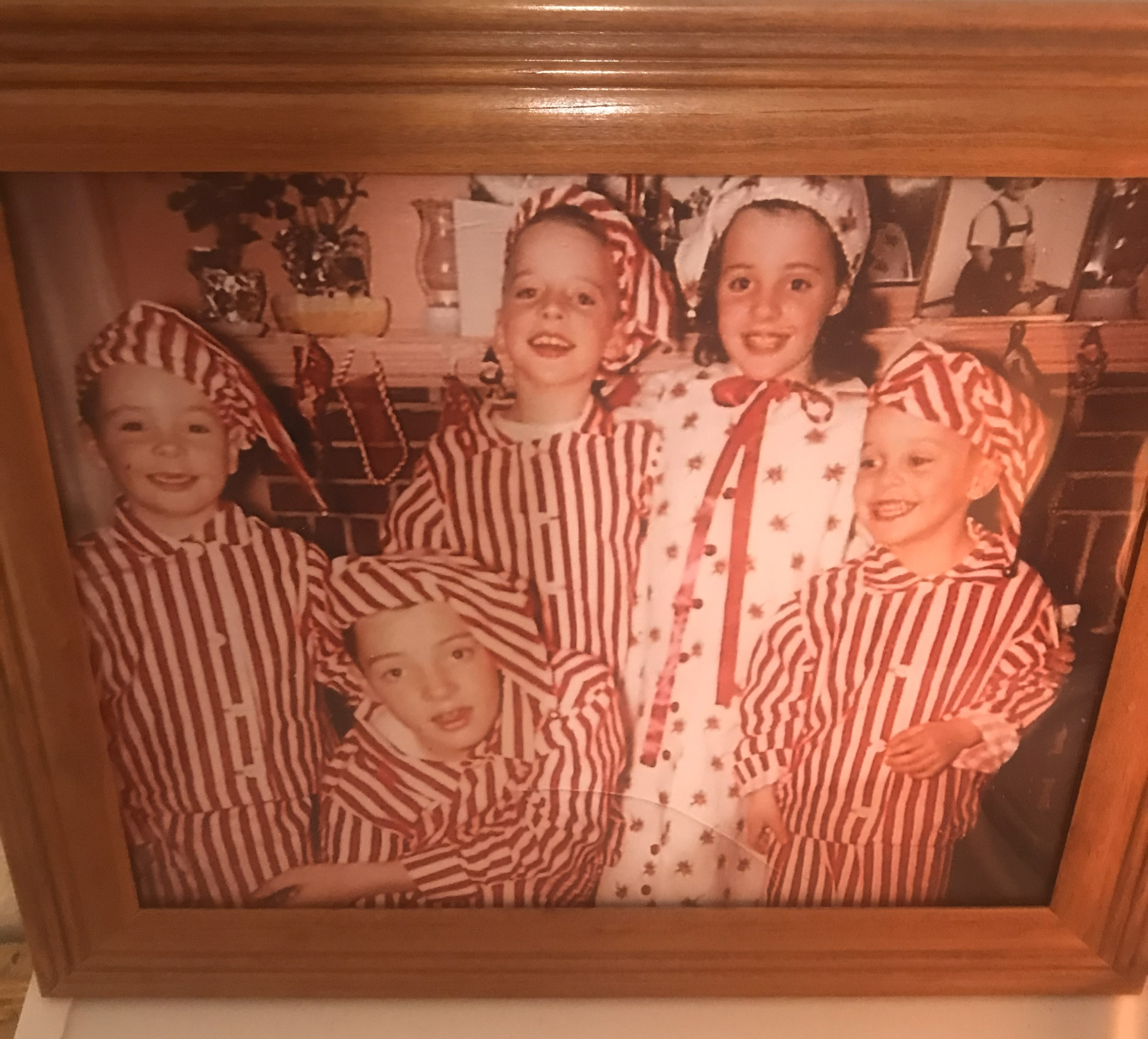
L to R: Mark, Jack (kneeling), Barry,Beth, Greg
convincingly. Being part of the conspiracy with my folks was the consolation prize for growing up.
After Midnight Mass, now sleepy myself, I’d fulfil my cookies and carrots duty and head up the stairs to sneak into bed in the room I shared with (at the time) three of my brothers. My sister, Beth, got her own room, a gender discrimination benefit no one questioned or resented. My youngest brother, Marty, had yet to join us. Carefully, I’d slip under the covers in my new pajamas careful not to rouse Mark with whom I shared the double bed. Mom always got us new matching Christmas pajamas, the one present which we were allowed to open on Christmas Eve.
Full of cookies and carrots, I’d lay my head on my pillow, listen to my brothers sleep breathing, calm down, content even while excited for the morning. Close my eyes. Wake up early when the young ones started to slip down to the family room to see if they could guess what they were going to open after my bleary eyed folks made the coffee, got their camera, and sat in the chairs by the tree.
“I could see the lights in the other windows of all the other houses on our hill and hear the music rising from them up the long, steadily falling night. I turned the gas down, I got into bed. I said some words to the close and holy darkness, and then I slept.” Dylan Thomas, “A Child’s Christmas in Wales”
Christmas announcement.
After many years of doing this, at the request of friends and family, I put together a book of blog posts with some editing and additions. Not a biography or a narrative, but a mosaic of an ordinary life described in the past, people, places, and faith that formed us.
If you have interest, it is available in an affordable paperback on Amazon. An e version, hopefully soon, will be available for those who prefer their library in their tablet. A review and five stars would help get the book seen if you are generous enough to take the time. Or share with your friends of similar taste who might enjoy the read on a cold winter night. It would be much appreciated.
Here’s the link to the book in Amazon. Shelter In the Storm
Or you can search on the title in Amazon.
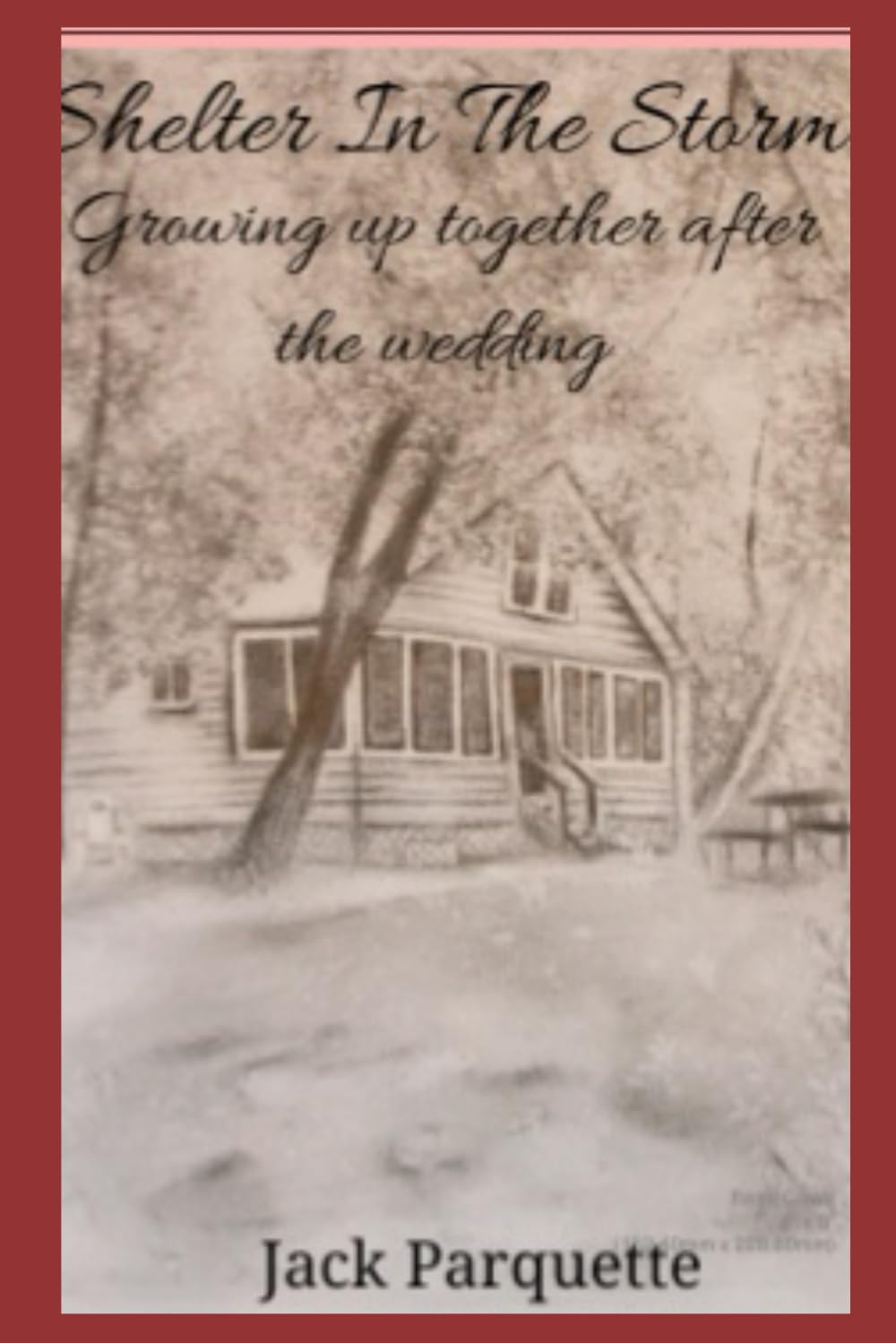
The cover was drawn by our granddaughter Ellie, who is fifteen. Her drawing is of the camp that four generations of us have enjoyed. For over forty years on Webb Lake in Weld, Maine, we have swam, climbed, canoed, read in our hammocks, and enjoyed smores around campfires there. It is featured in a couple of the essays.
 Quo Vadis Blog