“Sorrow’s springs are the same.
Nor mouth had, no nor mind, expressed
What heart heard of, ghost guessed:
It is the blight man was born for… “ Gerald Manley Hopkins, Spring and Fall
My brother died. To write that makes what seems impossible, possible, what seems surreal, real. He had done something he loved in the morning – a round of golf with one of his sons, Mark.
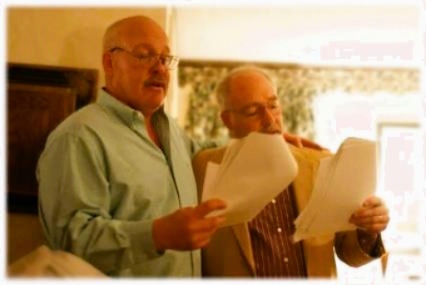
In the early evening, he was doing something else he loved – walking their border collies with his beloved Margy. He just stopped. Everything stopped. And he fell. One moment he was present with the sights and sounds of a quiet neighborhood summer evening in coastal Massachusetts, present to his curious and leash pulling dogs, and present to his wife in pleasant familiar companionship. The next moment he was not. He was one of my kid brothers. There are six of us. Always will be six of us, present or not. Greg is the guy with the grin and the Ireland sweatshirt he brought back with him from an anniversary trip with Margy.
Eight years younger, but he rarely did what I told him to do. I had insisted that the oldest one gets to go first, I was not going to say goodbye to a brother, that was the younger sibling’s burden to deal with. Greg didn’t listen. Or if he did, he ignored me.
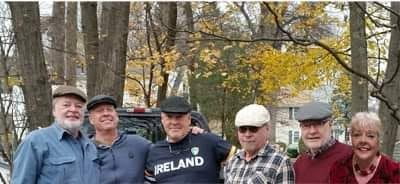
We talked or texted almost every day. Eight decades into this sibling thing, and we all still communicate to each other almost every day. Debating current events, politics, stories about our latest adventure, our Patriots, Bruins and Sox, music, philosophy of life, a meme, an odd story link someone came across, whatever was troubling us. Sometimes animated. Sometimes laugh out loud funny reading a text. Frequently that would be a text from Greg. Sometimes sharply disagreeing, but never without love. Very rarely more than a week passes without hearing from any of them unless someone is travelling far afield for a while. I haven’t heard from him this week. That isn’t an ache yet, but it’s a troubling void that will be a chronic ache and a hollow spot I cannot fill.
Paul Gregory Parquette was born in Norwood, Massachusetts on February 15, 1954, the son of our parents John and Elizabeth (Laracy) Parquette. Greg was raised on Marguerite Road in Walpole, Massachusetts with his five siblings. Next to youngest. Greg channeled his energy into sports from my earliest memories of him; playing baseball, football, and hockey. After graduating from Walpole High School, Greg attended two technical colleges, receiving certificates in HVAC and computer technology restlessly searching for something to make a living he would like to do. At GTE Sylvania Technical School Greg was top of his class. He was very bright but not academically drawn beyond that. Eclectic continuing education for the rest of his life. He never stopped learning.
Greg explored several career paths over the years: tried working keyboards at Adage in Woburn, as a machinist at Bird and Son in Walpole, and then a building superintendent at Castle Village Apartments in Randolph. He built his first serious career at Nippon Electric Corporation as a field technician. With NEC, one of his favorite tasks was to prepare for the World Series of Golf in Akron, Ohio. Greg set up all the computers, televisions and wiring necessary to broadcast the event across the nation. Got to know and befriend golf pros and CBS television sports personalities. He took on all challenges.
In 1992, in a major career path change, Greg left NEC for an opportunity with Fidelity Investments, a challenge he was well suited for and normally a job that required a degree or two. With Fidelity Greg learned Vendor Relations Management, acting as a liaison between the benefits and financial planning company and their clients, organizing their retirement and benefit plans. Until his retirement in 2017, for twenty-five years Greg helped his significant clients, including General Motors, protect the futures of their employees. While doing this he coached his son’s teams and served many years on the elected Franklin School Board where he lived.
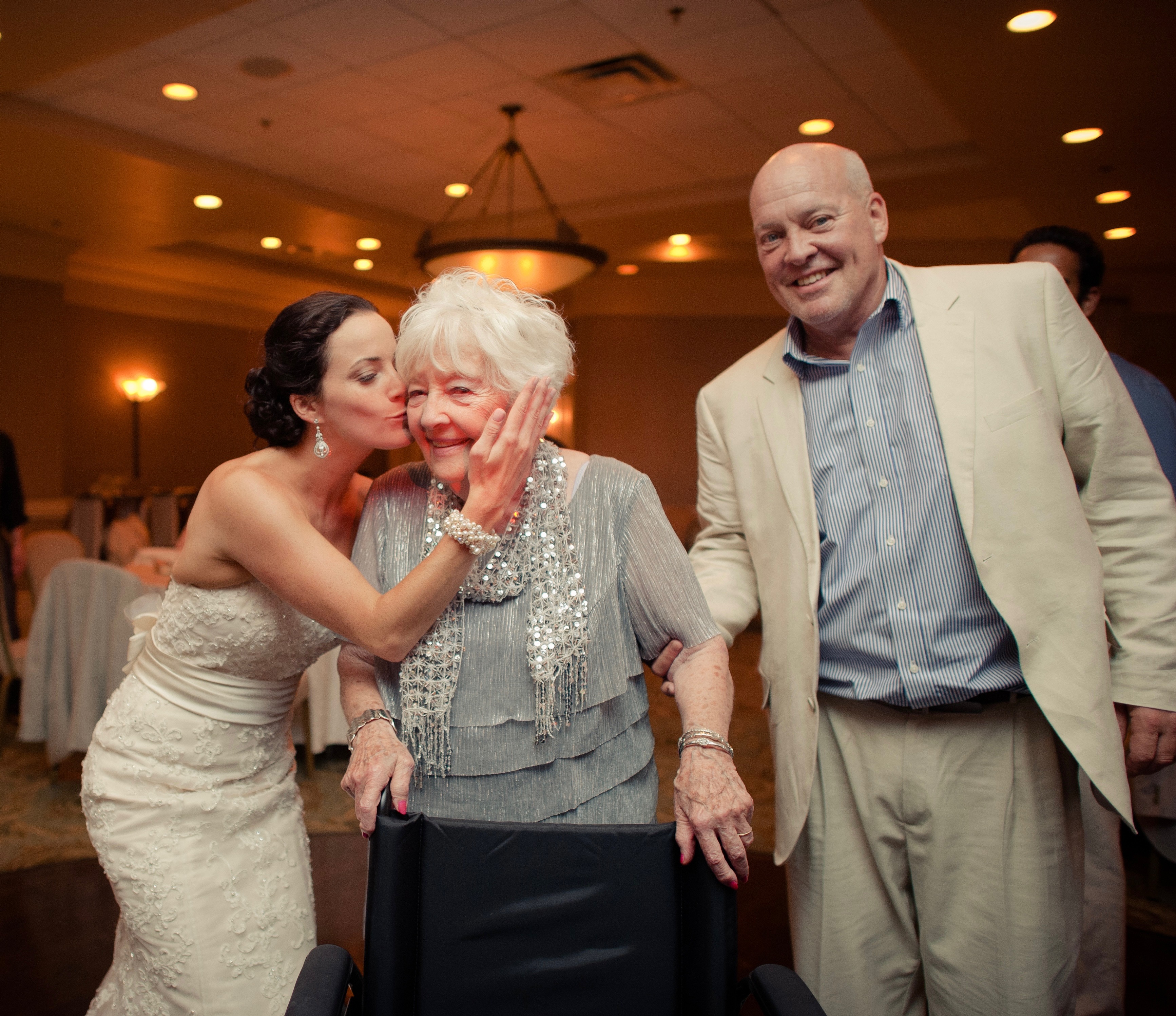
In 1977, a young Greg hit the local social scene in his then fashionable leisure suit, visiting Dixie’s in Wrentham with friends. He caught the eye of his future bride, Margy, who was there with her friends. Their first date ice skating led to a second date, and over a few months, their love at first sight deepened. Our lad was completely smitten. On June 1, 1979, Greg married the love of his life, Margaret Rose Hanley, at Saint Mary’s Church in Franklin, Massachusetts. The newlyweds made their home in Randolph, moved to Braintree, then purchased their first home in Franklin in 1983. There they grew their family, welcoming their sons John and Mark.
Greg was a present and active husband and father who loved spending time with his family. As his boys grew older and became interested in sports, Greg was always there to support them with what he was so passionate about. He had coached Pop Warner Football and jumped at the opportunity to lead his own kids. He helped any way he could, whether it was coaching or volunteering his time and athletic skills for their teams. Greg never missed a game, sometimes leaving work and calling home to tell the kids to be ready and waiting in the driveway for him. Greg was able to keep up with the kids on the field and at home, swimming in the family pool every evening after work and playing “Wingo”, a rowdy game they created together with developing rules.
The Franklin branch of the Parquette family enjoyed traveling across the US from the Grand Canyon to Florida and North Carolina. They went biking across Nova Scotia, camped in Arcadia National Park, and rode in an RV to Toronto where they caught the Blue Jays playing in the World Series, getting access to the dugout thanks to friends. Later after their children had grown, Greg and Margy continued to travel, visiting Montana and other sights in the US. They celebrated their 35th anniversary making lifelong memories on a 10-day trip across Ireland.
In his free time, Greg was a friendly information source for local sports. Whether catching the Beanpot Tournament with friends or watching the Sox play, every season he stayed current with his favorite teams Patriots, Bruins, and the Sox.
He continued to play golf with gusto and some self-provided entertaining play by play and to ride his bike all over town. He rode in a 150 Mile fundraiser for Multiple Sclerosis in two grueling days while in his fifties. He especially loved golfing with his sons. After Greg and Margy retired in Plymouth, Massachusetts in 2018, Greg organized the Redbrook CC Golf League every Wednesday. At home, Greg kept busy around the house, doing yardwork and home improvement projects, including a complete finished basement build out.
Greg was lovingly described as talkative, always having an interesting topic to discuss. Always ready for a conversation. He loved debating politics, much to the chagrin of those around him, with Greg often sharing news to make sure that everyone was “well informed”. Within his music-loving family, he was the one who most closely inherited their father’s beautiful tenor. Greg was the anchor leading Christmas caroling. Greg and Margy put in many hours of work for many years on the hospitality details while hosting our large extended family Christmas Eve gathering at their home. In addition to the beautiful carols, a highlight was a cutthroat Yankee Swap with deviously wrapped gifts. The competition to provide the most swapped gift and the consolation of bringing the gift no one wanted to be stuck with was ferocious.
There are many ways to describe Greg: loving, funny, kind, passionate, considerate. He was a mischievous son and sibling, a dedicated father and husband; and finally, a loving grandfather.
Three years ago, Greg was promoted to the role of “Papa” with the birth of his grandson Declan, whom he loved with all his heart. He will be sorely missed. I expect more than a few times in the coming weeks as has already happened, it will leap unbidden to my mind, “I’ve got to send that to Greg. That’ll make him crazy or make him laugh.”
Expecting still his advent home;
And ever met him on his way
With wishes, thinking, ‘here to-day,’
Or ‘here to-morrow will he come.’ Alfred, Lord Tennyson, In Memoriam A.H.H.
I must share some anecdotes that will always make Greg real to me. He won’t mind. Growing up in a family of eight, there are a thousand stories that made my mother prematurely gray. Car accidents, old beater $200 cars that only lasted until the next inspection, sports injuries, broken furniture from boys rough housing in the family room, school pranks that got out of hand but somehow avoided permanent police records, girlfriends gained and girlfriends lost. I could write for hours, but your patience would soon wear thin. All families have their favorite oft repeated stories.
One comes to mind that exemplifies Greg’s self-deprecating humor. He thought it demonstrated the Parquette boy’s aptitude for social miscues, a talent which we all share. Always a Parquette genius: if we are to make a funny screw up, make sure it is as public as possible and leaves us in an embarrassing situation. Greg enjoyed making us laugh at ourselves and our shared family proclivities, even if the laugh was at his expense.
When he was NEC, a large multinational Japanese owned computer corporation, he was awarded “Employee of the Year” for the whole company. A large annual awards dinner had him at the head table near the CEO and board members from the U.S. and Japan. Sitting on a raised stage in front of a roomful of well appointed dinner tables in a luxury hotel convention center. He bought a new suit for the occasion and was understandably nervous. The fall motif featured colorful autumn leaves centerpieces and pitchers of apple cider at every table.
During one of the major addresses by a senior executive, his attention was firmly fixed on the podium and the speaker. He refilled his glass from the apple cider pitcher over his lap but neglected to make sure the glass was under the pitcher. He realized his problem when he felt wet, a half glassful of cider poured out on his lap and soaked in. He managed to cover it up as well as he could and got through the dinner. We never heard what his exit was like. He told this story, ended it by pulling a wry face as only he could, and burst out laughing.
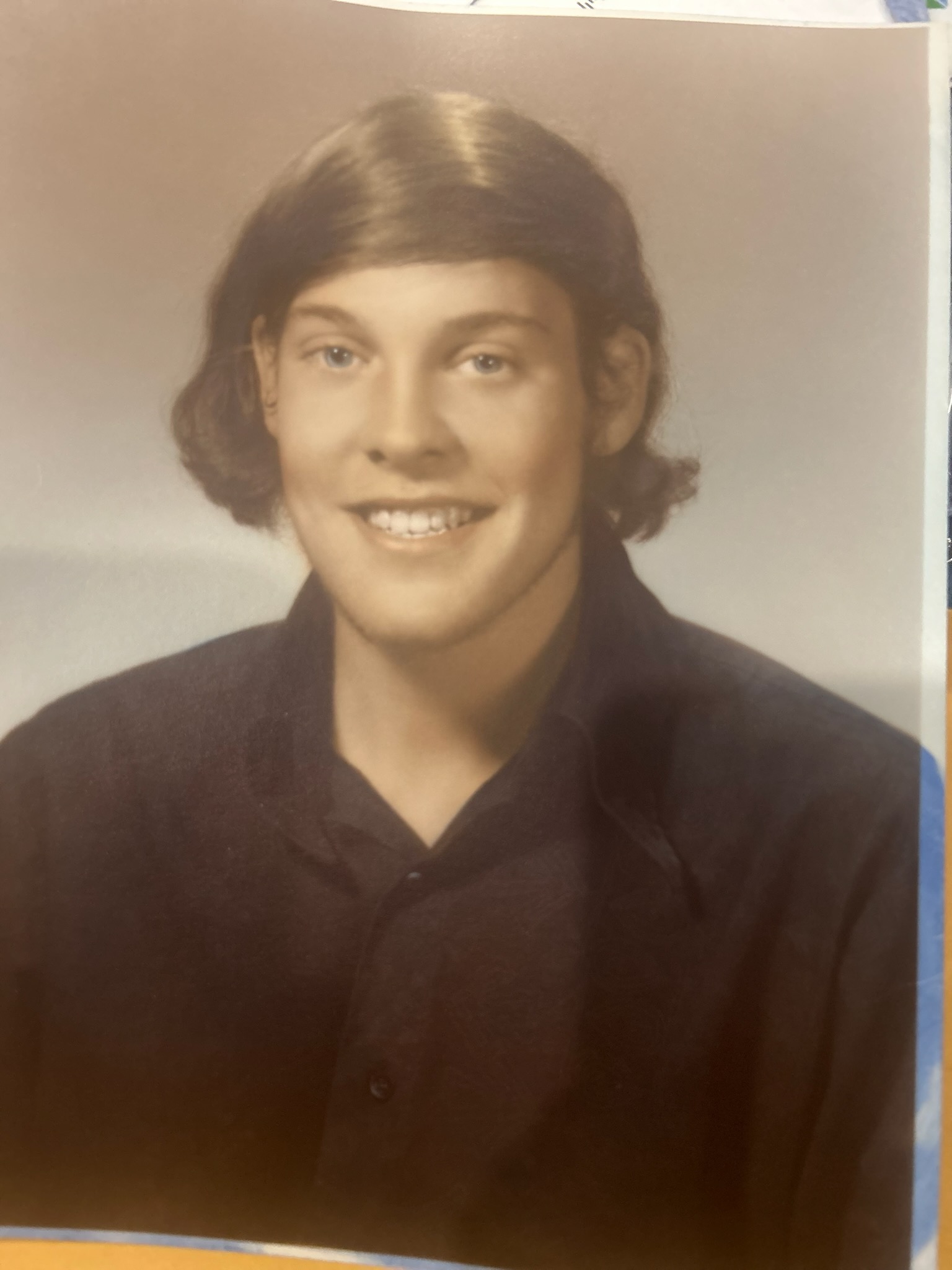
A second memory exemplifies his dogged persistence. In the early eighties, interest rates were ruinous. Not just for credit card debt, but even home mortgages were out of reach of those of us with modest means. Greg had a good job, but he was not rich. To qualify for a mortgage for the house of their dreams in Franklin, he shopped hard for interest rates. I can’t remember the exact circumstances, but a bank offered a substantially lower but limited rate and capped the offer. First come. First served, and when they were gone, they were gone. He had great credit and knew if you could get in the door, he could grab the mortgage rate that would allow them to buy the home. Doors opened Monday morning.
He spent the weekend in a foldout flat lawn chair and a blanket outside the bank so he would be among the first in line Monday morning. I remember visiting him there and bringing him coffee and something probably unhealthy to eat. He had a book and a portable radio to listen to a Sox game.
It was for his family. His Margy. Sleep is overrated. I cannot think of this sacrifice without remembering he thought it was a tiny price to pay. He spent a lot of the next twenty years improving that home. Building decks, putting in swimming pools, erecting a fence, and finally a big addition to help with Margy’s mom after she was widowed.
Ah Greg. I would believe you special if you weren’t my brother. But you are. Oh my.
C.S. Lewis wrote a book about the death of his wife, a wife he had met after years of believing he was a bachelor don forever. He married his good friend to care for her and her son as she was dying of cancer. He wrote that what shocked him was how deep grief felt like fear. I understand that profound insight better. The book is one worth reading and rereading. He titled it, “Surprised by Joy.” He alludes to his wife Joy, his awakening as her husband, and both the joy and pain of being with her until the end.
The tile was taken from the William Wordsworth poem, “Surprised by Joy.” In that poem, Wordsworth mourns the loss of his three year old daughter Catherine. After her death, he experienced something beautiful that triggered joy. His mind told him to share it with Catherine and was reminded abruptly that she was no longer there to hear it. I know how that feels.
My last personal memory with him was two weeks before he died. Occasionally we’ll go to a Newport Polo match five minutes from our home. We especially enjoy it with our local grandkids and our California grandkids when they visit. This year it was the America Ireland match always hotly contested. Greg and Margy showed up. That’s the thing about Greg. He often shows up. For our granddaughters dancing in Nutcracker or Swan Lake. He brings flowers and drives an hour to join us.
The kids love the ponies and the speed and stomping the divots between halves. Before every match, the full crowd stands for the national anthems, first the Irish, then the Star Spangled Banner. The piped music over the public address system and the dozens of flags along the sideline are moving. But hardly anyone sings. Except our family. I stood shoulder to shoulder with Greg. We sang. Loud. His always good pipes were well lubricated. As grief slowly dulls its edges into lasting gratitude, what a grand memory to hold.
I’ll miss having Greg to share something beautiful with. And to sing together again. My faith tells me I will, and I can anticipate that with great joy. He was one of my most faithful blog post subscribers and commenters. Dozens of comments over the years that I can reread and cherish. Wish I could send him this one. He definitely would join the conversation.
“But how could I forget thee?—Through what power,
Even for the least division of an hour,
Have I been so beguiled as to be blind
To my most grievous loss!—That thought’s return
Was the worst pang that sorrow ever bore,
Save one, one only, when I stood forlorn,
Knowing my heart’s best treasure was no more;
That neither present time, nor years unborn
Could to my sight that heavenly face restore.” William Wordworth, Surprised by Joy

I expect Greg would prefer a less somber and more hopeful epigraph. Love you, bro. See you on the other side.
“Though lovers be lost love shall not;
And death shall have no dominion.”
Dylan Thomas And Death Shall Have No Dominion