
‘Home is the place where, when you have to go there,
They have to take you in.’
‘I should have called it
Something you somehow haven’t to deserve.’ Robert Frost, “The Death of the Hired Man.”
We bought our first house for romantic reasons only a young couple in their mid-twenties with two young kids would consider. A converted post and beam small barn on five wooded acres in rural Maine, our place was affordable for someone of limited savings and good credit. A clear water spring house was three hundred yards in the back up a hill at sufficient elevation to provide gravity fed water even if the pump went out. By far the best water we’ve ever had.
We had a tiny rustic kitchen and even tinier bathroom connected beyond that. Toilet and walk in fiberglass shower only with the small electric hot water heater beside it constituted the only bathroom. The kitchen sink did double duty. We were the dish washers, and the washer and dryer were in Farmington about twenty miles from Mount Vernon where we lived. Cost a quarter per wash and the driers took dimes. The kids enjoyed McDonald’s playground down the road a piece.
Rita’s dad, a wonderful father-in-law, and a practical, skilled prototype machinist, drove up five hours to visit us and to encourage the youthful pride we took in buying our first home. He walked around it, through it, looked under it, and came in for a cup of coffee. He was quiet for a while, which was unusual enough. “Give it back to the bank,” he advised.
When you buy a place that you can afford built on beautiful, wooded land with a view across a large field to the mountains in Maine, and the price is low, there is always some work to do. In our case, we needed to install another wood stove and deal with the small issues of putting a foundation under it and dig in a new septic tank leaching field that didn’t puddle up after heavy rain. That’s a story for another day, but I did a lot of shoveling and pipe replacing.
I could handle the woodstove myself too. For the foundation we needed to replace the patched together barely a crawlspace stone foundation loosely mortared with something more permanent and raised from the ground and ledge. So, we needed Roland Bragg and his house moving company.
Roland showed up about 7:30 am on a Monday. He came from Nobleboro, about an hour away towards the coast. He came prepared. Several trucks and several men. After taking careful measurements, they broke out eight pieces of the existing foundation and methodically began to slide long iron I beams under the house driving the positioned supports straight across. We shut the water and septic system pipes down and cut them. Next Roland hooked up an elaborate system of large bottle jacks under each end of the beams which connected back through sturdy hydraulic lines into a large power take off pump on the back of one of his trucks.
The climactic second act was a piece of careful showmanship and skill. With a cigarette smoking steadily in the corner of his mouth, he manipulated a series of levers like Bach on an organ. The house slowly ascended evenly and steadily high above the old foundation. As it rose, his crew assembled what resembled giant Jenga towers of railroad ties cribbing under each beam end to anchor them for work underneath where the soon to be gone stone foundation was.
Our friend Alan Williams was hired by Roland to come in with his Bobcat machines. The stone foundation was piled in the backyard in few hours, clean well-draining fill was brought in and compacted, a footing was formed, concrete poured, and a new block foundation was built row by row by masons (cement masons, not the good guys who met weekly over Lew’s store in the Masonic Hall), until a couple of weeks later, Roland returned with his magic, lowered the house back down a foot or so on to its new plumb and level base. They slid out the temporary steel supports and filled the measured holes in the block wall with either block or new foundation windows. With the house now secure on its solid base, not a wall or window was cracked, no roof leaks developed, and all the doors swung perfectly square. The old chimney for the original woodstove rested comfortably on its new footings and block. Water and septic pipes were extended and reconnected. After the foundation was backfilled, I built some new front steps, and we were higher, solid, and dry in our new/old home.
One complication also remedied was that the woeful afterthought small bedroom I used as an office was poorly built and sagging. The ‘furniture’ consisted of a three foot by seven foot prefinished birch door with the hinge machining covered with molding creating a desk resting on two filing cabinets with a used four wheel office chair.
Roland Leon Bragg was a Silver Star winning paratrooper in WWII. After the controversy renaming Fort Bragg as Fort Liberty to cut ties with a Confederate slave owner general, two years later in 2025, it reverted to Fort Bragg. Roland was now the eponymous donor, not the general. Same guy who jacked our house up. He later owned a small sawmill in Nobleboro. An authentic war hero and reliable quintessential Mainer.
Since he refused a battlefield promotion for his heroism because he said he was just doing his duty, how he would react to a fort being named for him we will never know. He died of cancer in 1999, an unwitting and perhaps unwilling token in the Progressive – MAGA renaming tug of war.
Prior to the big project, I backed my F-250 up to it, took out a chainsaw and a sledgehammer and “disappeared” the room to the town dump in four or five loads. Without the benefit of an engineer, I over engineered a beam to fit in a pocket Roland’s crew left for me – a 12 by 12 rough sawn fir beam sixteen feet long to help support the new rooms with which we planned to replace the leaky old one. Heavy son of a gun of a beam and a beast to put in place, but a remarkable substitute for the old double two by eights rotting out before it.
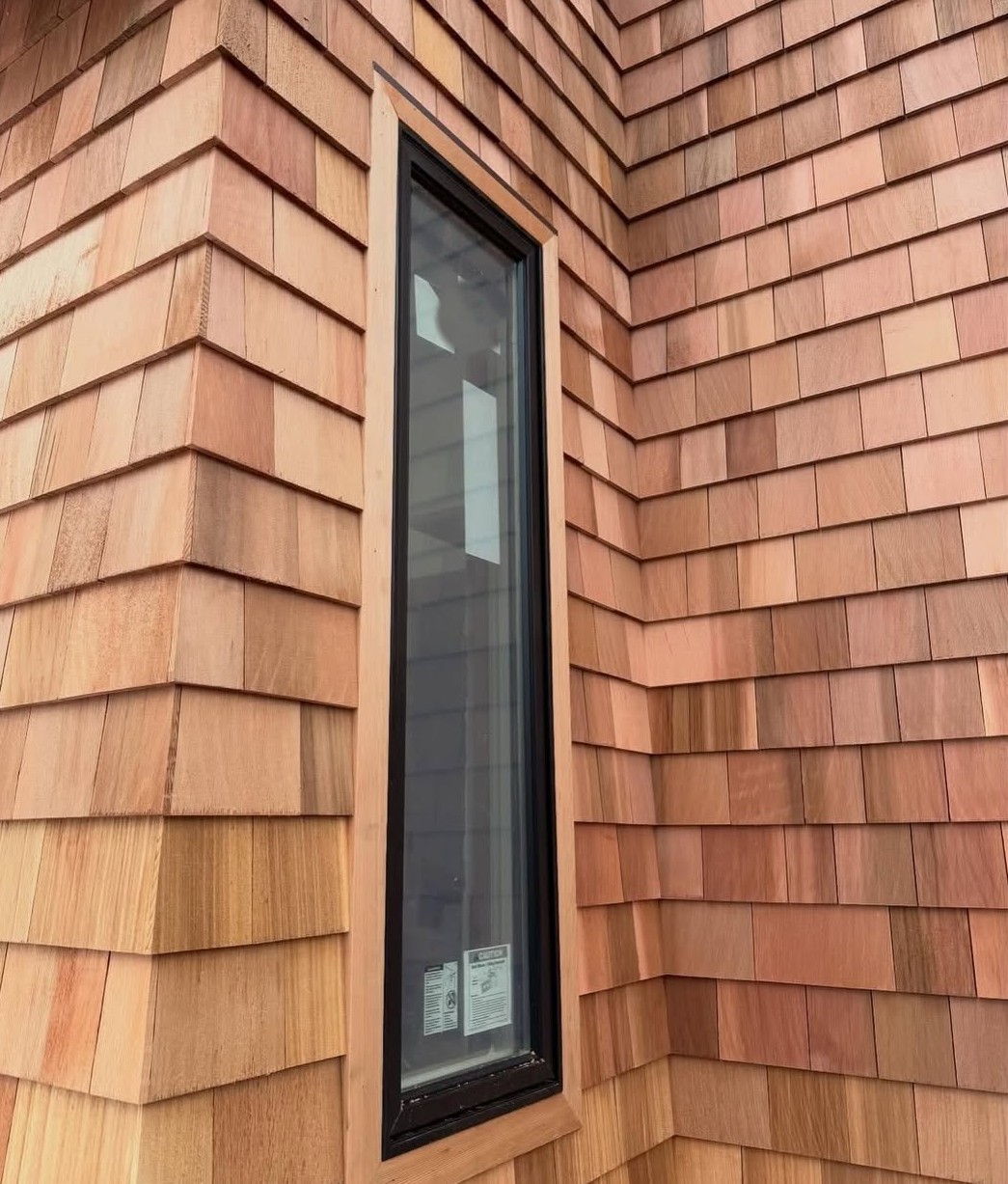
I drafted the plans on graph paper with a floor plan, a section, one framing detail, and two elevations, and our small town with its part time combination building inspector and code enforcement officer issued a permit – two bedrooms and a new bath on two floors with a spiral stair connecting them. I framed it with friend or two, plumbed it, and hired an electrician to make sure I didn’t burn it down. Conventional two by six insulated framing did not match the existing exposed post and beam barn original, but the walls were plastered, new, and shiny. Rita, the town health officer and obstetrical RN, helped side it working on makeshift ladders and rented pump jack scaffolding to install the new cedar shingles when the kids were in school. To match the existing house, she and I learned to weave the outside and inside connecting corners with a lesson from a siding guy I knew from jobsites using a small block plane. I don’t call her St. Rita without justification.
Fir load bearing beams are important, and they need to be strong.
“Funny thing how it is. If a man owns a little property, that property is him, it’s part of him, and it’s like him. If he owns property only so he can walk on it and handle it and be sad when it isn’t doing well, and feel fine when the rain falls on it, that property is him, and some way he’s bigger because he owns it. Even if he isn’t successful he’s big with his property. That is so.” John Steinbeck, The Grapes of Wrath
And so we started. Mid-twenties, not much money, sold lumber to contractors and climbed trees doing “buzzies” on the weekend to pay the bills along with Rita’s part time obstetrical nursing. Five houses eventually, slowly trading up then downsizing back down, married sixty years this coming January, and now retired, we muddle along in deep gratitude for our life together. We never owned a new house, and every one of them needed substantial work. The circumstances of our first home together are a rare story in these confusing times. The median first-time home buyer is now forty years old, and a family of median income cannot afford a median priced home. That threshold is about 110% of median income.
A few more stats for your coffee shop discussions. First time buyers are only 21% of all home buyers and only 35% of families in the country can afford a median priced home conventional mortgage. The pols wring their hands about ‘affordability.’
The compounding effect on birth rates, household formation, even marriage rates, all of which are essential to the bedrock ledge of societal stability are beyond this post, but the damage is not diminished.
More easily quantified through the National Association of Home Builders and other sources are the latest round of government action effects exacerbating the situation. The shotgun trade war tariff effects and fuel costs increase from the Iran War have added between twelve and seventeen thousand dollars depending on the size to the cost of new home construction. After factoring in the latest Fed rate increase, mortgage rates increased to seven percent last week. The Fed rate increase was triggered by the failure of the government to bring inflation under the two percent goal. The actions of the government in the last two years have pushed many more first time and median income buyers out of the already diminished home buyer eligibility pool.
Buying a first home, or any home, is the most significant financial event in most households. It certainly was for us. Without that leap and given the dismal housing market statistics now, how many seeking to build a stable location and lives for themselves have seen that dream evanesce? The missing first rung on our lifetime capital building ladder is irreplaceable.
Housing affordability is not the cause of our demographic and social troubles, but it is one of the load-bearing beams—and when it weakens, the strain appears in places far beyond the mortgage payment. Unlike our first place in Maine, our society with the complicity or incompetence of those we’ve elected to lead us have miserably under engineered this load bearing beam. Not a twelve by twelve solid fir beam, more like an ant infested rotting pair of old two by eights sistered together with rusting nails in forlorn hope.
In Henry David Thoreau’s “Walden,” the chapter on Economy compares the twelve to fifteen years of labor it took a family to pay off the mortgage on their average home in Concord to servitude. I wonder what his thoughts today would be about the near impossibility facing the working family to secure their own castle? “Quiet desperation” might not be an adequate description.
“(T)he cost of a thing is the amount of what I will call life which is required to be exchanged for it, immediately or in the long run.” Henry David Thoreau, Walden

