
“In the fall of 1896 my sister Emily and I started St. George’s School in two small wooden houses in Newport. I cannot refrain from bringing my sister’s name in at this point, as I am fully convinced that whatever measure of success the school attained as long as I was there was very largely due to her share of the work.” John Diman
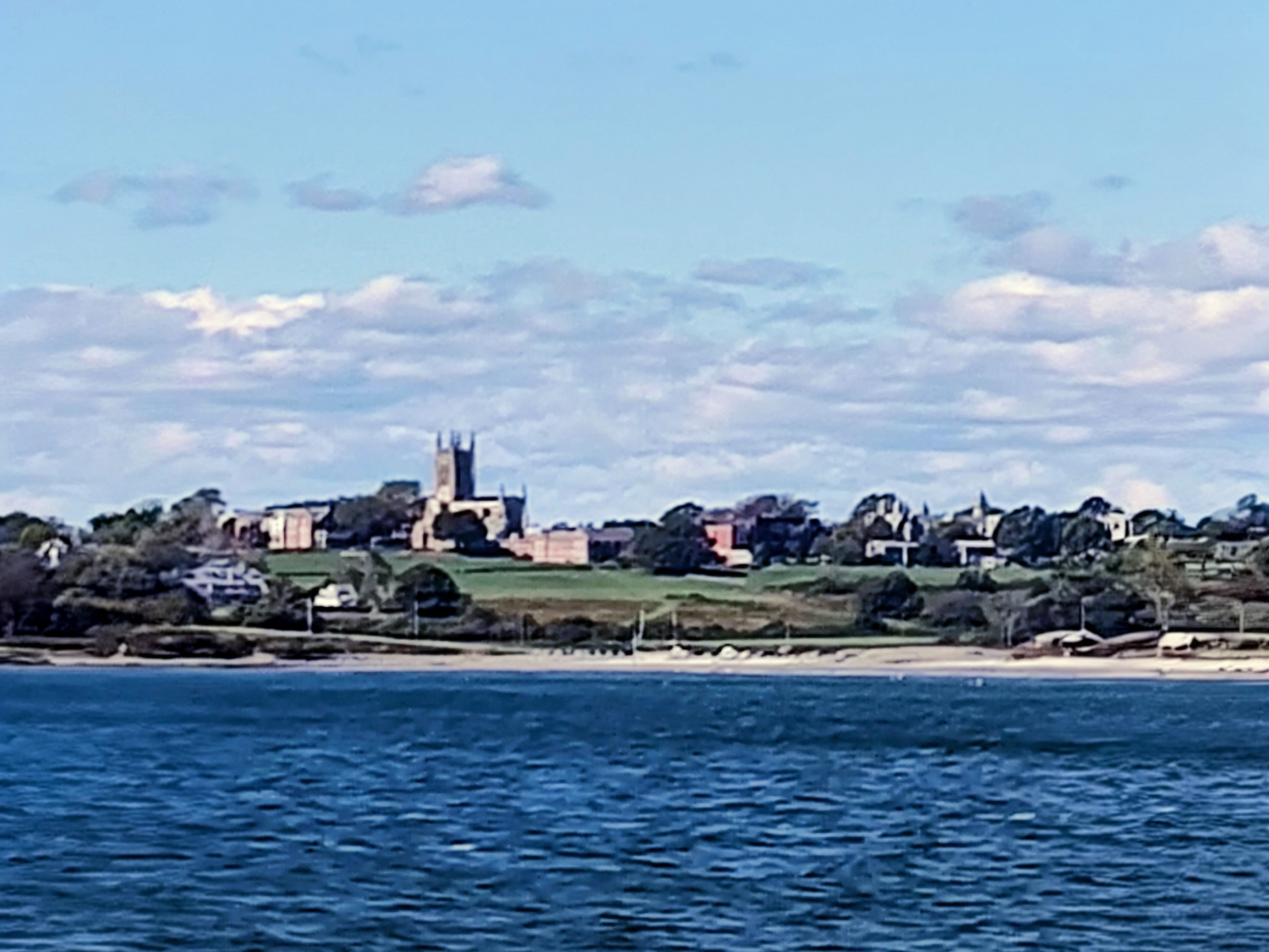
If you are ever fortunate enough to walk Sachuest Beach in Middletown, Rhode Island, looking south, you cannot miss the impressive spires of the chapel at St. George’s School. The chapel and expansive grounds of St George’s are an Aquidneck Island landmark. Sometimes we will run into its students on the beach or see twenty or so of them surfing offshore in one of their physical education classes taught by a professional surfer.
Travelling north past the wildlife refuge and Third Beach, turn on to Indian Avenue, the site of fine homes and estates along the broadening mouth of the Sakonnet River where it opens into Narragansett Bay and the Atlantic Ocean. At the top of the first long hill on Indian Avenue, you will pass the large, lovely wood framed “Boothden” estate on the right, former summer home of Edwin Booth, the finest Shakespearean American actor of his day and brother of John Wilkes, who had his own less savory renown.[i] Past Boothden at the bottom of the hill on the left is St Columba, a small Episcopal lovely stone church. In the west wall of the nave, there is a well-known stain glass window depicting Mary Devlin Booth, who died of pneumonia on February 21, 1863, at the age of 22. She was the beautiful bride of Edwin, who, along with his daughter Edwina born of Mary, donated the window.
The first permanent rector of St Columba in 1888 was John Bryon Diman, a graduate of Brown University and the Episcopal Theological School in Cambridge, Massachusetts. His father, Reverend Jeremiah Diman, was a highly regarded Congregational minister and professor of history and political economy at Brown University in Providence. Known as a brilliant lecturer, essayist, and orator, he taught for seventeen years at Brown until his death in 1881. John’s grandfather was Byron Diman, the nineteenth governor of Rhode Island and prominent merchant in Bristol.
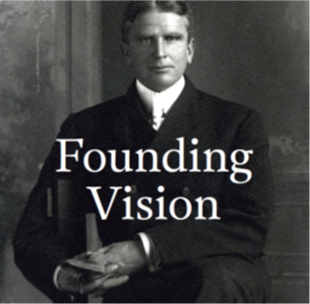
John Diman changed course in 1896 and opened the Episcopal small boarding school in a rented house on Catherine Street in Newport and left St Columba to become its first headmaster. The school prospered and grew, relocating in 1901 to the current one hundred and twenty five acre location on the top of a hill overlooking the beach and Sachuest Point National Wildlife Refuge.
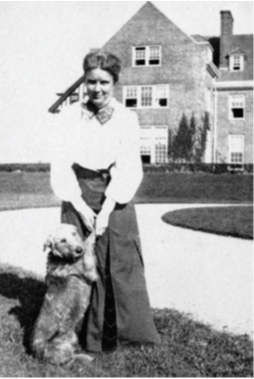
John Diman and his sister Emily dedicated much of their lives to educating the young. He credited his sister for creating the warmth of a home, welcome, and love in the school. She was indispensable in its formation and nature. St George’s was the first school he founded, modeled after English public schools for fine young gentlemen. John and Emily would often stand together outside King Hall and shake hands with each student in the morning. Emily’s sitting room was a sanctuary for homesick young students. She would read aloud to them in the evening.
When it moved to its present campus, he was instrumental in selecting the site and directing the architects and builders. No detail escaped his oversight.[ii]
Senator Claiborne Pell, former Vermont governor and presidential candidate Dr. Howard Dean, Prescott Bush (father of President George H and grandfather of President George W), Ogden Nash, some prominent Vanderbilts and Astors, and Tucker Carlson are among the thousands of graduates. The annual tuition, room and board have climbed a bit from $650 and $150 for day schoolers in 1896 to $73,000 and $58,000 for the non-boarders today.
John Diman’s known distaste for automobiles was balanced to some degree by his lack of skill driving them. A school famous maple tree bore scars of an encounter with a Mr. Diman driven vehicle for the rest of its days. He preferred to walk to Sunday worship along the dirt roads of his time. Tales of his absent mindendness when it came to things he didn’t care about, like his wardrobe, were a source of amusement for the students. His sister kept an eye out for spots and quietly whisked away stained jackets and cleaned them. He would show up at the ball field and hit long ‘fliers’ out to the boys, something he was very good at. Occasionally, his absent mindedness would catch him out and become a school legend for the other residents of St George’s. He once made an appointment to play tennis, but when he went back to his rooms to change, he decided it was time to go to bed, leaving his opponent without anyone across the net.
Mr. Diman was the quintessential headmaster combining a twinkle in his eye sense of humor and the requisite gravitas and dignity. No one could remember him shouting, but a look was enough to correct a student or faculty member who crossed the line. More than enough. He loved the students but was not demonstrative. One story relates how a homesick boy took the train from Fall River to Boston. Diman caught wind of it, hurried to the Fall River train station, and shadowed the boy all the way to North Station. When the frightened and hungry boy started frantically looking around the train station, there was Mr. Diman looking over his newspaper to offer to take him ‘home’ to the school and a good meal.
His staff from cooks and housekeepers to faculty were remarkably loyal, and it was common for them to remain at the school for decades. His even handed fair treatment of all was respected by all. Respect was the word most associated with Mr. Diman.
Reverand Diman had a passion for more than classic literature and languages. His heart was permanently set on the prime responsibility of forming young men to contribute and build a culture. He valued principle, character development of his students, and living the good life. His definition of the good life had little to do with the creeping hedonism and self absorbtion of our times. The good life he saw as the true path to happiness for his students was living according to traditional virtues, the Christian faith John Diman held most dear, the truth that informed Western civilization for a thousand years and a strong moral code of honor rooted in that faith. He wanted them to be worthy leaders.
“Anyone with intellectual equipment equal or superior to an amoeba’s could see in him the great natural schoolmaster, in whom justice and humor, which are slightly different isotopes of the same radioactive element, were as they still are perfectly mingled.” Leonard Bacon, Saint George’s Alumni Bulletin, 50th Anniversary issue, 1946
In 1912 after reflection and with very few at St George’s aware of it, John Diman determined that it was not only the children of the elite ruling class that needed education and a strong formation. He believed that the commercial trades could benefit those who had been forgotten. He looked north into Fall River, Massachuestts to create a public vocational technical school.
He crafted careful plans and presented them to the Fall River authorities. They were approved and implemented by the city. With his own money provided for start up funds, he found Frederick Randall of Boston to begin teaching in the basement of the Johh J McDonough Public School. The Diman Vocational School opened in December of 1912. Mechanical drawing, wood working, and two wood lathes were the main subjects. But John Diman made sure English skills, good character, and general knowledge were also taught and modeled. The first students were all previously relegated to failure as dropouts, twelve of them to start. In the second year, Diman put in more of his own funds to sustain the start up.
Frederick Randall remained for thirty years and secured the future of the school. In 1963 it was renamed the Diman Regional Vocational Technical High School. The most recent campus improvement was completed in August of this year. The new 400,000 square foot facility accomodates 1,500 students and graduates about 350 each year. Diman Voc Tech now in its one hundred and fourteeth year offers 18 or 20 vocational paths to its students including the orginal fine wood working, but adding everything from auto mechanics, plumbing, electrician, and information technology to various health care careers.
An exceptional school that has changed the lives of tens of thousands of students over more than a century began as the dreams of one extraordinary educator who started it with twelve dropouts and a vision for excellence.
But John Diman was not done yet. World War I, a life threatening illness, and many more years to go before he rested. Oh no, with St George’s and Diman Vocational, he was still warming up. More to follow.
“I don’t know how it was done, but his mere presence in a room heightened interest in whatever was on the program – work or play or conversation at the dinner table. The world grew more positive and affirmative when he was around. And he was always around, even when he wasn’t there.” Leonard Bacon, Saint George’s Alumni Bulletin, 50th Anniversary issue, 1946
[i][i] Edwin Booth was a firm Unionist and despised the Confederacy politics of his younger brother. One of history’s ironic true stories was a year before his brother murdered President Lincoln, Edwin was waiting at a rail station in New Jersey, when the eldest son of President Lincoln, Robert, jostled by the crowd or tripped, fell in front of an oncoming locomotive. The quick and strong Edwin lunged forward, grabbed Robert by the collar of his coat, and hauled him back to safety, saving his life and poor Abraham and Mary Lincoln from one more tragedy in theirs.
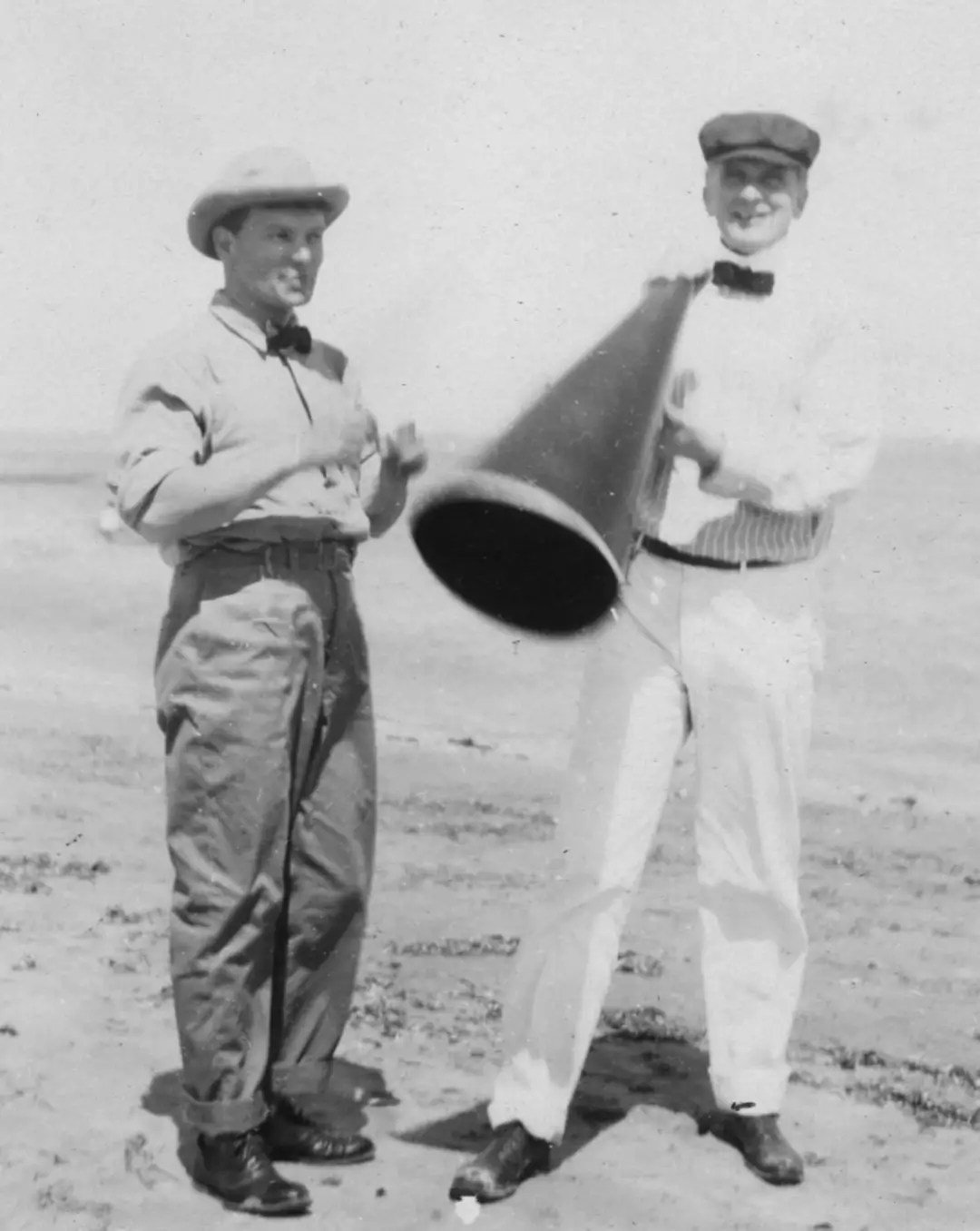
[ii] Images from St. George’s archives. Edward Sturtevant and John Diman with the megaphone. Mr. Sturtevant taught at the school for 40 years until his death. Hired in 1898, and he was one of the earliest teachers hired. A friend and important part of the school. An MIT graduate in 1898, he headed the science department and supervised the boating program. They were directing the student boaters in the picture. He was the secretary-treasurer of the St. George’s School Corporation. In 1967, the school named the Sturtevant Observatory on the campus in his honor. The “Founding Vision” image and image of Emily and her dog Dandy were both from the June 2022 summer issue of St. George’s Bulletin.

