Author Archives: jparquette

jparquette's avatar

About jparquette

Fortunate and blessed in companionship with my wife of fifty seven years, in health and in modest, but more than adequate circumstances. Life is good.

The Problem with Socialism

An article by Kevin Williamson earlier this month in National Review points out the fallacy of thinking Barack Obama a socialist because of his enthrallment with “spreading the wealth”.  Advocacy for large government deficit spending and tax policies tilted towards income redistribution are definitive of all modern liberalism and “progressive” politics, but they don’t make anyone a socialist.  The nucleus of socialism is central planning.  The Obama characteristic that firmly plants him in the socialist camp is his fixation with centrally planned solutions for the nation’s ills, irrespective of their consistent record of disappointment.

Few differences exist between the old five year plans of the Soviet Union for potato or wheat harvests and the “planned” objectives of 50% renewable energy or tax credits to increase purchases of electric cars or health care mandates. What will achieve real progress are competitive and practicable means of renewable energy sources, producing electric cars that anyone actually wants to drive at reasonable prices and facing squarely the many conundrums of modern health care.  Not arbitrary policies implemented by a cumbersome bureaucracy.

The European Union economies of Greece, Spain, Italy and even France are foundering not just because they spend more than they generate in wealth for entitlements, early retirements and “social justice” programs (although that is what is happening), but the root cause of failure is central planning itself.  Collapse occurs not because there aren’t plenty of brilliant true believers doing the planning, but because the premise of central planning is deeply flawed and unworkable.

This weekend’s Wall Street Journal carries an instructive editorial by Alberto Mingardi, the director general of the Intsituto Bruno Leoni, a Milan free market think tank. Link to editorial here.  In it, Mr. Mingardi cites Frederich A. Hayek’s Nobel Prize winning economic writings debunking the central planning myth.  Dr. Hayek is the author of the celebrated “Road to Serfdom”.  Central planning may have been feasible when humankind lived in small, insular groups which shared common values and metrics for measuring relative worth and achievement.  In modern, multifaceted states, there are too much data, too many variables, too many unknowns and too many destabilizing influences. Computer models are not capable of predicting the behavior of or the outcomes for small groups and individuals within this complexity.  Grandiose plans and goals predicated on these models are built on shifting sands.

The inherent waste and inefficiencies in outsized bureaucracy multiplies cost and diminishes the competence of any enterprise.  Corruption, internal wrangling and cronyism exacerbate the ineffectivness of solutions that do not solve and analgesics that do not relieve.  Our path out of the swamp cannot be found in unsound theories.  Socialism reads a lot better than it lives.

Socialism in general has a record of failure so blatant that only an intellectual could ignore or evade it.

Thomas Sowell

2 Comments

Filed under Politics and government

Losing the thread

The ancient Greek legends surrounding Prince Theseus have lessons for today.  Periodically, the king of Athens had agreed to send seven boys and seven girls to Crete to be fed to the Minotaur to appease King Minos.  The Athenian king’s son Theseus volunteered to be one of them, but said he would slay the creature to end the sacrifices.  The Princess Ariadne, daughter of King Minos of Crete, fell in love with Theseus and betrayed to him the secret of killing the Minotaur, a fearsome monster, which was half man with the head of a bull.  She smuggled Theseus a sword and a ball of twisted threads.  The Minotaur lived deep in an impossible labyrinth; the challenge for Theseus was to find his way out should he prevail over the monster.  He needed both a sword and then the twine to leave a trail back.

We have labyrinths today and seem to be losing the thread to find our way back.  A few anecdotes portray some of the twists in the maze.  Some of these seem trivial, but illustrate that we are becoming lost in some fundamental way and are confused about our priorities.    These are mostly unrelated, but seem somehow of a piece.

  •  In Belmont, Massachusetts recently, the animal control officer found a badly injured coyote.  Coyotes have become increasing vexing to suburban Boston communities, and Belmont is among the most affluent.  Twice in the last year, they have attacked children in Massachusetts, and routinely pet cats and small dogs disappear to coyote packs.  The town official didn’t dispatch the coyote to end its suffering.  No, she brought it to an animal rescue hospital in Grafton, MA, which at a cost to the taxpayers in excess of $2,000 nursed it back to health over three months.  The coyote was a fertile, young female, which they did not spay.  Then, of course, they brought it out to release in a remote part of Western Massachusetts, right?  No, it was released with great celebration to the “wilds” of Belmont to reunite with its pack mates.  Does this seem misguided to anyone else?
  • The Federal government has initiated a suit to set prices on e books because they are too high.  The Federal government apparently has solved all the problems of deficit spending, foreign wars, health care, poverty, education, religious freedom, Social Security and contraception, and has the time to turn their eye and insinuate their considerable power into the market place to “correct” the alleged malfeasance of publishers and book sellers.  What happened to a consumer shopping for a book, whether print or electronic, and if they could afford the price, buying it?
  • The Federal government subsidizes with tax credits the manufacture, construction and operating costs of windmill power.  Recently, the Bonneville Power Authority in the Pacific Northwest, another Federal agency, asked the local wind power producers to shut down their windmills seasonally.  Since the existing hydroelectric plants on the rivers produce all the power needed when the rivers are flowing strongly, the windmills were redundant, and their power had no place to flow.  The rivers flowing and the wind blowing tend to peak at the same time of the year. The dams, which are far less expensive per kilowatt hour to run, don’t kill birds and are equally renewable.  Dam generators need to run when the rivers are high because, if they don’t, the salmon run to spawn will be endangered.  The windmills have to stop and lie fallow, not unlike farm subsidies.  The BPA will pay the windmill owners up to $50 million per year to do nothing, and the wind will only howl.
  • The Justice Department has embarked on yet another crusade, most recently in Texas and South Carolina, to stop states from requiring identification of voters.  According to the department filing, voter photo IDs, even if provided free by the state to all who don’t have driver’s licenses, will have a disparate impact on the poor and minorities.  Voter fraud is a problem in many of the large cities where the dead cast their ballots early and often.  Since inner city votes favor almost entirely Democrat candidates, one might suspect an ulterior motive from Eric Holder, the current Attorney General.  Not so, says he.  His enthusiasm even with Fast and Furious, Supreme Court challenges to the health care mandate and myriad other pressing issues extends well above and beyond duty.  He has the time to decide how each state should determine who votes and how voter’s citizenship, right to vote and even their existence above the ground are verified.  Such dedication should not go unrecognized.
  • Finally, we drop all the way through the looking glass into Wonderland.  And the looking glass is a wavy fun mirror that distorts all reality.  The National Association for the Advancement of Colored People (NAACP) petitioned the United Nations Human Rights Council in Geneva to stop the same voter photo ID laws in the U.S., even though Indiana’s ID laws were upheld by our Supreme Court in 2008.  It seems that the U.N. should have more authority over U.S. laws than our courts.  Among the member nations on the U.N. Human Rights Council are such human rights luminaries as Cuba, Russia, China and Saudi Arabia, where women can’t vote at all.

We wander through the labyrinth running the thread through sweaty palms, just hoping to find our way back to the light.  Just a few of these cited twists and turns expose how tricky the journey is.

Marge, it takes two to lie. One to lie, and one to listen.  Homer Simpson

4 Comments

Filed under Culture views

No more pencils, no more books, no more teachers…..

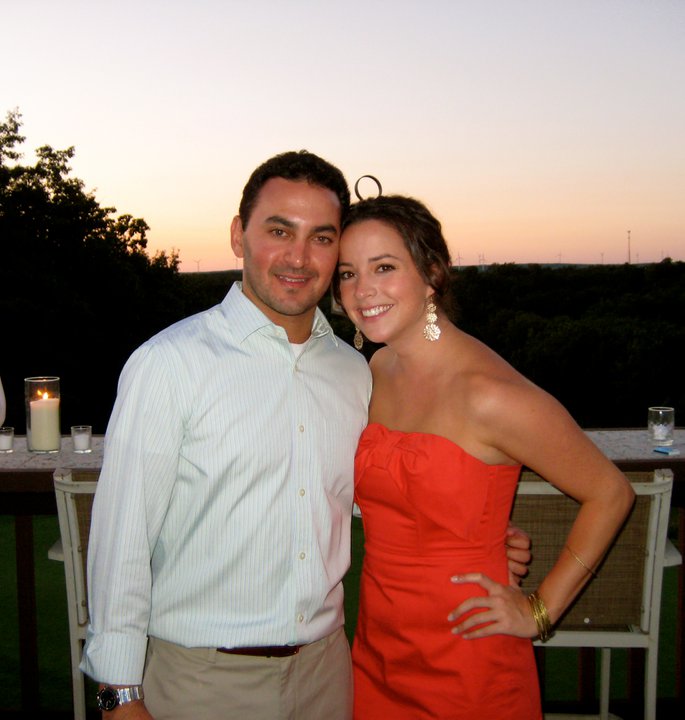
Meg and her fiance Marty Gilbert

Mayor Bloomberg, complying with a court order under a Freedom of Information suit, recently released the test scores and rankings of 18,000 New York City teachers, publicly listing their names.  Rankings were based on their students’ performances in the standardized tests under the No Child Left Behind program begun during the Bush administration and continuing today.  The list purports to identify effective and ineffective teachers.  My daughter, Meg, now in her fourth year teaching in Harlem, posted a note on her Facebook page regarding this.  She was not damaged in this listing, but fine, dedicated colleagues she well knows to be hard working teachers were.   Here is an excerpt from her note addressed to Mayor Bloomberg:

“You do not consider the fact that many of these ‘ineffective’ teachers are attempting to teach children who enter their class severely deficient, are emotionally unstable, are living in shelters, are victims of domestic violence, have drug or alcohol addicted parents, are in the middle of child services cases or are even learning disabled, but are not yet labeled as such since the process to do so can take up to two years.

There are so many aspects that we, as teachers, deal with on a day to day basis.  I’d like to see you come into some of the underperforming neighborhoods of Harlem, Brooklyn, the Bronx and teach for one day.  You wouldn’t last an hour.

Why don’t you find out which children are failing these ridiculous tests that measures so little of their actual intelligence and ask their PARENTS why they continue to fail?  Every teacher knows that in order for a child to succeed, there needs to be a pyramid of effort.  The pyramid consists of the student, the teacher AND the parent.”

Since she took her job in NYC, Meg has related the horror stories to us of what her students face at home, if indeed, their domestic arrangements can be called a home.  And what she deals with daily with classroom disruptions, appalling student behavior and bureaucratic foolishness.  In her elementary school, NYPD police sit full time in the hallways – not security guards, but fully trained professional NYC cops.  Three major studies looked at why students fail or succeed in the United States and illuminate these issues.  These were cited in Dr. Charles Murray’s noteworthy book, “Real Education”.

The Coleman Report, resulting from a mandate of the 1964 Civil Right Act, was commissioned to determine the effects of inequality of educational opportunity.  Dr. James Coleman led the most exhaustive study before or since, involving 645,000 students nationwide.  Data were compiled about school history, parents’ socioeconomic statuses, neighborhoods, curricula, school facilities and teacher qualifications.  He fully expected the study to document that the quality of the schools would correlate strongly with the academic performance of the students.  What he found to his surprise was that teacher credentials, the newness and facilities of the schools, public money spent per student and the curricula were not critical to improving the learning of the students.  What consistently correlated with student performance was family background.  Not to say that great teachers and schools don’t make a profound difference in the lives of some individual children, because they do, but across wide populations, these do not consistently correlate with over all academic achievement.  Innate academic ability, family situations and family support do.

The Title 1 program of the Elementary and Secondary Education Act of 1965 spent and continues to spend billions of dollars each year to upgrade schools attended by children of low income families.  Numerous studies were done to track Title 1 results.  Irrespective of the fond expectations of those gathering these data, no significant effect in any analysis from the 1970s forward has demonstrated improvement in the academic achievement of students in the schools aided by this program.  The most recent comprehensive study in 2001 by the Department of Education  (Dr. Murray’s book was published in 2008) showed that from 1986 to 1999 (the period of the study), the gap between high poverty and low poverty schools actually widened.

Finally, there is the No Child Left Behind programs, passed with strong bipartisan support in January of 2002 and championed by strange bedfellows George W. Bush and Ted Kennedy.  Everyone involved had the best of intentions.  Despite deep changes in the country’s NCLB educational system and a firestorm around “teaching to the test”, the results have been inconclusive at best.  After nearly ten years of effort, math scores for fourth graders at the 25th percentile (lowest 25% of tested academic ability) have risen three points; eight graders fell two points and seniors fell one point. The effective change in reading scores at all levels for the 25th, 10th, 50th and even the 75th percentile was zero.

There is far, far too much to cover in a blog.  I strongly recommend reading Dr. Murray’s book. I can’t even begin to discuss the deleterious effects of teachers unions and bloated school department administrations. Dr. Murray’s book emphasizes four main positions:

  • Abilities vary.
  • Half of the children are below average.
  • Too many people are going to college (especially four year liberal arts colleges).
  • America’s future depends on how we educate the academically gifted.

Educational romanticism, which is sacrosanct today, keeps as dogma that all but intellectually disabled children are capable of greatly improving academic performance, if held to high standards by good schools and tough tests.  While this view is lovely to contemplate, common sense and almost all developed data show it to be untrue.   A false premise condemns good teachers fighting the battle every day and cruelly sets unattainable expectations for many, while neglecting in some cases those who would most benefit.  Job specific technical training beyond high school needs to be strengthened and encouraged.  The exceptional teachers persevering in their frustrating jobs should be recognized for the heroes and heroines they are.

“It really bugs me that someone will tell me, after twenty years of being educated, how I’m supposed to think.”  Clarence Thomas

1 Comment

Filed under Culture views

Aunt Mary’s Amazing Milestone

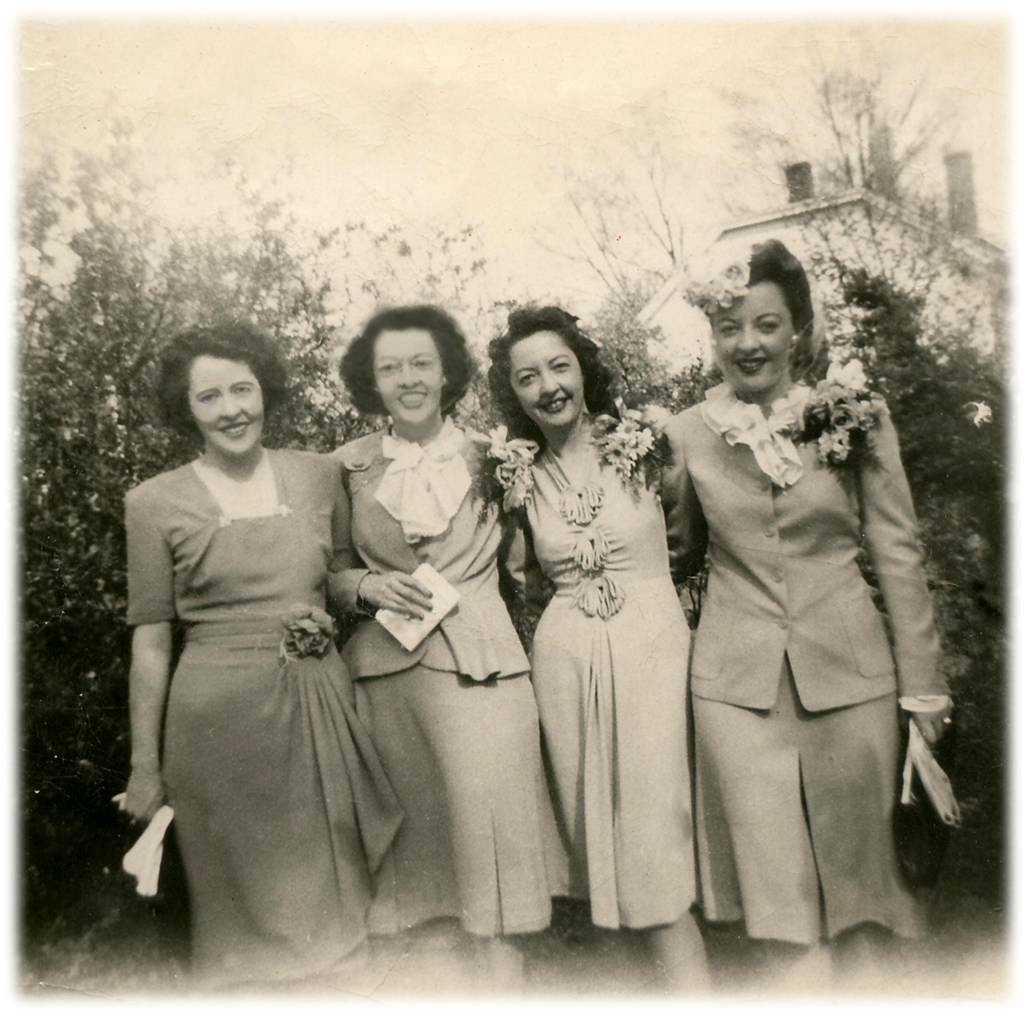
The Laracy Girls - Mill, Babe, Toots and Girly

When Mary was born, telephones, automobiles and electric lights were a rarity, but Civil War veterans lived in every town.  The ice man kept the food cold, the mailman brought almost all communications from far-flung friends and family, and the paper boy delivered the news.  Armies still had horse mounted cavalry; the War to End All Wars was still in the near future and a worse one followed twenty-five years later. Mary celebrates her hundredth birthday this week.

In 1912 western gunman and legendary town marshal of Dodge City, Wyatt Earp, had another seventeen years to go; Joshua Chamberlain, the hero of Little Round Top at Gettysburg, and Harriet Tubman, former slave and station keeper on the Underground Railroad, still lived. The Titanic hit the iceberg and sank in the North Atlantic.  Jackson Pollock, Woody Guthrie, “Lightening” Hopkins, Ben Hogan, John Paul I, Julia Child, “Lady Bird” Johnson and Gene Kelly along with Mary Laracy Smith were born. Mary was the daughter of second generation Irish immigrants, Jim and Molly (Manley) Laracy.  Everyone called her Toots. (“Toots” rhymes with foot, not loot. As in “Hey, Toots, you’re good looking.”)

Three younger sisters, Mildred, Cecelia and Elizabeth followed Mary along with an older brother, Billy, and the twin to Elizabeth (Betty), the baby brother John (Sonny).  Sonny’s WWII Army buddy, Jack, met and married his sister Betty and had six children of whom I am the oldest.  The Laracy girls, Toots, Mill, Babe and Girly broke the mold.  Only Toots and Girly (Mary and Betty) remain with us; they have been sisters for over 91 years, and what a century it was.

Mary was on the leading edge of the “Greatest Generation”, which literally saved the Western world.  The “eternal” German Third Reich, the Russian Revolution, indeed the whole terrible history of the Soviet Union, came and went.  The Spanish Flu took more human beings than the Black Plague.  Mary and her generation triumphed over the bloodiest century in human history and the century that cascaded humankind with more scientific and technological growth than the 20,000 years before it. Her generation faced the carnage, deprivation and exponential change with courage, good-humored resolve and steady intelligence, still managing to have many good times along the way.  They rose up out of the Great Depression determined to leave a better, safer and more prosperous world for their children, and they did.

Billy and Sonny followed their father, Jim, to become expert sheet metal workers.  The girls all worked in the war effort and after the war for the most part stayed home to raise their children; my mother, Betty,  was a telephone operator spending hours in front of one of those celebrated peg boards with a hundred plugs and wires everywhere.  She heard first hand of the Walpole boys who never came home from the Pacific, Northern Africa or Europe.

Cliff Smith married Mary and after the war moved steadily upward to become an executive in the local Kendall Mills textile plant, then he moved on to New York City.  The young Smith family moved to Fairfield County, Connecticut.  Their two children, David and Judy, were among 16 first cousins, with a mini baby boom of us born to the Laracy children within two years of the end of World War II.  All four Laracy women had babies in 1946. The children frequently visited and slept over with their cousins into their teen years.  The personal kindness and hospitality of the aunts and uncles greatly benefitted the nephews and nieces with many warm, fun memories and the security of the love in their homes.  I remember one “cousin” visit to Connecticut, when Cliff killed a poisonous copperhead snake with a rake to much acclaim from us kids.  At the Smith cottage on Lake Ossipee in New Hampshire, David and Judy tried with great fervor and skill, but largely unsuccessfully through no fault of their own, to teach me to water ski.

The sisters raised their children in the “Ozzie and Harriet”, “Father Knows Best” years of the fifties and early sixties, protecting their childhoods through long summer days.  We had bikes and baseball gloves, good schools and solid values — values we challenged and denigrated through the late sixties and seventies, only to rediscover them with our own families and try as best we could to pass them to our children.

Whether history will find the Baby Boomers to be worthy successors to the Greatest Generation is still very much an open question, as is what the next century will bring for our children and grandchildren.  But what is not an open question is the legacy of these amazing Americans, who overcame challenges never confronted by any previous generation and won.

When my Papa Laracy died, he had written my name (“Jackie”) in his little prayer book, “The Man of God, Devotions for Catholic Men”, and so thus it was bequeathed to me.  The inscription of the gift to him was, “To Pa from Toots, 12-25-1941”, only a couple of weeks after the attack at Pearl Harbor.  One of the prayers in it is this, “we beseech thee..amidst all the various changes of this our life and pilgrimage we may ever be protected by Thy help.”

God bless you and keep you at this milestone, Aunt Mary.  Happy Birthday, Toots.  We’ll lift a glass in your honor.

There is a mysterious cycle in human events.  To some generations much is given.  Of other generations much is expected.  This generation of Americans has a rendezvous with destiny.

Franklin D. Roosevelt 

2 Comments

Filed under Personal and family life

Cognitive Dissonance

Alone in the crowd

A recent article in the Wall Street Journal featured Alain de Botton’s new book “Religion for Atheists: A Non Believers Guide to the Uses of Religion”, which is to be published in March.  His writing is crisp; his observations about the alienation in our culture are astute.  Unfortunately, he attributes the missing sense of community, still found in religious groups, to the lack of the familiarity of rites and formulae, and, of course, utterly misses the point.

“Insofar as modern society ever promises us access to a community, it is one centered on the worship of professional success.  We sense that we are brushing up against its gates when the first question we are asked at a party is, ‘What do you do?’, our answer to which will determine whether we are warmly welcomed or conclusively abandoned.

Religions seem to know a great deal about our loneliness.  Even if we believe very little about what they tell us… we can nonetheless admire their understanding of what separates us from strangers… and prevent(s) us from building connections with others.”

Botton especially values the “genius” of the Catholic Mass.  The congregation, according to him, draws together dissimilar people from all layers of society.  Within the rituals, music and rote of the Mass, they are comfortable with one another; they know when to sit and when to stand and when to kneel.  The words of the prayers are known to all.  In fact even if one finds oneself among complete strangers speaking a foreign tongue, a Catholic can still participate in the Mass with ease – can still easily fit in and feel at home. The setting of the church, the composition of the attendees, who are not usually of the same race, profession, educational or income levels, yet share a “commitment to certain values”, all contribute to the connections of community.  These “values” include acceptance irrespective of class or success.

“As a result, we may start to feel that we could work a little less feverishly, because we see that the respect and security we hope to gain through our careers is already available to us in a warm and impressive community that imposes no worldly requirements on us for its welcome.”

How the Church succeeds in his purview presents a formulaic means of implementing “community” among the lonely, disaffected individuals that everywhere inhabit our population. He does regret the loss of the Agape Meal (Love Feast) of early Christian communities that transformed into the Eucharist of current practice, but still holds that there is some value in what remains.  It is good to know that an atheist has some better ideas to improve the liturgy.

He suggests a secular alternative to worship could be concocted and offered to all.  A “Temple to Perspective” would set the stage, complete with a “to scale” timeline monument to lift our eyes to the stars and put into perspective our tiny presence in geological and astronomical terms.

Temple to Relationships

His solution would include meals in an uplifting set-aside space, but meals with rules and rituals, such that the participants feel welcome, get to know each other in non judgmental ways and follow set patterns of conversation that do not judge others – sort of speed dating with memorized lines and without sex or wine.  Sterile, bleak and contrived come to mind.  From G.K. Chesterton: “When men cease to believe in God, they do not believe in nothing; they believe in anything.”

Personally, I’d prefer the bustling atmosphere of sidewalk tables outside a Federal Hill restaurant (Mediterraneo?) on a summer evening, perhaps bumping into Buddy Cianci, our personable and felonious ex-Mayor making his rounds.

St. Augustine wrote, “Therefore do not understand in order to believe, but believe in order to understand.”  Mr. Botton’s perceptions about the existential loneliness, not just of modern man, but of man without God are entirely accurate.  The point that he misses is the whole one.  Such presumably willful and obstinate spiritual blindness in such an intelligent brain is a great sadness.  He wants the faith but resists with impressive agility the Author of it.  What faith filled Catholics and others hold in common are not merely “shared values” or acceptance of others, although those attributes are valuable, but a deep, personal faith and relationship with their God.  Not superstitious whistling past the graveyard dreams as assumed by those who do not believe, but the intimate relationship of creature and Creator that cannot be imagined or understood by those who have not experienced it and are close minded even to the search.

From St. Augustine’s Confessions

Fecisti nos ad te et inquietum est cor nostrum donec requiescat in te.

You have made us for yourself, O Lord, and our hearts are restless until they rest in you.

Leave a comment

Filed under Culture views

The Fourth Greatest President in American History (Part 2)

President Obama’s claim that the achievements of his first term ranked his presidency as the fourth greatest in American history initiated these posts.  This edition will focus on the administration’s tendency toward fiat, executive orders and ignoring the more inconvenient aspects of the constitution.

President Obama has written and spoken about flaws in the constitution.  He also has publically promised that his main goal is to “fundamentally transform” America.  Even more recently, he pledged to accelerate his agenda by executive orders and rules whether or not Congress was prepared to follow.  If the legislative branch chooses to deliberate, vote, advise and consent on his plans, as is their constitutional responsibility, he will do what he wants to do and let God sort it out.   Here are a few instances where he already has demonstrated his predilection.  There are many more across all executive departments.

  • After the infamous Section 1233 mandating “end of life” counseling was voted out of the final Obamacare bill, it was reinstated by stealth regulation in November 2010 tucked amongst hundreds of new Medicare rules.  Friday night ‘document drops’ of hundreds of regulations and disclosures camouflaged on the slowest day of the news cycle has been an administration mainstay.
  • The Interior Department in Secretarial Order 3310 gave itself the authority to designate public lands as “Wild Lands” taking them off limits to such things as domestic oil exploration. Previously, such designations had been the exclusive prerogative of Congress.
  •  Before the outcry shut it down, after the “cap and trade” bill was defeated in Congress, the Environmental Protection Agency drew up regulations enacting the same anti-carbon measures rejected by the legislature.
  • While many presidents have employed recess appointments, President Obama has made it an art form. When the Senate could not see its way to approving Craig Becker, an AFL-CIO and SEIU lawyer, to the National Labor Relations Board, he was made a recess appointee. After all, the unions had contributed over $400 million almost entirely to Democrat candidates in the previous election, and where was the quid for the quo?  Although after the appointment ran out, Becker was rejected by the Senate and left the board, during his tenure the NLRB prevented Boeing from building a new factory in South Carolina, a right to work state.  The president made other recess appointments when the Senate was actually in session, which was remarkably unconstitutional.  He ignored the protests, challenging the Senate to a constitutional crisis, which Harry Reid declined to pursue.
  • Recently, we’ve seen an Amish farmer put out of business selling raw milk to neighbors, which his family had done for generations.  We once bought such milk from a local farmer in Maine, and it was healthy and the best milk we ever had.
  • Last week we read about a four year old in North Carolina, whose mother made her a turkey and cheese sandwich with a banana and apple juice lunch.  Citing a regulation put in place under the umbrella of Obamacare, the school confiscated the child’s lunch as not meeting their guidelines and gave the girl the prescribed chicken nuggets, then charged the mother for it.  This was put in place as part of an executive order from the president to retrain American citizens by ‘behavior modification.’  Nanny state, indeed.

A recent furor boiled up over Secretary of Health and Human Services Kathleen Sebelius enforcing regulations mandating that Obamacare health insurance coverage for all employees of private companies include abortifacient drugs.  There was no provision for conscience exemptions.  When the Catholic Conference of Bishops objected to this unprecedented crushing of First Amendment protections for churches, the president offered a ‘compromise’ wherein he simply ruled by fiat that, should church organizations demur, their insurance companies must offer at their own expense free coverage for these services.  This transparent ruse has become typical of the administration.  If an awkward constitutional issue blocks their way, declare it a non issue and override the niceties.

The United States Preventative Services Task Force, under Obamacare, makes all decisions on coverage such as the contraception decision.  Empowered to evaluate all preventative health services and decide which will be covered by insurance, the task force rates services “A” through “D” or “I” for “Insufficient Evidence”.  Under Obamacare, services rated “A” or “B” such as colon cancer screening for adults between 50 and 75 must be covered in full without co-pays.  Services rated “C” or “D” such as screening for ovarian or testicular cancer could end up not covered at all.  We first became aware of the task force’s new powers buried within the 2,500 pages of the bill, when it recommended that women ages 40-49 shouldn’t get routine mammograms, men shouldn’t get routine screening for prostate cancer, nor should women be screened for the viruses that cause cervical cancer.    It is one of the few Federal agencies with no review or appeal process defined; they have no requirement for public deliberations and are the only Federal health agency mandated to take cost into account when evaluating medical decisions.  What further restriction, mandate and cost cutting awaits an aging nation remains to be seen. It’s a Brave New World.

Embedded in the thousands of pages of the Obamacare, stimulus and financial reform bills is the power to issue regulations and executive orders to interpret and implement them.  This administration has embraced this control with great enthusiasm in order to “fundamentally transform” America and modify the behavior of Americans.  Without even the modest restraint of a reelection, what will a second term bring?  If this fails to give you pause, you aren’t paying attention.

Psalm 118:  It is better to take refuge in the Lord than to trust in princes.

3 Comments

Filed under Politics and government

Fault Lines

Our American culture is replete with rifts both significant and trivial: rich vs. poor; equal opportunity vs. equal results; liberal vs. conservative; government as a solution vs. government as an obstacle; Patriots vs. Giants; pro life vs. pro abortion or pro assisted suicide; traditional one man one woman marriage vs. all manner of gay and sad alternates; Tea Party vs. Occupy Wall Street; Red Sox vs. Yankees; Bud Light vs. microbreweries.

Charles Murray, the libertarian political scientist and author, recently published his new book, “Coming Apart: The State of White America 1960-2010”.  He limited his research to the white population and his employment statistics to pre 2008 to mitigate the variances due to race and recession.  The results are striking.  He proposes that the political divide (Tea Party) and economic split (OWS), while divisive, are far from the worst of our deepening separations.  His conclusion is that the accelerating values gap between the upper middle class and the working class is debilitating and threatens to end American culture as we have defined it for 250 years.  Some of it is economic, but most damaging are the cultural differences.

Some definitions will clarify the argument.  Dr. Murray studied in depth Belmont, a white affluent suburb of Boston, and Fishtown, a white working class neighborhood in Philadelphia.  His classifications are calibrated by education and employment.  Most of the people in the Belmont group had at least bachelor’s degrees and worked as doctors, lawyers, business owners, managers and academics.  In the Fishtown group, most had high school educations or less and worked in clerical, retail or blue collar jobs requiring little training.

While taking into account the admonition about “lies, damn lies and statistics”, some must be included in this discussion for it to make sense.  Dr. Murray’s evidence is convincing.  Both upper and lower classes have been affected by the cultural tsunami of the last fifty years, but the mores and habits of the working class have been even more drastically altered, thus increasing the gap.  In 1960, the average annual family income in inflation adjusted current dollars for the elite ‘zip codes’ was $84,000; today in relative terms it is $163,000.  During the same time period, married families in the elite group dropped from 94% to 83%; among our working class married households has fallen from 84% to 48%.   Children raised by single parents have risen from 1% to 6% among the Belmont families, and from 6% to 65% among those with a high school education or less.  Regular practice of religion went from 71% to 60% in the upper middle class, and from 62% to 41% in the working class.  Controlling for the recession, the gap between upper and working class industriousness (dropping out of the jobs market and working less than 40 hours) has also grown demonstrably.

The distressing reality is that the cultural commonality among the elites and the workers has fallen apart.  “The centre cannot hold.”  Elites live in enclaves increasingly isolated from the common folk.  They eat different food, take care of their bodies differently, watch different entertainment, go to different schools, take different vacations and share less and less with fellow citizens of lesser means.  While there has always been a gap, as Alexis de Tocqueville noted about American culture in the 1830’s, “The more opulent citizens take great care not to stand aloof from the people.  On the contrary, they constantly keep on easy terms with the lower classes: They listen to them, they speak to them every day.”  For most that is no longer the reality of our daily lives.

Forty years ago or less, the population of America understood each other better, embracing a common civic culture and “shared experiences of daily life and shared assumptions about (core) American values involving marriage, honesty, hard work and religion.”  As we grow farther apart, communicating on a meaningful level becomes ever more problematic.  We talk at and around each other, not with each other.

The good news for Dr. Murray is that there is a burgeoning recognition  of the new American Great Divide as a grievous problem.   He suggests that the remedy is not amenable to government mandates or educational curricula; the cure is one family at a time, one person at a time and is the responsibility of each of us and all of us: to simply, make the effort to know one another better across the cultural divide.

One of Laura Ingalls Wilder’s Little House books was “The Long Winter”.  The life threatening challenges to Charles Wilder’s family were terrifying.  Our family sometimes wrapped in blankets just reading aloud about the cold and weeklong prairie blizzards.  Charles tied a rope from the door of their cabin to the barn. Each day he fed and milked their cow.  During the seemingly endless, howling storms, he would take a lantern, keep his hand on the rope and do his barn chores.  The rope protected him from losing his way in the storm; the blizzards were so intense that a dead reckoning error of just a few degrees would strand him, hopelessly unable to find his way back – a fatal mistake; he wouldn’t be found until the spring thaw.

Our lesson in that is this:  hold on to the rope.  Each family, each person.  Hold on to the rope.

Listening moves us closer, it helps us become more whole, more healthy, more holy. Not listening creates fragmentation, and fragmentation is the root of all suffering.
Margaret J. Wheatley

2 Comments

Filed under Culture views

Free Speech is Not Always Free

Last Thursday at the Rhode Island Statehouse, the Occupy Providence folks joined by the “professionals” from Occupy Wall Street finally clarified their muddled message a bit while shutting down the Rhode Island Right to Life Committee’s annual rally in the rotunda.  Apparently greed is bad; abortion is good.  Abortion is so good, even though it already ends 23% of pregnancies in Rhode Island, there needs to be more of them, and indeed killing our unborn children should be an entitlement paid for with public tax dollars, breaching both tradition and the law in Rhode Island.

The governor, Lincoln Chaffee, recently issued an executive order to create the health benefit exchanges mandated by Obamacare.  When the state senate refused to pass the exchanges allowing abortion funding, the good governor took it upon himself to design them with the mandated payments for abortion.  This executive order is being challenged in the courts.  The Occupiers, like the governor, prefer administrative fiat and publically funded abortions, seizing by edict that which must be the legislature’s prerogative.  This strategy of executive strong-arming is exactly what President Obama explicitly has promised us should he be reelected.  The legislature be damned.

To reinforce their message, the Occupiers engaged in brown shirt thuggery and exercised their First Amendment rights by booing down the free speech of those who would exercise theirs.  Palpable anger, whistles, bumping, bullying grandmothers and children, fist pumping and pelting the high school girls of LaSalle Academy with condoms were taken, it seems, from the playbook of dilettante revolutionaries.  The well planned, orchestrated and slowly intensifying commotion started with signs and escalated with incremental crowding of the podium and intimidation of especially young pro life speakers to the point of making further speeches or prayers impossible.

They hooted down Barth Bracy, Executive Director of RIRTL, when he was telling them they weren’t part of the 99%, but a remnant of the survivors in the 77% of their demographic who dodged the abortionist.  Father Bernard Healey, who represented the Diocese of Providence, was prevented from leading the closing prayer.  The diocese actually implemented the homeless shelter that the Occupiers have been demanding ineffectually for months from the City of Providence.  Father Healey, an affable, intelligent man with a ready sense of humor, would have liked to pray for the mothers, the babies and the Occupy Providence mob, but was prevented from doing so.

These “revolutionaries” will eventually take showers (one would hope – those nearest them at the rally told us that personal hygiene was not their strong suit) and go back to their classrooms at Brown to check on their trust funds, but in the meanwhile they played winter camping out in tents in Burnside Park and disrupted the orderly gatherings of those with whom they disagree. Perhaps the Brown University Swearer Center for Public Service would consider setting up a homeless center themselves with the dorm capacity vacated by the Occupiers.  However, I suspect the Brown public service community is more comfortable with the theoretical when it comes to helping the homeless; the messy details are best left to other than the chardonnay crowd.

Providence Mayor Angel Taveras should follow the lead of the more courageous leadership in New York and Boston.  The time is past due for the Providence police to don their Tyvek hazardous material suits and filtered masks, clean out the tents and disinfect the area for use by the 99% of Providence residents and taxpayers who used to enjoy the park.

Freedom of speech is not a sometimes thing, available only to the loud and noxious.  The vast majority of Americans greatly value the right of peaceable assembly to express to their lawmakers their most heartfelt views on critical issues.  Pity the few who don’t so value the First Amendment and overrun that right for the rest of us with adolescent tantrums.

To suppress free speech is a double wrong. It violates the rights of the hearer as well as those of the speaker.  Frederick Douglass

7 Comments

Filed under Politics and government

Anniversary Waltz

In 1966, when he was nineteen, not much more than a boy really, he fell utterly in love with a girl who was so lovely, he caught his breath sometimes when he saw her. The sound of her voice brought him joy.  Her name was Rita, a name derived from Margarita or Marguerite, from the Greek and Latin, means “pearl”.  They could not be dissuaded by wiser parents and married in the winter of 1967, when they were twenty.  Spenser Tracy played the father character in “Guess Who’s Coming to Dinner”, a great Stanley Kramer film of the same period; he told his daughter, who could not be talked out of marrying a black man (Sidney Poitier), that they would face great difficulty with a marriage of mixed race, but when he realized they were truly and totally in love, he told the family the only thing worse than them marrying would be them not marrying.  Rita and her young husband were in a similar state.

He hadn’t finished college, and Rita had just graduated as a registered nurse; she supported them for the first year and a half.  After a brief January Cape Cod honeymoon on semester break, the couple moved into a third story walk up apartment near the campus of Smith College in Northampton, MA, while he finished his degree at the University of Massachusetts.  He found summer work as a tree climber for an arborist company and paid for tuition and books. She started on a medical/surgical ward at Cooley Dickenson Hospital, where Ted Kennedy had recovered from a broken back suffered in the crash of a small plane. Very little extra money in the tin canister and they were completely happy.

Rita and Amy

More foolishness followed graduation.  After a year living back close to their parents, they ventured west for a year in Colorado: he as a tree climbing foreman, she as a pediatric nurse at Boulder General.  While there, their first child, Amy, was born, and they turned twenty three.  A long period of a dalliance starting with the almost obligatory left wing politics of Boulder followed. After returning to Massachusetts, first Boston, then Cape Cod, they moved for a decade to rural Maine.  In Maine, they survived the first real danger to their marriage in the midst of a long, cold winter, when the snow drifted halfway up the first story windows and cabin fever raged.  After nine years of marriage and months of their winter of discontent, they were literally a day short of separation with two young children, Amy and Gabriel.

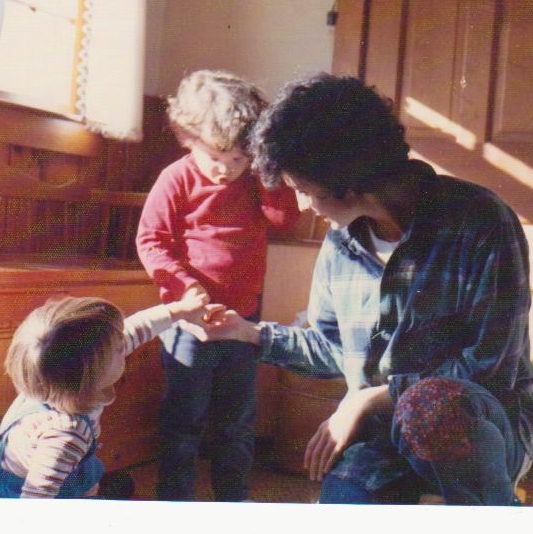
Rita, Amy and Gabe

Reason, a return to the faith of their childhood, the grace of their sacrament and nothing short of a miracle intervened.  They stuck it out.  A difficult year later, their love bloomed again and never left them.  A third child was born while in Maine – Angela. They moved to Rhode Island, and their fourth baby, Meg, came home.

Rita stayed at home to raise their children for many years, except for some part time work as an obstetrical nurse and teaching as a certified childbirth educator.  When Meg started high school, she volunteered with the Diocese of Providence in their pro life office.  Her experiences with maternity nursing, training young mothers to give birth and with her own premature baby (2 lbs) had forged in her a profound fervor for pro life issues.

She was hired as executive director of a crisis pregnancy center, Woman to Woman, and then was recruited as executive director of the state wide Rhode Island Right to Life organization.  RIRTL offers material help to women in crisis pregnancies, educational talks at schools and churches, speeches at political rallies in the state house rotunda and maintains a legislative lobby. Rita did battle with newspapers, local television and legislators.  Her writing became effective, and she spoke to crowds of hundreds.  Upon her retirement, she received written commendations from both houses of the state legislature and the governor.  She had dinner with governors, bishops and congressmen.  None of which meant much to her, the commendations gather dust in a closet.  What mattered to her were the babies and the mothers. She was astonished at this public turn of events, but her husband was not.  Rita is a warrior.

Rita loves to read, especially history; she is a lifelong learner.  Her active mind takes great pleasure in discussion of politics, cultural issues and history.  Her husband and she like very much to walk in the woods or along a beach, holding hands and speaking of many things – sometimes the lives of their children, sometimes their grandchildren, and sometimes the volatile topics of the day.  She favors a few deep friendships to which she is fiercely loyal and is a member of Red Sox Nation.  Rita likes to sing and play her guitar.  She draws well and enjoys sketching.  Her Italian and Portuguese heritage helped her become a good cook.   Her sometimes quick temper, which flows from her passionate nature, flairs far less frequently now, and they rarely have cross words.  Her husband still loves her like life itself; Rita is the greatest blessing of his life, and he is grateful.  The love of this young couple matured and will last them until death do them part.

Forty five years ago today they were married.  Happy anniversary, beautiful.

Proverbs 31

When one finds a worthy wife,           
her value is far beyond pearls.
Her husband, entrusting his heart to her,
has an unfailing prize.
She brings him good, and not evil,
all the days of her life.

14 Comments

Filed under Personal and family life

Exultation

One of the more attractive and hopeful aspects of the human personality is our capacity for wonder, curiosity and the joy of the “Eureka” moment discovering the solution to seemingly insurmountable, vexing challenges.  A story from the past week brought this marvel to mind.

Public Broadcasting’s NOVA series ran a program about Hugh Hunt, a Cambridge University engineering professor, and his inquiry into an early WWII bombing raid by Great Britain that temporarily shut down the heartland of the Third Reich’s war equipment industry in the Ruhr Valley.  In 1942 with the war against Hitler in grave danger a British engineer, Barnes Wallis, convinced the Royal Air Force that he could breach the immense Möhne and Eder dams, which would flood coal mines and deprive the steel plants of necessary water and hydroelectric power to disrupt the production of tanks, planes and munitions for the German war machine.  Fearsome anti aircraft emplacements and the inaccuracy of bombs of the early war (only 10% hit within 5 miles of their targets) thus far had kept the dams safe.  To prevent air dropped torpedoes from reaching the dams, large, steel submarine nets were installed below the waterline across the huge lakes.  Wallis designed the famous “bouncing bombs”, code named “Upkeep”, which could skip across the water and sink adjacent to the dams, detonating after they dropped thirty feet below the surface. Delivery necessitated low level, risky flying.

On the night of May 16, 1943 a 617 RAF Squadron of 19 Lancaster bombers attacked the dams with the “Upkeep” bombs suspended beneath their fuselages. The concussive wave from their explosives, magnified by the weight of the water above them, blew out large sections of the dams and flooded the valleys.  In addition to damaging the mines and power plants, 25 bridges were washed out.  Eight bombers and fifty three members of the “Dam Busters” squadron did not survive the raid, but their success was one of the most significant of the war.

In 2011, Hugh Hunt was intrigued by how Wallis managed to skip what looked like oil drums across the water.  Most of the 1940’s notes were lost in local floods in 1960, and no one had been able to duplicate Barnes Wallis’s achievement since.  After months of meticulous research, Hunt was ready to test his theories at a remote lake in Canada.  He assembled a team that included a dam engineer and contractor to build a 30’ high model of the original dam.  They poured hundreds of concrete 2’ x 2’ x 4’ blocks that interlocked like Lego blocks, overcoming numerous design, soil type and topography problems.  First they cut a deep channel from the lake then built the dam in the middle of it.  Once it was completed, the last barrier of soil separating the channel from the lake was dug out, filling the channel behind the dam. It took six intense weeks to complete.

Two weeks of field testing in the lake required Arnie Schreder, a bush pilot with thirty years of experience, to fly his two engine WWII vintage DC-4 over 200 MPH only 50 feet above the water to achieve the necessary angle and speed of entry for the barrel.  Flying that low put the plane at risk of being damaged or even broken up by the impact splash when the barrel hit the lake.  Experiments with cement filled barrels had proven that a backspin of over 700 RPM was necessary to make them skip.  In Wallis’s version, an engine had been fitted to the bomb release mechanism under the plane to achieve the necessary spin.  Hugh Hunt devised a low budget solution that required spinning up the barrel with a large commercial drill to 1,600 RPM on the ground, and then releasing it over the lake before it slowed below 700.

At the last minute, tests proved their commercial drop mechanism designed for forest fire fighting was inadequate for the task, putting the barrel into the water at an angle, instead of the perfect parallel it required.  Two days before the crucial final drop, Hunt rented a local machine shop to alter the arms on the mount, personally cutting and welding into the night.  The day before the critical drop, Jim Bellevance, the dam contractor, stopped the leaks and finished the dam.  As each difficult hurdle was cleared, the team celebrated with shouts and hugs all around.

On the day of the final test, explosives were lowered into the water adjacent to the dam. The Canadian government’s toleration of this motley team of scientists, flyers and builders did not extend to letting them fly over sovereign territory with live bombs.  Hugh Hunt’s promise to Arnie Schreder was that if he could manage to skip the 300 pound barrel five times down the lake, into the channel and against the dam, Hunt would detonate the charge beneath it.  The crew pulled back to a safe distance and tensely watched the dénouement of a year’s planning and effort.  Arnie flew tight on the right line and low.  The barrel released perfectly and bounced hard five times and into the top of the dam.  When the dam blew, Hunt danced like a child, hugged one of his engineers and pumped his fist into the air.  No one watching could see scientists as detached and undemonstrative.

I was reminded of my 3 year old granddaughter, Gianna.  She will spend a half hour painstakingly building a Lego structure with windows, towers, bridges, cars, stairs and doors. Her intense focus is a marvel.  When it is finally finished to her satisfaction, she will look at us and her creation with great satisfaction, then delight in smashing it to oblivion.  Absolute delight.  Exultation.  The joy of simply being human.

Fair is what we see, Fairer what we have perceived, Fairest what is still in veil.

Blessed Nicolas Steno.  Father of modern geology with significant contributions to anatomy and paleontology as well.  Danish Bishop. Born January 11, 1638. Beatified by Pope John Paul II in 1988.

Leave a comment

Filed under Culture views