
I’ve been wandering through this land
Just doin’ the best I can Tryin’ to find what I was meant to do
And the people that I see
Look as worried as can be
And it looks like they are wanderin’, too.And I can’t help but wonder where I’m bound
Where I’m bound
I can’t help but wonder where I’m bound…, Tom Paxton
Once a smart phone became firmly established in my daily routine, layered on top of an assertive laptop, the compulsion to check emails and all manner of distraction entrenches week by week into my neurons and synapses. The message notification “dings” set me to salivating like Pavlov’s dogs; resisting the impulse to jump from what I am doing to the current diversion is increasingly difficult. Focus blurs.
Nicolas Carr published in 2010 The Shallows, What the Internet is Doing to our Brains, which analyzes the physical, emotional and psychological effects in our brains of using the net. I first listened to “The Shallows” as an audio book, now I’m reading it on the Nook; I can’t get the ideas to stop their reverberations. The implications for us and for the lives of our children are unsettling.
Our method of acquiring information is transmuting us into feverish wantons with the attention deficits of mosquitoes in a crowded tent on a humid summer night. On laptop or smart phone we flit to the compelling chime of personal and work email, Facebook updates, Linked In messages, Tweets, text messages and voicemail notifications. The banner of multitasking rides at the head of a rabble with a disordered compass.
”It wasn’t just that so many of my habits and routines were changing as I became more accustomed to and dependent on the sites and services of the net. The very way my brain worked seemed to be changing. It was then that I began worrying about my inability to pay attention to one thing for more than a couple of minutes…. My brain… wasn’t just drifting. It was hungry. It was demanding to be fed the way the Net fed it – and the more it was fed, the hungrier it became.” The Shallows, Nicolas Carr
Brain theory long assumed genetically predisposed neurons and synapses which congealed in late adolescence. Neurology now concludes that plasticity for neuron and synapse formation persists for all of our lives. We rewire incessantly. New experience and repetitive actions shape fresh biological connections; neglected habits atrophy. The media is not only the message, but re-forms our minds, our nerve cells, how we think and what we think.
We read fewer books and grow impatient with long articles (or blog posts). We follow YouTube videos, clever slogans and the Tweets of movie actors and baseball players where once we probed nuance in the insights of genius. 140 characters and hash tags hazard scarce space for fine distinctions. Research and analysis defaults to bouncing hyperlink to hyperlink, descending into minutiae and boggling detail. Renaissance Man is no more; as my boss is fond of saying, we major in minors. We know (or have immediate access to) more and more about less and less.
”By waiting and by calm you shall be saved, in quiet and in trust your strength lies. But this you did not wish.” Isaiah 30:15
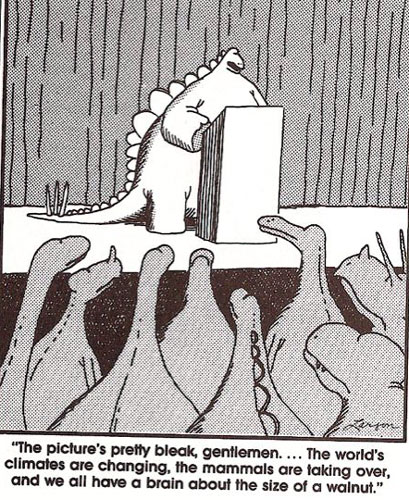 I wonder if other societal problems are related. Can it be coincidence that the first generation engrossed in on line distraction and video games from their infancy is also the generation beset with epidemic Attention Deficit/ Hyperactivity Disorder? After decades of consistent improvement, IQ scores have declined in the last fifteen years, mainly in writing and verbal skills. Studies cited in “The Shallows” are conclusive that those reading material in a traditional book retain more and have deeper understanding of the same material read by other subjects on screen with hyperlinks, supposedly better equipping them to explore and understand associated texts. How can these two issues not be related? Are we sacrificing biological memory capacity and the ability for deep thinking even as we gain in artificial memory and silicone aided rapid computation and recall? Are exponential gains in access to facts depriving us of knowledge, and worse, of sorely needed wisdom? Where do we find peace in feverish, addictive distraction?
Then you better start swimmin’
Or you’ll sink like a stone
For the times they are a-changin’. Bob Dylan
The still developing technology affords us the ability to assimilate not only the printed word, but images, video and speech from sites like TED and on line learning educational channels from many universities. Irrevocably alterations occur to how we learn and communicate, even how our brain works, hopefully into wisdom, not Babel. Should we choose to dissipate this windfall into pornography, trivialities, Tweets, two minute YouTube videos, Facebook posts and in violent, amoral games like Grand Theft Auto, we will corkscrew into degradation. One of the earliest developments in printed books was pervasive pornography, but the ship pitched in the storm for a while and then righted. Should we similarly roll with the wind and tide to integrate imaginatively human wisdom with this virtually unlimited source of information, our children will have a future worth leaving them. Our creative gifts and free will to act will set us on our path. The jury is not only still out, we are the accused, the advocates, the judge and the jury.
“Many years back I gave up all claim to a rational view of the world and even avoided people who believed that the laws of physics and causality have any application when it comes to understanding the mysteries of creation or the fact that light can enter the eye and form an image in the brain and send a poetic tendril down the arm into a clutch of fingers that could write the Shakespearean sonnets.” Creole Belle, James Lee Burke


















 Quo Vadis Blog