“Ever tried. Ever failed. No matter.
Try again.
Fail again.
Fail better.” Samuel Beckett, Worstward Ho
I learned to climb trees competently and was taught by the foreman of the Northampton branch of an old and respected Massachusetts arborist company, Frost and Higgins. Century old tree companies in New England then tended to be associated with old Yankee names like Bartlett, Allen, Frost and Higgins. The foreman, however, was part of an eclectic crew. Bill was of Polish genes, as were a lot of people around Springfield. We could find kielbasa in the local market a lot easier than chouriço, linguica, or hot Italian sausage.
Bill was a natural athlete who once had a major league tryout as a pitcher. A year in minor league buses and Motel 8 convinced him he didn’t want to pay the dues to try the odds of making it to the Show. He was a veteran of the 101st Airborne. On our first Saturday orientation he had the two new climbers learning to jump off a platform and roll when we hit. Safety training in the sixties. All of us learned quickly, if we didn’t already know, that gravity has no mercy and suffers no alternative. The second part of the lesson was Bill’s summary of his personal comprehensive safety program, “If you fall, three feet before you hit the ground, you’re fired.”
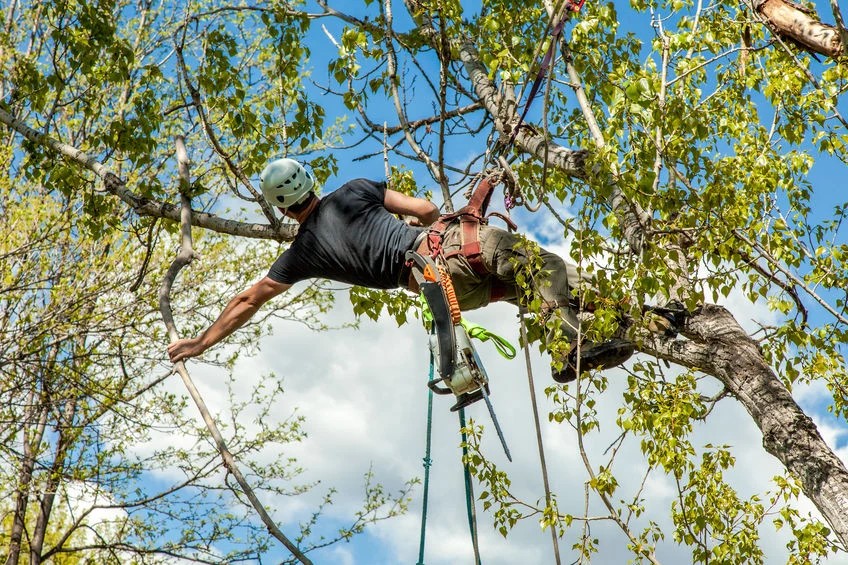
Climbing skills were tested more in pruning than in takedowns: no spurs, farther out on small limbs, balance, surefooted. We had to learn different criteria for the types of pruning, but the priorities were dead wood, diseased branches, crossing branches rubbed with bark abrasion, branches growing back into the tree, small suckers robbing the tree of nutrients. How fine we would have to cut (and how far out into the twigs we would have to climb) was determined by what was needed and purchased by the owner. Climb to the highest safe crotch into which we could climb, tie in, and work our way down, kicking cut branches and hangers to the ground as we went.
Picture a pendulum, and you are the weight. Tied in at an angle, we would walk out to where we needed to be to reach what needed to be trimmed. The farther out I climbed, the greater the potential for centrifugal energy. For swings back into the center of the tree, gravity was just as effective an engine as in falling. Gaining speed as the restorative energy built headed towards an equilibrium, hopefully controlled, feet forward facing the target. Swing from branch to branch, from pruned branch or leader to the new one needing attention. A few crash landings in the learning curve were expected.
American elms, back when there were a lot of them, could easily reach 80 or 90 feet, were the most challenging for me to get up. And occasionally frightening. Spread out leaders like a vase meant a lot of rethrowing of my rope and shinnying to get to the top. Shinnying is a good term for what happens to your shins. Abrasion and pain are two others. They were also the most fun to swing unimpeded by intervening branches once I was tied in. I learned to fly.
“Anything worth doing is worth doing badly.” G.K. Chesterton
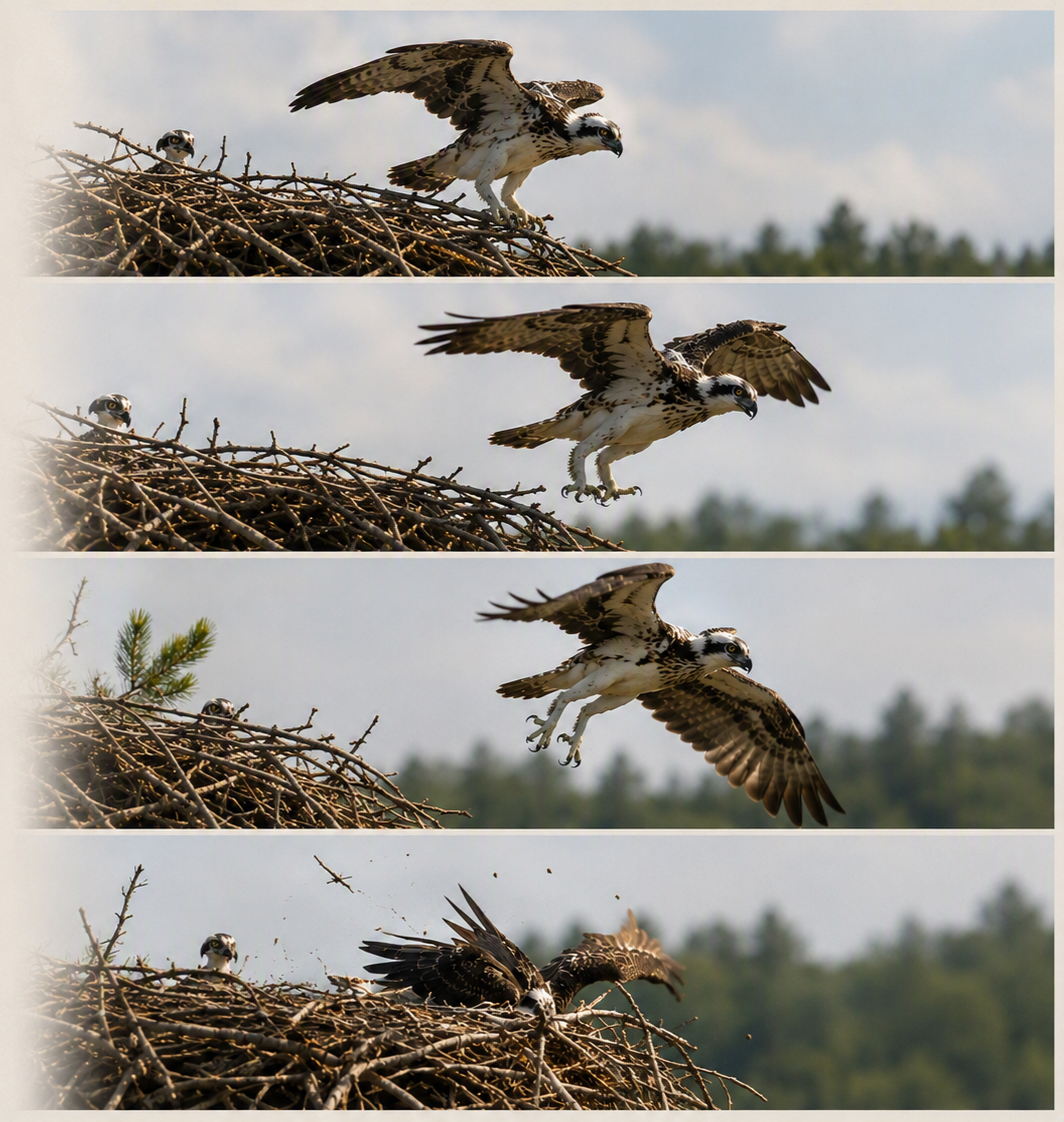
When an osprey (or most any bird) learns to fly, little elegance is involved in the beginning. We often see the chicks in the nests around the island. The parents sit patiently on the eggs then with diligence feed the chicks once they hatch. Their little open mouths are a steady demand. The adults fish persistently in the always nearby water, riding updrafts, circling, searching, dropping like doom itself onto some small fish it spots. We’ll see one strike the water like a stone and emerge many times with the still struggling prey twisting and protesting its fate. Back to the nest to the ever ready open beaks of their offspring. At first just pieces, later whole small fish down the waiting gullets.
The time comes for the chicks to learn to hunt and fend for themselves before the autumn migration, otherwise, what’s the point of it all? A little like an arborist learning to climb before they fly, they are awkward, unsure, a bit clumsy, a bit underpowered. They perch on the outer rim of the large nest and flap their wings against the wind for days, building strength in their soon-to-be-powerful pinions that will keep them alive. “As awkward as a fledgling bird may look, this is a natural stage, and the parents are most likely nearby.” (Massachusetts Audubon Society).
The first flight is sometimes accidental, a short hop to a nearby branch. Or a slip to flutter to the ground. Gradually over several weeks, they lengthen the journey with perhaps a few barely controlled crash landings back in the nest. Their parents mostly watch unless there is a real disaster; if they are stunned on the ground and a predator comes near, it will learn the sharpness of osprey mama talons. The adults incrementally decrease feeding their fledglings until necessity drives the fledglings to the water to learn their craft. I’ve never seen a first plunge for an osprey into the water to grab their first fish, but there must be one. I expect it takes a few tries to hone their instincts, to see with their keen eyes the prey slightly offset by the distortion of light from the air to the ocean and waves. But eventually they will eat and find their own mate for life, build their own nest, raise their own chicks, and fulfill their calling.
“There are two lasting bequests we can give our children: one is roots, the other is wings.” Hodding Carter, Where Main Street Meets the River, (perhaps quoting an earlier source).
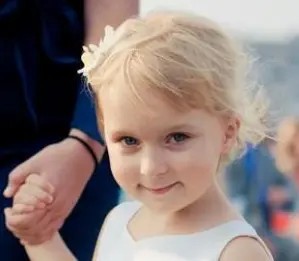
A first grandchild is unique and remains so. Each one is precious, but the memory of the birth of the first one is indelible. Her name is Gianna. Her mom, Angela, our next to youngest daughter, taught for a while after college and gained her master’s degree in education. Once her children started arriving (there are now five), Angela went all in for them, homeschooling them from kindergarten. She has laid down her life for her children for eighteen years every day. Gianna is her first graduate. Angela and her parents shed a few tears of gratitude. I expect a few more will follow later this year.
The G Unit will fledge this August and take her first extended flight to Catholic University of America in Washington, DC. She earned high honors almost every term in a challenging classical curriculum with a mixture of home and many online classes. She studied Latin and in depth works of a lot of Dead White Guys eschewed by most public curriculum. I remember well written papers on Plato’s Republic, Chesterton’s Orthodoxy, Shakespeare’s plays and sonnets, C.S. Lewis, Homer, Eliot, Virgil, Aristotle, and many others: names that once helped define the social imagination and shared Western civilization that sustained a culture for a few thousand years until the deconstructionists convinced us that they could do better. And didn’t. She earned a very large share of her college costs in scholarships and grants, but she will help with an on campus job.
She danced ballet as her mom had done for a dozen years and her moments of glad graceful movement rival any osprey. She sings much better too, having performed as an alto through her high school years in the statewide Rhode Island Children’s Chorus (RICC) High School Honor Choir with Dr. Christine Noel. Her first audition for that was challenging during COVID and done by a submitted tape. Dr. Noel recognized a gift she could help form and called within a day. She was right. They will miss her, and she will miss them. Dance three or four times a week with Heritage Ballet. Practice chorus once a week at the RI Philharmonic Carter Center. We will miss those too, although three of her sisters still dance at Heritage, so our blessed days of chauffeuring beautiful dancers to practice and attending their performances will thankfully continue.

I have written about G before several times in this forum, starting when she was three. Type her name in the search box on the home page, and you can follow her progress. She retains her sharp intelligence and sense of ironic humor. Adding to her repertoire, she developed a world class eye roll that someday may freeze the blood of some lucky suitor. She is in no rush for that, and neither are her parents and grandparents.
I expect if I am granted the time, I’ll be writing about her again. Rita and I pray for her each day along with our other six grandchildren. That will not change while we are able.
This year she will fledge, trusting her young wings and heading south to the big city of Babylon. Such an odyssey is both wonderous and frightening for her grandparents. She has proven many times to be levelheaded in many situations with sound judgment. Her dorm and roommate are assigned. Her wings have developed strong flapping out there on the edge of the nest. Her persistence has gained vigor shinnying up vertical challenges. Her parents have done all that any parent could do to support, guide, and love her. They have been there for her, and remain so, but now it will be more remote.
But, dear Lord, she’s only eighteen. Watch over her. Keep her safe. And let her soar.
“Like an eagle that stirs up its nest,
that hovers over its young,
spreading out its wings, catching them,
bearing them on its pinions…” Deuteronomy 32:11