Tag Archives: god

Journeyman

“A human community, then, if it is to last long, must exert a sort of centripetal force, holding local soil and memory in place. Practically speaking, human society has no work more important than this.” Wendell Berry, “The Work of Local Culture.”

Apollos Rivoire, a French Huguenot refugee, immigrated to Boston when he was thirteen. Apprenticed to a silversmith, he learned his craft well and built a good business. His son followed in his footsteps apprenticed to his father as was the practice for millennia. Joseph was a carpenter as was his son in Nazareth.  There is much to be said for the personal handing down of skills and understanding. The nurturing of young lives, training them day by day into respect for themselves, for each other, for hard work and its fruits. Apollos later anglicized his name to Paul Revere.

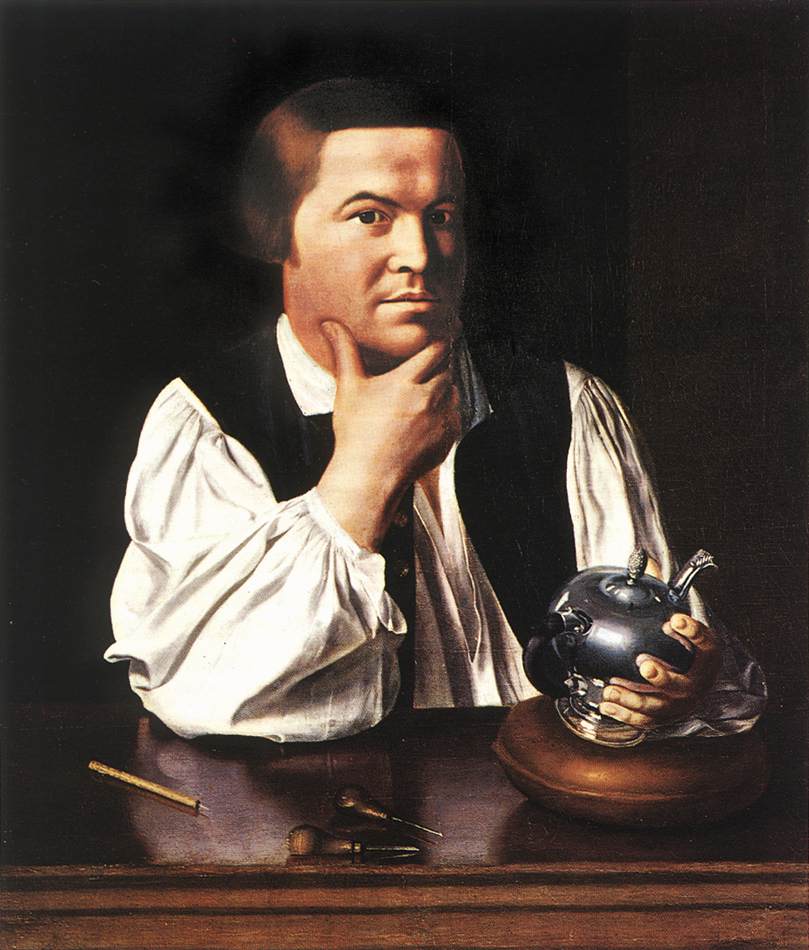
Paul Revere, J.S. Copley

His son was born in 1735 and became renowned for his beautiful craftmanship; some of his works are still displayed in art museums including the Boston Museum of Fine Arts and the Metropolitan Museum in New York. [i]After the Revolutionary War that helped make him famous riding through the countryside to Concord and Lexington, to further his status in Boston society he decided to switch teams from a skilled artisan to a wealthy merchant as a nascent industrial age emerged.

Revere the son developed the business into lucrative trade after expanding out into other metals: copper and iron. He began manufacturing iron sash cord weights, church bells and rolled copper roofing, including the roof of the original capitol building in Massachusetts. Revere Copper Works started with a foundry and rolling mill in nearby Canton and still exists as the oldest still operating manufacturing company in America, albeit no longer in New England. Paul Revere was an early advocate of tariffs to protect his business from foreign competition, not to protect jobs, but to enhance profits.

Paul Revere exemplified America’s transformation from an agrarian society of rural farmers and local artisans into a nation massing in cities. American citizens converted by necessity from small-farm stewardship and skilled apprenticeships into specialized wage laborers ever more fragmented and distant from the self-sufficient small community folks who led the sort of lives Thomas Jefferson considered necessary for the American experiment in democracy and a constitutional republic to flourish.

Our agriculture and food supply providers devolved as well with thousands of skilled farmers gradually shrinking to far fewer large international corporate agribusiness managers, machine and chemical dependent, with its primary goal production and bushels per acre the sole measure of success. From mules and sweat and careful planting to harvesting combines and giant tractors. Utilization, not nurture. From the patient, observant skills of the artisan to tending the repetitive pounding of our technological wonders. From painstaking, paying close attention, respectful husbandry to mechanized plowing and harrowing. From rolling contoured pastures to strip mines.

“The first belt knife given by a European to an Indian was a portent as great as the cloud that mushroomed over Hiroshima…Instantly the man of 6,000 BC was bound fast to a way of life that had developed seven and a half millennia beyond his own. He began to live better and he began to die… In the sum it was cataclysmic. A culture was forced to change much faster than change could be adjusted to. All corruptions of culture produce breakdowns of morale, of communal integrity, and of personality….” Bernard DeVoto, The Course of Empire, 1952.

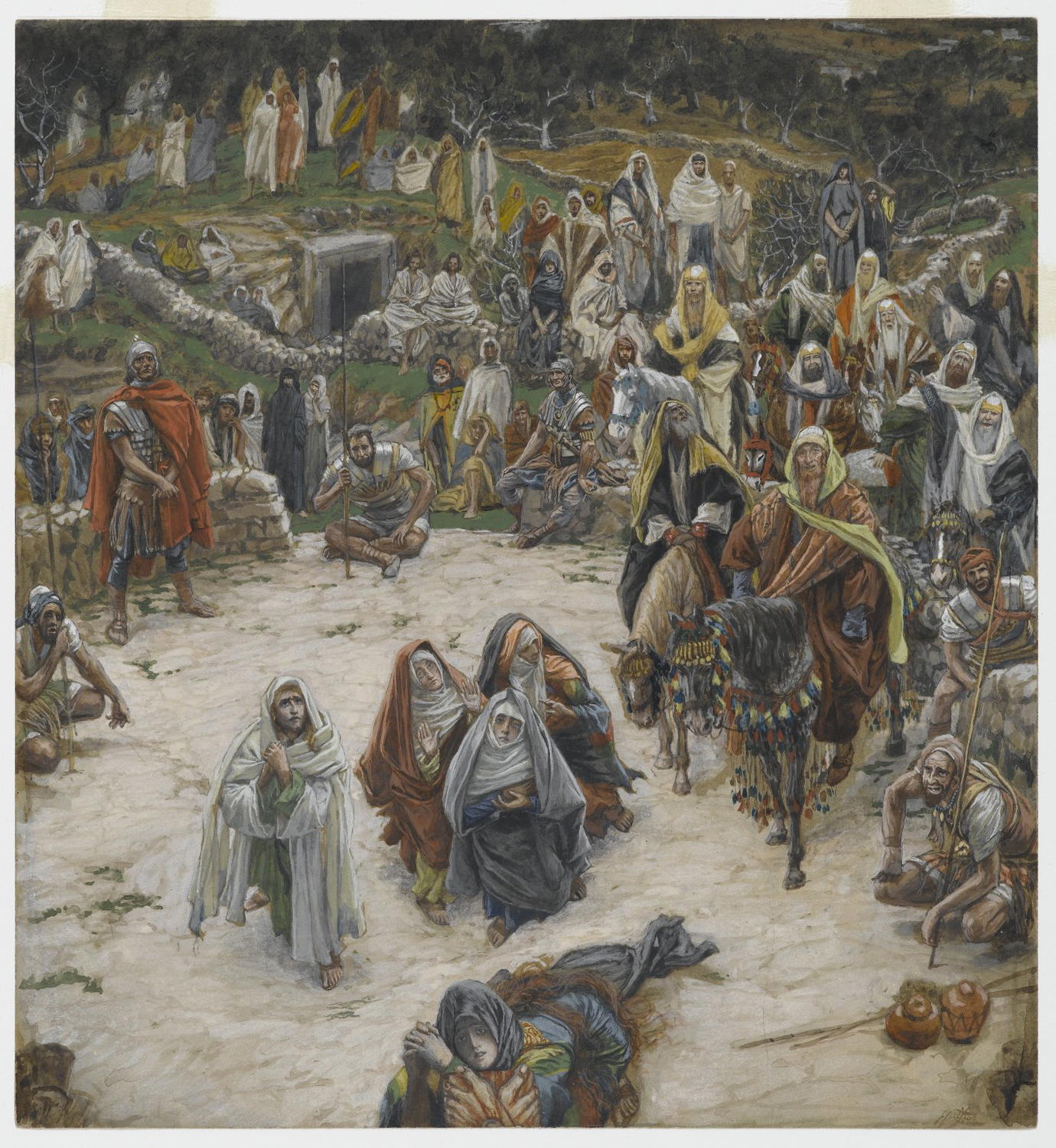
Tower of Babel, Pieter Bruegel the Elder

What can be learned from this brief quote and history lesson about what befell Native Americans? Can that lesson be applied to the great unsettling that seems to have uprooted our culture leaving us all unmoored and trying to figure out how we wound up so divided, adrift, and confused? Our two oldest granddaughters are on the cusp of Generation Z. They are the first generation in human history to grow up with an instantly accessible and seemingly unlimited portal into a strange, dangerous, and contentious world wide web in their pockets. Discerning information from disinformation, a tower of Babel unrivaled[ii]. As Jonathan Haidt put it, “The phone-based life makes it difficult for people to be fully present with others when they are with others, and to sit silently with themselves when they are alone.” [iii]

We have always struggled with what Blaise Pascal called “Divertissement” or distractions. In his posthumously published in 1670 “Pensées,” he lamented that most human tendency to seek distraction in entertainments, amusements of every kind, work, trivial conversations, gambling, addiction, ambition, even war. Anything to avoid confronting ourselves and thinking about our mortality, and the question of God. “(J)’ai dit souvent que tout le malheur des hommes vient d’une seule chose, qui est de ne savoir pas demeurer en repos dans une chambre.”   (“I have often said that the sole cause of man’s unhappiness is that he does not know how to stay quietly in his room.”)

Already well-practiced talent in our predilection to distracting ourselves from the “Big Transcendent Questions,” our creativity and invention have led us to the most pernicious distraction ever devised. Not ex nihilo, but a progression, a development of our irresistible and relentless pursuit of distraction from what we most want to avoid.  Can this profoundly disrupting technology now be accommodated to in a few years?  Or like the Native American suddenly discovering a whole world beyond their centuries old culture, are we “forced to change much faster than change could be adjusted to.”

For everyone older, the transformation has been no less disorienting than for our befuddled Generation Z, and we are just as perplexed about what to do about it. Some of us long in the tooth can even remember a world before the web, even before the blinking cursor, MSDOS, our first desktop personal computers with no hard drives, and the first awakenings of our future: before the deluge of data that assails us every waking moment, and certainly before the shocking portent of artificial intelligence and synthetic consciousness. We old ones are truly anachronism personified.

We have barely cleared the highest rise of the world’s scariest rollercoaster, having endured the slow, clanking, inexorable, hooked-up tow to the top. Now we have crested the peak and are experiencing that vertiginous moment and glimpse of what’s to come. You thought the ride so far has been disconcerting? Raise your hands over your head, maybe start screaming if it helps some, and get ready for the ride of your life.

The Machine manifests today as an intersection of money power, state power and increasingly coercive and manipulative technologies, which constitute an ongoing war against roots and against limits. Its momentum is always forward, and it will not stop until it has conquered and transformed the world. To do that, it must raze or transmute many older and less measurable things: rooted human communities, wild nature, human nature, human freedom, beauty, faith and the many deeper values which we all adhere to in some way or another but find difficult to describe or even to defend.” Paul Kingsnorth, Against the Machine, The Unmaking of Humanity, 2025  

So, we ask, ‘what is to be done?’  How do we survive the plunge?  Perhaps more relevantly, how do we find peace from the din? Silence the unremitting tumult, the cacophony of the screens, the absolute noise of it all? Always connected, often lonely. The Solution will not be found in some innovative Federal program. There is no Solution in a new Progressive Program devised in a focus group or think tank. Never has been.

Not Solution, only solutions. Tens of millions of them. One heart, one mind, one soul at a time. With shared hope, we will gather to support one another in small communities of faith and comradeship, volunteering our time and energy. We can grow a few things in our gardens and relearn that connection with wild things, with the soil, sun, rain, and gentle husbandry; plant indigenous pollinator gardens instead of clearing more ground for chemically sustained fairway lawns squandering thousands of gallons of water. We can patronize local small agriculture through farmer’s markets, buy from artisans in our own towns, and frequent local coffee shops rather than do business with corporate chain stores. Learn their faces and names and stories. Have conversations we don’t have to type or thumb onto our phone screens. We can regularly worship with our brothers and sisters in that church down the street, acknowledging that there is a God and we are not Him.  

But, just maybe, we can shore up a foundation under it all, more essential than even those precious common efforts. Our healing and hope will take place in quiet rooms early in the morning with the window open and a good cup of coffee. Listening. Just listening.  

“The LORD said: ‘Go out and stand on the mountain before the Lord; the Lord will pass by. There was a strong and violent wind…then an earthquake… and then a fire—but the LORD was not in them; after the fire, a gentle breeze.[iv] When he heard this, Elijah hid his face in his cloak and went out and stood at the entrance of the cave. 1 Kings 19:11-13


[i] Image: Paul Revere, J.S. Copley, Museum of Fine Arts, Public Domain, Wikimedia Commons

[ii] Image: Pieter Bruegel the Elder, The Tower of Babel, 1563. Kunsthistorisches Museum, Vienna. Public domain image via Wikimedia Commons / Google Art Project

[iii] The Anxious Generation: How the Great Rewiring of Childhood Caused an Epidemic of Mental Illness, Jonathan Haidt, 2024

[iv] The original Hebrew text, “qol d’mamah daqqah,” translates literally to “the sound of a thin, gentle silence”

Leave a comment

Filed under Culture views

Afterward

  Ed died a couple of weeks ago. We went to his funeral, incongruously in the stately beauty of St. Mary Church in Newport where the Camelot Kennedys were married. Regular readers have met Ed here in another post. He was the gentle and once suffering soul who lived in an unmaintained mobile home with filthy floors, smoked too much, could barely clear the couch in his hovel to get to the bathroom, and took in homeless people just a click worse off than he was. He slept fitfully on his sagging couch with disheveled gray blankets of an indistinguishable original color, and his guests slept in his bed.

   Later he was moved against his will to a nursing home when pneumonia and advancing neuropathy and Parkinson’s took him down. The ambulance brought him to the hospital, and they wouldn’t let him go home again. We continued to bring him the Eucharist on Sundays after Mass there and celebrate a brief liturgy. It wasn’t a bad place as such places go, and the staff was kind. He was always astonishingly attentive and grateful and reverent with the Blessed Sacrament.

   I took him on an outing one morning in late September after he had recovered somehow from a bout with COVID. He was officially in hospice, but the nurse said I could take him out if I promised to bring him back as soon as he got tired. He could no longer walk, but the nurse helped me move him into the car from the wheelchair. His frail body weighed about as much as my twelve year old granddaughter.

  I had hoped we could go in the chair to a bench overlooking Second Beach outside the Sachuest Point Wildlife Refuge Visitor Center where we volunteer on Fridays. He once loved to walk the trails there when he could. Now even the move in a wheelchair to the bench was beyond him. So, we remained in the car and talked and just sat. Then we drove a couple of miles to Sweetberry Farm, drank coffee, and ate blueberry muffins from their small bakery there. We parked overlooking the orchard and fields and distant hills next to the tall hydrangeas. He most wanted to lower the windows and examine more closely the blooms on the hydrangeas. He was content to sit in silence and contemplate the flowers until he asked quietly if we could go back to his shared room so he could take a nap in his bed.  

“When they heard the sound of the Lord God walking about the garden in the breezy part of the day..” from Genesis 3

  Adam and Eve hid from God because they were afraid and ashamed, though they had never been that before they listened to the snake. They ate the fruit of the tree of good and evil, which was the only fruit of all the delightful trees in the garden from which they had been forbidden. Even though they were completely happy, they wanted more even though they had been warned it would ruin them. They wanted to become like God, to be God, and we still do strive to be so. In doing so, we struggle, fail, alienate ourselves from God and from one another; hurt ourselves and others. We want to be God, but we’re not and cannot be.

  But we are given a lovely image, a glimpse before the Fall when the Lord God walked about the garden in the breezy part of the day. Adam and Eve could join Him, talk with Him about all that is wonderful, laugh with Him, take in the incomprehensible beauty of the garden, of all God had made for us to enjoy, to be utterly joyful within.

  Now, this little bit of anthropomorphizing God is metaphor. We have no idea what before or after are.

  We have been told that whatever comes after our earthly heart stops and our brain stills will be more than we can ‘ask or imagine,’ but we cannot know what the beatific vision will be like. We have been told that there is more than dying and returning to the earth – dust to dust. More than ‘that’s all folks.’ More than a final corruption.

  We have been promised a new body that will last forever, a spiritual body, but not a spirit alone. We won’t be angels. Angels are a different order of creatures. We will be human beings with bodies as we were created from the earth, but in the image of God. Like Jesus, we will be resurrected as He promised for us. We will be ensouled but also embodied. A perfected body in the presence of God. Without disappointment or fear or pain. The breath of God will be within us.

  I dreamed last night. Ed was there. We somehow slid down along the stair walls together in a circular rotunda, very fast, laughing like fools, nearly flying. At the bottom I walked down a well-lit whisper quiet institutional corridor with light tan Formica walls with a pleasing design and matching Formica countertops until I came to a doorway and entered a small room with a desk. Ed was in the room helping an older lady write a letter she needed to petition some authority for help. He was happy to be her companion and aid. He looked up at me and smiled. I woke up.

  My imaginings of heaven are woefully inadequate, but I hope there are little houses in neighborhoods of friends that I love and with whom I am completely affable. Laughter is often heard. We share leisurely conversations about all things that are beautiful with lots of comfortable pauses to enjoy the evening breeze. And there is a yard with a garden to work in until it is green and pleasant and orderly with healthy shade trees, oaks, maples, and birch, perhaps there is a hammock looking up into one of them through the branches into a bright blue sky and billowing clouds, and hydrangeas to prune when I want.

   In the evening when the sea breeze comes up, maybe a walk in the vineyard overlooking the beach with my Lord talking softly or merely silent in sublime company and nothing needs to be said. Blissfully leg weary at the end of the day accomplishing fruitful things in the garden with my well worked hands leaves me pleasantly tired from a day well spent.

  Although Jesus told us that there will be no marriage in Heaven, deep friendships will persist. I like to think I’ll still be able to spoon sleepily with my dearest friend, Rita, with her hair that smells like spring. I like to fall asleep at night. In heaven I hope to fall instantly asleep and dream the unfettered joyful dreams of the redeemed.

“He who dwells in the shelter of the Most High and abides in the shadow of the Almighty says to the Lord: My refuge, my stronghold, my God in Whom I trust” Psalm 91 and the beginning of Sunday Night Prayer in the Liturgy of the Hours.

3 Comments

Filed under Faith and Reason