Author Archives: jparquette

jparquette's avatar

About jparquette

Fortunate and blessed in companionship with my wife of fifty seven years, in health and in modest, but more than adequate circumstances. Life is good.

Science and the Religion of Scientism, Part One

RFIDs, Human Trafficking and The Limits of Technology

“Berlin! The very name like two sharp bells of glory. Capital of science, seat of the Führer, nursery to Einstein, Staudinger, Bayer. Somewhere in these streets, plastic was invented, X-rays were discovered, continental drift was identified. What marvels does science cultivate here now? Superman soldiers, Dr. Hauptmann says, and weather-making machines and missiles that can be steered by men a thousand miles away.” All The Light We Cannot See, Anthony Doerr

A tiny Radio Frequency Identification tag pairs with a Global Positioning System tracker all in a package about the size of a grain of rice. Inject it just below the skin of your expensive Black Lab, a three-thousand-dollar investment with vet fees. If your dog runs off and gets lost or is dognapped for sale in another state, with your cellphone application or the police, you can find her and bring her home safely. Not cheap, but worth it. You love that mutt.

Much has been learned through RFID GPS tracking to manage wildlife populations, even endangered wildlife, to help them thrive or to survive with little damage done during the insertion of the miniature device. Migration habits, size of territories and travel within territories, familial and group/herd relationships, feeding patterns, mating and other behaviors can be tracked, analyzed in computers and used to plan to help or hinder a species depending upon the habitat management objectives.

All good, right? What could go wrong? There are RFID/GPS trackers inserted into razor sharp arrows, so bow hunters can more easily track deer shot through only one lung from a tree stand; deer pierced like that can run a long way in terror and pain before lying down to bleed out. And worse. A lot worse.

“Human progress, though it is a great blessing for man, brings with it a great temptation. When the scale of values is disturbed and evil becomes mixed with good, individuals and groups consider only their own interests, not those of others. “Gaudium et spes,” (“Joy and Hope”), Vatican II documents.

implantA young emergency room resident in Boston heard a twenty-year-old patient tell him confidentially that she had a RFID/ [i] GPS tag inserted in her thigh against her will. At first the ER staff was incredulous and were making eye contact as though they had someone on their hands akin to a crazy claiming they had been injected with mutant genes during an alien abduction, but within a few minutes they realized that a prosaic local source of evil was at work. Like the branding of indentured Irish servant/slaves and the hobbling of runaway African slaves, more advanced technology had been introduced into the human trafficking industry.

The sex trade bosses have enhanced their surveillance and control capability; these devices have been used in the United States, injected into workers in industry and domestic service as well.[ii] The majority of the prey so subjected are native born Americans; it is not the exclusive province of exploited undocumented immigrants. Subdued in the domain of enslavement, the subjects are those with the fewest options. After they are tagged, their options further diminish.

“The process of going mad is dull, for the simple reason that it is going on. Routine and literalism and a certain dry-throated earnestness and mental thirst, these are the very atmosphere of morbidity… This slow and awful self-hypnotism of error is a process that can occur not only with individuals, but also with whole societies. It is hard to pick out and prove; that is why it is hard to cure.” From A Miscellany of Men, G.K. Chesterton, 1912

This is hardly a new phenomenon – evil uses of science and technology. Zyklon nerve gas to lower the cost per person of killing “undesirable” human beings in the showers of Auschwitz comes to mind. Or perhaps Margaret Sanger’s Planned Parenthood and eugenics nexus, where she advocated deceitful or even forced sterilization of “undesirable” breeders to bring about a more perfect human race.[iii] I could tell you of a co-worker, who suffered such a fate, but that is a tale for another time.

More recently, we see the alarming hastening of the demise of organ donors, especially for those “undesirables” with mental illness or long term illnesses who have expressed an interest in such a hastening. Already happening in the euthanasia friendly climes of Belgium and the Netherlands. Why wait for lethal injection to take effect? Anesthetize the patient, wheel them into the operating room and yank out the most desirable or profitable parts.[iv]

If we don’t understand how we arrived at this ethics of utility, where things are loved and people are used, there are some gaps to fill in. For a couple of thousand years of what is loosely described as Western Civilization we held that ‘reason’ or ‘wisdom’ encompassed science. Science was part of, but far from all of what was considered to be true. Truth and reason were humankind’s efforts to understand the reality of things, and that search involved other and greater aspects of truth than merely empirical observation, hypothesis and experiment. Like a sort of collective macular degeneration, our vision first occluded at the center then faded into an increasing myopia. Metaphysics, art, poetry, religion and philosophy were slowly blinkered as sources of truth.

This will require a part two – how we devolved from a more human wisdom to a new ethos, and how we grotesquely distorted science into a new faith, ‘Scientism.”

“Parts are not to be examined until the whole has been surveyed.” Samuel Johnson


[i] http://www.marketplace.org/2016/03/02/health-care/health-care-takes-fight-against-trafficking

[ii] https://polarisproject.org/sites/default/files/2015-Statistics.pdf


[iii] Maggie, Part Two. Quo Vadis Blog, June 2, 2013

[iv] Euthanasia by Organ Harvesting, Dr. Wesley Smith, First Things, March 31,2016

3 Comments

Filed under Culture views

The Blare of the Brass Trump

“There are two sides to a trumpeter’s personality.  There is the one that lives only to lay waste to the woodwinds and strings, leaving them lying blue and lifeless along the swath of destruction that is the trumpeter’s fury.  And then there’s the dark side.” Anonymous

TrumpMuch has been written of the Trump phenomenon, about ignorant, angry, racist voters who have taken more than enough and can’t take anymore. Far deeper and more intransigent than that, I’m afraid. The glib Donald proposes no real or even thoughtful solutions – only simplistic pandering, and he displays little depth of knowledge in any of the subjects about which he harangues. How is a privileged narcissist, a vain bully whose signature is insult and schoolboy humiliation of anyone who voices even minor criticism, successfully pretending as a “tell it like it is” savior of the common man? What vein is he mining?

Peggy Noonan this weekend starts the conversation best, I think, in her Wall Street Journal column, and I recommend it to you: “Trump and the Rise of the Unprotected.” She writes that the divide between the “protected” (well to do, influential, comfortable and safe) and the “unprotected” (everybody else) has widened to nearly unbridgeable and is intolerably frustrating to those on the vulnerable side. Noonan suggests that the protected includes most politicians, academia, the majority of both conservative and progressive media, the educated and the wealthy – defined as anyone not constantly worried about paycheck to paycheck necessities for their families.

The protected have no insight into what the majority of people deal with on Monday morning or in middle of the night sweats; the unprotected are in frigid water without a lifeboat while the Titanic goes down. The elite have for the most part abandoned public schools for their own children except for lip service to the teacher’s union. They converse smugly among themselves about the witlessness of the average person along with some occasional painless and riskless tsk, tsking about minorities and the disadvantaged, who need to be rescued by the government or free enterprise or some combination thereof. The protected and unprotected stand on the precipices of opposite sides of a canyon and shout bumper sticker slogans at each other.

Trumpism is not a joke, much as we wish it was, and neither is it an eruption without a cause. We can see it as the other side of the same coin as Obamaism. We long for a demagogue to lead us out of the bewilderment of our own inability to grasp what’s really going on. We are awash in information and immediacy of communication and bereft of understanding and wisdom, overloaded with bits of knowledge, and unable to piece together a meaningful picture of the whole. So we grasp at the self-serving kindness of strangers and fantasize that the expert, the manager, the technocrat can pick their way through the obstacles that no one else understands and bring us safely home.

“The vast accumulations of knowledge – or at least information – deposited by the nineteenth century have been responsible for an equally vast ignorance. When there is so much to be known, when there are so many fields of knowledge in which the same words are used with different meanings, when everyone knows a little about a great many things, it becomes increasingly difficult for anyone to know whether he knows what he is talking about or not. And when we do not know, or when we do not know enough, we tend always to substitute emotions for thoughts.” T.S. Eliot, from the essay, “The Perfect Critic”

G.K. Chesterton wrote over a century ago in his brilliant short essay on juries, “The Twelve Men,” [i] The Fabian argument of the expert, that the man who is trained should be the man who is trusted would be absolutely unanswerable if it were really true that a man who studied a thing and practiced it every day went on seeing more and more of its significance. But he does not. He goes on seeing less and less of its significance. In the same way, alas! we all go on every day, unless we are continually goading ourselves into gratitude and humility, seeing less and less of the significance of the sky or the stones.”

Our culture is in great danger of intellectual and moral surrender to the expert, to the manager whom we believe knows all and can fix all, like Donald Trump, or for that matter, Barack Obama. We retreat from an overwhelming onslaught of data and information and cede authority to those longing to assume it. We flee into distractions, entertainments and the frivolous because we fear we cannot bear or understand what it is we need to understand and to bear. Mistaking management for leadership, we willingly turn over our governance to those we hope see the light that we do not.

“Trumpet players see each other, and it’s like we’re getting ready to square off and get into a fight.” Wynton Marsalis


[i] See free online version of Chesterton’s collection, “Tremendous Trifles” from the Gutenberg Project: http://www.gutenberg.org/files/8092/8092-h/8092-h.htm#link2H_4_0012

12 Comments

Filed under Culture views, Politics and government

A Tale of Two Athletes

A Tale of Two Athletes

“How soon hath Time, the subtle thief of youth, stolen on his wing my three and twentieth year.”      John Milton

When Aaron Hernandez was twenty three, he had realized his youthful dreams: a lucrative National Football League contract, making him a multimillionaire; new found fame and the adulation the public reserves for its talented sports heroes; a pretty fiancé, Shayanna Jenkins, with whom he had a young daughter; a big house, and a history of success and awards at Bristol Central High School in Connecticut, a national championship at the University of Florida and an American Conference Championship with the New England Patriots. He received the 2013 Pop Warner Youth Football League Inspiration for Youth Award. With Hernandez and Rob Gronkowski, Tom Brady had the most lethal big and fast tight end duo in the league, almost unstoppable. Aaron Hernandez making the cut and up to speed on an end around run was daunting for any defense.

His signature touchdown celebration was to mime counting the money; he took pleasure in displaying his heavily tattooed, incredibly fit body. There were other shadows: his associations with the Bloods street gang, drugs and guns. His mother, Terri, played a minor role in organized crime, as a phone operator taking bets for a large sports gambling syndicate. Even though he was ranked as the top tight end prospect in the country, Hernandez, a consensus All American went later than expected in the fourth round of the NFL draft because of concerns about drug use and a history of violence.

“No man chooses evil because it is evil; he only mistakes it for happiness, the good he seeks.” Mary Wollstonecraft Shelley

Aaron Hernandez reconsideringWhen he was twenty four after a couple of weeks of nonstop media coverage, he was arrested for the murder of Odin Lloyd, a semi-pro football player dating the sister of his fiancé. Lloyd was driven around for a couple of hours, taken to the back of a North Attleborough industrial park and executed with five shots from a .45 caliber handgun traced back to Hernandez. Within two days, the Patriots released him; the money dried up and he became just another guy in leg irons and an orange jump suit awaiting trial in the Bristol County Jail in Dartmouth, Massachusetts.

“When I’m blind, when I cannot see, when all life’s trouble sweeps over me. When I’m in darkness and all I see is me, be with me, Lord.” Tom Booth, “Be With Me, Lord”

Mr. Lloyd had offended Hernandez by talking to his enemies in Cure, a Boston nightclub, about Hernandez’s alleged involvement in a previous drive by shooting in Boston in 2012. Two Cape Verdean immigrants were shot in their car; they had a run in with Hernandez at a bar earlier that night, “disrespecting” Hernandez, apparently a capital offense. After his conviction and life sentence for the Lloyd murder, Hernandez is under indictment for the other two earlier murders. More violent incidents and bar fights turned up in the investigations, including one in Florida, when he shot in the face his once friend and “right hand man” from the Bristol gang, Ernest Wallace, costing Wallace an eye. Hernandez’s future is now as bleak as it once was luminous; he will never run free again amongst similarly gifted athletes. His past is defined now with a chalked outline of a dead former friend on a weedy, littered back lot.

“What you are is God’s gift to you, what you become is your gift to God.” Hans Urs von Balthasar

Grant DesmeGrant Desme was named 2009 Arizona Fall League MVP. Only the best of major league prospects are sent to the fall leagues. Having been an early draft pick, he was one of the most touted minor league prospects in all of baseball. He had played baseball for Cal Poly San Luis Obispo after transferring over from San Diego State. First team All American and Triple Crown winner for the Big West Conference, he was an extraordinary athlete.[i] “I had everything figured out. I was on top of the world: successful at baseball, not having to go to school, having a big contract, but I was not where God wanted me to be.”

He had been injured by a pitch in 2007 that broke his wrist. Surgery followed, and the six week estimated healing time turned into over a year; he missed almost all of the 2008 season. During his recovery, he started to examine his dreams and plans for the future. The injury had him questioning his premises. “I couldn’t play baseball. God really started rocking my world. I was faced with a lot of silence… To have something that was completely out of my control, like an injury, strip that away left me wondering: What’s the purpose? What am I actually going after? Because if I can put all my effort into something and not have it fulfilled, why do it? It ended up making me think a lot about death, a lot about my entire existence on this earth. It made me confront the big questions about life, and it led me to God.”  He contemplated becoming a priest.

But Grant Desme returned to baseball, wanting to prove to himself that if he changed his course, it was not running away from a failure. He went back into Single A ball, but was soon bumped up to Double A. Combined with both teams, his stats (for a baseball geek like me) were, as he said, like a video game. A 30-30 season (over 30 home runs and 30 stolen bases – a thing of boyhood dreams)- OPS of .933 – 31 home runs -OBP of .365 – 6 triples – 42 stolen bases. He had speed, good judgment, hit to all fields and power. After the MVP Fall League, he was reassigned to the Oakland A’s and invited to spring training — on the verge of the jump to “The Show.” He loved playing baseball; all questions about his recovery and amazing skills were answered.

He retired.

Frater MatthewGrant Desme is now Frater (Brother) Matthew Desme of the Novertine Abbey. [ii]  He finished up his philosophy studies, and after four years of theology and an apostolic year in Rome he will finish his qualifying education for ordination as a priest. His life is radically simple with some baseball with the brothers from time to time – the ultimate ringer. “I realized that even if I played twenty years in the major leagues and ended up a Hall of Famer, I would still die one day. No matter what I achieved, I would be just as dead as everyone else in the cemetery… At every stage of my career, I thought happiness was just around the corner. No matter how well I played or how far I advanced, I never gained the complete, lasting happiness I was expecting. There were thrills, but none of them lasted. Everything here below is fleeting.”

Frater Matthew Desme says his previous life was a “very superficial form of masculinity … based on externals and trying to put yourself before others. I’ve since learned an authentic masculinity based on self-sacrificing love.” Grant Desme’s future is luminous with his past defined now as a grand worldly success that hadn’t lived up to his hopes for it.

Aaron Hernandez and Grant Desme were athletes gifted in a way 99.999% of us mortals will never experience, but their paths diverged in a radical way, as has their outcome. One became ensnared in the counterfeit happiness of our culture with self-fulfillment and self-gratification its goal; the other found peace and lasting happiness in humility, serving and loving others.

“The Christian says, ‘Creatures are not born with desires unless satisfaction for those desires exists. A baby feels hunger: well, there is such a thing as food. A duckling wants to swim: well, there is such a thing as water. Men feel sexual desire: well, there is such a thing as sex. If I find in myself a desire which no experience in this world can satisfy, the most probable explanation is that I was made for another world. If none of my earthly pleasures satisfy it, that does not prove that the universe is a fraud. Probably earthly pleasures were never meant to satisfy it, but only to arouse it, to suggest the real thing. If that is so, I must take care, on the one hand, never to despise, or to be unthankful for, these earthly blessings, and on the other, never to mistake them for the something else of which they are only a kind of copy, or echo, or mirage. I must keep alive in myself the desire for my true country, which I shall not find till after death; I must never let it get snowed under or turned aside; I must make it the main object of life to press on to that country and to help others to do the same.”                        C.S. Lewis, Mere Christianity


[i] Quotes from “He gave up baseball to follow God’s call.” The Catholic Voice, September 8, 2014

[ii] “Ex-Baseball Phenom Discusses Life in a Novertine Abbey” National Catholic Register, 4/8/13. http://www.ncregister.com/daily-news/ex-baseball-phenom-chose-the-better-part-in-norbertine-abbey/

7 Comments

Filed under Culture views

Merry Christmas and Happy New Year

Norman Bird Sanctuary pond 11-15-15“He knows if you’ve been good or bad, so be good for goodness sake.” “Santa Claus is Coming to Town”   1934, lyricist Haven Gillespie

If your high school yearbook was anything like mine (yes, they did have printing presses back then), many of the earnest and hopeful pictures of the seniors were autographed. We took them around to friends, who at the time seemed destined to be inseparable, and exchanged heartfelt good wishes for each other’s lives. Most would include their best expectations for their own lives in a line under their picture stating their goals and aspirations. A majority yearned most notably for happiness. I doubt there were many that interpreted that longing with a clear definition. Prosperity? A beautiful spouse and loving family? Good health and a long life? Multi bedroom houses and an expanse of weed-less lawn? A Porsche, a Harley or a Catalina 315 in Newport Harbor? Wilderness camping? A career with high earnings, fulfilling achievements and social recognition? A lot of fun, however construed, with multiplying diversions and entertainments – dances and concerts and travel to exotic places?

For some an adolescent meaning for happiness persists with inherent disappointment baked in – perhaps even to become pathology with a grinding need for distraction whether in sports or sex, drugs and rock & roll or toys of any stripe or a consuming career and pursuit of the accrual of wealth and stuff or celebrity and the praise of others. If the unrecognized intention is distraction, then distraction from what is the relevant question.

“Anyone that chooses to look back on his past excesses will perceive that pleasures (typically) have a sad ending: and if they can render a man happy, there is no reason why we should not say that the very beasts are happy too.” “The Consolation of Philosophy”, Boethius, (sixth century)

The ancients had a much different understanding of happiness and thought much of happiness a choice, not good luck or successful effort for what we moderns accept as achievement. For Aristotle, human happiness did not consist of satiated desire or momentary contentment, but living daily lives in quiet pursuit of first knowing objective truth, virtue and honor, then to instill virtue in our decisions great and small. He agrees “The highest good attainable by action is happiness,”[i] but defines what that means poles apart from contemporary interpretation.  Happiness is not dependent upon the ephemeral or somebody else’s opinion; happiness is not to be sought as a goal unto itself, but something revealed and familiar in silent reflection, nurtured in our daily thoughts, words and actions.

For Christian theologians like Thomas Aquinas and Augustine, Aristotle’s definition is self evident, but they refine it further. Aquinas dedicates a segment of his Summa Theologica to happiness. “Since the last (final or primary) end is stated to be happiness, we must consider the last end in general.” [ii] He accomplishes this in great depth for an entire, beautiful section of his exposition on Ethics.  Augustine in his letter to Proba wrote, “We must search out the life of happiness, we must ask for it from the Lord our God. Many have discussed at great length the meaning of happiness, but surely we do not need to go to them and their long drawn out discussions. Holy Scripture says concisely and with truth: Happy are the people whose God is the Lord.” To be truly happy, it is necessary to first know God, and in so knowing, learn truth and virtue, then to live that life. This brings us to Christmas.

“You first loved us so that we might love You – not because You needed our love, but because we could not be what you created us to be, except by loving You.” “On the Contemplation of God,” William of St Thierry, abbot.

“The end of the ages is already with us. The renewal of the world has been established, and cannot be revoked.”[iii]  We could come up with a better plan than God did for reconnecting His creation with Himself unless that was the only possible plan: that the Bridge had to be of flesh and blood, born of a very young woman in a very remote area of the world. The mystery is not that this actually happened in Bethlehem. If we contemplate the reunification of man separated from God, God, Who is pure Truth, Love and Beauty could not do other than this loving reconciliation for it is His nature, His essence. How it was and is done is a wonder, but what else would it be?

Once genuinely knowing that truth within ourselves, trying to live a life worthy of it, a life of virtue, seeking to understand ever more deeply and love ever more fervently leads like gravity leads running water in a woodland stream to an inner peace and happiness[iv], to that “perfect and sufficient good.”  “So be good for goodness sake.”

“Above all things keep peace within yourself, then you will be able to create peace among others. It is better to be peaceful than learned.”[v]  So if in the context of this peace imbedded in an abiding happiness, we should feel offended or ignored or forgotten or taken for granted or hurt or angry or resentful or vainly knowledgeable in an ignorant world or upset with incompetence or obtuseness or arrogance we perceive in others, then these are opportunities for virtue and great peace.  A gift of opportunity is granted to reclaim peace, to recall the sufferings of others, to know that we cannot see into their souls and what grave secret burdens they carry. We can understand that our feelings may well up from a reservoir of hurt carried within us all that we can allow to drain off. Peace is better than to be right. Mercy and truth, but mercy first. Peace and right, but peace first. Humility before offended pride, which always is rooted in our own faults.  God bless you and yours this Christmas season and a Happy New Year.

For Mercy, Pity, Peace, and Love

Is God, our Father dear,

And Mercy, Pity, Peace and Love

Is man, His child and care.


For Mercy has a human heart,

Pity a human face,

And Love the human form divine,

And Peace, the human dress.  

 “The Divine Image,” William Blake

[i] The Nichomean Ethics, 1.4, Aristotle

[ii] Peter Kreeft in Summa of the Summa, states in his notes, “’Happiness’ (eudaimonia in Greek, felicitas in Latin) means not merely subjective contentment, or rest of desire, but also real blessedness, the state of possessing the objective good for man.”

[iii] “Lumen gentium” from the Second Vatican Council.

[iv] “As Plato pointed out (Republic, Bk 9), all who have experienced both the greatest bodily delights and the greatest spiritual delights testify to the same results of this dual experiment: that the soul can experience far greater pleasure than the body. (It can experience far greater suffering, too.) All who doubt this simply prove they lack the experience and are in no position to judge.” Peter Kreeft, notes from Summa of the Summa.

[v] From “Imitation of Christ,” Thomas à Kempis.

4 Comments

Filed under Background Perspective

Word Sense

Janus, Roman god of transitions and opposites, looking to the past and future

Janus, Roman god of transitions and opposites, looking to the past and future

Most bloggers like words, are fascinated by words, enjoy thinking about and playing with words, and want to use the right words. Nerds essentially, poets with an unrequited love, and I fall into that category.

“In time small wedges cleave the hardest oak.”The Spanish Tragedy,” Thomas Kyd

“That is why a man leaves his father and his mother and cleaves to his wife, and they become one flesh.” Genesis 2:24

Janus words are self-antonyms, and with some thought, we can find quite a few of them. “Cleave” is a bit antiquated. Thomas Kyd penned “The Spanish Tragedy” in Elizabethan times. When did anyone last tell their spouse he cleaved to her? Perhaps you cleaved the firewood with a splitting maul. More likely you split the wood. In modern conversation, allusion to cleavage most often involves immodest dress. Still, we understand the opposite meanings of “joined with” and “split” by their context.

How about the Janus word, “screen?” I’m wonky enough to look forward to watching a screening of “Pawn Sacrifice,” the new Tobey Maguire movie about the Bobby Fischer/Boris Spassky world championship chess match in Iceland. Screen can also mean to hide from view, as in Hillary set up a private server for her emails to screen her communications from oversight and legal inquiry.

Oversight can mean to oversee and supervise, as in the Secretary of State has oversight responsibilities for the security of U.S. diplomatic missions and embassies across the globe. However, if an ambassador in a high risk country like Libya pleads for additional security forces, is ignored, doesn’t get the help he needs, then is murdered along with three other Americans in Benghazi, well, that’s an oversight of a different kind.

“Sanction” can connote approval or condemnation. We can discern its opposite meanings depending upon context to guide us, even within the same sentence. The weak Iran weapons deal with its unpublished side agreements tacitly sanctions Iran’s nuclear weapon ambitions by removing all economic sanctions without enforceable inspection provisions, thus freeing up billions of dollars for Iran’s terrorist supporting enterprises.

More?  How about “trim,” which can mean “to decorate (add to)” or “to cut away?” “Fast” can mean to move rapidly or to stand motionless and firm. “Weather” can be used to describe wearing away over time or to persist unchanging in the face of adversity. A little thought and you can find others like “left” or “dust.” We don’t ponder these self-opposite words, and our brains adjust without pause to interpret them on the fly.

As I thought of these words, another came to mind that, while not exactly an auto-antonym, can connote, if not opposite meanings, vastly disparate implications for the human experience. Let’s explore the word “sense” in a little more depth.

“And I’m thinking ‘bout how people fall in love in mysterious ways. Maybe just the touch of a hand.” “Thinking Out Loud” Ed Sheeran

 Sense can mean hard headed evaluation and everyday common wisdom. “That makes no sense.” Or “Common sense is unfortunately not very common in Washington.” Sense has other inferences connecting us to feelings, intuition and imagination. “He had a sense of foreboding when his new partners stopped their conversation as he entered the room.”

Sense is a basic attribute of sentient beings. We need five senses as our means of learning about our environment. They become increasingly intimate and perhaps more primitive as we first experience them from far to near. We start to see from great distances; with a little help to the far side of the universe. Closer in, we begin to hear – the greater the distance, the louder the stimulus needs to be and the longer it takes for us to sense the disturbance. From explosion to the transcendence of music; the unwelcome intrusion of angry shouting to the whisper of a child with a secret.

Next in comes smell, always particulate, sometimes exhilarating, calming or pleasant, other odors offensive or even frightening. Closer in still come taste and touch, requiring physical contact with that which brings to us the sensation. Sweet and pungent, bitter and delightful, hot and cold, sharp and soft, pleasure and pain.

Within our most intimate relationships, all five senses intensify, and with the most personal of human contact with bodies intertwined, all senses heightened, we become one. Open to passionate sharing of our very selves, at its spiritual core, open to new life – both with each other and in co-creation with God. Not merely, “Let’s go lie down somewheres, baby,”[i] but “I in my innermost desire want our love to bear the fruit of a child, who is a lot like you.” The definition of marriage is an intimacy like no other inscribed in our nature as humans. The vagaries of cultural change can no more redefine marriage at its core than it can redefine our souls.

“What more do you want?”

“The truth,” she said. “For starters.”

We both fell silent for a moment. I said, “It was a hell of a lot easier for us to agree to have sex.”

She drew that big breath back in; her shoulders and chest rose. “Sex is always easier than the truth,” she said. “The Star of Istanbul” Robert Olen Butler

[i] “Coney Island of the Mind” Lawrence Ferlinghetti

4 Comments

Filed under Background Perspective

Musicophilia

“Mozart’s music is so pure and beautiful that I see it as a reflection of the inner beauty of the universe.” Albert Einstein

violin partita No 2 D Minor JS BachLast week Dr. Oliver Sacks died well; he wrote, thought and gifted mankind until the end. He was highly praised as a neurologist, author and for the partially autobiographical 1990 film, “Awakenings,” which earned Golden Globe and Academy Award Best Actor nominations for Robert De Niro and Robin Williams. Williams played the Oliver Sacks character. A fine writer, he penned a book, “Musicophilia” in response to Stephen Pinker’s statement that “music is ‘auditory cheesecake, an evolutionary accident piggybacking on language.’” [i]

Dr. Sacks “pointed to [music’s] ability to reach dementia patients as evidence that music appreciation is hard-wired into the brain.” He said in a lecture at Columbia in 2006 that “I haven’t heard of a human being who isn’t musical, or who doesn’t respond to music one way or another . . . I think we are an essentially, profoundly musical species. And I don’t know whether — for all I know, language piggybacked on music.” [ii]

Music is to me the deepest of human efforts to communicate, to impart information – intellectual and emotional – an amalgam of mathematics, symbols, human feelings and poetic beauty. Some is simple; some is more complicated. Musicologist Helga Thoene studied patterns and double coding in music. She applied a number/alphabetic substitution code to the notes of Bach’s exquisite unaccompanied Violin Partita in D-Minor[iii], a piece written after the death of his wife. Thoene discovered encoded within it the medieval Latin proverb, Ex Deo nascimur, in Christo morimur, per Spiritum Sanctum reviviscimus (In God we are born, in Christ we die, through the Holy Spirit we are made alive).

With 27 possibilities (26 letters and one number for a space), the odds of this sixty eight character (with spaces) phrase occurring perfectly and randomly are one in 27 x 27 x 27 and so on 68 times (2768), a very large number – quite respectable odds against pure chance. What is a reasonable person’s reasonable inference about the Ex Deo statement? Applying his considerable genius to create a beautiful piece of music, Bach applied intelligence to impart additional information and intended it to be there. That, of course, is the point.

“The most beautiful experience we can experience is the mysterious. It is the source of all true art and science…” Albert Einstein

Other instances of improbable odds occur in nature. If in the formation of the universe the ratio of the gravitational force-constant to the electro-magnetic force-constant increased by as much as one in 1040 (one with 41 zeros after it), only small stars would be formed. Decrease it by the same amount, only large ones.[iv] Both are needed. Large ones produce all the elements in their thermonuclear center and disperse them with supernovas for their use in new stars and planets; small stars survive long enough to sustain a planet with life. An image to help understand the odds? They are akin to a sharpshooter with a rifle hitting a quarter, but a quarter 20 billion light years away at the outer edge of the observable universe.

Closer to home there is the DNA structure and sequencing for a human being, or even a single protein. To bog down the blog with the details of the math, biology and chemistry would flood too many ideas with inadequate space to explore them. A far better job of it than I could ever attempt is to be found in “God’s Undertaker” referenced in the footnotes. I’ve mentioned this book before, and for any fair minded and motivated curiosity, it is well worth a few evenings of reading. Clearly written and not beyond anyone with a minimal familiarity with scientific and mathematical topics – nothing beyond high school is necessary to understand the concepts.

The formation of a single protein or even more so the human genome DNA generated randomly over eons of time and prebiotic chemistry is doable – as long as we accept one in 10123 odds, or approximately one out of the estimated number of protons in the known universe. Science has succeeded in creating with various manipulations of natural events, such as simulated lightning strikes into the hypothesized primordial soup, some, but not all of the necessary amino acids for all the proteins needed by life. Not a single protein by spontaneous confluence of any kind has been produced in this manner. Artificial proteins, yes, with elaborate computer modeled lab procedures, but with any process mimicking randomness – not even remotely close. Neither has double helix pairing such as the AGCT structure of twenty billion of such pairings in precise sequence in human DNA been shown to be possibly random. The introduction of intricate instructions and information is necessary.

The point is one discussed before in this blog. There is zero proof of any kind that these more complex prebiotic chemical processes took place randomly, nor, despite numerous efforts, have they been close to duplicated in a laboratory.

I was  justly criticized for naming the choice for a theistic vs atheistic or even agnostic perspective on these things as a faith decision. I think that is because it can be confusing to those who don’t see a choice for “no God” or an unprovable God as a faith decision. Rather let’s agree to call it a belief system that undergirds one’s world view. Materialist/naturalist vs. intelligent design. Reflect, then, on the ponderous and convoluted reasoning set forth by the materialist to explain away the odds. Is not the reasonable inference by a reasonable person that the evidence points to an infusion of the necessary information from an intelligent source? That the against-all-odds, irreducible complexity of life is more simply explained by a designer – an Occam ’s razor for our existence?

Are those who trust a designer as more likely than a random accretion as the cause for the presence of elements and the fine-tuned chemistry, physics and biology of life less enlightened than the nature only true believer? If it is credible that the Ex Deo proverb is coded within Bach’s partita by accident or for that matter that a partita or a Bach or the longing and beauty of the human mind creating music was somehow a chance happening like ink drops on a piece of paper, then I suggest you are not following the evidence to lead to your conclusion. That isn’t science; it is belief.

Science that takes as an axiom that all conclusions must find a naturalist/materialist result is not science that follows the evidence, but presupposes and limits its findings to the detriment of the search for truth.

   “I want to know God’s thoughts. The rest are details.” Albert Einstein

[i] Quotes from Peter Leithart’s blog piece in the journal, “First Things.” http://www.firstthings.com/blogs/leithart/2015/09/musicophilia

[ii] Ibid

[iii] As played by Arthur Grumaiux: https://www.youtube.com/watch?v=lpe7thXd69E

[iv] Please see “God’s Undertaker. Has Science Buried God?” by John C Lennox for in depth analysis of these examples.

8 Comments

Filed under Background Perspective

Allagash

“Wilderness is the preservation of the World.” Henry David Thoreau, Walking

The Allagash Wilderness Waterway begins in sight of Mount Katahdin, the highest peak in Maine. Running ninety two miles from lakes west of Katahdin, it ends where the Allagash River, meandering north, runs into the St John River on the Canadian border.

allagash 2In the mid-eighties my fourteen year old son Gabriel and I joined with eight other men for nine days to canoe the Allagash Waterway. We planned logistics, food, equipment – a duty roster calendar and menu for each day: cooking, clean up, water and wood gathering. Two other father and son teams with young men near Gabe’s age, along with a pair of late teens and Father Wilifred Gregoire from Westerly, Rhode Island, partnered with a parishioner who was his friend. Father Greg was an experienced outdoorsman, an Allagash veteran with more than a half dozen previous excursions. Milton Wilbur from Woonsocket, another Allagash veteran, accompanied by his son, Josh, led the trip.

A wilderness canoe trek takes on its own sedate, steady rhythm: rise at dawn; stretch out the previous day’s muscle stiffness; early fire over the previous night’s coals, cowboy coffee and breakfast, clean up, break and pack the camp; put in and begin to paddle – mostly J strokes, slow and unrelenting with little respite; the sound of the water and occasional sighting of deer or hawk or a trout breaking the surface; find a suitable spot for lunch; maybe a swim if the sun is warm; put in for the afternoon miles; locate our planned evening campsite, stake down and raise the tents, roll out the sleeping bags; draw water at a spring, forage for blowdown wood and light the evening campfire; cook and eat dinner, clean; quiet talk around the fire; some nights camp songs with men used to singing together; perhaps some reading or a fold out chess set; more quiet talk with my son in the sleeping bags for the night; deep sleep two to a tent. The rhythm corresponds to the backdrop perfectly. Utter peace. Hard pulling and the soreness disappeared after a day or two. Gabe and the other young guys held their own in the canoes without complaint. Bathing was with Dr. Bronner’s phosphate free, biodegradable peppermint soap in the lakes and river. Shaving was left behind.

On Sunday morning, we changed the rhythm without breaking it. Father Greg celebrated an evening Mass before dinner with us as we neared sunset under the canopy of a stand of Eastern White Pine on the shore of the far end of Chamberlain Lake, sharing prayer and our faith. Singing our worship songs of thanksgiving in the silence of the vast Maine woods.

“How gladly would I treat you like my children and give you a pleasant land, the most beautiful heritage of any nation.” Jeremiah 3:19

The early days of the trip were the most physical, sometimes fighting wind driven swells, which broke on the shore of Chamberlain. The outfitters met us at our jumping off spot after we followed a fifteen mile dirt road to Telos Lake and there delivered our five canoes – well worn, but sound, aluminum, Grumman made, flat bottomed for the river, but tricky to manage on the lakes in a wind. They drove our van back and waited for our call in nine days from the payphone in Allagash, while we paddled north. Telos the first day, tired from an all night drive from Rhode Island; the long miles of Chamberlain, portages to Big Eagle Lake, the long haul up Eagle into Churchill Lake; portage at the top of Churchill Dam to a stretch of river that flowed into Umsaskis Lake, which empties into Long Lake; past Long Lake Dam and Cunniff Island, and finally picking up the aid of the Allagash River current for the rest of the way except for an hour or so traversing Round Pond. On the big lake, we looked up once to see Milton and Josh deploying a clamp-on sail and disappearing ahead. Experience counts.

Allagash Wilderness Tramway EnginesOne long day on the river, a bald eagle followed us for hours, probably looking for scraps. He would settle in a tall hemlock or pine, wait for us to pass, rise effortlessly and glide past us to his next vantage point along the river. On another day, we took a brief hike into the woods between Chamberlain and Eagle Lake to show the boys two railway engines, stranded in the forest sixty years earlier when the logging tramway rail system was abandoned. They climbed happily through, over and around the old boilers and controls. A third diversion when we hit a long stretch of rapids, nothing too challenging, but we had to pay attention. The rangers, who kept an inconspicuous eye out for the safety of the various groups, picked up the gear we left near a woods road log bridge. We had an adventure down the rapids with only bathing suits, life jackets and sneakers at risk. They dropped off our tents, sleeping bags, clothes and provisions, safe and dry, at the end of the rapids, when the descent flattened out and the river widened once again to a more temperate pace. The teen team, Keith and Dave, stood up, then when that failed to capsize them, stood up backwards and finally went down one section of rapids with one on the shoulders of the other. They went in and swept along by the current finished the rapid run laughing riotously. No nanny state for these young lunatics.

On our last day before we made final landfall in Allagash and swapped our canoes for our van, we pulled the canoes up on a sand spit for lunch and played for several hours at Allagash Falls, where all of us were boys again, splashing in the cold deluge, slithering over the ancient, smoothed rocks like a waterslide freely provided.

The pre-Socratic Greek philosopher, Heraclitus, wrote that one cannot touch the same drop of water twice in a torrent and that “no man ever steps in the same river twice, for it’s not the same river and he’s not the same man.” My memory rusts like the train engines, becomes a bit idealized perhaps, but the Allagash changes us in some undefined way for the good. There is in Nature, for sure, tooth and claw, blood and fury, but there is also in untamed places a feminine aspect: fertile, bountiful, generous with great peace found no other place – a time for thoughts and no thoughts, a time merely to be.

“The life of contemplation in action and purity of heart is a life of great simplicity. One is content to remain at every moment in contact with God, in the hiddenness and ordinariness of the present moment with its obvious task. At such times, walking down a street, sweeping a floor, hoeing beans, reading a book, taking a stroll in the woods – all can be enriched with contemplation and the obscure sense of God’s presence.” Thomas Merton, The Inner Experience, Notes on Contemplation

6 Comments

Filed under Maine Tales, Personal and family life

Planned Desolation

“Now there’s a wall between us, somthin’ there’s been lost. I took too much for granted, got my signals crossed.” Shelter from the Storm from the Blood on the Tracks album, Bob Dylan

Josef Mengele, the banality of evil

Josef Mengele, the banality of evil

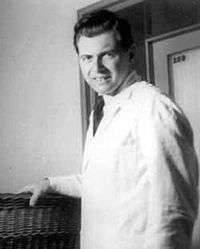
Documentation for the various studies was meticulous; the results held great potential to help people at risk. How long can a person survive hypothermia in a cold, cold sea? Can we develop new treatments for infection to aid the wounded by testing the new drugs on human subjects? What is the most cost effective method of high volume sterilization to reduce the propagation of lesser races? The good doctors’ tests were conducted in secure facilities with good logistics for rail service. At least for a while until Allied bombing destroyed the trains.

Especially desirable for the testing were young twins: compare the effects of deadly disease when the uninfected control in the experiment possesses the exact same DNA as the tested subject. Once the infected twin died, the doctors would kill them both because the comparative autopsies advanced the research.

“Because they ripped open expectant mothers in Gilead, while extending their territory, I will kindle a fire upon the wall of Rabbah, and it will devour her castles.” Amos 1: 13-14

The benefits of medical research were given this month as justification for collecting human specimens with bonuses paid for highly desirable organs.

The Center for Medical Progress secretly videotaped officials from Planned Parenthood over the last three years, and if you have not viewed them and have a strong stomach, they expose in gruesome detail the practices of America’s largest abortion provider, Planned Parenthood[i]. These are not sociopathic outliers like Kenneth Gosnell, but directors of large districts like the Southern Pacific Region and Texas, as well as Senior Director of Medical Services, Deborah Nucatola, MD.

The undercover team, posing as parts buyers for medical research parts procurers, negotiated for specific fetal organs with bonuses for certain DNA or blood types. Parts included pancreases, lungs, livers, hearts, and eyeballs. Late term abortions were especially desirable. A la carte price schedule. To skirt the law, wholesale firms are on site which take possession of the organs and pay a fee for each. They in turn profit by selling them to research firms. The fees vary according to the rarity of the baby parts, blood and tissue types.

Abortion procedures are sometimes altered and discussed with the middleman, especially for larger fetuses. These procedures add risk of injury to the mothers, but are necessary to harvest intact cadavers. They are actually called cadavers by a Planned Parenthood negotiator; interesting term cadaver – not fetal tissue or protoplasm or medical waste, but a term normally reserved for a dead human being, which, of course, they are. Mothers who are pain tolerant and can endure wider dilation are valued for their ability to birth live, intact babies to provide the most lucrative organs. In many cases, mothers are not informed as to the disposition of their baby’s corpses even though Planned Parenthood tells the public they are.

Late term abortions in some states are illegal. Selling body parts and so called partial birth abortions are illegal in all jurisdictions, but produce the healthiest, most complete harvestable parts. Working around these restrictions is carefully done, but with these damning videos, not carefully enough. Some states have initiated investigations and shut down funding for Planned Parenthood, but not all. The U.S. Senate blocked an attempt to pull federal funding entirely, but this battle is far from over.

When we wrote our local officials asking for an investigation, some stonewalled and others answered back, parroting Planned Parenthood talking points: they make no profit by these practices; fetal research benefits medical science; if funding was pulled, access to women’s health care would be damaged beyond repair; the videos were edited. Policy setters (including President Obama) refuse to watch them; truth, apparently cuts too close to the bone. PP spends millions over the years on lobbying and political donations. Please watch these videos and make your own judgment as to whether statements by senior Planned Parenthood officials could be in any way mitigated by context, and the full videos are made available start to finish. Six of twelve have been released by the Center for Medical Progress. Link to videos.

“Is it not your duty to know what is right, you who hate what is good, and love evil? You who tear their skin from them, and their flesh from the bones!.. They chop them in pieces like flesh in a kettle, and like meat in a cauldron.” Micah 3: 1-3

Cecile Richards at Democrat National Convention 2012

Cecile Richards at Democrat National Convention 2012

Numbers can be revealing, here are a few to gain a sense of the real facts behind the health care scare scam proffered by the Planned Parenthood apologists.

  • Planned Parenthood claims that abortion constitutes only 3% of their services (327,000 out of ten million), but it is necessary to look under the hood. Their method of counting services is weighted. If they see a patient for a PAP smear, a pregnancy check and write a prescription of twelve months of birth control pills, it is counted as 14 services (one each for every month of the prescription). If the count is kept only for pregnant women who come in, 93% of them walk out without their baby still on board. A minor percentage gets other help or adoption services, if they push for it. Abortions are a third of their revenue, and another third comes from public funding. The abortions provide another source of revenue: baby parts for sale.
  • The sale of fetal body parts is not a new practice for Planned Parenthood. The ABC news magazine 20/20 exposed the practice over fifteen years ago, when Chris Wallace ran the story. However, like the current videos, the major news organizations, with the exception of Fox, are spending very little time on this story. It is suppressed by the parent organizations which have alliances with and ideological sympathy for Planned Parenthood and abortion.[ii]
  • While its defenders try to convince us that no public funds pay for abortions directly, taxpayer funds pay the bills, help keep the lights on and help pay the inflated salaries of the administrators, many of whom are non-medical people. One hundred and thirty seven of them make over a hundred thousand dollars a year. Its CEO, the now beleaguered Cecile Richards, made $523,616 in 2013. She looks good in sound bites though; non-profit work for PP pays well.
  • The claims that women’s health care would be negatively affected if public funds are withdrawn from PP are grossly misleading. There are approximately 700 Planned Parenthood clinics (abortion assembly lines) in the U.S, while 9,000 community health care centers provide women’s health care. Planned Parenthood serves 2.7 million patients a year; community health care centers over 21 million.
  • Planned Parenthood warns that breasts would be at risk without their clinics. However, they do only referrals for mammograms and zero actual mammograms a year. Community health care centers do 424,000. Planned Parenthood performs 378,000 PAP smear tests; community health centers 1,758,000. Women’s health care services would be far better served with increased taxpayer funding for community health care centers.

St. Thomas Aquinas wrote in his Summa Theologica, “Properly speaking conscience is not a power, but an act.” When evil is perceived, we are required to respond. We can do that politically. We can show up at our local PP clinic on August 22nd at 9 AM. At the least be prepared by being informed about the facts when the discussion comes up.

One of the videos shows the grotesque picking over of baby parts in a tray looking for prized tissues. The pictures are your worst nightmare of tiny hearts, crushed heads and little hands. The searchers were excited because the tray holds dismembered twins, which like the German World War II researchers in the death camps, were found to be of particular value.

“The most deadly poison of our time is indifference.” St. Maximillian Kolbe [iii]


[i] See previous post about the genesis of Planned Parenthood. Maggie Part 2.

[ii] See Crisis Magazine article on this. “Why News Organizations Protect Planned Parenthood.”

[iii][iii] Father Kolbe died in Auschwitz after volunteering to take the place of another prisoner, who was a Jewish father with a family.

9 Comments

Filed under Culture views

Shrouded 2

“Well, if I had my way, Lord, in this wicked world, Lord. If I had my way, Lord, I would tear this building down.” “Tear This Building Down,” Blind Willie Johnson

starry nightIn an email response from Anthony and a blog comment from my son, Gabriel, we exposed what I find to be a quintessential dichotomy with profound implications, a crucial discussion. The accepted secular wisdom based in pervasive skeptical humanism is that there is an irreconcilable divide between science and religion. This antagonism is promulgated and encouraged by the science only coterie and is depicted as the enlightened modern mind vs the deluded ancient superstitions of the ill-informed.

I’ve read Carl Sagan, Richard Dawkins, Christopher Hitchens and others, but personally found their “explanations” dissatisfying and smug. Sagan proclaims at the beginning of the popular “Cosmos” television series (and follow up book) of the eighties[i]The cosmos is all there is, or was, or ever shall be.” Neil de Grasse Tyson recently updated the series for PBS to great acclaim. He, too, subscribes to a philosophical structure called Naturalism, which holds that everything that exists is within one all-encompassing system of nature, whose cause will ultimately be explained only by science. As Gabriel wrote in his comment posted about the Shroud of Turin, the absence of an explanation using our current scientific abilities does not mean there is no explanation. Like you said, it’s a mystery… for now.”

The shroud is a mystery, but not exactly in the sense that Gabe understands it. Science has explained the ‘how” to a great degree: as was described in the previous post, it was not painted, but imposed upon a microscopically thin outer layer of the fabric in a phenomenon akin to a photographic exposure with an enormous burst of ultraviolet spectrum energy greater than all known sources of such energy in a burst of infinitesimally short duration in a perfect replication front and back of a body crucified and uniformly superimposed on the cloth. This was replicated, but only imperfectly on a very small sample of cloth because of the limitations of available energy and the ability to project it absolutely perfectly uniformly over a large area.

The problem with the defined “how” from a pure scientific method perspective is duplicating the experiment. Hypothesize, test, publish the results and confirm when the experiment is duplicated by others, right?[ii] Very difficult to duplicate since we have no way of generating such energy from the inside of a body scourged with a Roman flagrum, crucified and lanced: difficult to find a grant to fund such research and difficult to find a volunteer subject, I would expect. Perhaps as Gabe suggests, someday science will be able do so. Let me state for the record, I don’t volunteer as the guinea pig.

The dichotomy is not science vs religion, but naturalism vs theism.[iii] I suggested in my email to Anthony that naturalism and science are not the same, are not coterminous. Many advocates and practitioners of the scientific method have been and are theists as well as scientists.

To believe that eventually science will explain all that is, is a through the looking glass view reflecting back the much derided “god of the gaps” accusation leveled at the theists, wherein God exists in our minds only because we haven’t been able to explain something yet by science. But in the naturalist’s view, it is dogma that we will eventually with the right methodology and equipment explain it all. Just please acknowledge that “The cosmos is all that is, ever was, or ever shall be,” is every bit as much a statement of faith as “In the beginning God created the heavens and the earth.” Naturalism, indeed accepting the scientific method as the sole arbiter of discovering truth, is a metaphysical concept.

“If you ask how such things occur, seek the answer in God’s grace, not in doctrine; in the longing of the will, not in the understanding; in the sighs of prayer, not in research; seek the bridegroom not the teacher; God and not man….” From “Journey of the Mind to God” by St. Bonaventure

Downstream of the institutionalizing of skeptical humanism in culture, for good or ill, has been profound change. For instance, with naturalism comes the death of God and with Him, the demise of natural law integral to not only physical ecology, but moral ecology. Truth has become subjective and self-interpreted, and as Justice Antonin Scalia stated in another outnumbered dissent last month, “Words no longer have meaning.” This does not seem to me an improvement. When there is no natural law accepted as a standard of justice or truth, we are cut adrift. There is no purpose. “What is the meaning of life?” or “What am I supposed to do with this life?” or “Why are we here?” become questions without relevance. Whatever truth serves to get us nervously whistling past the graveyard suffices, but objectively has no benchmarks.

When the majority of a court, no matter how august, (many times a slim majority of only five people) can redefine not only the U.S. Constitution, but reality itself, we get results that redefine our humanity. The court is merely reflecting the culture in which it is immersed. Dred Scott v Sandford didn’t make black human beings saleable commodities. Roe v Wade didn’t make pre born babies less than human. Obergefell v Hodges doesn’t make sweaty sheets or even abiding affection into a marriage. We create our own redefinitions of what’s real and what’s ridiculous. To wit: mutilating surgery doesn’t make a Bruce into a Caitlin or a hero, just a sad, disturbed, maimed human being who went from an outsy to an innsy with some ill placed cuts and hormone injections. Culture wars escalate, but natural law doesn’t change. Veritas vincit.

As I was weeding the garden yesterday, marveling at lush provision, I was struck by its simple splendor. Like looking up into the starlit wonder of a moonless, cloudless night sky, or wandering at leisure Sachuest Point Wildlife Refuge, I am always delighted by gratuitous beauty. The old thought experiment comes to mind: waking up on the beach of an uninhabited island and in exploring I come across a tight roofed, freshly painted cottage near the water’s edge with a comfortable bed, a well-stocked pantry, and a relaxing chair on a pretty porch; I ponder its origins. I could, like the naturalist, make the assumption that the cottage was serendipitously left by eons of the fortuitous actions of wind, sand and water over time. Lots and lots of time. Maybe a meteorite, an earthquake or climate change. Or I could come to another, not unreasonable conclusion, that we live on this fragile, beautiful great blue ball as gift, similarly well provisioned. And believe it is fitting to contemplate origins and purpose, meaning and where we are headed. Is it not in such contemplation that we will find the peace our nature seeks?

“I could not exist unless I were in thee from whom are all things, by whom all things are, and in whom are all things…Thou hast made us for Thyself, and our hearts are restless until they find rest in Thee.” Confessions of St. Augustine.


[i] Quote and some of the ideas on naturalism are shamelessly purloined from “God’s Undertaker: Has Science Buried God?” by Dr. John Lennox, Professor of Mathematics and Philosophy at Oxford University

[ii] Not all of science is easily repeatable or able to be duplicated. Cosmologists who spend their lives studying the origins of the universe and what happened in the first nanoseconds of the Big Bang would be dismayed to learn their work is not really science after all.

[iii] Giants of the scientific revolution were theists: Newton, Boyle, Kepler, Galileo, Descartes, and the list goes on. It is when ideology, beliefs outside of science or worse, politics, insinuates itself into the science that is at issue. Darwin would be a prime example. He determined that skeptical humanism would be enhanced if his theory of natural selection could explain all the great gaps in evolution (especially species jumps), so he spent much of his life proselytizing to great effect in the popular consciousness. While natural selection is a proven hypothesis for the most part, undirected evolution from proto proteins to human life is far from cast in stone. The APG climate change science rift is a current example of political and ideology’s unseemly influence over pure science.

6 Comments

Filed under Background Perspective

Shrouded

“Life teaches you how to live it if you live long enough.” Tony Bennett

Orig__ShroudIn the late eighties much was made in the secular press with barely suppressed glee of the carbon dating tests conducted on the “Shroud of Turin” that “proved” definitively that it was at best medieval pious art and at worst just another fraudulent prop thrown up by a dying religion–certainly not the authentic burial cloth of Jesus. I remember thinking that late nineteenth century revelations of the shadowy photographic negative image deepened the enigma of how the shroud was fabricated, but, while fascinating, was not essential to my faith one way or the other. I was fully prepared to accept it as the work of a skillful medieval artist.

The “Shroud of Turin” is currently on public display for the next few months. Many still believe it is the burial cloth which wrapped the body of Jesus. Since the startling discovery in 1898 that the image of a scourged, crucified man wrapped front and back is seen much more clearly in a photographic negative, scientific inquiries have been made to ascertain or debunk its origin. The results are mixed, but the presence of human hemoglobin and blood serum is undisputed: type AB negative and possessing both X and Y chromosomes, hence male. How the image was created remains a mystery.

The carbon 14 dating was done on tiny samples clipped from the edges of the cloth in 1988. The samples were necessarily tiny because carbon dating techniques destroy the tested material. The results came back that the cloth was dated between 1260 and 1390. The findings have been disputed, positing that the samples may have been contaminated from repairs woven in by nuns after the shroud was damaged and rescued from a medieval fire. Computer models of the results were unusually scattered unlike other more consistent data from typical carbon date tests.

In 1978 the Vatican invited a U.S. lead multinational scientific team of thirty three with seven tons of equipment to examine the shroud, giving them unprecedented access. They found no evidence of artificial pigments that would be associated with a forgery. The color of the image is somehow photo etched on the outer, microscopically thin (0.000028 of an inch or 1/30th of one fiber of a 200 fiber linen thread) layer by an inexplicable process. In the final report, the STURP (Shroud of Turin Research Project) team concluded “no combination of ‘physical, chemical, biological or medical circumstances’ could adequately account for the image. The Shroud of Turin, the STURP team concluded, ‘remains now, as it has in the past, a mystery.’”[i]

In 2002, three different series of extensive testing were conducted on the Shroud – two chemical analyses of the materials of the linen and the stains and one microscopic mechanical examination of the original weave, comparing it to a database of all known weave and hem sewing patterns of linen. All three confirmed dating compatible with the historical time of the life and death of Jesus.[ii] See the footnote reference below for detailed explanations. The original carbon dating was found to be inaccurate; the area from which the samples were taken were compromised (the medieval patches and backing cloth added after the fire damage). The patterns of blood stains and the image on the shroud were consistent with crucifixion by the Roman government and burial practices of devout Jews.

Next, Physicist Paolo Di Lazzaro and colleagues from Italy’s National Agency for New Technologies, Energy and Sustainable Economic Development (ENEA) spent five years trying to duplicate the shroud’s image using state of the art lasers to focus short bursts of ultraviolet light. In 2011, they published their partial success on a few square centimeters of raw linen. They were unable to match all the physical and chemical characteristics of the shroud or to produce anything close to the full size human image on 53 square feet. The team found that to emulate an image of that size, albeit imperfectly, would require laser “pulses having durations shorter than one forty billionth of a second, and intensities on the order of several billion watts, which exceeds the maximum power released by all the ultraviolet light sources available today.” Presumably the ultraviolet light sources available 2,000 years ago or to a medieval forger were fewer. Dr. Di Lazzaro said, “One could look at hypotheses outside the realm of science, a sort of miracle, but a miracle cannot be investigated by the scientific method.” Just so.

How the image was created remains a mystery. There may be for some a lot at stake. As one wag posted in a long chain on Facebook regarding the current exposition, “My faith does not depend upon its authenticity, but your atheism utterly depends upon its inauthenticity.” Or as William James famously wrote, “In order to disprove the assertion that all crows are black, one white crow is sufficient.”

“Ask yourselves whether you belong to his flock, whether you know him, whether the light of his truth shines in your minds. I assure you that it is not by faith that you will come to know him, but by love; not by mere conviction, but by action.” St. Gregory, the Great.

[i] See April 17, 2015 article in National Geographic. http://news.nationalgeographic.com/2015/04/150417-shroud-turin-relics-jesus-catholic-church-religion-science/


[ii] Summary of the chemical analysis and linen studies: http://www.newgeology.us/presentation24.html


3 Comments

Filed under Background Perspective