Author Archives: jparquette

jparquette's avatar

About jparquette

Fortunate and blessed in companionship with my wife of fifty seven years, in health and in modest, but more than adequate circumstances. Life is good.

Allagash

“Wilderness is the preservation of the World.” Henry David Thoreau, Walking

The Allagash Wilderness Waterway begins in sight of Mount Katahdin, the highest peak in Maine. Running ninety two miles from lakes west of Katahdin, it ends where the Allagash River, meandering north, runs into the St John River on the Canadian border.

allagash 2In the mid-eighties my fourteen year old son Gabriel and I joined with eight other men for nine days to canoe the Allagash Waterway. We planned logistics, food, equipment – a duty roster calendar and menu for each day: cooking, clean up, water and wood gathering. Two other father and son teams with young men near Gabe’s age, along with a pair of late teens and Father Wilifred Gregoire from Westerly, Rhode Island, partnered with a parishioner who was his friend. Father Greg was an experienced outdoorsman, an Allagash veteran with more than a half dozen previous excursions. Milton Wilbur from Woonsocket, another Allagash veteran, accompanied by his son, Josh, led the trip.

A wilderness canoe trek takes on its own sedate, steady rhythm: rise at dawn; stretch out the previous day’s muscle stiffness; early fire over the previous night’s coals, cowboy coffee and breakfast, clean up, break and pack the camp; put in and begin to paddle – mostly J strokes, slow and unrelenting with little respite; the sound of the water and occasional sighting of deer or hawk or a trout breaking the surface; find a suitable spot for lunch; maybe a swim if the sun is warm; put in for the afternoon miles; locate our planned evening campsite, stake down and raise the tents, roll out the sleeping bags; draw water at a spring, forage for blowdown wood and light the evening campfire; cook and eat dinner, clean; quiet talk around the fire; some nights camp songs with men used to singing together; perhaps some reading or a fold out chess set; more quiet talk with my son in the sleeping bags for the night; deep sleep two to a tent. The rhythm corresponds to the backdrop perfectly. Utter peace. Hard pulling and the soreness disappeared after a day or two. Gabe and the other young guys held their own in the canoes without complaint. Bathing was with Dr. Bronner’s phosphate free, biodegradable peppermint soap in the lakes and river. Shaving was left behind.

On Sunday morning, we changed the rhythm without breaking it. Father Greg celebrated an evening Mass before dinner with us as we neared sunset under the canopy of a stand of Eastern White Pine on the shore of the far end of Chamberlain Lake, sharing prayer and our faith. Singing our worship songs of thanksgiving in the silence of the vast Maine woods.

“How gladly would I treat you like my children and give you a pleasant land, the most beautiful heritage of any nation.” Jeremiah 3:19

The early days of the trip were the most physical, sometimes fighting wind driven swells, which broke on the shore of Chamberlain. The outfitters met us at our jumping off spot after we followed a fifteen mile dirt road to Telos Lake and there delivered our five canoes – well worn, but sound, aluminum, Grumman made, flat bottomed for the river, but tricky to manage on the lakes in a wind. They drove our van back and waited for our call in nine days from the payphone in Allagash, while we paddled north. Telos the first day, tired from an all night drive from Rhode Island; the long miles of Chamberlain, portages to Big Eagle Lake, the long haul up Eagle into Churchill Lake; portage at the top of Churchill Dam to a stretch of river that flowed into Umsaskis Lake, which empties into Long Lake; past Long Lake Dam and Cunniff Island, and finally picking up the aid of the Allagash River current for the rest of the way except for an hour or so traversing Round Pond. On the big lake, we looked up once to see Milton and Josh deploying a clamp-on sail and disappearing ahead. Experience counts.

Allagash Wilderness Tramway EnginesOne long day on the river, a bald eagle followed us for hours, probably looking for scraps. He would settle in a tall hemlock or pine, wait for us to pass, rise effortlessly and glide past us to his next vantage point along the river. On another day, we took a brief hike into the woods between Chamberlain and Eagle Lake to show the boys two railway engines, stranded in the forest sixty years earlier when the logging tramway rail system was abandoned. They climbed happily through, over and around the old boilers and controls. A third diversion when we hit a long stretch of rapids, nothing too challenging, but we had to pay attention. The rangers, who kept an inconspicuous eye out for the safety of the various groups, picked up the gear we left near a woods road log bridge. We had an adventure down the rapids with only bathing suits, life jackets and sneakers at risk. They dropped off our tents, sleeping bags, clothes and provisions, safe and dry, at the end of the rapids, when the descent flattened out and the river widened once again to a more temperate pace. The teen team, Keith and Dave, stood up, then when that failed to capsize them, stood up backwards and finally went down one section of rapids with one on the shoulders of the other. They went in and swept along by the current finished the rapid run laughing riotously. No nanny state for these young lunatics.

On our last day before we made final landfall in Allagash and swapped our canoes for our van, we pulled the canoes up on a sand spit for lunch and played for several hours at Allagash Falls, where all of us were boys again, splashing in the cold deluge, slithering over the ancient, smoothed rocks like a waterslide freely provided.

The pre-Socratic Greek philosopher, Heraclitus, wrote that one cannot touch the same drop of water twice in a torrent and that “no man ever steps in the same river twice, for it’s not the same river and he’s not the same man.” My memory rusts like the train engines, becomes a bit idealized perhaps, but the Allagash changes us in some undefined way for the good. There is in Nature, for sure, tooth and claw, blood and fury, but there is also in untamed places a feminine aspect: fertile, bountiful, generous with great peace found no other place – a time for thoughts and no thoughts, a time merely to be.

“The life of contemplation in action and purity of heart is a life of great simplicity. One is content to remain at every moment in contact with God, in the hiddenness and ordinariness of the present moment with its obvious task. At such times, walking down a street, sweeping a floor, hoeing beans, reading a book, taking a stroll in the woods – all can be enriched with contemplation and the obscure sense of God’s presence.” Thomas Merton, The Inner Experience, Notes on Contemplation

6 Comments

Filed under Maine Tales, Personal and family life

Planned Desolation

“Now there’s a wall between us, somthin’ there’s been lost. I took too much for granted, got my signals crossed.” Shelter from the Storm from the Blood on the Tracks album, Bob Dylan

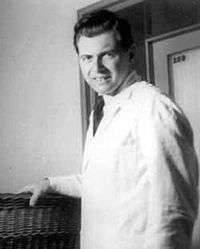
Josef Mengele, the banality of evil

Josef Mengele, the banality of evil

Documentation for the various studies was meticulous; the results held great potential to help people at risk. How long can a person survive hypothermia in a cold, cold sea? Can we develop new treatments for infection to aid the wounded by testing the new drugs on human subjects? What is the most cost effective method of high volume sterilization to reduce the propagation of lesser races? The good doctors’ tests were conducted in secure facilities with good logistics for rail service. At least for a while until Allied bombing destroyed the trains.

Especially desirable for the testing were young twins: compare the effects of deadly disease when the uninfected control in the experiment possesses the exact same DNA as the tested subject. Once the infected twin died, the doctors would kill them both because the comparative autopsies advanced the research.

“Because they ripped open expectant mothers in Gilead, while extending their territory, I will kindle a fire upon the wall of Rabbah, and it will devour her castles.” Amos 1: 13-14

The benefits of medical research were given this month as justification for collecting human specimens with bonuses paid for highly desirable organs.

The Center for Medical Progress secretly videotaped officials from Planned Parenthood over the last three years, and if you have not viewed them and have a strong stomach, they expose in gruesome detail the practices of America’s largest abortion provider, Planned Parenthood[i]. These are not sociopathic outliers like Kenneth Gosnell, but directors of large districts like the Southern Pacific Region and Texas, as well as Senior Director of Medical Services, Deborah Nucatola, MD.

The undercover team, posing as parts buyers for medical research parts procurers, negotiated for specific fetal organs with bonuses for certain DNA or blood types. Parts included pancreases, lungs, livers, hearts, and eyeballs. Late term abortions were especially desirable. A la carte price schedule. To skirt the law, wholesale firms are on site which take possession of the organs and pay a fee for each. They in turn profit by selling them to research firms. The fees vary according to the rarity of the baby parts, blood and tissue types.

Abortion procedures are sometimes altered and discussed with the middleman, especially for larger fetuses. These procedures add risk of injury to the mothers, but are necessary to harvest intact cadavers. They are actually called cadavers by a Planned Parenthood negotiator; interesting term cadaver – not fetal tissue or protoplasm or medical waste, but a term normally reserved for a dead human being, which, of course, they are. Mothers who are pain tolerant and can endure wider dilation are valued for their ability to birth live, intact babies to provide the most lucrative organs. In many cases, mothers are not informed as to the disposition of their baby’s corpses even though Planned Parenthood tells the public they are.

Late term abortions in some states are illegal. Selling body parts and so called partial birth abortions are illegal in all jurisdictions, but produce the healthiest, most complete harvestable parts. Working around these restrictions is carefully done, but with these damning videos, not carefully enough. Some states have initiated investigations and shut down funding for Planned Parenthood, but not all. The U.S. Senate blocked an attempt to pull federal funding entirely, but this battle is far from over.

When we wrote our local officials asking for an investigation, some stonewalled and others answered back, parroting Planned Parenthood talking points: they make no profit by these practices; fetal research benefits medical science; if funding was pulled, access to women’s health care would be damaged beyond repair; the videos were edited. Policy setters (including President Obama) refuse to watch them; truth, apparently cuts too close to the bone. PP spends millions over the years on lobbying and political donations. Please watch these videos and make your own judgment as to whether statements by senior Planned Parenthood officials could be in any way mitigated by context, and the full videos are made available start to finish. Six of twelve have been released by the Center for Medical Progress. Link to videos.

“Is it not your duty to know what is right, you who hate what is good, and love evil? You who tear their skin from them, and their flesh from the bones!.. They chop them in pieces like flesh in a kettle, and like meat in a cauldron.” Micah 3: 1-3

Cecile Richards at Democrat National Convention 2012

Cecile Richards at Democrat National Convention 2012

Numbers can be revealing, here are a few to gain a sense of the real facts behind the health care scare scam proffered by the Planned Parenthood apologists.

  • Planned Parenthood claims that abortion constitutes only 3% of their services (327,000 out of ten million), but it is necessary to look under the hood. Their method of counting services is weighted. If they see a patient for a PAP smear, a pregnancy check and write a prescription of twelve months of birth control pills, it is counted as 14 services (one each for every month of the prescription). If the count is kept only for pregnant women who come in, 93% of them walk out without their baby still on board. A minor percentage gets other help or adoption services, if they push for it. Abortions are a third of their revenue, and another third comes from public funding. The abortions provide another source of revenue: baby parts for sale.
  • The sale of fetal body parts is not a new practice for Planned Parenthood. The ABC news magazine 20/20 exposed the practice over fifteen years ago, when Chris Wallace ran the story. However, like the current videos, the major news organizations, with the exception of Fox, are spending very little time on this story. It is suppressed by the parent organizations which have alliances with and ideological sympathy for Planned Parenthood and abortion.[ii]
  • While its defenders try to convince us that no public funds pay for abortions directly, taxpayer funds pay the bills, help keep the lights on and help pay the inflated salaries of the administrators, many of whom are non-medical people. One hundred and thirty seven of them make over a hundred thousand dollars a year. Its CEO, the now beleaguered Cecile Richards, made $523,616 in 2013. She looks good in sound bites though; non-profit work for PP pays well.
  • The claims that women’s health care would be negatively affected if public funds are withdrawn from PP are grossly misleading. There are approximately 700 Planned Parenthood clinics (abortion assembly lines) in the U.S, while 9,000 community health care centers provide women’s health care. Planned Parenthood serves 2.7 million patients a year; community health care centers over 21 million.
  • Planned Parenthood warns that breasts would be at risk without their clinics. However, they do only referrals for mammograms and zero actual mammograms a year. Community health care centers do 424,000. Planned Parenthood performs 378,000 PAP smear tests; community health centers 1,758,000. Women’s health care services would be far better served with increased taxpayer funding for community health care centers.

St. Thomas Aquinas wrote in his Summa Theologica, “Properly speaking conscience is not a power, but an act.” When evil is perceived, we are required to respond. We can do that politically. We can show up at our local PP clinic on August 22nd at 9 AM. At the least be prepared by being informed about the facts when the discussion comes up.

One of the videos shows the grotesque picking over of baby parts in a tray looking for prized tissues. The pictures are your worst nightmare of tiny hearts, crushed heads and little hands. The searchers were excited because the tray holds dismembered twins, which like the German World War II researchers in the death camps, were found to be of particular value.

“The most deadly poison of our time is indifference.” St. Maximillian Kolbe [iii]


[i] See previous post about the genesis of Planned Parenthood. Maggie Part 2.

[ii] See Crisis Magazine article on this. “Why News Organizations Protect Planned Parenthood.”

[iii][iii] Father Kolbe died in Auschwitz after volunteering to take the place of another prisoner, who was a Jewish father with a family.

9 Comments

Filed under Culture views

Shrouded 2

“Well, if I had my way, Lord, in this wicked world, Lord. If I had my way, Lord, I would tear this building down.” “Tear This Building Down,” Blind Willie Johnson

starry nightIn an email response from Anthony and a blog comment from my son, Gabriel, we exposed what I find to be a quintessential dichotomy with profound implications, a crucial discussion. The accepted secular wisdom based in pervasive skeptical humanism is that there is an irreconcilable divide between science and religion. This antagonism is promulgated and encouraged by the science only coterie and is depicted as the enlightened modern mind vs the deluded ancient superstitions of the ill-informed.

I’ve read Carl Sagan, Richard Dawkins, Christopher Hitchens and others, but personally found their “explanations” dissatisfying and smug. Sagan proclaims at the beginning of the popular “Cosmos” television series (and follow up book) of the eighties[i]The cosmos is all there is, or was, or ever shall be.” Neil de Grasse Tyson recently updated the series for PBS to great acclaim. He, too, subscribes to a philosophical structure called Naturalism, which holds that everything that exists is within one all-encompassing system of nature, whose cause will ultimately be explained only by science. As Gabriel wrote in his comment posted about the Shroud of Turin, the absence of an explanation using our current scientific abilities does not mean there is no explanation. Like you said, it’s a mystery… for now.”

The shroud is a mystery, but not exactly in the sense that Gabe understands it. Science has explained the ‘how” to a great degree: as was described in the previous post, it was not painted, but imposed upon a microscopically thin outer layer of the fabric in a phenomenon akin to a photographic exposure with an enormous burst of ultraviolet spectrum energy greater than all known sources of such energy in a burst of infinitesimally short duration in a perfect replication front and back of a body crucified and uniformly superimposed on the cloth. This was replicated, but only imperfectly on a very small sample of cloth because of the limitations of available energy and the ability to project it absolutely perfectly uniformly over a large area.

The problem with the defined “how” from a pure scientific method perspective is duplicating the experiment. Hypothesize, test, publish the results and confirm when the experiment is duplicated by others, right?[ii] Very difficult to duplicate since we have no way of generating such energy from the inside of a body scourged with a Roman flagrum, crucified and lanced: difficult to find a grant to fund such research and difficult to find a volunteer subject, I would expect. Perhaps as Gabe suggests, someday science will be able do so. Let me state for the record, I don’t volunteer as the guinea pig.

The dichotomy is not science vs religion, but naturalism vs theism.[iii] I suggested in my email to Anthony that naturalism and science are not the same, are not coterminous. Many advocates and practitioners of the scientific method have been and are theists as well as scientists.

To believe that eventually science will explain all that is, is a through the looking glass view reflecting back the much derided “god of the gaps” accusation leveled at the theists, wherein God exists in our minds only because we haven’t been able to explain something yet by science. But in the naturalist’s view, it is dogma that we will eventually with the right methodology and equipment explain it all. Just please acknowledge that “The cosmos is all that is, ever was, or ever shall be,” is every bit as much a statement of faith as “In the beginning God created the heavens and the earth.” Naturalism, indeed accepting the scientific method as the sole arbiter of discovering truth, is a metaphysical concept.

“If you ask how such things occur, seek the answer in God’s grace, not in doctrine; in the longing of the will, not in the understanding; in the sighs of prayer, not in research; seek the bridegroom not the teacher; God and not man….” From “Journey of the Mind to God” by St. Bonaventure

Downstream of the institutionalizing of skeptical humanism in culture, for good or ill, has been profound change. For instance, with naturalism comes the death of God and with Him, the demise of natural law integral to not only physical ecology, but moral ecology. Truth has become subjective and self-interpreted, and as Justice Antonin Scalia stated in another outnumbered dissent last month, “Words no longer have meaning.” This does not seem to me an improvement. When there is no natural law accepted as a standard of justice or truth, we are cut adrift. There is no purpose. “What is the meaning of life?” or “What am I supposed to do with this life?” or “Why are we here?” become questions without relevance. Whatever truth serves to get us nervously whistling past the graveyard suffices, but objectively has no benchmarks.

When the majority of a court, no matter how august, (many times a slim majority of only five people) can redefine not only the U.S. Constitution, but reality itself, we get results that redefine our humanity. The court is merely reflecting the culture in which it is immersed. Dred Scott v Sandford didn’t make black human beings saleable commodities. Roe v Wade didn’t make pre born babies less than human. Obergefell v Hodges doesn’t make sweaty sheets or even abiding affection into a marriage. We create our own redefinitions of what’s real and what’s ridiculous. To wit: mutilating surgery doesn’t make a Bruce into a Caitlin or a hero, just a sad, disturbed, maimed human being who went from an outsy to an innsy with some ill placed cuts and hormone injections. Culture wars escalate, but natural law doesn’t change. Veritas vincit.

As I was weeding the garden yesterday, marveling at lush provision, I was struck by its simple splendor. Like looking up into the starlit wonder of a moonless, cloudless night sky, or wandering at leisure Sachuest Point Wildlife Refuge, I am always delighted by gratuitous beauty. The old thought experiment comes to mind: waking up on the beach of an uninhabited island and in exploring I come across a tight roofed, freshly painted cottage near the water’s edge with a comfortable bed, a well-stocked pantry, and a relaxing chair on a pretty porch; I ponder its origins. I could, like the naturalist, make the assumption that the cottage was serendipitously left by eons of the fortuitous actions of wind, sand and water over time. Lots and lots of time. Maybe a meteorite, an earthquake or climate change. Or I could come to another, not unreasonable conclusion, that we live on this fragile, beautiful great blue ball as gift, similarly well provisioned. And believe it is fitting to contemplate origins and purpose, meaning and where we are headed. Is it not in such contemplation that we will find the peace our nature seeks?

“I could not exist unless I were in thee from whom are all things, by whom all things are, and in whom are all things…Thou hast made us for Thyself, and our hearts are restless until they find rest in Thee.” Confessions of St. Augustine.


[i] Quote and some of the ideas on naturalism are shamelessly purloined from “God’s Undertaker: Has Science Buried God?” by Dr. John Lennox, Professor of Mathematics and Philosophy at Oxford University

[ii] Not all of science is easily repeatable or able to be duplicated. Cosmologists who spend their lives studying the origins of the universe and what happened in the first nanoseconds of the Big Bang would be dismayed to learn their work is not really science after all.

[iii] Giants of the scientific revolution were theists: Newton, Boyle, Kepler, Galileo, Descartes, and the list goes on. It is when ideology, beliefs outside of science or worse, politics, insinuates itself into the science that is at issue. Darwin would be a prime example. He determined that skeptical humanism would be enhanced if his theory of natural selection could explain all the great gaps in evolution (especially species jumps), so he spent much of his life proselytizing to great effect in the popular consciousness. While natural selection is a proven hypothesis for the most part, undirected evolution from proto proteins to human life is far from cast in stone. The APG climate change science rift is a current example of political and ideology’s unseemly influence over pure science.

6 Comments

Filed under Background Perspective

Shrouded

“Life teaches you how to live it if you live long enough.” Tony Bennett

Orig__ShroudIn the late eighties much was made in the secular press with barely suppressed glee of the carbon dating tests conducted on the “Shroud of Turin” that “proved” definitively that it was at best medieval pious art and at worst just another fraudulent prop thrown up by a dying religion–certainly not the authentic burial cloth of Jesus. I remember thinking that late nineteenth century revelations of the shadowy photographic negative image deepened the enigma of how the shroud was fabricated, but, while fascinating, was not essential to my faith one way or the other. I was fully prepared to accept it as the work of a skillful medieval artist.

The “Shroud of Turin” is currently on public display for the next few months. Many still believe it is the burial cloth which wrapped the body of Jesus. Since the startling discovery in 1898 that the image of a scourged, crucified man wrapped front and back is seen much more clearly in a photographic negative, scientific inquiries have been made to ascertain or debunk its origin. The results are mixed, but the presence of human hemoglobin and blood serum is undisputed: type AB negative and possessing both X and Y chromosomes, hence male. How the image was created remains a mystery.

The carbon 14 dating was done on tiny samples clipped from the edges of the cloth in 1988. The samples were necessarily tiny because carbon dating techniques destroy the tested material. The results came back that the cloth was dated between 1260 and 1390. The findings have been disputed, positing that the samples may have been contaminated from repairs woven in by nuns after the shroud was damaged and rescued from a medieval fire. Computer models of the results were unusually scattered unlike other more consistent data from typical carbon date tests.

In 1978 the Vatican invited a U.S. lead multinational scientific team of thirty three with seven tons of equipment to examine the shroud, giving them unprecedented access. They found no evidence of artificial pigments that would be associated with a forgery. The color of the image is somehow photo etched on the outer, microscopically thin (0.000028 of an inch or 1/30th of one fiber of a 200 fiber linen thread) layer by an inexplicable process. In the final report, the STURP (Shroud of Turin Research Project) team concluded “no combination of ‘physical, chemical, biological or medical circumstances’ could adequately account for the image. The Shroud of Turin, the STURP team concluded, ‘remains now, as it has in the past, a mystery.’”[i]

In 2002, three different series of extensive testing were conducted on the Shroud – two chemical analyses of the materials of the linen and the stains and one microscopic mechanical examination of the original weave, comparing it to a database of all known weave and hem sewing patterns of linen. All three confirmed dating compatible with the historical time of the life and death of Jesus.[ii] See the footnote reference below for detailed explanations. The original carbon dating was found to be inaccurate; the area from which the samples were taken were compromised (the medieval patches and backing cloth added after the fire damage). The patterns of blood stains and the image on the shroud were consistent with crucifixion by the Roman government and burial practices of devout Jews.

Next, Physicist Paolo Di Lazzaro and colleagues from Italy’s National Agency for New Technologies, Energy and Sustainable Economic Development (ENEA) spent five years trying to duplicate the shroud’s image using state of the art lasers to focus short bursts of ultraviolet light. In 2011, they published their partial success on a few square centimeters of raw linen. They were unable to match all the physical and chemical characteristics of the shroud or to produce anything close to the full size human image on 53 square feet. The team found that to emulate an image of that size, albeit imperfectly, would require laser “pulses having durations shorter than one forty billionth of a second, and intensities on the order of several billion watts, which exceeds the maximum power released by all the ultraviolet light sources available today.” Presumably the ultraviolet light sources available 2,000 years ago or to a medieval forger were fewer. Dr. Di Lazzaro said, “One could look at hypotheses outside the realm of science, a sort of miracle, but a miracle cannot be investigated by the scientific method.” Just so.

How the image was created remains a mystery. There may be for some a lot at stake. As one wag posted in a long chain on Facebook regarding the current exposition, “My faith does not depend upon its authenticity, but your atheism utterly depends upon its inauthenticity.” Or as William James famously wrote, “In order to disprove the assertion that all crows are black, one white crow is sufficient.”

“Ask yourselves whether you belong to his flock, whether you know him, whether the light of his truth shines in your minds. I assure you that it is not by faith that you will come to know him, but by love; not by mere conviction, but by action.” St. Gregory, the Great.

[i] See April 17, 2015 article in National Geographic. http://news.nationalgeographic.com/2015/04/150417-shroud-turin-relics-jesus-catholic-church-religion-science/


[ii] Summary of the chemical analysis and linen studies: http://www.newgeology.us/presentation24.html


3 Comments

Filed under Background Perspective

Acclimated

“It takes a very long time to become young.” Pablo Picasso

IMG_0570Late in June of 2014 we moved from the Providence home in which we had lived for almost thirty years to Middletown. Riding our bikes yesterday we saw cottontail rabbits again—four of them in a field adjacent to Oliphant Lane along our regular route. On rides earlier in the month I wondered if they would be so numerous as last June and why we had yet to see any this year: a matter of timing as it turns out. At least a year is needed to begin to know a new house, a new locale, a new life: four seasons, weather, and changes slow and sudden, the idiosyncrasies of house upkeep.

We missed the spring last year here: the wild palette of color that catches our eyes and our breath. Soil is rich on Aquidneck Island; many small farms, a couple of large nurseries (one across the street) and at least two commercial vineyards attest to its fecundity. So do our gardens and the diverse flora, both wild and somewhat tamed. After a challenging cold, snowy winter, the spring came “on little cat feet,” tenuously with false starts, and later in all its finery. Early the forsythia, then lilacs, cherry blossoms pink, horse chestnuts white, our pear and apple trees, purple azaleas, rhododendron, and more recently both pink and white dogwood with the Rose of Sharon yet to come. We hung bird feeders and planted flower beds, raised vegetable beds, three blueberry bushes and a moderate sized twenty by twenty garden. Last year we planted little, as we were late to the task.

The bird feeders drew a large crowd: goldfinch, red winged blackbirds, mourning doves, pairs of cardinals, winter wrens, and downy woodpeckers, some unwelcome grackles and gray squirrels. Gianna, now seven, fashioned a bird house from a half gallon cardboard milk container after getting a lesson at the local Norman Bird Sanctuary; one of the wrens moved in.  The smaller female squirrel fed on the ground underneath the seed feeder from some that we scattered and some that we and our guests dropped. She remained unmolested by me although a red tailed hawk noticed, but as yet has not made a dive for her. The male squirrel, undeterred even after we hung an unjustifiably guaranteed squirrel proof plastic hood, required some discouragement with a few stings from an underpowered (one or two pumps) BB gun. The rabbits so far have left our garden alone, but the blueberries needed some netting while they ripen. We share with the birds a good mix of seed and suet from the Agway store, but draw the line on the blueberries.

We have lived rural, and we have lived urban. Middletown is a mixture, but tends toward rural, which taken as a whole is better. The shrubs and trees in Middletown are for the most part less hacked than those in the city. City folk’s drive to tame untamable things mars the landscape with shaped, shorn, unnatural shrubbery and trees cultivated like the gelled, fashionable hair of a vain, just past his prime news anchor on a small market local broadcast. Here, there is less of it.

“Gardeners may create order briefly out of chaos, but nature always gets the last word, and what it says is usually untidy by human standards.” Diane Ackerman

IMG_0567The second tree climbing job I had was for Allen Tree Experts in 1968 between living in Northampton in Western Massachusetts and moving to Colorado. Ellis Allen was a third generation tree warden for the Town of Medfield, Mass. President of the Mass Arborists Association, Ellis was the most knowledgeable of any the many people I worked for in the trade. In his private practice, we worked for the wealthy who could afford him in nearby towns like Dover and Sherborn on estates and gentlemen farms. Boston high-rise buildings were visible from the top of tall oaks and elms. Customers included ex-governor Frank Sargent and former U.S. Senator and Governor Leverett Saltonstall. Ellis was exacting in his instructions and standards; he would suffer no shears—electric or manual. Shrubs were to be pruned precisely with hand snips: no grotesquely mangled Andromeda or Japanese maple, cropped azaleas; no shattered yews. Cuts were made one at a time by skilled hands, angled back into the center of the plant so they didn’t show with casual observation. The objective was a gently disciplined planting that retained the natural shape of its residents. Ellis would fire someone who could not learn the technique and artistry, or he would consign them permanently to chain saws and stump grinding.

We worked for several weeks in Dover on the eighty acre estate, now long since subdivided, of Mrs. Adams, a direct descendent of John and John Quincy.  She was elderly, kind and, while self-possessed with the poise of aristocracy, unpretentious. Her chauffer driven 1938 Plymouth caught her spirit. On the farm estate was a smaller house for the butler and another for the groundskeeper, who directed all the comings and goings of arborists. Mrs. Adams would overlook all; she and Ellis were kindred when it came to all things green. She was the president of the garden club and had been since The War. A large greenhouse adjacent to one of the barns protected award winning orchids and roses. Each day at break time, the cook would bring out fresh coffee and still warm rolls for the staff and the visiting tree climbers.

Once Ellis sent me to find a hundred and fifty year old pin oak that towered thirty feet above the canopy of the surrounding trees fifty yards from the house. Mrs. Adams observed it every morning from her breakfast balcony; several minutes of dead reckoning were needed to find it in the woods. I trimmed just the protruding top most of the morning, leaving the cut branches on the ground where they fell. Another afternoon, I fine pruned a forty foot linden–not like a city chopped lollipop linden, but retaining its innate figure. I used hand snips without a bucket truck. Climbing skills out at the end of the branches were important working for Ellis.

“In June as many as a dozen species may burst their buds on a single day. No man can heed all of these anniversaries; no man can ignore all of them.” Aldo Leopold

3 Comments

Filed under Personal and family life, Tree Stories

Population Bomb Defused

zpg“Sometime in the next fifteen years the end will come. By the end I mean the utter breakdown of the planet’s capacity to support humanity.” Dr. Paul Erlich, 1970

In 1973 before we moved to Maine, we lived in a two bedroom cottage on Mashnee Island where the Cape Cod Canal connected to the bay. One of my contractor customers was a locked down, fit, good looking guy with a locked down, fit, good looking wife and no children. He invited me back to his house to review some upcoming house building plans in his home office one afternoon. When I went in, he offered me some coffee and a half hour of pacing and proselytizing on his zealous organization, Zero Population Growth, for which he was the head of the Cape Cod chapter, one of 600 chapters. ZPG’s ideas rapidly gained ascendency due to Paul Erlich’s best seller, Population Bomb. Dr. Erlich, a Stanford professor of ecology and demographics, developed mathematical models of population growth that foretold of doomsday: the earth is running out of food, mass starvation, riots and complete social breakdown. His solution was population control, voluntary if possible, but government enforced if necessary. His “wisdom,” while radical in the late sixties and early seventies became mainstream and deeply inculcated in our culture. As we have seen again in the climate change debate, elaborate computer models aren’t always predictive. What was neglected in his models was the human capacity to adapt, to learn, and developments like the “green revolution” in India that multiplied our ability to feed and house the growing population. Imperfect solutions, but adjusting constantly to new reality.

My customer thrust on me with messianic fervor a copy of Erlich’s book. At a certain age, we are all convinced that the world is coming to an end, ignorant humans are the cause, and that we and likeminded cognoscenti are privy to its deprivations and must all rally to radical solutions. Karl Marx, Vladimir Lenin, Chairman Mao, Voltaire, Adolph Hitler, even such as Margaret Sanger[i] and Peter Singer—so many similar true believers in that desperate parade—were convinced and convincing that they possessed the truth. The detritus of their error was death. Dr. Erlich delivered his version. Whether his inaccuracies were mistakes, bad computer modeling or lies to bolster an agenda, I’ll leave to others.

“A lie told often enough becomes the truth.” “Sometimes history needs a push.” Vladimir Lenin

Recent articles reminded me of Erlich’s past. The New York Times published “The Unrealized Horrors of Population Explosion” about the radical drop in birth rate to below replacement levels in many countries that threatens their culture and sustainability, citing Erlich’s work as an example of science gone wrong. Erlich was the darling of the media in the early seventies; movies like ZPG and Solvent Green were made. A frequent guest of Johnny Carson, he was often hailed as gospel by liberal media giants like Walter Cronkite and Howard K. Smith. He told Johnny to bet big that England wouldn’t exist by the year 2000. The world was headed for catastrophic uncontrolled population growth. Erlich recommended coercive birth control if voluntary good sense didn’t prevail. He advocated doing away with tax deductions for children and punitive luxury taxes on diapers, baby furniture and formula with public shaming of any mother birthing more than two children. India initiated mandatory sterilizations, and eight million women had their tubes tied against their will in hellish assembly line “clinics.” China initiated a one child policy with forced abortions and job loss, eviction from homes or jail time for violators. Much of Western Europe stopped having babies; so did we. ZPG put out scary videos of mobs of people wearing gas masks to enable breathing while immersed in polluted air caused by populations living like rats in a box.

The birth rate plummeted in many nations, including our own. We are now faced with rapidly aging populations, birth rates below the 2.1 minimum necessary to sustain an economy or take care of its own; some are calling what has befallen us a “demographic winter.”

“Children bring life, joy, hope, also trouble, but life is like this…However, it’s better to have a society with these worries and problems than a sad and grey society because it has remained without children.” Pope Francis, General Audience 3/18/15

The same media that parroted Erlich’s earlier errors still shills for him. He acknowledges that his time line was a bit off—England still exists after all, smug smile—but he contends that anthropogenic climate change, the toxins of ocean pollution and escalating species extinction support his earlier theory. After all, he intones in that affected condescension only an academic darling can perfect, “time for an ecologist is different” from that of the uninformed.

While MSNBC is delighted that a pope has finally seen the light as published this week in Pope Francis’s encyclical “Laudato Si’,” they neglect to report some of the document’s other conclusions that solutions to environmental challenges lie as well in our individual and local decisions about overconsumption, compassion in daily practice and sharing, perhaps more than in massive Al Gore like government power interventions that engender more disruption and human misery than they alleviate.

Some lessons for me are these. We do need to consider the impact of our daily life decisions, and while the scientists continue to work out their data, their models and their recommendations, each of us each day can begin right now, where we are to do our part. Erlich’s polemics praising small families and childlessness contributed to the fuel of the so named “sexual revolution,” with all its social ramifications of commitment phobia, single parent families and renegade male irresponsibility; it’s all of a piece. And that the generosity requisite for good child bearing and child rearing, if atrophying in our collective lives, is exactly the generous spirit we need to tamp down our personal avarice, our consumption and our reluctance to share our planet’s resources and in its future.[ii]

“If I were giving a young man advice as to how he might succeed in life, I would say to him, pick out a good father and mother, and begin life in Ohio.” Wilbur Wright, from “The Wright Brothers,” David McCullough[iii]

[i] See prior two part blog posts on Sanger’s handiwork and life. Maggie

[ii] As quoted by Regis Martin in Crisis Magazine, Ross Douthat wrote in a 2012 NY Times piece, our “’retreat from child rearing, is at some level, a symptom of late-modern exhaustion,’ a condition of ‘decadence,’ he calls it, evoking a ‘spirit that privileges the present over the future.’”

[iii] While not his best book, Mr. McCullough at 81 may have lost some velocity off his fastball, but he still has all his pitches. Well worth your time.

3 Comments

Filed under Culture views

Jail Break

“You going to get used to wearing them chains after a while. Don’t you ever stop listening to them clinking.” From “Cool Hand Luke”

Norfolk Prison“Holy Mother of God!” cried my great aunt Isabel Manley (Aunt ‘Tot’). She stood at the sink looking out the kitchen window into the woods and the railroad tracks behind their house. Her brother Charlie had escaped from the Norfolk Medium Security Prison in the adjoining town about five miles away. He emerged from the trees behind the house and Aunt Tot spotted him. Charlie was the baby of the family. He worked for the town as a laborer, which may indicate limited ability, but from a family with some connections in the town.

Two plain clothes detectives were waiting for him. My mother, when she was about twelve, and my grandmother, Molly Manley Laracy, had gone to the West Street house to await developments after the news circulated in Walpole about Charlie’s breakout. The cops waited patiently while my great grandmother, Margaret McHugh Manley, served Charlie what turned out to be (I believe) his last home cooked meal. He was twenty nine. What happened after that remains fuzzy.

“You know, that’s the first thing that got me about this place, that there wasn’t anybody laughing. I haven’t heard a real laugh since I came through that door, do you know that? Man, when you lose your laugh, you lose your footing.” Ken Kesey, “One Flew Over the Cuckoo’s Nest”

 In the depths of the Depression, Charlie Manley robbed a gas station with a toy gun. His motive is unknown.  Piecing together the story from my ninety four year old mother and my one hundred and three year old Aunt Mary left some gaps. Other than the prison break story that my mother related to me recently, neither has any strong recollection of Charlie: he was kind to them as young girls, quiet, and a little shy, worked hard.

His older sister, Julia, married Timothy Cullinane, who rose through the ranks to become the respected and more than a little feared big Irish chief of police in Walpole. Timmy was jovial to his grand nephews and nieces, red faced, well over six feet with broad shoulders and a barrel chest. Their home was the family Christmas afternoon gathering place for a buffet feast, storytelling and laughter while we cousins were growing up. I learned as I got older that Uncle Timmy was not to be trifled with as a cop, however, and more than a few skulls suffered some dents from his night stick as a patrolman, then sergeant. His only child, Marie, taught at Boston College for many years.

No Irish Need ApplyCharlie’s father, Dan Manley, worked for the railroad as many Irish did, as a switch operator, steadier employment than many immigrants enjoyed. Aunt Tot stayed in the West Street house and took care of her parents, the proverbial Irish spinster working as a carder, combing cotton at Kendall Mills, Walpole’s largest employer. She and her brother, my Uncle John, lived in the house all of their lives, drifting into a mostly uneventful retirement. John had one healthy lung left after injuries sustained in a German mustard gas attack in the trenches of 1918 France. What I remember most about John was wry kidding of his grand nephew, his smoky laugh and his yellow, nicotine stained fingers. What I remember most about Aunt Tot was her cackling laugh that terrified me as a young boy. The smell of the old house lingers, cigarette smoke, a faint scent of aging and fading decrepitude – flower patterned, rough textured, lumpy living room furniture and a wall of full bookshelves, not show books, but gently worn. John’s pile of books rested on a side table by his lounger near the back window. Tot and John died within months of each other in 1966. Kid brother Charlie died in 1959 at the age of fifty six in the Bridgewater State Prison Hospital for the Criminally Insane, having never climbed out of “the system.”

“I listened to them fade away till all I could hear was my memory of the sound.” Ken Kesey, “One Flew Over the Cuckoo’s Nest”

How Charlie made his way from Norfolk Medium Security Prison work parties in the local fields to deep incarceration in Bridgewater and why he fell from view from the family and everyone else is a mystery I hope to understand some day. Research on a forgotten prisoner who died over fifty years ago is a slog. No one at Norfolk Prison or Bridgewater State Hospital is amenable to giving out information over the phone. Perhaps someday I’ll find time to drive there and ask for the records. Whether they are forthcoming is a tale for another day. I hope it is not a “Cuckoo’s Nest” dreadful story of the incorrigible escapee the system cannot slot or handle, who succumbs to a thirties era enforced lobotomy and early death. The Irish family closed ranks tightly, and my mother and aunt have no idea what became of him.

A Hassidic rabbi once wrote this prayer: Let me not die while I am still alive. Did Charlie spend his years yearning to go back to what he had? When did he realize it wouldn’t be there anymore? He made mistakes beyond mending and became a ghost. There was no happy ending for Charlie.

“If he breaks a thing down, there is no rebuilding; if he imprisons a man, there is no release.” Job 12:14

1 Comment

Filed under Background Perspective, Personal and family life

Metanoia

“They are happy, whose strength is in you, in whose hearts are the roads to Zion. As they go through the Bitter Valley, they make it a place of springs.”  Psalm 84

Sister Christina

Sister Christina

“Metanoia” is to “transform one’s heart,” a total change in life, turning from one thing and fully embracing another. Rita and I with our granddaughter, Gianna, were privileged a few weeks ago to attend the public commitment to such a transformation.  Our goddaughter that we’ve known since her birth, now Sister Christina, professed her final vows with the Capuchin Sisters of Nazareth.

Spending most of Saturday with the sisters first at the Mass where Sister Christina took her vows and the reception meal that followed, we were struck with the warmth, joy and intelligence of these lovely women. They laugh easily and often. When I spoke with any of them, I was the only person in the room as they looked directly into my eyes and listened with full attention. I was not exceptional; it is their way.

Sister Christina lives with some other members of her order in rural Pennsylvania. They garden, sew their own simple habits, work with local youth, make candles, but mostly, they pray. For hours every day, they pray. Alone and together within the peaceful daily rhythm of their community, they pray. Capuchin Sisters of Nazareth is a contemplative order. Praise, adoration, singing in harmony, silent contemplation and petitioning for the intentions of the Church and many others, they pray. Unchanging, day after day, with gentleness, much love, peace and persistence, they pray. They assured us there is never a lack of need for their prayerful intentions.

The sisters are of many ages, but most are young. Living out their vows of chastity, obedience and poverty, theirs is a simple life, but not an easy one. I have seen this with other orders: the more arduous the call, the younger the average age. The more secularized orders that have abandoned the habit seem to be aging and atrophying. Orders like the Nashville Dominicans, the Sisters of Life, Mother Teresa’s Missionaries of Charity and these Capuchin Sisters have different charisms and callings, but all are orthodox and centered on service, prayer and seeking holiness. No lack of vocations within these orders; some have a waiting list. Many secular skeptics would tell us the sister’s lives are an anachronism. Meet these women, and you may perceive theirs is the better way, the more essential way than many of our over scheduled lives obsessed with production and efficiency in this age of lonely alienation.

“I pray because the need flows out of me all the time – waking and sleeping. It doesn’t change God – it changes me.”  C.S. Lewis

Encountering women like Sister Christina and her sisters is a species of miracle for which I am grateful.

No definitive proof for or against the existence of God can be ascertained by today’s methodology and philosophy. Such a thing is not provable or disprovable by the 21st century dogmatic arbiter of fact, the scientific method, but deeper sources of proof and truth are available.

Father Pio Mandato[i], the Capuchin priest who knows the sisters, was the celebrant and homilist for the Mass during which Sister Christina professed her vows.  Father Pio told us that there are other proofs positive for God’s existence.  One he finds is to look into the eyes of Sister Christina and see reflected back her deep relationship to God, her faith and certainty.  I agree.

These women live out joyful lives of peace and prayer.  Our existence is enriched simply because they do so, whether we know it or not. Christian joy is not constant happiness without disappointment, but it is finding gratitude in all circumstances.  Perhaps in this tired old world we could aspire to emulate a little of their joy in our lives; take a sad song and make it better.

“Don’t carry the world upon your shoulders. For well you know that it’s a fool who plays it cool by making his world a little colder…Take a sad song and make it better.”  ‘Hey, Jude,’ John Lennon and Paul McCartney

 http://www.capuchinsisters.com/

[i] Father Mandato has his own story, which was related to me by someone at the reception. He lives an hour or two away  but comes from his hermitage from time to time to minister the sacraments to the sisters. Saint Padre Pio of Pietrelcina was the spiritual director in Italy of Father Pio’s mother. When she became pregnant with Father Pio, Padre Pio told her that her child would be a boy and would be a priest. He eventually followed Padre Pio into the Capuchin order. Father Pio’s peace, luminous smile, good humor and inner light were another pleasure of our weekend in Pennsylvania.

Leave a comment

Filed under Personal and family life

Resurrection

Finally crocus blooms“Lo, the winter is past, the rain is ended and gone away; flowers appear on the earth, the time of the singing of birds has come.” Song of Solomon, King James Version

I saw my father this week; it’s been a while. He died in 1982 on his sixty sixth birthday, so his appearances are infrequent and remembered only when I awaken shortly after them. He looked fit, dressed in his typical Saturday casual, not jeans: faded slightly rumpled khakis and a well-worn plaid shirt. No gunmetal sky pallor like the last time I spoke with him in the hospital; his color was healthy, more like he was quarterbacking the street tag football team: tanned, a little ruddy and flushed. We had a short, but satisfying visit. I explained to him how to use a leg press machine at the gym safely, so he would not injure himself. My Dad smiled kindly in a reticent Irish way and whispered that he already knew how.

 “Take care of all your memories, said Mick

For you cannot relive them

And remember when you’re out there tryin’ to heal the sick

That you must always first forgive them.” From “Open the Door, Homer” Bob Dylan

Holy Week.  Easter Sunday. I write of my faith infrequently. Politics and religion at a restaurant – almost never welcome and uncomfortable for those at the next table. Intensely personal, as all faith is, it informs, though, how I see the world, how I think. As it must, or I would be a great fool to hold it dear.

Sitting on a limestone ledge near the edge of the Grand Canyon last month, I was thinking about time and vastness in two contexts from my eclectic recent reading of Aquinas and early twentieth century physics. In Summa Theologica, Thomas Aquinas tells us that time for God is closer to Einsteinian relativity than to Newtonian absolute time: time is a product of our measuring it. [i]  For St. Thomas, the past is no longer actual nor the future yet actual. “Eternity only touches time in the present.” Regrets and guilt are not productive. Anxiety about what may never come is not useful. We have only today; we have only now.

Gianna Barek thinking big thoughts“God is very big, Papa. Bigger than you. Bigger than the whole world and the stars.” Gianna Barek

In Blaise Pascal’s notable gamble, God either is or He isn’t. No absolute proof for or against is possible. “Why not believe?” asks Pascal, because the consequences of betting wrong are eternal loneliness and alienation.  The consequence of being right on atheism is mere extinction, and one’s choices have no effect in this regard. Although Monsieur Pascal was much brighter than I, I believe him to be wrong with his minimalist bet on two counts: his gamble promises too little for and asks too little of the believer.

A new heart I will give you, and a new spirit I will put within you; and I will remove from your body the heart of stone and give you a heart of flesh.” Ezekiel 36:26

The question is this: If the blind cannot see it, does the sun cease to warm us? If blindness is a deliberately chosen mind and spirit closed to faith, does that have any bearing on the reality of the existence of God, of redemption in the cross and resurrection? If we choose not to be open to the possibility, does the truth, if it is so, cease to be true?

“The life of contemplation in action and purity of heart is a life of great simplicity and inner liberty. One is not seeking anything special or demanding any particular satisfaction. One is content with what is. One does what is to be done, and the more concrete it is, the better. One is not worried about the results of what is done. One is content to have good motives and not too anxious about making mistakes. In this way one can swim with the living stream of life and remain at every moment in contact with God, in the hiddenness and ordinariness of the present moment with its obvious task.” Thomas Merton, The Inner Experience

[i] Of course, St. Thomas preceded Newton and Einstein by centuries. His purpose was theological. See Peter Kreeft’s excellent notes in his “Summa of the Summa.”

3 Comments

Filed under Background Perspective, Personal and family life

Spring Snow

“April is the cruelest month, breeding

Lilacs out of the dead land, mixing

Memory and desire, stirring

Dull roots with spring rain.

Winter kept us warm, covering

Earth in forgetful snow, feeding

A little life with dried tubers.”  ‘The Waste Land’, T.S. Eliot

The apple tree in our backyard remains dormant, and no buds swell. Grass, appearing and starting to green this week after months of winter covering, has resettled under new fallen snow this first morning of spring. A gentle snow fell with a higher sun backlighting a gray sky different from a winter sky, not the windblown dark storms of January. A pair of small woodpeckers came back to our suet log in the Rose of Sharon north of the kitchen sink window. We put out seed again for the chickadees, two mourning doves, red winged blackbirds and other over wintering birds that frequent the cedars and sugar maple. The swings out in back, re-hung on a warm day last week, are white coated and still. Spring snow portends of our mortality.

“Amen, amen, I say to you, unless a grain of wheat falls to the ground and dies, it remains just a grain of wheat; but if it dies, it produces much fruit.”  John 12:24

While running Saturday errands, at one of our stops, a thirty something woman approached us with two children, one in a front baby carrier and an obviously blind nine year old girl, Adrianne. Her Mom was petitioning with a colorful paper decorated can to help defray expenses while the family recovered from the loss of her husband’s employment. They had moved from Vermont for cancer treatment for Adrianne last summer. The radiation for her brain tumor arrested the growth of the tumor, but damaged Adrianne’s optic nerve. The father had taken the other four children to the nearby Dunkin Donuts to warm up.  The family was surviving with the support of the local St.  Lucy’s Parish pastor, Father John O’Brien, and the generosity of a local motel, which was putting them up with a deep discount during the winter off season.  They are on a list and hope to have a local rental apartment soon.

Rita spoke to her, helped a little, and we drove to the next stop on the Saturday list. First feeling overwhelmed with this family’s loss, we discussed it in the car and went back. I spoke to her some more; she was remarkably cheerful and friendly given her plight. Her husband had given up a good job with housing in Vermont as a caretaker, so they could tend to Adrianne. As yet he has been unable to find employment, although he is not without skills with experience in carpentry and masonry. They had run off together when she was sixteen, the same age her oldest son is now. Her home life as a child had been difficult, her parents divorced, estranged and unable to help. She told me how blessed she and her husband were to remain in love, together with their beautiful kids. Intelligent and with a lively face, she relayed this remarkable journey in five minutes in front of BJ’s Wholesale Market to total strangers. I sensed no self-pity, no resignation, and no resentment, only hope with immense love for her family and for her faith.

We helped a little more, and I gave her my business card to give to her husband. I hope he calls.  I hope I will be able to help to find a job for him.

What folly and unhappiness in our petty complaints, grudges and in our lack of gratitude for the everyday blessings of our lives. What joy and peace in perseverance, patience, forgiveness and a thankful heart.

“My life is but an instant, an hour which passes by. My life is a moment which I have no power to stay.  You know, oh my God, that to love you here on earth – I have only today.” St. Therese of Lisieux


4 Comments

Filed under Background Perspective, Personal and family life