Author Archives: jparquette

jparquette's avatar

About jparquette

Fortunate and blessed in companionship with my wife of fifty seven years, in health and in modest, but more than adequate circumstances. Life is good.

Independence Day 2016

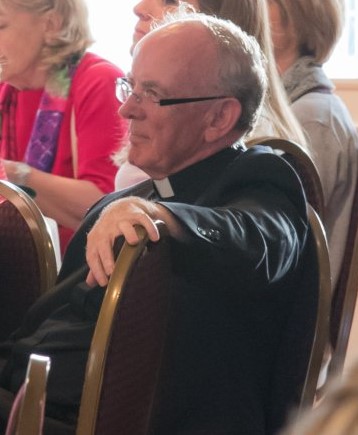
Father Nick Smith celebrated his seventy-five birthday last week. Although retired, he, like many a good priest of sharp mind, blessed with deep faith and good health, never really fully retires. Father Nick still celebrates Mass a couple of times each weekend and is listed in our parish bulletin at Saint Patrick Church on Smith Hill in Providence as Senior Priest. Educated originally in the city of his birth, Dublin, Ireland, he emigrated to the United States while still a young priest. Thoughtful, kind and with a smile that would calm the savage beast, we are blessed to know him. The gentle lilt of his native brogue in his homilies brings to mind the poetry of the Irish soul. His passion clear, his authenticity doubtless.

This morning’s Mass was no exception to his well-regarded homilies and earned him enthusiastic applause, which, as most know, is not the norm for Catholic Masses, although at St. Pat’s with Father Nick and our pastor Father James Ruggieri is not an infrequent occurrence. Both are extraordinary priests and homilists. For this Fourth of July, I asked Father Nick for a copy of his homily, and with his permission, share it with you as a guest blogger today for our celebration of this anniversary of our country’s birth as an independent nation, now nearing a quarter of a millennium. Warts and all.

 Independence Day, Father Nicholas Smith

Father NickIn recent years the famous Tall Ships have been in New England, including Newport, and I understand will visit Boston next year. It’s quite amazing the thousands who come out to see them: the parade, the pageantry, and the color of it all. And well they might.

The country was discovered by a man on a ship! The Pilgrims arrived at Plymouth Rock on a ship! Many of us wouldn’t be here if someone back in our family tree hadn’t come to this country by ship.  Tall ships, small ships, passenger ships, cargo ships.  All in a very unique way remind us of who we are and from whence we’ve come.

Tomorrow is the 240th birthday of the founding of our nation. Independence Day is the commemoration of what those peoples sought when they landed on these shores long ago. The first boat people, sailing away from slavery, persecution, famine to a new world of justice and equality and peace. So we don’t celebrate the land at this time nearly as much as we salute a people who came and fought and in many cases died for the privilege of being free. That’s the gift of the Founding Fathers right there in the historic Bill of Rights! That we are all free – free to come and go – free to worship – free to vote for those we want to lead us, and vote out those we don’t.

But we remember—with some reverence even—we remember that this freedom is both delicate and dangerous. It doesn’t mean that you can do what you want. It has its limitations. And the fundamental restriction is, of course, that your freedom cannot infringe on the freedom of another.

As an immigrant myself, I’ve said this before, but it bears repeating.

  • No one would want to live in an America where you can be mugged or robbed or shot.
  • No one would want to be a citizen here, and be at the mercy of the Ku Klux Klan or the hatred of the Nazi Party.
  • No would want to live in an area where you’re threatened simply because you happen to be of a particular color or race or creed.

These are sad realities.

  • We’re not free when people in some areas of cities have to put five locks on their doors for protection.
  • We’re not free to walk down the street at night.
  • We’re not free in so many ways.

Because America the Beautiful is also America the violent. The abuse of freedom—a warped sense of freedom—freedom gone wrong is rampant.

Nowhere is freedom more delicate than in the whole relationship of Church and State. They should be separate. We should be free to worship how and where we want. But when you get down to the individual person, you cannot split him up. You and I are both American Catholics. Not one or the other, but both.

So when the priest in the pulpit speaks out on the sacredness of life or against abortion for example, not only is he free to do so as an American, but it’s his duty and responsibility as an apostle of Jesus Christ. What we’re free to do is to accept God’s Laws or reject them. What we’re not free to do is to make them, or twist them around to suit our whims. Jesus gave us God’s Laws, and we are followers of Christ.

Rejection, incidentally, of Christ’s laws didn’t begin today or yesterday. It can be traced all the way back to scripture. “Come to me. Come after me,” is essentially what Jesus is saying in that beautiful gospel today. Clearly, a significant number didn’t then, and don’t now.

On this great weekend, however, we want to look at the positive! God knows we get enough of the other. So, if nothing more, recall the immortal words of President Kennedy, words which every American child should know like you know the Hail Mary. “Ask not what your country can do for you. Ask what you can do for your country.”

The only America we can pass on to the people of tomorrow is the one we create today and love today. If you’re not satisfied with it, stop sitting on the sidelines and complaining. Work at making it better—doing your bit to make it a country of high moral standards, a country of neighborliness and justice and charity. A country where the phrase “In God we trust” is more than just words on a coin.

So what are we celebrating today?

  • We’re celebrating the past—the people of the ships—your forefathers, who sacrificed not only that we could be, but that we could be free.
  • We celebrate the future—the hopes, the dreams, the ideals we have for our children—and theirs.
  • But also, and most important in my opinion, we celebrate the present—one another—because all we’ve got is one another.

Let’s pray in this Mass that we can grasp anew something of the great gift of freedom—and the responsibility that flows from that gift.

Let’s pray that God’s kingdom

  • A kingdom of love, not hate.
  • Of hope, not despair.
  • Of peace, and not war

That this kingdom of God may penetrate our very beings and sweep through this land from ‘sea to shining sea.’

Leave a comment

Filed under Background Perspective

Noise

 “There is a silent self within us whose presence is disturbing precisely because it is so silent: it can’t be spoken. To articulate it, to verbalize it, is to tamper with it, and in some ways to destroy it. Our culture is geared in many ways to help us evade any need to face this inner, silent self.” Thomas Merton, Love and Living.

Webb Lake wall panelsSteve Griffin, owner of Island Carpentry, has done much precise, beautiful work in our house in Middletown. We have come to know and value Steve’s friendship. Last year when he directed the installation and did the carpentry to install our gas fireplaces, he built a box over the mantle of one of them to mount our television. Bartering for our replaced electric kitchen stove, Steve’s wife, Mary Ann, created with Steve a four panel door to hide the box. Using old photographs Rita gave her, she painted a composite scene of our many summers spent in a rented old camp on Webb Lake in Weld, ME. This week she finished.

One of the many gifts Webb Lake gave us was solace and silence, especially early in the morning when the lake was mirror calm. I’m an early morning riser and have been for at least fifty years. Silence for private time, prayer and reading that leads to reflection and meditation is a before dawn activity for me, as it was on Webb Lake in the canoe. Here it is birdsong and sometimes the distant, muted foghorn in Newport Harbor which carries in the pre-dawn stillness. Is there anything more grand than that first cup of coffee in the sunroom looking out over the garden, the eighteenth century stone wall and Rhode Island Nursery across the lane? As Thomas Merton wrote, “our culture is geared…to help us evade any need to face (our) inner, silent self.” Yet this “inner, silent self” is where we most need to wander at leisure if we ever expect to find our peace, our self-knowledge, our connection.

“We live in a state of constant semi-attention to the sound of voices, music, traffic, or the generalized noise of what goes on around us all the time. We are more or less there.” Thomas Merton, Love and Living.

To Merton’s constant semi-attention in the last few decades, we’ve layered on omnipresent emails, texts, Facebook, Snapchat, Tweets, YouTube, television with a thousand channels, Pandora, videos and video games on demand, the insistent phones on our belt and on and on.  And on.  We don’t have to do much to completely avoid our silent, inner selves and the meaning of our increasingly preoccupied lives. In truth, we seek commotion: for after all, within those distractions persists our ability to avoid what we truly need to engage. For the ‘unexamined’ life is frenetically busy, exhausting even, but on the surface painless, while vaguely troubling underneath is a deep discontent like a tumor without symptoms yet. Without recognizing our core, what is left wanting, and what change is prerequisite to peace, we are left without a center at rest. Human beings are born with restless hearts, with a hole in the center. Do we seek what will truly heal it or do we squander our time by obfuscating with the deluge of stimuli?

” A great strong wind was rending the mountains and breaking in pieces the rocks before the Lord; but the Lord was not in the wind. And after the wind, an earthquake, but the Lord was not in the earthquake. And after the earthquake, a fire, but the Lord was not in the fire; and after the fire the sound of a gentle blowing. When Elijah heard this, he wrapped his face in his mantle and went out and stood in the entrance of the cave. And behold a voice came to him and said to him, “What are you doing here, Elijah?”  1 Kings 19: 11-13

“What are you doing here?” is the only relevant question we all must answer.

Garden 2016As I was going through the painstaking process of pulling the disassembled tomato support cages from the ceiling joists of the shed, straightening out the bent members, cobbling them back together for one more year and erecting them around this season’s hope for red tomatoes, Rita remarked to me that I was a patient gardener. I have never thought of myself as particularly patient; Type A, driving for perfection, impatient with myself especially. But times and souls change, especially when we spend the time to fill the hole in the middle.

I realized planting the last of the pole beans, the yellow bush beans and peas today with Gianna and Ellie, our two oldest granddaughters, that the hours pass quickly. We laugh, teach, learn and plant. They tell us where to put the pumpkins and sunflowers, their favorites. We can also be quiet together. Gianna is eight and now is the official reader of seed packets, discerning depth and spacing. Why are cucumber and the various kinds of squash planted in rings called hills? Why are some seeds planted an inch deep, and some only a quarter inch? Why is the squirrel eating the new corn and cucumber sprouts? If we see the baby rabbits out there in the garden, will I turn into Mr. McGregor?

I further realize that the overriding sensation of the garden in the sun with sore muscles, dirty feet, red knees and calloused hands is contentment, deep, abiding contentment. And that is enough.

“We are not fully present and not fully absent; not fully withdrawn, yet not completely available. We just float along in the general noise which drowns out the deep, secret and insistent demands of the inner self.” Thomas Merton, Love and Living.

8 Comments

Filed under Culture views, Personal and family life

Science and Scientism, Part Two

“The God of the Bible is also the God of the genome. He can be worshipped in the cathedral or in the laboratory. His creation is majestic, awesome, intricate and beautiful – and it cannot be at war with itself. Only we imperfect human beings can start such battles. And only we can end them.” Dr. Francis Collins, who led the team that mapped the entire human genome. “The Language of God”

Director of the Hayden Planetarium Neil deGrasse Tyson speaks as host of the Apollo 40th anniversary celebration held at the National Air and Space Museum, Monday, July 20, 2009 in Washington. Photo Credit: (NASA/Bill Ingalls)

Director of the Hayden Planetarium Neil deGrasse Tyson speaks as host of the Apollo 40th anniversary celebration held at the National Air and Space Museum, Monday, July 20, 2009 in Washington. Photo Credit: (NASA/Bill Ingalls)

After the strident coverage of the scandals of Jim Bakker, Jimmy Swaggart and Oral Roberts, televangelists fell on hard times to the point where Billy Graham, who led more people to an altar call than any of the others, made the definitive point that he was not one. To many, televangelism became a punchline. A notable exception is the enthusiasm attained with his followers by one of the most successful of the current televangelists, although he is not a Christian one. His television series was a resounding success, produced by a fellow true believer, Seth MacFarlane, the animator who also produced a widely watched hit commercial series, “Family  Guy.”

Dr. Neil deGrasse Tyson came to broad public acclaim through the remake of the old Carl Sagan series from the eighties, “Cosmos.” Dr. deGrasse Tyson has it all: engaging personality, telegenic good looks, a pleasing, convincing voice, brilliant teaching skills, along with a great passion for and the certainty of his faith. He fills large public venues on his tours with high production value, entertaining presentations that sell out routinely. Dr. deGrasse Tyson is now a millionaire (and counting).

I have no objection to the science that he so ably teaches (in truth I love and read books on science regularly), but take issue with his other agenda: the aggressive deconstruction of other people’s faith. Joining Richard Dawkins, the late Christopher Hitchens, Bill Nye and other apostles of the cult of scientism, he is not subtle, lobbing gratuitous enades right from the start of the Cosmos series using a shop worn atheist meme about Giordano Bruno[i].  He likes to fire up his flock with Tweets mocking anyone naïve enough to fall for the God myth.

Here’s a couple from December 25th, 2014 from a man clearly enamored of his own cleverness.

  1. ‏ On this day long ago, a child was born who, by age 30, would transform the world. Happy Birthday Isaac Newton b. Dec 25, 1642
  2. Merry Christmas to all. A Pagan holiday (BC) becomes a Religious holiday (AD). Which then becomes a Shopping holiday (USA).

The irony in #1 is apparent: Newton and many others who were seminal in Western science were deeply religious. #2 is factually wrong on sequence, dates and history (explanation in the article referenced in the footnote).[ii] The point of these was obviously not accuracy, it was self-satisfied mockery of other’s cherished beliefs. They reflect the central narrative of the scientism creed: the long struggle to climb out of the ignorance and mire of religion has finally triumphed, pulling mankind up from autocratic, stubborn ignorance and into pure, breathing-free reason; and, we, the deGrasse Tysons of the world, the enlightened, are its wizards.

“(Moderns) do not know that there are other methods (besides science) of finding the truth, such as honest, straightforward logical reasoning. They are less aware than previous generations of what good reasons are, for the very word ‘reason’ has drastically shrunk in meaning in modern philosophy.” Peter Kreeft,” Fundamentals of the Faith”

Their dogma ignores that modern science grew out of the soil of religion; there is no opposition, only complimentary and necessary perspectives. The founders of modern Western science were educated in church sponsored universities and faith filled, seeing no conflict between faith and reason: Newton, Descartes, Galileo, Pascal and many others. Many scientific advances have been made by priests and religious.  Here’s a few:

  • Father Jean Picard developed the first modern reasonably accurate estimate of the size of the earth. He was a contemporary of and collaborator with Isaac Newton, inventor of calculus and founder of modern physics.
  • Nicholas Copernicus, astronomer and mathematician, who formulated the math and calculations proving a heliocentric solar system, was a third order Dominican.
  • Gregor Mendel, father of gene theory and the science of modern genetics, was an Augustinian friar and abbot of the St. Thomas Abbey.
  • Father Georges Lemaitre
  • More recently, Father George Lemaitre, Belgian priest and teacher of astronomy and mathematics at the Catholic University of Leuven, first formulated the theory of an expanding universe in 1927, usually misattributed to Hubble, who published two years later. Father Lemaitre developed what became known as Hubble’s Constant, as necessary to those calculations, and first proposed the Big Bang Theory. After first challenging the theory, Albert Einstein met with Lemaitre, and after extensive review of the math, became a supporter.

Scientism is not science, but self-defines a schism between science and reason vs. religious faith and superstition.  This impoverished belief system violates a fundamental tenet of true science; by presupposing that no Creator exists, it distorts wide open inquiry to preclude any possibility of the divine. Rather than going wherever the evidence leads, scientism shuts down paths of examination.  If you want to maintain an open mind on the subject, I recommend some reading on this vast subject; it has far too long a history for a blog post. I briefly reviewed the slow devolution of philosophy to the current “enlightened” position of a false dichotomy between faith in a Creator and science in a couple of previous posts: Singularity and Beyond Singularity, but for a deeper look, I’ve included a short suggested reading list in a footnote[iii].

Science offers a valid, but limited understanding of our existence. Science is the specific study and understanding of physical phenomenon, mostly, but not entirely, based in the “scientific method” of observation of empirical and measurable data, then formulating hypotheses regarding those observations. Next it tests and hones hypotheses with experimentation, further observation and mathematics. Science is rooted, however, in broader metaphysical concepts: that we can trust our observations and reasoning, i.e. that our brains and observational equipment (biological and instruments) can be relied upon for accurate observation, and that the scientific method is valid. The foundation of science itself is a metaphysical concept that the universe is intelligible, and that human beings can come to understand that intelligibility. An intelligible universe would seem to indicate an intelligible origin. Great benefits have accrued to humankind through science and its practical cousin, technology, but also concomitant risk and always emerging ethical questions.

“Can,” “how,” “how much and how many,” “what,” “where,” “when,” “who,” “why and why not,” and their relationships are the domain of science, however “ought” and “should.” are the province of ethics, informed by millennia of philosophy and religion. On this ground, scientism has staked its claim as well. Science is, well, a science, but scientism is a faith, a type of religion, albeit a secular and relatively new one. Scientism holds that science is the only reliable guide to truth, and that metaphysics, philosophy, religion, poetry, art and other forms of human understanding are speculative, subjective, relative and not up to the exacting standards of hypothesis, experiment and empirical observation. From this perspective, objective truth is solely contained in the scientific method.

As with all stories, this has no certain beginning; and shrouded in the mists of antiquity, the story begins when we start watching and paying attention. When and where you start watching, dear reader, is what you must determine with some study and thought, and dare I say, some prayer.

“Positivism and existentialism are no longer as popular as they were earlier in this century, but their essential mind-set has taken root securely in our culture, especially the false premise common to both philosophies, namely that reason equals science.” Peter Kreeft, “Fundamentals of the Faith.”


[i] Father Robert Barron comments on “Cosmos: A Space Odyssey.”

[ii] Word on Fire Blog, “What Neil deGrasse Tyson Misses About Science and Faith,” Joe Heschmeyer

[iii] This list is far from comprehensive, and many other references are omitted, but they will provide a starting place from a variety of perspectives. I have read them and know them to be clear and well written. There are many others. I apologize for the incomplete references, but Amazon links to all are included. Most are available in inexpensive paperback or Kindle editions:

9 Comments

Filed under Background Perspective, Culture views

Of Winter and Circus Wagons

“Winter is a season of recovery and preparation.” Paul Theroux

Our first winter in Maine came on us suddenly and without adequate groundwork. We had purchased our somewhat renovated post and beam barn on five mostly wooded acres in Mount Vernon. Sagely we thought, our family planned to move from Cape Cod in the spring, so we rented the house out to a couple of single young men we met briefly. In January, they stopped paying rent and moved out without notice. Didn’t return phone calls either. Since we couldn’t afford the new Maine house and our rental house on Mashnee Island, in late February we moved.

The property boasted pristine spring water which gravity fed the house over a drop of about fifty feet of elevation through a five-hundred-foot underground pipe from our spring enclosure in the woods. Even flatlanders like us took only our first day to discover that an unused pipe barely clearing ledge eighteen inches below the soil in late January freezes solid. We were lucky; it didn’t split open. But neither did it deliver water until May.

Digging out the septic tank with shovel and pick to expose the cover, we bought an indoor Sears chemical toilet that I emptied daily. A forty gallon galvanized wash tub, a wood stove to heat up the kettles and multiple trips to the spring with a couple of two gallon buckets took care of the bathing. Drinking, cooking and incidental washing cost a few more trips a day. After a few spills of water on the hill, it became a slippery and occasionally painful adventure to fetch water. I had no idea how much wood we needed, so we quickly ran out, and Maine is not an easy place for strangers to find firewood for our principal source of heat in February. Every week, I would take our Ford F-150 to a birch toothpick and dowel sawmill factory and fill it with burlap bags of dowel ends and bark trimmings.

When a twenty-four-hour stomach bug ripped through the family, the Sears chemical toilet proved to be a sad, inadequate resource. But, Rita didn’t leave me, and we muddled through the rest of the first winter. At least the twenty below nights were behind us with the ascent of the February sun. We were in our first house, sleeping in an overhead loft on a mattress jammed up tight against the roof at the edges, and while the Maine winter soon made mock of any romantic notions, the loft was warm, and we made it until the blackflies and mud season signaled spring.

“By suffering comes understanding.” (toi pathei mathos), Ancient Greek saying.

The townspeople, who were welcoming, but reserved, tried to help us prepare for our second (and first full) winter as best they could; locals retain a wait and see attitude towards newcomers until they prove they can stay the course. Snow started in earnest before Thanksgiving, but happily relented around Easter. Sort of. I observed, asked questions, built a small pole barn wood shed with spruce cut out back and filled it with five cords of dry hardwood I split by hand. Working together, Rita and I wrapped the entire perimeter of the house to about a foot above the stone foundation with black plastic secured with wood lathe and roofing nails, then laid bales of hay against it to keep out the floor drafts. I made a matched spruce board storm door, weather-stripped to seal out more leaks. Large double-hung salvaged windows looked north, providing a house selling view of the adjacent field and mountains beyond, but they squandered heat and rattled in the wind. Tacked up clear plastic inside storm windows helped. Rita’s dad came for a visit and helpfully suggested we give the house back to the bank. So we awaited the onslaught, seemingly much better prepared than our first winter.

Circus wagonNothing could prepare us, however, for weeks that never went above zero and snow that drifted up against the house covering the lower half of the windows on the north and east end. On the south side of the house, we were in perpetual shade, which cooled us in the summer, but the snow shed from the roof built up against the back of the house, covering all but the top eight inches of the windows in the kid’s bedroom. In front the snow packed down under snowshoes and boots, and when our children looked out to see Dad hauling wood from the woodshed, only my legs trudging past the windows were visible. The entire interior of the house was painted a solid white semi-gloss, no doubt purchased on sale in five gallon buckets from the Sherman Williams store in Augusta.

On days with a higher sun and no wind Rita would sometimes bundle up the kids and take them on a lunch picnic in the back of the truck. I worked late too many nights trying to establish my company’s business in new territory. After one particularly isolating week in Mount Vernon of white out and cold, I came home after an overnight in Aroostook County to find the living room and dining room (both had sleeping lofts) transformed. The décor was early circus wagon. Gold yellow walls and red painted posts up to the bottom horizontal beam and the cathedral ceilings. Preparation ill-advised or perceptive cannot cover all contingencies; sometimes you’ve just got to go with your gut.

“He who is best prepared can best serve his moment of inspiration.” Samuel Taylor Coleridge


9 Comments

Filed under Maine Tales, Personal and family life

Science and the Religion of Scientism, Part One

RFIDs, Human Trafficking and The Limits of Technology

“Berlin! The very name like two sharp bells of glory. Capital of science, seat of the Führer, nursery to Einstein, Staudinger, Bayer. Somewhere in these streets, plastic was invented, X-rays were discovered, continental drift was identified. What marvels does science cultivate here now? Superman soldiers, Dr. Hauptmann says, and weather-making machines and missiles that can be steered by men a thousand miles away.” All The Light We Cannot See, Anthony Doerr

A tiny Radio Frequency Identification tag pairs with a Global Positioning System tracker all in a package about the size of a grain of rice. Inject it just below the skin of your expensive Black Lab, a three-thousand-dollar investment with vet fees. If your dog runs off and gets lost or is dognapped for sale in another state, with your cellphone application or the police, you can find her and bring her home safely. Not cheap, but worth it. You love that mutt.

Much has been learned through RFID GPS tracking to manage wildlife populations, even endangered wildlife, to help them thrive or to survive with little damage done during the insertion of the miniature device. Migration habits, size of territories and travel within territories, familial and group/herd relationships, feeding patterns, mating and other behaviors can be tracked, analyzed in computers and used to plan to help or hinder a species depending upon the habitat management objectives.

All good, right? What could go wrong? There are RFID/GPS trackers inserted into razor sharp arrows, so bow hunters can more easily track deer shot through only one lung from a tree stand; deer pierced like that can run a long way in terror and pain before lying down to bleed out. And worse. A lot worse.

“Human progress, though it is a great blessing for man, brings with it a great temptation. When the scale of values is disturbed and evil becomes mixed with good, individuals and groups consider only their own interests, not those of others. “Gaudium et spes,” (“Joy and Hope”), Vatican II documents.

implantA young emergency room resident in Boston heard a twenty-year-old patient tell him confidentially that she had a RFID/ [i] GPS tag inserted in her thigh against her will. At first the ER staff was incredulous and were making eye contact as though they had someone on their hands akin to a crazy claiming they had been injected with mutant genes during an alien abduction, but within a few minutes they realized that a prosaic local source of evil was at work. Like the branding of indentured Irish servant/slaves and the hobbling of runaway African slaves, more advanced technology had been introduced into the human trafficking industry.

The sex trade bosses have enhanced their surveillance and control capability; these devices have been used in the United States, injected into workers in industry and domestic service as well.[ii] The majority of the prey so subjected are native born Americans; it is not the exclusive province of exploited undocumented immigrants. Subdued in the domain of enslavement, the subjects are those with the fewest options. After they are tagged, their options further diminish.

“The process of going mad is dull, for the simple reason that it is going on. Routine and literalism and a certain dry-throated earnestness and mental thirst, these are the very atmosphere of morbidity… This slow and awful self-hypnotism of error is a process that can occur not only with individuals, but also with whole societies. It is hard to pick out and prove; that is why it is hard to cure.” From A Miscellany of Men, G.K. Chesterton, 1912

This is hardly a new phenomenon – evil uses of science and technology. Zyklon nerve gas to lower the cost per person of killing “undesirable” human beings in the showers of Auschwitz comes to mind. Or perhaps Margaret Sanger’s Planned Parenthood and eugenics nexus, where she advocated deceitful or even forced sterilization of “undesirable” breeders to bring about a more perfect human race.[iii] I could tell you of a co-worker, who suffered such a fate, but that is a tale for another time.

More recently, we see the alarming hastening of the demise of organ donors, especially for those “undesirables” with mental illness or long term illnesses who have expressed an interest in such a hastening. Already happening in the euthanasia friendly climes of Belgium and the Netherlands. Why wait for lethal injection to take effect? Anesthetize the patient, wheel them into the operating room and yank out the most desirable or profitable parts.[iv]

If we don’t understand how we arrived at this ethics of utility, where things are loved and people are used, there are some gaps to fill in. For a couple of thousand years of what is loosely described as Western Civilization we held that ‘reason’ or ‘wisdom’ encompassed science. Science was part of, but far from all of what was considered to be true. Truth and reason were humankind’s efforts to understand the reality of things, and that search involved other and greater aspects of truth than merely empirical observation, hypothesis and experiment. Like a sort of collective macular degeneration, our vision first occluded at the center then faded into an increasing myopia. Metaphysics, art, poetry, religion and philosophy were slowly blinkered as sources of truth.

This will require a part two – how we devolved from a more human wisdom to a new ethos, and how we grotesquely distorted science into a new faith, ‘Scientism.”

“Parts are not to be examined until the whole has been surveyed.” Samuel Johnson


[i] http://www.marketplace.org/2016/03/02/health-care/health-care-takes-fight-against-trafficking

[ii] https://polarisproject.org/sites/default/files/2015-Statistics.pdf


[iii] Maggie, Part Two. Quo Vadis Blog, June 2, 2013

[iv] Euthanasia by Organ Harvesting, Dr. Wesley Smith, First Things, March 31,2016

3 Comments

Filed under Culture views

The Blare of the Brass Trump

“There are two sides to a trumpeter’s personality.  There is the one that lives only to lay waste to the woodwinds and strings, leaving them lying blue and lifeless along the swath of destruction that is the trumpeter’s fury.  And then there’s the dark side.” Anonymous

TrumpMuch has been written of the Trump phenomenon, about ignorant, angry, racist voters who have taken more than enough and can’t take anymore. Far deeper and more intransigent than that, I’m afraid. The glib Donald proposes no real or even thoughtful solutions – only simplistic pandering, and he displays little depth of knowledge in any of the subjects about which he harangues. How is a privileged narcissist, a vain bully whose signature is insult and schoolboy humiliation of anyone who voices even minor criticism, successfully pretending as a “tell it like it is” savior of the common man? What vein is he mining?

Peggy Noonan this weekend starts the conversation best, I think, in her Wall Street Journal column, and I recommend it to you: “Trump and the Rise of the Unprotected.” She writes that the divide between the “protected” (well to do, influential, comfortable and safe) and the “unprotected” (everybody else) has widened to nearly unbridgeable and is intolerably frustrating to those on the vulnerable side. Noonan suggests that the protected includes most politicians, academia, the majority of both conservative and progressive media, the educated and the wealthy – defined as anyone not constantly worried about paycheck to paycheck necessities for their families.

The protected have no insight into what the majority of people deal with on Monday morning or in middle of the night sweats; the unprotected are in frigid water without a lifeboat while the Titanic goes down. The elite have for the most part abandoned public schools for their own children except for lip service to the teacher’s union. They converse smugly among themselves about the witlessness of the average person along with some occasional painless and riskless tsk, tsking about minorities and the disadvantaged, who need to be rescued by the government or free enterprise or some combination thereof. The protected and unprotected stand on the precipices of opposite sides of a canyon and shout bumper sticker slogans at each other.

Trumpism is not a joke, much as we wish it was, and neither is it an eruption without a cause. We can see it as the other side of the same coin as Obamaism. We long for a demagogue to lead us out of the bewilderment of our own inability to grasp what’s really going on. We are awash in information and immediacy of communication and bereft of understanding and wisdom, overloaded with bits of knowledge, and unable to piece together a meaningful picture of the whole. So we grasp at the self-serving kindness of strangers and fantasize that the expert, the manager, the technocrat can pick their way through the obstacles that no one else understands and bring us safely home.

“The vast accumulations of knowledge – or at least information – deposited by the nineteenth century have been responsible for an equally vast ignorance. When there is so much to be known, when there are so many fields of knowledge in which the same words are used with different meanings, when everyone knows a little about a great many things, it becomes increasingly difficult for anyone to know whether he knows what he is talking about or not. And when we do not know, or when we do not know enough, we tend always to substitute emotions for thoughts.” T.S. Eliot, from the essay, “The Perfect Critic”

G.K. Chesterton wrote over a century ago in his brilliant short essay on juries, “The Twelve Men,” [i] The Fabian argument of the expert, that the man who is trained should be the man who is trusted would be absolutely unanswerable if it were really true that a man who studied a thing and practiced it every day went on seeing more and more of its significance. But he does not. He goes on seeing less and less of its significance. In the same way, alas! we all go on every day, unless we are continually goading ourselves into gratitude and humility, seeing less and less of the significance of the sky or the stones.”

Our culture is in great danger of intellectual and moral surrender to the expert, to the manager whom we believe knows all and can fix all, like Donald Trump, or for that matter, Barack Obama. We retreat from an overwhelming onslaught of data and information and cede authority to those longing to assume it. We flee into distractions, entertainments and the frivolous because we fear we cannot bear or understand what it is we need to understand and to bear. Mistaking management for leadership, we willingly turn over our governance to those we hope see the light that we do not.

“Trumpet players see each other, and it’s like we’re getting ready to square off and get into a fight.” Wynton Marsalis


[i] See free online version of Chesterton’s collection, “Tremendous Trifles” from the Gutenberg Project: http://www.gutenberg.org/files/8092/8092-h/8092-h.htm#link2H_4_0012

12 Comments

Filed under Culture views, Politics and government

A Tale of Two Athletes

A Tale of Two Athletes

“How soon hath Time, the subtle thief of youth, stolen on his wing my three and twentieth year.”      John Milton

When Aaron Hernandez was twenty three, he had realized his youthful dreams: a lucrative National Football League contract, making him a multimillionaire; new found fame and the adulation the public reserves for its talented sports heroes; a pretty fiancé, Shayanna Jenkins, with whom he had a young daughter; a big house, and a history of success and awards at Bristol Central High School in Connecticut, a national championship at the University of Florida and an American Conference Championship with the New England Patriots. He received the 2013 Pop Warner Youth Football League Inspiration for Youth Award. With Hernandez and Rob Gronkowski, Tom Brady had the most lethal big and fast tight end duo in the league, almost unstoppable. Aaron Hernandez making the cut and up to speed on an end around run was daunting for any defense.

His signature touchdown celebration was to mime counting the money; he took pleasure in displaying his heavily tattooed, incredibly fit body. There were other shadows: his associations with the Bloods street gang, drugs and guns. His mother, Terri, played a minor role in organized crime, as a phone operator taking bets for a large sports gambling syndicate. Even though he was ranked as the top tight end prospect in the country, Hernandez, a consensus All American went later than expected in the fourth round of the NFL draft because of concerns about drug use and a history of violence.

“No man chooses evil because it is evil; he only mistakes it for happiness, the good he seeks.” Mary Wollstonecraft Shelley

Aaron Hernandez reconsideringWhen he was twenty four after a couple of weeks of nonstop media coverage, he was arrested for the murder of Odin Lloyd, a semi-pro football player dating the sister of his fiancé. Lloyd was driven around for a couple of hours, taken to the back of a North Attleborough industrial park and executed with five shots from a .45 caliber handgun traced back to Hernandez. Within two days, the Patriots released him; the money dried up and he became just another guy in leg irons and an orange jump suit awaiting trial in the Bristol County Jail in Dartmouth, Massachusetts.

“When I’m blind, when I cannot see, when all life’s trouble sweeps over me. When I’m in darkness and all I see is me, be with me, Lord.” Tom Booth, “Be With Me, Lord”

Mr. Lloyd had offended Hernandez by talking to his enemies in Cure, a Boston nightclub, about Hernandez’s alleged involvement in a previous drive by shooting in Boston in 2012. Two Cape Verdean immigrants were shot in their car; they had a run in with Hernandez at a bar earlier that night, “disrespecting” Hernandez, apparently a capital offense. After his conviction and life sentence for the Lloyd murder, Hernandez is under indictment for the other two earlier murders. More violent incidents and bar fights turned up in the investigations, including one in Florida, when he shot in the face his once friend and “right hand man” from the Bristol gang, Ernest Wallace, costing Wallace an eye. Hernandez’s future is now as bleak as it once was luminous; he will never run free again amongst similarly gifted athletes. His past is defined now with a chalked outline of a dead former friend on a weedy, littered back lot.

“What you are is God’s gift to you, what you become is your gift to God.” Hans Urs von Balthasar

Grant DesmeGrant Desme was named 2009 Arizona Fall League MVP. Only the best of major league prospects are sent to the fall leagues. Having been an early draft pick, he was one of the most touted minor league prospects in all of baseball. He had played baseball for Cal Poly San Luis Obispo after transferring over from San Diego State. First team All American and Triple Crown winner for the Big West Conference, he was an extraordinary athlete.[i] “I had everything figured out. I was on top of the world: successful at baseball, not having to go to school, having a big contract, but I was not where God wanted me to be.”

He had been injured by a pitch in 2007 that broke his wrist. Surgery followed, and the six week estimated healing time turned into over a year; he missed almost all of the 2008 season. During his recovery, he started to examine his dreams and plans for the future. The injury had him questioning his premises. “I couldn’t play baseball. God really started rocking my world. I was faced with a lot of silence… To have something that was completely out of my control, like an injury, strip that away left me wondering: What’s the purpose? What am I actually going after? Because if I can put all my effort into something and not have it fulfilled, why do it? It ended up making me think a lot about death, a lot about my entire existence on this earth. It made me confront the big questions about life, and it led me to God.”  He contemplated becoming a priest.

But Grant Desme returned to baseball, wanting to prove to himself that if he changed his course, it was not running away from a failure. He went back into Single A ball, but was soon bumped up to Double A. Combined with both teams, his stats (for a baseball geek like me) were, as he said, like a video game. A 30-30 season (over 30 home runs and 30 stolen bases – a thing of boyhood dreams)- OPS of .933 – 31 home runs -OBP of .365 – 6 triples – 42 stolen bases. He had speed, good judgment, hit to all fields and power. After the MVP Fall League, he was reassigned to the Oakland A’s and invited to spring training — on the verge of the jump to “The Show.” He loved playing baseball; all questions about his recovery and amazing skills were answered.

He retired.

Frater MatthewGrant Desme is now Frater (Brother) Matthew Desme of the Novertine Abbey. [ii]  He finished up his philosophy studies, and after four years of theology and an apostolic year in Rome he will finish his qualifying education for ordination as a priest. His life is radically simple with some baseball with the brothers from time to time – the ultimate ringer. “I realized that even if I played twenty years in the major leagues and ended up a Hall of Famer, I would still die one day. No matter what I achieved, I would be just as dead as everyone else in the cemetery… At every stage of my career, I thought happiness was just around the corner. No matter how well I played or how far I advanced, I never gained the complete, lasting happiness I was expecting. There were thrills, but none of them lasted. Everything here below is fleeting.”

Frater Matthew Desme says his previous life was a “very superficial form of masculinity … based on externals and trying to put yourself before others. I’ve since learned an authentic masculinity based on self-sacrificing love.” Grant Desme’s future is luminous with his past defined now as a grand worldly success that hadn’t lived up to his hopes for it.

Aaron Hernandez and Grant Desme were athletes gifted in a way 99.999% of us mortals will never experience, but their paths diverged in a radical way, as has their outcome. One became ensnared in the counterfeit happiness of our culture with self-fulfillment and self-gratification its goal; the other found peace and lasting happiness in humility, serving and loving others.

“The Christian says, ‘Creatures are not born with desires unless satisfaction for those desires exists. A baby feels hunger: well, there is such a thing as food. A duckling wants to swim: well, there is such a thing as water. Men feel sexual desire: well, there is such a thing as sex. If I find in myself a desire which no experience in this world can satisfy, the most probable explanation is that I was made for another world. If none of my earthly pleasures satisfy it, that does not prove that the universe is a fraud. Probably earthly pleasures were never meant to satisfy it, but only to arouse it, to suggest the real thing. If that is so, I must take care, on the one hand, never to despise, or to be unthankful for, these earthly blessings, and on the other, never to mistake them for the something else of which they are only a kind of copy, or echo, or mirage. I must keep alive in myself the desire for my true country, which I shall not find till after death; I must never let it get snowed under or turned aside; I must make it the main object of life to press on to that country and to help others to do the same.”                        C.S. Lewis, Mere Christianity


[i] Quotes from “He gave up baseball to follow God’s call.” The Catholic Voice, September 8, 2014

[ii] “Ex-Baseball Phenom Discusses Life in a Novertine Abbey” National Catholic Register, 4/8/13. http://www.ncregister.com/daily-news/ex-baseball-phenom-chose-the-better-part-in-norbertine-abbey/

7 Comments

Filed under Culture views

Merry Christmas and Happy New Year

Norman Bird Sanctuary pond 11-15-15“He knows if you’ve been good or bad, so be good for goodness sake.” “Santa Claus is Coming to Town”   1934, lyricist Haven Gillespie

If your high school yearbook was anything like mine (yes, they did have printing presses back then), many of the earnest and hopeful pictures of the seniors were autographed. We took them around to friends, who at the time seemed destined to be inseparable, and exchanged heartfelt good wishes for each other’s lives. Most would include their best expectations for their own lives in a line under their picture stating their goals and aspirations. A majority yearned most notably for happiness. I doubt there were many that interpreted that longing with a clear definition. Prosperity? A beautiful spouse and loving family? Good health and a long life? Multi bedroom houses and an expanse of weed-less lawn? A Porsche, a Harley or a Catalina 315 in Newport Harbor? Wilderness camping? A career with high earnings, fulfilling achievements and social recognition? A lot of fun, however construed, with multiplying diversions and entertainments – dances and concerts and travel to exotic places?

For some an adolescent meaning for happiness persists with inherent disappointment baked in – perhaps even to become pathology with a grinding need for distraction whether in sports or sex, drugs and rock & roll or toys of any stripe or a consuming career and pursuit of the accrual of wealth and stuff or celebrity and the praise of others. If the unrecognized intention is distraction, then distraction from what is the relevant question.

“Anyone that chooses to look back on his past excesses will perceive that pleasures (typically) have a sad ending: and if they can render a man happy, there is no reason why we should not say that the very beasts are happy too.” “The Consolation of Philosophy”, Boethius, (sixth century)

The ancients had a much different understanding of happiness and thought much of happiness a choice, not good luck or successful effort for what we moderns accept as achievement. For Aristotle, human happiness did not consist of satiated desire or momentary contentment, but living daily lives in quiet pursuit of first knowing objective truth, virtue and honor, then to instill virtue in our decisions great and small. He agrees “The highest good attainable by action is happiness,”[i] but defines what that means poles apart from contemporary interpretation.  Happiness is not dependent upon the ephemeral or somebody else’s opinion; happiness is not to be sought as a goal unto itself, but something revealed and familiar in silent reflection, nurtured in our daily thoughts, words and actions.

For Christian theologians like Thomas Aquinas and Augustine, Aristotle’s definition is self evident, but they refine it further. Aquinas dedicates a segment of his Summa Theologica to happiness. “Since the last (final or primary) end is stated to be happiness, we must consider the last end in general.” [ii] He accomplishes this in great depth for an entire, beautiful section of his exposition on Ethics.  Augustine in his letter to Proba wrote, “We must search out the life of happiness, we must ask for it from the Lord our God. Many have discussed at great length the meaning of happiness, but surely we do not need to go to them and their long drawn out discussions. Holy Scripture says concisely and with truth: Happy are the people whose God is the Lord.” To be truly happy, it is necessary to first know God, and in so knowing, learn truth and virtue, then to live that life. This brings us to Christmas.

“You first loved us so that we might love You – not because You needed our love, but because we could not be what you created us to be, except by loving You.” “On the Contemplation of God,” William of St Thierry, abbot.

“The end of the ages is already with us. The renewal of the world has been established, and cannot be revoked.”[iii]  We could come up with a better plan than God did for reconnecting His creation with Himself unless that was the only possible plan: that the Bridge had to be of flesh and blood, born of a very young woman in a very remote area of the world. The mystery is not that this actually happened in Bethlehem. If we contemplate the reunification of man separated from God, God, Who is pure Truth, Love and Beauty could not do other than this loving reconciliation for it is His nature, His essence. How it was and is done is a wonder, but what else would it be?

Once genuinely knowing that truth within ourselves, trying to live a life worthy of it, a life of virtue, seeking to understand ever more deeply and love ever more fervently leads like gravity leads running water in a woodland stream to an inner peace and happiness[iv], to that “perfect and sufficient good.”  “So be good for goodness sake.”

“Above all things keep peace within yourself, then you will be able to create peace among others. It is better to be peaceful than learned.”[v]  So if in the context of this peace imbedded in an abiding happiness, we should feel offended or ignored or forgotten or taken for granted or hurt or angry or resentful or vainly knowledgeable in an ignorant world or upset with incompetence or obtuseness or arrogance we perceive in others, then these are opportunities for virtue and great peace.  A gift of opportunity is granted to reclaim peace, to recall the sufferings of others, to know that we cannot see into their souls and what grave secret burdens they carry. We can understand that our feelings may well up from a reservoir of hurt carried within us all that we can allow to drain off. Peace is better than to be right. Mercy and truth, but mercy first. Peace and right, but peace first. Humility before offended pride, which always is rooted in our own faults.  God bless you and yours this Christmas season and a Happy New Year.

For Mercy, Pity, Peace, and Love

Is God, our Father dear,

And Mercy, Pity, Peace and Love

Is man, His child and care.


For Mercy has a human heart,

Pity a human face,

And Love the human form divine,

And Peace, the human dress.  

 “The Divine Image,” William Blake

[i] The Nichomean Ethics, 1.4, Aristotle

[ii] Peter Kreeft in Summa of the Summa, states in his notes, “’Happiness’ (eudaimonia in Greek, felicitas in Latin) means not merely subjective contentment, or rest of desire, but also real blessedness, the state of possessing the objective good for man.”

[iii] “Lumen gentium” from the Second Vatican Council.

[iv] “As Plato pointed out (Republic, Bk 9), all who have experienced both the greatest bodily delights and the greatest spiritual delights testify to the same results of this dual experiment: that the soul can experience far greater pleasure than the body. (It can experience far greater suffering, too.) All who doubt this simply prove they lack the experience and are in no position to judge.” Peter Kreeft, notes from Summa of the Summa.

[v] From “Imitation of Christ,” Thomas à Kempis.

4 Comments

Filed under Background Perspective

Word Sense

Janus, Roman god of transitions and opposites, looking to the past and future

Janus, Roman god of transitions and opposites, looking to the past and future

Most bloggers like words, are fascinated by words, enjoy thinking about and playing with words, and want to use the right words. Nerds essentially, poets with an unrequited love, and I fall into that category.

“In time small wedges cleave the hardest oak.”The Spanish Tragedy,” Thomas Kyd

“That is why a man leaves his father and his mother and cleaves to his wife, and they become one flesh.” Genesis 2:24

Janus words are self-antonyms, and with some thought, we can find quite a few of them. “Cleave” is a bit antiquated. Thomas Kyd penned “The Spanish Tragedy” in Elizabethan times. When did anyone last tell their spouse he cleaved to her? Perhaps you cleaved the firewood with a splitting maul. More likely you split the wood. In modern conversation, allusion to cleavage most often involves immodest dress. Still, we understand the opposite meanings of “joined with” and “split” by their context.

How about the Janus word, “screen?” I’m wonky enough to look forward to watching a screening of “Pawn Sacrifice,” the new Tobey Maguire movie about the Bobby Fischer/Boris Spassky world championship chess match in Iceland. Screen can also mean to hide from view, as in Hillary set up a private server for her emails to screen her communications from oversight and legal inquiry.

Oversight can mean to oversee and supervise, as in the Secretary of State has oversight responsibilities for the security of U.S. diplomatic missions and embassies across the globe. However, if an ambassador in a high risk country like Libya pleads for additional security forces, is ignored, doesn’t get the help he needs, then is murdered along with three other Americans in Benghazi, well, that’s an oversight of a different kind.

“Sanction” can connote approval or condemnation. We can discern its opposite meanings depending upon context to guide us, even within the same sentence. The weak Iran weapons deal with its unpublished side agreements tacitly sanctions Iran’s nuclear weapon ambitions by removing all economic sanctions without enforceable inspection provisions, thus freeing up billions of dollars for Iran’s terrorist supporting enterprises.

More?  How about “trim,” which can mean “to decorate (add to)” or “to cut away?” “Fast” can mean to move rapidly or to stand motionless and firm. “Weather” can be used to describe wearing away over time or to persist unchanging in the face of adversity. A little thought and you can find others like “left” or “dust.” We don’t ponder these self-opposite words, and our brains adjust without pause to interpret them on the fly.

As I thought of these words, another came to mind that, while not exactly an auto-antonym, can connote, if not opposite meanings, vastly disparate implications for the human experience. Let’s explore the word “sense” in a little more depth.

“And I’m thinking ‘bout how people fall in love in mysterious ways. Maybe just the touch of a hand.” “Thinking Out Loud” Ed Sheeran

 Sense can mean hard headed evaluation and everyday common wisdom. “That makes no sense.” Or “Common sense is unfortunately not very common in Washington.” Sense has other inferences connecting us to feelings, intuition and imagination. “He had a sense of foreboding when his new partners stopped their conversation as he entered the room.”

Sense is a basic attribute of sentient beings. We need five senses as our means of learning about our environment. They become increasingly intimate and perhaps more primitive as we first experience them from far to near. We start to see from great distances; with a little help to the far side of the universe. Closer in, we begin to hear – the greater the distance, the louder the stimulus needs to be and the longer it takes for us to sense the disturbance. From explosion to the transcendence of music; the unwelcome intrusion of angry shouting to the whisper of a child with a secret.

Next in comes smell, always particulate, sometimes exhilarating, calming or pleasant, other odors offensive or even frightening. Closer in still come taste and touch, requiring physical contact with that which brings to us the sensation. Sweet and pungent, bitter and delightful, hot and cold, sharp and soft, pleasure and pain.

Within our most intimate relationships, all five senses intensify, and with the most personal of human contact with bodies intertwined, all senses heightened, we become one. Open to passionate sharing of our very selves, at its spiritual core, open to new life – both with each other and in co-creation with God. Not merely, “Let’s go lie down somewheres, baby,”[i] but “I in my innermost desire want our love to bear the fruit of a child, who is a lot like you.” The definition of marriage is an intimacy like no other inscribed in our nature as humans. The vagaries of cultural change can no more redefine marriage at its core than it can redefine our souls.

“What more do you want?”

“The truth,” she said. “For starters.”

We both fell silent for a moment. I said, “It was a hell of a lot easier for us to agree to have sex.”

She drew that big breath back in; her shoulders and chest rose. “Sex is always easier than the truth,” she said. “The Star of Istanbul” Robert Olen Butler

[i] “Coney Island of the Mind” Lawrence Ferlinghetti

4 Comments

Filed under Background Perspective

Musicophilia

“Mozart’s music is so pure and beautiful that I see it as a reflection of the inner beauty of the universe.” Albert Einstein

violin partita No 2 D Minor JS BachLast week Dr. Oliver Sacks died well; he wrote, thought and gifted mankind until the end. He was highly praised as a neurologist, author and for the partially autobiographical 1990 film, “Awakenings,” which earned Golden Globe and Academy Award Best Actor nominations for Robert De Niro and Robin Williams. Williams played the Oliver Sacks character. A fine writer, he penned a book, “Musicophilia” in response to Stephen Pinker’s statement that “music is ‘auditory cheesecake, an evolutionary accident piggybacking on language.’” [i]

Dr. Sacks “pointed to [music’s] ability to reach dementia patients as evidence that music appreciation is hard-wired into the brain.” He said in a lecture at Columbia in 2006 that “I haven’t heard of a human being who isn’t musical, or who doesn’t respond to music one way or another . . . I think we are an essentially, profoundly musical species. And I don’t know whether — for all I know, language piggybacked on music.” [ii]

Music is to me the deepest of human efforts to communicate, to impart information – intellectual and emotional – an amalgam of mathematics, symbols, human feelings and poetic beauty. Some is simple; some is more complicated. Musicologist Helga Thoene studied patterns and double coding in music. She applied a number/alphabetic substitution code to the notes of Bach’s exquisite unaccompanied Violin Partita in D-Minor[iii], a piece written after the death of his wife. Thoene discovered encoded within it the medieval Latin proverb, Ex Deo nascimur, in Christo morimur, per Spiritum Sanctum reviviscimus (In God we are born, in Christ we die, through the Holy Spirit we are made alive).

With 27 possibilities (26 letters and one number for a space), the odds of this sixty eight character (with spaces) phrase occurring perfectly and randomly are one in 27 x 27 x 27 and so on 68 times (2768), a very large number – quite respectable odds against pure chance. What is a reasonable person’s reasonable inference about the Ex Deo statement? Applying his considerable genius to create a beautiful piece of music, Bach applied intelligence to impart additional information and intended it to be there. That, of course, is the point.

“The most beautiful experience we can experience is the mysterious. It is the source of all true art and science…” Albert Einstein

Other instances of improbable odds occur in nature. If in the formation of the universe the ratio of the gravitational force-constant to the electro-magnetic force-constant increased by as much as one in 1040 (one with 41 zeros after it), only small stars would be formed. Decrease it by the same amount, only large ones.[iv] Both are needed. Large ones produce all the elements in their thermonuclear center and disperse them with supernovas for their use in new stars and planets; small stars survive long enough to sustain a planet with life. An image to help understand the odds? They are akin to a sharpshooter with a rifle hitting a quarter, but a quarter 20 billion light years away at the outer edge of the observable universe.

Closer to home there is the DNA structure and sequencing for a human being, or even a single protein. To bog down the blog with the details of the math, biology and chemistry would flood too many ideas with inadequate space to explore them. A far better job of it than I could ever attempt is to be found in “God’s Undertaker” referenced in the footnotes. I’ve mentioned this book before, and for any fair minded and motivated curiosity, it is well worth a few evenings of reading. Clearly written and not beyond anyone with a minimal familiarity with scientific and mathematical topics – nothing beyond high school is necessary to understand the concepts.

The formation of a single protein or even more so the human genome DNA generated randomly over eons of time and prebiotic chemistry is doable – as long as we accept one in 10123 odds, or approximately one out of the estimated number of protons in the known universe. Science has succeeded in creating with various manipulations of natural events, such as simulated lightning strikes into the hypothesized primordial soup, some, but not all of the necessary amino acids for all the proteins needed by life. Not a single protein by spontaneous confluence of any kind has been produced in this manner. Artificial proteins, yes, with elaborate computer modeled lab procedures, but with any process mimicking randomness – not even remotely close. Neither has double helix pairing such as the AGCT structure of twenty billion of such pairings in precise sequence in human DNA been shown to be possibly random. The introduction of intricate instructions and information is necessary.

The point is one discussed before in this blog. There is zero proof of any kind that these more complex prebiotic chemical processes took place randomly, nor, despite numerous efforts, have they been close to duplicated in a laboratory.

I was  justly criticized for naming the choice for a theistic vs atheistic or even agnostic perspective on these things as a faith decision. I think that is because it can be confusing to those who don’t see a choice for “no God” or an unprovable God as a faith decision. Rather let’s agree to call it a belief system that undergirds one’s world view. Materialist/naturalist vs. intelligent design. Reflect, then, on the ponderous and convoluted reasoning set forth by the materialist to explain away the odds. Is not the reasonable inference by a reasonable person that the evidence points to an infusion of the necessary information from an intelligent source? That the against-all-odds, irreducible complexity of life is more simply explained by a designer – an Occam ’s razor for our existence?

Are those who trust a designer as more likely than a random accretion as the cause for the presence of elements and the fine-tuned chemistry, physics and biology of life less enlightened than the nature only true believer? If it is credible that the Ex Deo proverb is coded within Bach’s partita by accident or for that matter that a partita or a Bach or the longing and beauty of the human mind creating music was somehow a chance happening like ink drops on a piece of paper, then I suggest you are not following the evidence to lead to your conclusion. That isn’t science; it is belief.

Science that takes as an axiom that all conclusions must find a naturalist/materialist result is not science that follows the evidence, but presupposes and limits its findings to the detriment of the search for truth.

   “I want to know God’s thoughts. The rest are details.” Albert Einstein

[i] Quotes from Peter Leithart’s blog piece in the journal, “First Things.” http://www.firstthings.com/blogs/leithart/2015/09/musicophilia

[ii] Ibid

[iii] As played by Arthur Grumaiux: https://www.youtube.com/watch?v=lpe7thXd69E

[iv] Please see “God’s Undertaker. Has Science Buried God?” by John C Lennox for in depth analysis of these examples.

8 Comments

Filed under Background Perspective