Author Archives: jparquette

jparquette's avatar

About jparquette

Fortunate and blessed in companionship with my wife of fifty seven years, in health and in modest, but more than adequate circumstances. Life is good.

Cold Snap

“Human reason has this peculiar fate that … it is burdened by questions which… it is not able to ignore, but which, as transcending all its powers, it is not able to answer.” Immanuel Kant, Critique of Pure Reason

When I went out one morning this week to bring in some wood for the woodstove, the thermometer registered 3 degrees, which is about as cold as it gets in Rhode Island without wind chill. Now in the Sandy River Valley in the West Central Maine where we once lived, 3 degrees before dawn might qualify as a bit of a January thaw.  Routinely in the dead of winter there, we would wake to 20 below.  I remember a week when we didn’t break into positive numbers at the warmest period in the afternoon, and every night was 15 or 20 below.  Hauling in wood from the shed would numb my face in the thirty feet I carried it.  I grew a beard most winters to protect my skin, since I was often outdoors.

Albert Camus once wrote, “in the midst of winter, I finally learned that there was in me an invincible summer.”  Camus’s metaphor seems to bear more than merely surviving a cold winter; perhaps he writes also of the winter none of us will escape in the end.  As I near my 67th birthday, the depths of winter echo with chords of my mortality.   As I near my 67th birthday, I am reminded that one certain inevitability is closer now than ever before, and it is necessary to be reconciled with that truth.  And yet, an “invincible summer” is within us, an unquenchable, “desperate desire” that the final deep cold will not descend undiminished, that we will see those we love again, that the inescapable lowering into frozen ground is not the end.

“The dragon is by the side of the road, watching those who pass.  Beware lest he devour you.  We go (to) the Father of souls, but it is necessary to pass by the dragon.” St. Cyril of Jerusalem

Bill Yates pictureIn December, our dear friend in Maine, Bill Yates, succumbed to bile duct cancer after being diagnosed in August. A strong, unexpected cold wind overwhelmed him.  Always very fit, in July, he was competing in 5K races, still going strong at 71.  He never made 72.  Bill was a former Navy doctor, board certified in obstetrics and gynecology.  In 1975, he opened the first OB/GYN practice in Franklin County, Maine.  Later in his career, he updated his training and refocused on helping infertile couples, but eschewed in vitro procedures, which he deemed risky, expensive and with grave moral issues.  He retired in 2003 after nearly thirty years and over 2,500 babies delivered.

In 1969 while serving as a Navy lieutenant, he married Navy nurse Margaret Bandlow in Virginia two years after graduating from medical school.  Bill and Meg were married forty three years at his passing.  Among their six girls and two boys are a physician (Elena, one of the twins), two Sisters of Life in NY, Leah (Sister Mary Louise Concepta) and Rachel (the other twin, now Sister Mariae Agnus Dei), an engineer and a certified rafting guide on the Colorado River through the Grand Canyon.  Like Bill and Meg, their children travel to places all over the world to explore, hike and run, bicycle hard, and love the hills and rills of Maine.

 Bill grew up in Elyria, Ohio and maintained a Mid Western natural friendliness and dry sense of humor.  His intelligence and insatiable curiosity made him an engaging conversationalist. His kindness made a conversation with him a distinct pleasure: full of new ideas, but devoid of painful pitfalls.  His father owned a general contracting company, so he grew up around construction and summer jobs.  Bill inherited a deep pleasure in building things – a new house, a new office suite for his practice; he would occasionally uproot what was and build something fresh because he wanted to.  Once when his partners wanted to stay in the last office he built, Bill got new partners. “Undeterred” comes to mind whenever I think of him.  Since construction has been the source of my career, we had many talks about contracting and contractors.  My firm hope is that we will have some more when time is no longer finite.

 “Down, down, down into the darkness of the grave

Gently they go, the beautiful, the tender, the kind;

Quietly they go, the intelligent, the witty, the brave.

I know.  But I do not approve.  And I am not resigned.”

Edna St. Vincent Millay

If you are a regular reader, you may remember the story about our choice in 1980 to undo our decision following nearly a decade not to have more children after Amy and Gabriel.  The great blessing of Angela and Meg (and now Pete, Gianna, Ellie, new baby in the womb and Marty) were the direct happy result of that decision.  Bill Yates was Rita’s OB/GYN physician in Maine whose encouragement and connections to his Navy doctor friend in Portland enabled me to have a vasectomy reversed.  Our lives were affected so profoundly that I cannot reflect on them without emotion.  For this and for Bill and Meg Yates, I am forever grateful.

Meg is a lifelong Catholic, and although Bill was raised in a mainline Protestant denomination, he kept the promises he made to her at their wedding and attended Mass with the children and her.  At one point in his forties, he became more curious about her faith.  Rita and I were on vacation for a couple of weeks on Webb Lake, near where they lived.  We happened to be carrying in my Bible our note cards for something called a “Life in the Spirit” seminar, which we had taught as a husband/wife team for quite a few years.  Usually conducted with once a week sessions for seven weeks, we spent several nights covering the material and praying with Bill and Meg.

In the autumn, they came down with the whole crew to visit us and attended a Fall Festival with a Catholic community to which we belonged at the time.  That we absorbed with nary a speed bump the ten Yates in our small house — sleeping bags and air mattresses everywhere — was a testament to the loving, controlled chaos of their family.  While here at a picnic, Bill had an absorbing conversation with our friend, Father John Dreher, himself a convert from Protestantism and a Mid Westerner, who came east to study at Brown decades before.  The next year Bill took formal instruction in the Church and joined Meg as a professed Catholic, a commitment that carried through the rest of his life.

The following summer, when we saw them again, they brought me a magnificent 12 speed bicycle.  At the annual Wilton Blueberry Festival that they helped run, Bill bought a limited run $10 raffle ticket in my name for the bike as a thank you for the previous summer.  The ticket was pulled, and I enjoyed many years of long rides around Webb Lake in Maine and to and from a state park in Rhode Island on many early mornings back in Rhode Island.   Bill’s bike.

I spotted the bike hanging upside down in our garage when I was pulling out my wood splitting maul a month or so ago; the bike has been there for five years without a ride. Pitchers and catchers will arrive in the major league training camps next month.  Ash Wednesday is less than three weeks ahead, which inevitably leads to Easter, and is my personal first sign of the annual greening.  I’m going to take Bill’s gift to a first class bicycle shop for a full tune up and some new tires.  Hope comes once again during a cold snap, as it always does. Spring beckons.

“The leaves are falling, falling as from way off,

as though far gardens withered in the skies;

they are falling with denying gestures.

And in the nights the heavy earth is falling

from all the stars down into loneliness.

We are all falling.  This hand falls.

And look at others: it is in them all.

And yet there is One who holds this falling

endlessly gently in His hands.”

“Autumn”, Ranier Maria Rilke

Quotes in this post were shamelessly purloined (but attributed to their original authors), as was the title of a previous post from Dr. Regis Martin’s superb small book on Christian hope, “Still Point – Loss, Longing and Our Search for God”, which I could not recommend to you more highly, irrespective of your inclinations in this regard.  The desire for hope is imbued in our being.

5 Comments

Filed under Personal and family life

Millie and a Fortieth Anniversary

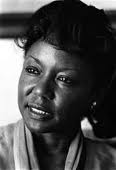
mildred jefferson 1Mildred Fay Jefferson died at age 84 just over two years ago in Cambridge where she lived, not far from Harvard Medical School.  She was the first African American woman to graduate from that prestigious university, having entered it at twenty years of age. She had previously earned a master’s degree from Tufts University following her bachelor’s degree from Texas College at the age of 16.  She went to Tufts while waiting to be old enough to be accepted at Harvard Medical thirty years before “affirmative action” was even a concept.  Mildred was the first woman of any race accepted as a surgical resident at Boston City Hospital, the first woman physician at the former Boston University Medical Center, where she taught, and the first woman member of the Boston Surgical Society. Her intelligence was incandescent, but we will best remember her as a friend.

Dr. Jefferson was the only child of a Methodist minister and a school teacher, born in 1926, and raised in Carthage, a small town in East Texas.  As a young girl, she would ride on house calls in the horse drawn buggy of the town doctor.  Her family and the doctor encouraged her ambition to become a doctor.  Her family called her “Millie”.  No one else did that I ever knew, including us.  In 1973 after the Roe v Wade Supreme Court decision struck down all laws restricting abortion on demand at any stage of pregnancy, Mildred considered her original Hippocratic Oath taken when she graduated from Harvard and refocused her considerable gifts.  (Link to original Hippocratic Oath, no longer taken by new doctors after a 2,000 year history: Original Hippocratic Oath.)  She founded Massachusetts Citizens for Life, and then co founded National Right to Life, becoming first its Vice Chairperson, then Chairperson and then President, overseeing all its activities.  In 1980, she formed the first National Right to Life Political Action Committee.  If you found yourself in a debate or a battle with Mildred Jefferson, you’d better bring a lunch.

 Testifying before Congressional committees led to crisscrossing the country inspiring millions with her extraordinary public speaking ability and multiple appearances on national television, including a session on PBS’s Advocates, remarkable for its long term impact.  She made her case, none of it “religious”, but logically and relentlessly, Mildred outlined the moral, medical and sociological case against women taking the lives of their pre-born infants.   Watching her articulate her deeply held convictions with grace, power and knowledge was the governor of a large state, who had signed into law a bill allowing abortions in that state.  So convinced and convicted was he by her compelling arguments, he wrote her a letter.  In it, he told her that he had never really considered the full implications of abortion, nor its effects on women and the culture. He deeply regretted his unreflective support for a “woman’s right to choose”, and vowed to do everything within his purview to fight for the unborn, a commitment he kept until the end of his life.  As President of the United States, Ronald Reagan could bring considerable influence to bear.

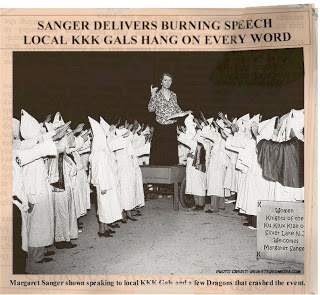
As we mark the fortieth anniversary of Roe v Wade on Tuesday with its sad accumulation of fifty five million aborted babies, and we celebrate the life of Martin Luther King tomorrow, Dr. Jefferson represented the confluence of the civil rights of former slaves and women as well as those of the unborn.  She was knowledgeable about and a warrior in all these struggles, her certitude was that they were of a piece.  She would talk about the racist eugenics advocated by the founder of Planned Parenthood, Margaret Sanger, and how to this day their abortion clinics are located most deliberately in poor and minority neighborhoods.  Mildred deplored the undeniable facts that black citizens comprise about 12% of the U.S. population, yet suffer 35% of the abortions.  She saw this as a kind of genocide, wherein affluent white liberals saw their moral directive was to “help” minorities by lending them a hand to murder their young.

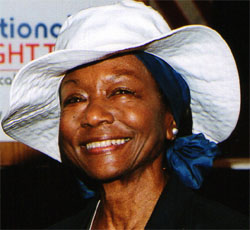
mildredjeffersonWhen my wife, Rita, became the Executive Director of Rhode Island Right to Life early in the new millennium, she understood the medical and moral dimensions of the battle, but was naïve on the political battleground.  Mildred Jefferson took her under her wing.  As a force to be reckoned with in both national pro life activity and Republican Party politics, her mentoring skills were like everything else she did – formidable.  She was in her early seventies then, looked fifty, and had a magnificent gift to make you feel like you were the most important person in the universe – the total focus of her attention in any conversation.  Over lunches and dinners, we soon learned she could discuss knowledgeably any topic that came up, from the Civil Rights movement of the fifties and sixties to whatever became of the owner of the former Steve’s Ice Cream emporiums in Cambridge and Providence, whom she knew well.  Her smile, her laugh, her warmth, her truly startling memory and intelligence were a delight and comfort.  Never was there a hint of affectation in her conversation – only a sincere desire to help, to support, to encourage and to befriend.  The Rhode Island Right to Life annual oratory contest and scholarship award for high school students is named in Mildred’s honor; the national contest, to which the Rhode Island winner is sent, was a special passion of hers.   She supported Rita in many ways throughout her years at RIRTL and sat with us at Rita’s retirement dinner.

When Dr. Jefferson spoke at our annual rally in the Statehouse Rotunda, she was mesmerizing with natural speaking ability and gifted intellect; she would let loose the occasional glimpse into the cadences of her Southern preacher father.  The entire audience of religious and political luminaries along with school buses full of young people and the hundreds of ordinary pro lifers with their families were rapt with attention and respect for her history.  This tiny, unassuming woman who could keep us enthralled around a mealtime conversation, transformed into a speaker of great power.  She could even lead us in a rousing few verses of “Battle Hymn of the Republic”, sung with the accomplishment of her childhood Methodist choir days.

She was beautiful in so many ways; we hope to see her again.  We will miss her at the rally on Tuesday, but even more, we will miss her at dinner.  We miss her smile.

Ecclesiastes 3:11, He has made everything beautiful in its time. He has also set eternity in the human heart.

Link to NRTL tribute to Dr. Jefferson

Link to a commemorative article about her life.

5 Comments

Filed under Culture views, Personal and family life

Still Point

Except for the point, the still point, there would be no dance, and there is only the dance.  T.S. Eliot – Four Quartets

Drove my Chevy to the levyBeing the oldest of five (eventually to be six) children in 1956, the age of ten brought with it occasional responsibilities that would be surprising to most ten year olds in 2013.  We shared one bathroom, and the four boys shared one bedroom in a three bedroom cape with two small one window dormers in the front.  When I was thirteen or so, my youngest brother, Marty, filled out the nest, and my dad added on a family room.  We never questioned and rarely felt put upon by the living arrangements; our family was secure and happy in our daily routines.  My parents had one car; my father worked two jobs and my mother worked full time as a mom, which was quite enough for anyone.

Intermittently my mom asked her oldest to help out paying bills downtown, which was a mile or so from our house.  Accomplishing this on my bike was an easy adventure and invited me in to the mysterious grown up world.  My mother didn’t have a car when my father was at work, and in 1956 in addition to me, she had two kids in diapers plus a set of five year old fraternal twins, one of whom had a severe hearing disability.  She handled this all with aplomb and good humor most of the time, but when the bills were due, she needed some assistance.

The budget was managed by accruing cash weekly in separate envelopes for various expense categories.  I would be given the utilities envelopes and the mortgage envelope, and then mount up on my bike.  There were no bike racks or bike locks, none was needed, just a kickstand or a convenient wall to leave the bike against.  First, I would go to the bank, then the electric company and the telephone office.  No gas company bill in 1956 and I think she paid cash to the oil man, when he delivered.  Grocery shopping was a full family affair when we were little.  The checkout clerk would help load the groceries into our car.  I lost five dollars in change once, which was a minor disaster in a time when it represented nearly fifty percent of the weekly grocery budget.  She was disappointed, but kept her concern brief and tight lipped – almost. I was admonished after that to return straight home with no stops at friends’ houses or especially the library, which could delay my return for hours.

card catalogA bike ride to the library was also about a mile, and with the possible exception of a sandlot baseball game behind the elementary school, my favorite activity.  I was a constant reader and shy at ten.  There are pictures of me my mother still has, sitting on the floor reading a book absolutely absorbed and still, amid the chaos of my five siblings.   I haven’t changed all that much – except for the shy part, although I remain private.  My reading consumption was and remains omnivorous, but at ten inclined towards biographies of Indian fighters and tales of King Arthur and the Knights of the Round Table.  As I got a little older, I was spellbound by biographies of Thomas Edison and Babe Ruth with The Count of Monte Christo not far behind.

The Walpole Library was small, but well stocked. Upstairs was for the adults, but the basement was reserved for children and adolescent fare.  The librarian was a genial and skilled substitute far superior to Google for a ten year old; the card catalog held the keys to the kingdom.  If the librarian was preoccupied, we could sneak out to the front steps and edge our way around the whole structure on an eight inch granite ledge that circumscribed the building as a design feature just below the windows.  The children’s section had round low reading tables with small chairs.

In one corner, two stereoscopes resided along with boxes of the two photo four by ten inch cards that fitted into them.  Most of the pictures were black and white, although some, including Civil War historical shots were sepia. As a ten year old, I especially liked the battle aftermath photos.  When viewed through the lenses, they appeared in 3D.  Developed in the mid nineteenth century and vastly improved by Oliver Wendell Holmes in 1861, the stereoscope opened previously undreamt wonders to a ten year old.  From Egyptian pyramids to the streets of Paris to the Grand Tetons, our new world was limited only by our imaginations.

StereopticonStereoscopes are now valuable antiques and anachronistic reminders of simpler times (that is simpler unless one lifts the edges of the curtains).  They were supplanted sadly by more enticing moving pictures and eventually television.  Our television was a big box in the living room with a small black and white screen and three somewhat fuzzy channels.  Ozzie and Harriet, I Love Lucy, The Ed Sullivan Show, The Jack Benny Show, The Honeymooners and many, many Westerns like Gunsmoke and Have Gun, Will Travel drained away our family hours as we got older. I could still slip away to my sanctuary in the eaves of the attic, which had a single pull chain light bulb and a hook and eye latch, to seek the quiet harbor of my books.

I’ve heard it said that we all have our nineteen year old selves permanently emblazoned on our personalities.  Can it be any less so for ten?  My tenth birthday was in February of 1956, eleven years to the day after the Marines raised the American flag on Iwo Jima, securing a key stronghold on the long drive to Tokyo.  To idealize any period of time is to trivialize it, however to hold it at the center of our innocence is quite another.

The fifties were in some ways innocent and optimistic, yet they also harbored Jim Crow laws and the hypocrisy of country club adultery and too much liquor.  But most families were hard working and held traditional morality dear; the parents were the “Greatest Generation” determined to leave behind the Depression years of the thirties of their youth and the killing years of the forties of the war, and to pass on to their children a safer, more stable and more comfortable future.  For this they worked steadily and generally cheerfully for the rest of their lives.  Comfortable was achieved; stable and safe eventually were beyond theirs to bequeath, but in the fifties, at least the illusion of simpler times was lovingly preserved.

“We don’t know what we are doing, because we don’t know what we are undoing.” G.K. Chesterton

4 Comments

Filed under Background Perspective, Personal and family life

Leverage

A decade or so ago, some friends undertook the arduous journey to adopt their daughter, who spent the first fifteen months of her life in a Moscow orphanage.  The journey was arduous in all ways possible – mileage, time, financially, intellectually demanding to wend their way through the arcane rules and most especially, emotionally.  On their initial visit to the facility, they found most of the younger children were minded in a small enclosed area with a few toys to claim, if they could be held against all competition.  The facility housed over a hundred small clients, a couple of dozen or so under the age of two.  When they first spotted the young beauty that was to transform their lives, the fifteen month old glanced sideways while on the changing table and made eye contact across the room.  That ability to connect with those who were her life line was a skill, either learned or inborn, that conveys to her a gift beyond reckoning and persists into her precocious pre teen personality.  She can take over a room like brightness draws moths into the light.

In Moscow, she competed with a score or more toddlers and infants for the haggard, stretched thin attention of two full time attendants, each of whom worked a twelve hour shift every day.  One person at a time was on duty for changing, food, health care, teaching and loving.  They did their best; they really did.  Learning toys were scarce, food was sparse and survival skills important.  An orphan who prospers learns early to compete, to persist and to make her way.  Her intelligence and persistence were the primary attributes we noticed when we  met her in our friend’s house shortly after they returned home.

For adopting parents, protocol was for at least two visits of a fortnight each, separated by a period of time, usually a month minimum.  The first one was intended for selection of their new family member and early bonding; the second was to complete the paperwork, spend more time with the child, and usually followed a vetting process.  Our friends were able to convince the adoption authorities that a second trip would be prohibitively expensive financially and more importantly expensive for their schedules, since they were both self employed.  They remained in Moscow for twenty eight days at a cost exceeding thirty thousand dollars, but when they got on the first leg of their Aeroflot flight home, there were three of them.

President Vladimir Putin signed a bill Friday banning U.S. citizens from adopting Russian children, raising tensions with Washington as the Obama Administration is trying to win Moscow’s support to end the war in Syria.  Russian officials portrayed the latest legislation as a tit-for-tat retaliation against a new U.S. law that seeks to punish Russians accused of human-rights violations.

Moscow’s legislation—which also bans U.S.-funded civic groups in the country—puts concrete action to rising Russian complaints, voiced most vehemently by Mr. Putin, that the U.S.’s own human-rights failings give it no credibility to lecture others.  But the adoption ban has exposed Mr. Putin to criticism both internationally and within his own government. Critics allege that the law makes political pawns out of Russian orphans, whose living conditions can be dire and prospects for adoption often slim.

Gregory White, Wall Street Journal 12/28/12

Many of the children adopted from Russia by American parents suffer disabilities such as spina bifida, which is treatable if medical resources are more abundant than in a Moscow orphanage.  Without adoption, these children will languish.  Worse yet is the fate of young especially pretty women, who outgrow the orphanage, and become prey on the streets of the city.  The sex slave and drug trade flourish in Russia; young girls are turned on and turned out.  Most grievous are the adoptions shut down in mid stride.  There are children and parents who have spent much time together and bonded; they will now be unable to complete the process, some just a week or so from flying home together.

“I looked the man in the eye. I found him to be very straightforward and trustworthy. We had a very good dialogue. I was able to get a sense of his soul; a man deeply committed to his country and the best interests of his country.”  President G.W. Bush about Vladimir Putin, press conference, 1/6/2001

“I told him (Yeltsin) I was impressed by what I had seen of President Putin but wasn’t sure he was as comfortable with or committed to democracy as Mr. Yeltsin.”  Former President Bill Clinton in a NY Times article, “Boris the Fighter” on the occasion of the funeral of Boris Yeltsin 4/29/2007

Vlad, the Impaler, Putin

Vlad, the Impaler, Putin

These protestations about violated human rights in the United States  coming from Vladimir Putin, a triumphant thug who came up through the ranks of the KGB, now FSB, would be ridiculous, if so many innocent lives were not sacrificed to the brutal, leveraged, “diplomacy” of the hard core left.  Remember in October of 2006, Anna Politkovskaya, a gifted, courageous journalist, was assassinated in the lobby of her apartment building with two bullets in her head.  She had become a potent nuisance to Putin with her brilliant expose of “Failed Democracy” and the outrages against Chechen civilians.  She was murdered on Putin’s birthday, no doubt a gift from his old colleagues in the FSB, who are exceedingly skilled in contract murders.  A month after her death, Alexander Litvenenko, a former FSB officer who had defected to the West, was taken very ill to a British hospital, where he died a gruesome, slow death three weeks later of acute radioactive polonium poisoning.  He had been working with MI5 and MI6 as well as in his new career as a journalist. He published two books:  “Blowing Up Russia, Terror from Within” and “Lubyanka Criminal Group.”   Polonium in the mashed potatoes is a creative and cruel method of political assassination, again one in which the old KGB was particularly gifted.  The “Cold War” may be in the history books, but its practitioners learned their craft well.

President Obama to then President Dmitri Medvedev (now Prime Minister after he and Putin again exchanged chairs): “This is my last election.  After my election, I have more flexibility.”  Video…

Medvedev:  “I understand.  I will transmit this information to Vladimir.” 

Ten years later and fully adapted to her adopted country, this beautiful daughter of our friends is doing splendidly at an exclusive private school.  Her grades are excellent, and she is excelling in her other special interests in photography and basketball. She is on the local “travelling team” as an All Star in her age bracket.  The school for gifted students is on a handsome campus as a “feeder” school for the Ivy League and other top line universities. Her school has won the state wide Academic Decathlon nineteen times out of the twenty nine it’s been held.  One expects her prospects are considerably more promising than those of a street urchin in Moscow.  Her parents are devoted to her success in life and to her nurture.  Love is irreplaceable.

“May it show us the family’s holy and enduring character and exemplifying its basic function in society: a community of love and sharing, beautiful for the problems it poses and the rewards it brings; in sum, the perfect setting for rearing children – and for this there is no substitute.”  Pope Paul VI, speaking of the Holy Family in Nazareth 1/12/1964

3 Comments

Filed under Personal and family life, Politics and government

Bittersweet

St. Patrick's Christmas

St. Patrick’s Christmas

Friday night, we brought our granddaughter, Gianna (pronounced “Jahna”) to the St. Patrick’s Parish Nativity play.  Gianna remained rapt for the entire performance, needing an occasional gentle restraint from wandering too far up the aisle.  A teen choir accompanied the players; there were twirling, dancing, singing angels, a trek around the church with a donkey for Mary and Joseph only to be turned away at several inns, sheep singing with shepherds, a tall, lanky, twelve year old yellow star leading three Magi to the cradle and the tiny Holy Family in the stable.  All of the players were ardently earnest; everyone sang.  We stood to cheer for them at the end. Gianna didn’t want to leave.

"Are we like sheep?"

“Are we like sheep?”

St. Patrick is a small, inner city bilingual parish.  The parishioners span a wide cross section of Providence life from all ages, colors and abilities, almost none of them affluent.  Prison tattoos can be seen on some of the men, who are attending with their families. These men hug their wives and kids frequently; some have packs of cigarettes in their shirt pockets.  St. Pat’s has a soup kitchen and help for the homeless at a food pantry called Mary House; there is a small Eucharistic adoration chapel in a converted office trailer with a year round 24/7 vigil.  Pretensions are rare. There is no cry room; children make children noises:  beautiful sounds.  We are reminded of our first parish as adults in Maine, St. Joseph’s, because of the community life, joyful music, love and peacefulness of the assembly.  We have come home again.

Things fall apart; the centre cannot hold;
Mere anarchy is loosed upon the world,
The blood-dimmed tide is loosed, and everywhere
The ceremony of innocence is drowned..
    W.B. Yeats, “The Second Coming”

Jesse Lewis

Jesse Lewis

Grace Audrey McDonnell

Grace Audrey McDonnell

Daniel Barden

Daniel Barden

Charlotte Bacon

Charlotte Bacon

Ana Marquez-Greene

Ana Marquez-Greene

The Children of Newtown

I have been to Newtown many times. My old company had a lumberyard there about three miles from the Sandy Hook School.  Much has been written about the perfect New England village with the friendly coffee shops and picturesque woods, fields and upscale homes of NYC professionals.  All of this is true, yet it is a town like any other.  Like yours and mine with the imperfections, well hidden family troubles, anxieties and small betrayals, as well as love, joyful sounds, Christmas lights and festivities.  And schools.

Evil visited Newtown a week ago.   Books will be written about the deterioration and lack of funding for mental health facilities and support; about semi automatic weapons such as the AR-15 with hundred shot clips (for which I can see no earthly rationale for circulation in the general population, just to be clear – they have only one function); about bullying and Asperger Syndrome and autism spectrum disorders;  about the sad necessity for fortress schools; about the crushing of some children who never recover from their parent’s divorce and withdraw into a killing isolation; about the failure to identify evil before it pounces full throated on the innocent; about a fascination with violence within our entertainment, within ourselves.  It seems to me a confluence of these things created Adam Lanza, a weak, cowardly and wounded boy/man; they afforded him the facilities to make a decision for evil. All of these aspects merit full analysis to uncover a passageway to enable us to perform our most basic human function – to protect our young.

I think also, we need to be thinking about Pope John Paul’s Evangelium Vitae (Gospel of Life), a 1995 encyclical in which he decried a “culture of death” which has inculcated itself into our attitudes and practices, almost without notice anymore.  This dark culture misconstrues freedom as license, leading to “this eclipse of the sense of God”, and devolving ever more into narcissism, materialism, hedonism and utilitarianism.  Adam Lanza was the product of his personal and familial pathology, but he also was the effluence of the milieu in which he swam.  A “culture of death” according to John Paul most specifically reveals its morbidity as a war of the strong against the weak, be they handicapped, old or unborn.  “The first to be harmed are women, children, the sick or suffering and the elderly.”  Adam Lanza was harmed.  From that he made increasingly easy decisions to inflict his rage and pain on others more vulnerable: one evil act cascading into the unspeakable – a definition of evil.

Perhaps Eugene Kennedy, cited in Peggy Noonan’s column, put best what should be our response to all of this (in addition to seeking preventative solutions).  What good can we take from this senseless act?   Newtown reminds us of “the mystery of being alone in the world as it is and as we are… with cracks running through it… from small disappointments to blows of the heart.” But it “revealed the goodness of normal people, which is seldom celebrated” when the teachers sacrificed their lives trying to shield the children.  Ms. Noonan says that we will attempt to respond politically to “take actions that will make our world safer, and this is understandable. But there is no security from existence itself.”  As Professor Kennedy put it, the answer is to “plunge into life  … we have to engage in life and take it on with all the risks it entails or we won’t be alive at all.”  “It is better to suffer pain than to live in a world in which you don’t allow yourself to be close enough to anybody to have the experience that’s bound to give us suffering.  Love guarantees suffering.”

Kennedy concludes, ”we’re all on a hero’s journey… the hero faces challenges along the way… entering the forest each day without a cut path, and finding our way through is what we are called to do.”  Here, says, Ms. Noonan, Mr. Kennedy suggests that faith offers not an explanation of tragedy, but the only reliable guide.  “Jesus said, ‘I am the Way.’ That is not a metaphor.”

“Can a mother forget her infant, be without tenderness for the child of her womb?  Even should she forget, I will never forget you.”   Isaiah 49:15

The response at St. Patrick’s Church was not to be embittered or paralyzed with sadness over inexplicable tragedy, but to embrace the life given to us.  At the conclusion of the pageant, Rita asked our four year old Gianna if she wanted to be in the nativity play next year when she turned five.  I suggested that she could practice really hard and be the donkey.  Never lacking ambition, Gianna told us she wanted to be Mary.  Mary, the Christ bearer, who within her carried Love, is the call to all of us at this time of the year.  To hold within us Love, and to do what that Love calls us to.  For when it comes down to it, that is all we have.

NYC Nativity, Mary waits and welcomes

NYC Nativity, Mary waits and welcomes

6 Comments

Filed under Culture views

The Taxman Cometh

Great Horned Owl taken 12-8 on Angela's garageThe calm of a waiting predator, watching.

Great Horned Owl taken 12-8 on Angela’s garage
The calm of a waiting predator, watching.


I am like a desert owl, like an owl among the ruins.

I lie awake; I have become like a bird alone on a roof.

Psalm 102: 6,7

“When you’re 50 you start thinking about things you haven’t thought about before.”  Eugene O’Neill

Still in our early twenties, we withheld some of our Federal income taxes for 1969, the year we lived in Boulder, to express our displeasure at the conduct of the war in Vietnam.  Woefully naïve on several counts, I wrote a note with our tax return clearing up in excruciating detail why we were doing so.  Martin Luther King and Bobby Kennedy were dead, and the world seemed bleak. Returning to Massachusetts with our infant daughter, we were living temporarily with my parents waiting for a cheap winter rental to open up on Mashnee Island off Cape Cod.

How they found us remains a mystery, but as I was coming home from work one evening driving my hand painted 1956, flathead six Chevy pickup truck, two tired looking gray men in rumpled suits pulled into my father’s driveway driving a dirty gray Ford Crown Vic.  Apparently, they had been waiting for me.  The younger of the two had a black band fedora; the older one had a close cropped fringe of salt and pepper hair with nothing on top.  I had a lot of hair and jeans stained from climbing trees.

The older one in charge, whose name has long receded, gave me his card and explained that they had no issue with our political views, which were our prerogative to hold, nor did they care to debate – very clear there would be no debate.  However, they had come to collect the taxes due plus penalties and interest.  It wasn’t a lot of money, but taxes were taxes after all and not an option.  He rattled off his bullet points unapologetically by rote without a smile or a threat or an alternative.  First they would attach and drain, if necessary, our checking and savings accounts.  If we had no such accounts, they would garnish my wages.  If I lacked a job, they would lien our house.  If we had no house, they would take our truck.  He looked over at the Chevy pointedly.  Which would I prefer?

 And so it goes.

Raushenberg's "Canyon"

Raushenberg’s “Canyon”

A story in this week’s WSJ reminded me of this incident for some reason.  Lifelong art dealer, Ileana Sonnabend, died in 2007 leaving her considerable collection to her heirs, Nina Sundell and Antonio Homem.  The heirs were forced to sell about $600 million dollars worth of their heritage to pay the $471 million in death taxes due on them.  ($600 million was more than was due, but of course, taxes were owed on the proceeds from selling them – capital gains taxes on the death taxes.)  Of course, there was a catch with one of the pieces: Robert Rauschenberg’s “Canyon”, created in 1959 and appraised at $15 million by the IRS.

The collage legally couldn’t be sold because it contained a stuffed bald eagle; selling it would violate the 1940 Bald and Golden Eagle Protection Act and the 1918 Migratory Bird Treaty.  That Rauschenberg before his death filed a notarized letter in 1988, stating that the eagle had been killed and stuffed by one of Teddy Roosevelt’s Rough Riders long before the 1940 law was in effect, made no difference.  The art work could not be sold; the auction house said it was worth nothing as a sale item.  The family filed an affidavit claiming that due to the inability to sell it, there was no value, and therefore no taxes were due on the inheritance for it.  Aha, responded the IRS, since there was a “gross understatement” of its value by the owners, the IRS value had now been upped to $65 million, so the tax bill was $29.2 million plus $11.7 million in penalties for understating its value.   Plus interest.

After five years of expensive legal wrangling, the painting, which had been on permanent loan for display by the owner at the Metropolitan Museum, was donated to the Museum of Modern Art, also in New York.  The painting had been exempt from Wildlife Service penalties as long as it was on loan to the museum, so now it passed with the same waiver to the MOMA.

And so it goes.

The hang up on avoiding the fiscal cliff is the tax rate on the top 3% of earners, not the tax dollars paid, but the tax rate.  While President Obama has proven to be a poor to middling CEO in his role at governance, he is a near genius at politicking, perhaps learned through political infighting during his bureaucratic years as a community organizer.  The tax rate increase he has drawn as a line in the sand has little to do with revenue – the dollars that would be collected are a little spot of yellow in a great snow drift.  The tax rate increase has everything to do with driving a wedge and causing as much consternation as possible amongst his political enemies.

Bear with just a few numbers.  In 1958, the top 3% of earners paid marginal rates as high as 91%, a progressive erotic dream, but almost no one paid those rates because of the pages of loopholes and deductions available.  The total income of the top earners was 14.7% of all income earned, and they paid 29.2% of all federal income taxes.  Many of the loopholes have been closed or capped already, and in 2010 the elite 3% earned 27.2% of all income; their percent of all taxes paid rose to 51%.  Middle and lower income earners (the bottom two thirds) earned 41.3% of all income and paid 29% of all taxes in 1958.  In 2010, their share of earned income had fallen to 22.5%, but their share of taxes paid plummeted to 6.7% of all taxes.

So, indeed, the rich have gotten richer, and their relative tax burden reflects that proportionately, but almost 50% of the rest of us pay no federal income taxes whatsoever.   The compulsion of the progressive liberal is not about “fairness”, it is about redistribution, punitive measures against the successful and ideology.  But even more so, it is about casting chaos into the opposition and twisting the knife.

And so it goes.

“They’re trying to kill me,” Yossarian told him calmly

“No one’s trying to kill you,” Clevinger cried.

“Then why are they shooting at me?” Yossarian asked.

“They’re shooting at everyone,” Clevinger answered.  “They’re trying to kill everyone.”

“And what difference does that make?”


“That’s some catch, that catch-22,” he observed.

“It’s the best there is,” Doc Daneeka agreed.

Catch 22, Joseph Heller

5 Comments

Filed under Politics and government

Sing, But Keep Going

winston-churchillA story is told about Winston Churchill that may or may not be apocryphal, however the significance for us is timeless.  After the war was over and Sir Winston unceremoniously voted out when his indomitable gift of leadership and candor became politically inconvenient, he was invited to speak at a gathering at Cambridge University.  He sat through the formal dinner with his bulldog visage unreadable, silently contemplating the tribute that dominated one wall, memorializing the long list of Cambridge alumni and students who laid down their lives to protect their country from being brutally incorporated into the Third Reich.  The dean finally concluded his endless extravagant introduction lauding Churchill, and how his soaring rhetoric saved the British Isles.  An expectant hush settled on the listeners, awaiting inspirational brilliance.  Sir Winston stood wearily and looked out over hundreds of fresh young faces, survivors whose brethren would never return.  Glancing once again over to the wall, he spoke, “Never give up, never give up, never give up.”  Churchill settled back into his chair.

The usually laconic, if not truly morose, Senate Minority Leader, Mitch McConnell, burst out laughing when Treasury Secretary Timothy Geithner proffered the Obama administration’s “compromise” solution to avoid jumping over the “fiscal cliff” on January first.  Without a scrap of compromise or one inkling to slow down spending, its raison d’etre was taxes, taxes and then, again, more taxes, and even those barely cover a couple of weeks of Federal expenditure. Not a serious proposal, only more political posturing and dialectic of class struggle. To add to the comic relief, the proposal suggested that Congress should abdicate its responsibility to approve debt ceiling increases.  “Leave it to us and avoid the unseemly bickering,” suggested the Executive Branch.  Perhaps that is the rub that incited McConnell’s rarely seen mirth.

The administration kicked off the reign of the 44th president with an unprecedented level of unstimulating stimulus spending at the staggering level of $800 billion larded on in 2009.  The unprecedented soon became business as usual with spending levels sticking at the newly established benchmark, resulting in undreamed of deficits, over $1,000,000,000,000 (one trillion) a year.  This deficit and the negotiations to raise the debt ceiling resulted in the beggar’s choice deal that dug the chasm looming ahead and deemed by a gleeful media as a “fiscal cliff”.  $16 trillion in debt (and counting), and the compromise solution only addressed asking more from the taxpayers with the rhetoric about fairness and redistribution.  Not a syllable about specific proposals to curtail diarrhea profligacy.

One provision, raising the estate taxes on the “wealthy” from 35% to 55%, would result in the breakup of long held family ranches and farms.  Ranches and farms are by definition illiquid, with their “wealth” consisting of hundreds or even thousands of acres of agricultural land – land owned for generations.  Every nickel of the income derived from these businesses and the income of their owners has already been taxed, every acre taxed each year with property taxes.  Yet when the principle owner lacks the good sense to stay alive, the heirs are subject to the “death tax”.  Their only option is either taking on insupportable debt or selling off some land to pay the taxman.  Estate taxes are deeply rooted in progressive egalitarianism and antipathy to any attempt to pass along the hard earned net worth of the successful to their heirs.  Not just the oft cited Paris Hilton or Kim Kardashian excesses, but privately held farms, ranches and businesses are to be crushed with burdensome taxes at the passing of the owner.

Perhaps the least understood and therefore mostly avoided debt discussion is not the fiscal deficit that shows on the Federal balance sheet.  The debt that is held “off the books” is far worse.  Like Enron, which sealed its own ruin by concocting sophisticated accounting to hide liabilities, the Federal debt that isn’t declared on the balance sheet is shocking to comprehend.  Think icebergs.

The promises made to those who have paid into the system their whole working lives are not stipulated in Federal deficit reports.  The mostly unfunded liabilities of Social Security, Medicare and federal employees’ future retirement benefits already are over $86.8 trillion, 550% of Gross DP.  Much has been made of our stated deficit of $16 trillion crossing the line of 100% of GDP. Quick addition of both the stated and unstated deficits is $102 trillion or about $310,000 for every man, woman, child and transgendered person in the country.  You only thought you had worked all your life to pay off your mortgage and credit cards.  Think again.

Secretary Geithner stated unequivocally that Social Security is not on the table in any debt discussion under any circumstances.  Why?  My cousin, David, is an unrepentant Connecticut/Manhattan progressive, yet somehow remains very intelligent and a good guy.  I have full confidence that he and I could sit down with a halfway competent accountant and come to an agreement to fix Social Security funding for the foreseeable future over a couple of beers.  Eliminate the cap (satisfies taxing the rich), stop the ridiculous pandering of cutting the Social Security contributions of all of us employees, gradually continue to raise the retirement age to reflect the increased longevity of our citizens, and we’re just about done.  How about another beer?  Why can’t our elected officials do the same?

 Nearly 49% of the voting population chose Door “B” to common sense and responsibility.  We lost, but cannot surrender.  Never give up, never give up, and never give up.  For the sustainability of this noble Great Experiment of ours.  To remain true to our ideals and consciences.  For our children and grandchildren.  Sing, but keep going.

“Let us sing alleluia here on earth, while we still live in anxiety….So, then, brothers (and sisters), let us sing now, not in order to enjoy a life of leisure, but in order to lighten our labors.  You should sing as wayfarers do – sing but continue your journey… Sing, but keep going.”  St. Augustine

Leave a comment

Filed under Politics and government

Irish Cuisine

“I’m Irish, so I’m used to odd stews. I can take it.  Just throw a lot of carrots and onions in there and I’ll call it dinner.”  Liam Neeson

Many would say the topic is oxymoronic, but the roots of all things Irish are hardscrabble.  My father was half Irish, and never knowing his father, who died when he was an infant;  he was raised by his Ma, Margaret Veronica Lannon, a former vaudeville singer who married her stage manager, John Parquette, and helped by her Irish sisters Stacia and Essy — immigrants all in a three decker full of family in Lynn, Massachusetts.  My mother was the youngest of six to Irish parents, her mother, Molly Manley, was full time at home, and her father, Jim Laracy, was a tin knocker.  She was born in the apartment over D.A. Baker’s sheet metal shop where my grandfather lived (and worked) before they bought the house on Maple Street in Walpole.

Our family of six children in Walpole, of which I was the oldest, was deeply imbued with an Irish culture, albeit with a French name.  My mother, Betty (or Girly to her sisters), going strong at 91, still possesses her characteristic sense of humor and intelligence.  The main danger she presents currently is to gondola displays at the local Target when someone foolishly allows her to drive a battery powered ‘accessible’ sit down shopping cart.  All her kids grew up straight and true.  Somehow.  All of us are blessed with the strong work ethic of both our parents.  Ma has long claimed that her six children would never go hungry as long as she had a good can opener.  She was pretty good at potatoes, though, and beef stew, even if Dinty Moore canned stew was not foreign to us in a pinch.

“I have always found the Irish to be a bit odd.  They refuse to be English.” Winston Churchill

My wife, love of my life and frequent muse, Rita, suggested this blog topic, so I’ll begin with a story that includes her.  When we were newlyweds, we didn’t have a lot of money.  Rita was a registered nurse working full time, while I finished out my last three semesters of college.  We lived in a third story walk up ‘shotgun’ apartment on a tight budget, painfully young and rhapsodically happy.  Rita, of Italian and Portuguese descent, is a creative cook acquainted with all manner of spices alien to me at the time.  Salt and pepper were the only spices I knew from my mother’s table, and pepper was suspect.

I tried to inflict my childhood Saturday night tradition of hot dogs and beans on Rita, which held for awhile.  A month or two into our marriage, we sat down on Saturday night – canned Boston baked beans and hot dogs grilled in the frying pan – two each.  Halfway into this ambrosia, Rita, who is genetically incapable of telling a lie or a joke with a straight face, started snickering.  When I asked her what was funny, my question stimulated full blown laughter.

It seems, since our food budget allowed nothing for waste, that when she was gathering the goods for supper, there was a new package of hot dogs and two left over hot dogs that were a bit, shall we say, sticky, but not yet quite green.  My young beloved artfully and meticulously kept the old segregated from the new in the frying pan throughout the cooking.  I, of course, was given the old ones.  But she couldn’t hold the deception together and giggled her way to full disclosure.  Her justification for this crushing of young love was that I, being Irish, couldn’t tell the difference, and she being of more refined culinary sensibilities, could.

“It’s not that the Irish are cynical. It’s rather they have a wonderful lack of respect for everything and everybody.”  Brendan Behan

Our friend and former coworker with Rita at Rhode Island Right to Life, Peg Lavallee, told Rita this recent story of her brother, Charlie Galligan, a retired cop (what else?).  The Lavallees and the Galligans were going to a fund raising event for an Irish cause at McBride’s Pub on Wayland Street in Providence.  McBride’s features normal pub fare along with Galway Shepherd’s Pie, Fish and Chips, Bangers and Mashed, an occasional boiled dinner and “Famine Stew” along with the “Perfect Pint” of Guinness.  The pub is located in the old carriage house of the Monahan Funeral Home and part of the Monahan complex, a century old site of Irish wakes in the city, which is still open for business across the shared parking lot.  It is convenient to go to a wake, tell a few maudlin jokes and hoist a few to honor the recently deceased at the pub.  Every night at ten the bartender calls for a pause as a “Last Call” where all raise their glass in memory of someone who has “gone to the Promised Land.”

As Peg and her husband, Arty, were coming from their cars with Charlie and his wife, a van pulled up with a long wooden box which carried a replica of a full size statue of a small family, part of the Irish Famine Memorial in downtown Providence. It was to be displayed in the restaurant.  Two older gentlemen in their late sixties were unloading the crate.  Charlie offered them a hand, but his help was politely declined.

As the determined Irishmen slid the box out of the back of the van, disaster struck, the statue smashed through the front of the crate and flew out to a loud thud on the parking lot.  Charlie in typical Irish wry humor, without missing a beat, said to them, “Hope you guys aren’t the undertakers.”  Then he started back towards the parking lot pretending to look around, and asked them, “Do you need this head?”

“I’m Irish.  I think about death all the time.”  Jack Nicholson

A grandchild story will round out the topic for this week.  Gianna is my daughter Angela’s four year old.  Her dad is Polish and Irish, and Gia has dragged a few of the dry Irish wit genes through.  She does, however, manage to maintain more sophisticated taste buds.  Recently I was bringing her to Walpole one Saturday to treat my mother to lunch.  On the way, we discussed the menu.  I asked her what she would like for lunch, and she said tostados.  I told her it was unlikely Nana could be talked into a Mexican restaurant (IHOP as it turned out was the selection).  Since squirrels and a large oak tree in my backyard are a frequent topic of conversation, I suggested she might enjoy an acorn sandwich.  She remained somewhat skeptical.

I assured her that with strawberry jam and ketchup, acorn sandwiches were tasty, and that if people were really hungry, they could eat acorns just like squirrels.  She assured me that she wasn’t that hungry.  We changed subjects.

Later we discussed her uncertainty that we might not find Nana’s house given the limited access highway (Route 95) we were on.  I explained the concept of exits and not to be concerned as I knew which one to take.  After we mulled that around for a few more miles, she spotted a sign coming up and proclaimed it said, “EXIT”, which it did.  She asked if that was where we were going, and I told her there was another one farther ahead.

Being a grandfather, I then told her she was the smartest four year old girl in the world.  Gianna graced me with her half smile and replied without a pause, “Smart enough not to eat acorns, Papa.”

“Being Irish, he had an abiding sense of tragedy, which sustained him through temporary periods of joy.” William Butler Yeats

3 Comments

Filed under Personal and family life

Stalemate

A chess match ends as a win, a loss or a draw.  A draw can be agreed to by the persons playing the white and black pieces.  Certain situations are deemed a stalemate, which is a draw by definition.  No one wins.  The rules defining a stalemate have application to real life.  If one player on either side is not in checkmate, but has no legal moves, the game is a stalemate and drawn.  If both players have moved fifty times without a pawn moving or a capture being made, that’s a stalemate.  If a position has been repeated three times with every piece on the exact same square for both sides, that’s a stalemate and drawn.  It matters not if the positions are repeated sequentially, so long as they are reproduced exactly.   Only the side in the weaker position poised for a loss would declare the repeated position and draw.

“If a tie is like kissing your sister, losing is like kissing your grandmother with her teeth out.”  George Brett

At the end of drawn out, bitterly contested campaigns, we find ourselves shell-shocked weary with virtually no change in the balance of power in Washington.  Hundreds of thousands of words have been and will be written about changing demographics, debate performances, issues false and true, ground games and early media blitz bets placed in swing states.  The essential question, however, is where do we go from here?  Can the Republicans tweak their base and make inroads into the new demographic coalitions of Latinos, single women, citizens of Asian origin and other minorities?  Have we reached a “tipping point” such that those relying on government and “in the wagon” outnumber those contributing to tax revenues and “pulling the wagon”?

“When the people find they can vote themselves money–that will herald the end of the republic.”  Ben Franklin

Can we avoid repeating our exact position or making fifty moves with no progress to break the potential of stalemate?  Will common sense prevail over ideology and a compromise be crafted to avoid the “fiscal cliff” of large across the board tax increases and devastating cuts to our defense that the Congressional Budget Office tells us will script us directly into over 9% unemployment and a new recession?  Other than a textbook definition, did we ever truly climb out of the last one with the prolonged anemic “recovery”?  Will the now assured full implementation of Obamacare with its assured tax increases and enormous expenditures make cutting our deficit structurally impossible over the next decade and trip us into a recession anyway?  What the hell was David Petraeus thinking?  So many questions to answer, we can be easily overwhelmed.

“A billion here, a billion there, and pretty soon you’re talking about real money.”  Attributed, but not fully documented, to the late former minority leader, Senator Everett Dirksen

There is some certainty in the real numbers, however, and they are worth understanding as we discuss everything else.  Let them speak for themselves.  The deficit that deeply troubles so many of us and will beggar the future of our children can be grasped quite easily with a minimum of sophisticated fiscal knowledge by using this table from a Wall Street Journal article:

U.S. Deficit Growth (from US Treasury Dept and CBO records)
Total federal revenue, outlays and deficits,
fiscal years 2007-2012, in billions of dollars.
Year           2007        2008        2009        2010        2011        2012
Revenue  $        2,568  $    2,524  $    2,105  $    2,163  $    2,302  $    2,449
Spending  $        2,729  $    2,983  $    3,518  $    3,456  $    3,599  $    3,538
Deficit          ($161)       ($459)    ($1,413)   ($1,293)    ($1,297)    ($1,089)
% of GDP           -1.2%        -3.2%      -10.1%      -9.0%       -8.7%        -7.0%

Let these numbers roll around the back of your head for just a little while.  As revenues dropped (and are now just starting to recover), spending exploded and set a new benchmark frozen at an unprecedented level. No serious attempt has been made to curtail the profligacy of Washington as they buy our votes and the campaign contributions of special interests. Our deficit in the Obama years as a percent of Gross Domestic Product (the sum of our total economic activity as a nation) has never been less than double the worst year of the Bush administration, which was fighting the same two wars.  And the actual dollars of deficit have never been less than double the worst of the Bush years.

The Republican caucus insists on paring back the out of control spending; President Obama’s supporters such as those in the public unions and MoveOn.org insist on reducing the deficit by raising taxes.  His proposal in last year’s debt ceiling negotiations was to raise them by about $82 billion a year, which is still only 7% of last year’s deficit.  This week he has upped the ante to double that with no mention of trying to reduce spending.  Stalemate.  Many believe he would be content to let the economy go over the fiscal cliff and blame the Republicans for the new recession while satisfying his left base which demands higher tax rates and very few cuts.  Next year he could negotiate from the now higher rates.  Stalemate, and playing political brinksmanship with our fragile economy.

Unsustainable is a clichéd buzz word, but sometimes clichés are the best we can do.

2 Comments

Filed under Politics and government

Simplicity

Last weekend on Saturday we attended the wedding of Allison and Henry; we’ve known Allison since she became our youngest daughter Meg’s friend in the second grade.  Twenty odd years later, both Meg and Allison are professionals with letters after their names and married.  Both have now been in each other’s wedding parties; Allie was a bridesmaid in Meg’s wedding in August.  Allie’s wedding was in the Cathedral of Saints Peter and Paul near downtown Providence, the main building completed in 1889 on the site of a former, smaller church, built on “Christian Hill” in 1832.  The structure is magnificent and is a sign of the majesty of God, constructed by the faith of its builders and thousands of worshippers who have assembled there for over a century.

For Allie and Henry’s wedding, the ceiling height pipe organ filled the space with classic music, including Johann Pachelbel’s Canon in D as the beautiful bride processed into the church and later Shubert’s Ave Maria.  During the wedding Mass, the priest told a story of the late actress Helen Hayes, a lifelong Catholic and one of only eleven people to ever win an Emmy, an Oscar, a Tony and a Grammy.  She was awarded a Presidential Medal of Freedom, America’s highest civilian honor, by President Reagan.  Her first stage role was in A Midsummer Night’s Dream, when she was five, and her last was as Agatha Christie’s character Miss Marple when she was eighty five.

When Helen was first married to her husband, playwright Charles MacArthur, they had little money.  On their first anniversary he gave her a paper bag full of peanuts and told her he wished it could be a velvet bag full of emeralds.  After nearly thirty years in a loving marriage, Charles was diagnosed with terminal cancer; Helen was fifty six.  On their final anniversary together, he gave her a velvet bag full of emeralds.  Her response was to tell him she wished it was a bag of peanuts, and they could do it all over again.  As he finished the story, Rita and I reached over to grasp hands as both of us were filled with gratitude for our forty five years together.

After the homily, the priest joined the young couple before the altar and guided them through the marriage vows.  He left the microphone off, and in such a large church, only those witnesses right near the bride and groom could hear them.  It wasn’t necessary to hear. As they exchanged rings, everyone present could see and knew their love and sincere intent to “have and to hold” for the rest of their lives.  To me, it was entirely appropriate that their vows and love were for them alone – simple, in complete focus one to one, heart to heart, mind to mind, soul to soul.

“The spirit’s foe in man has not been simplicity, but sophistication.”  George Santayana

Last Sunday, in lieu of our regular parish, we went to Mass at St. Patrick’s on Smith Hill in Providence, an inner city, poor, bilingual church – poor in money and accoutrement, rich in Spirit and Love.  The church building had long ago been declared structurally unsound and demolished, but the parishioners converted their school auditorium into a church and persisted with both school and church.  St. Pats hosts a soup kitchen on Mondays and has for over thirty years.  The school evolved three years ago into St. Patrick’s Academy, a small high school staffed by both professionals and dedicated volunteer mentors. Next year will see its first graduating seniors.  The contrast to the soaring cathedral could not have been more striking.  The music was guitars and a piano, not a large pipe organ; the pews were filled with all manner of folk, color and age – teenagers, children, the elderly, families, the halt and the lame. The sound of children, silent or rare in many churches, was beautiful.

We were a bit disappointed that her pastor, Father James, wasn’t presiding over the Mass, and an older priest was there in his stead.  Father James’ homilies are always to the heart, his humility genuine and immediately apparent to all who are fortunate enough to pass his way.  Since he is fluent in Spanish, he must have been the celebrant last weekend at the Masses in that tongue.  He has done such things as live anonymously on the street as a homeless person to more fully understand the poorest of the poor in our city.  Father James is a gifted listener and counselor.

“I am not a genius, I am just curious. I ask many questions, and when the answer is simple then God is answering.” Albert Einstein

Our disappointment was short lived as we heard the lovely Irish lilt, saw the impish warm smile, intelligence and wisdom of this priest we had never met.  Reminiscent of the many Irish priests of my youth, he was simultaneously loving, witty and direct.  His homily about the gospel reading reminded us that complaining about “not getting anything out of Mass attendance” quite misses the point. “Since when did we become the center of the universe?” he asked.  Worship is not another entertainment we think should have to compete in a world of feel-good distractions, to be judged and participated in based on the liveliness or ‘relevance’ of the music or the emotions and passion of the preaching.  We come for the Eucharist and the Word, to give thanks, to gather together as Christians have gathered for two millennia.  Being a “good person doing our best with good works” is an inadequate response in and of itself to the transcendent Gift which bridged the gap between the eternal and the ephemeral, the mortal and that which never dies – the soul and the Creator.

The music was occasionally ragged, the voices in harmony, but untrained, some of them in their teen years, some of them in their sixties.  Nothing was diminished by the imperfections; the spirit was authentic.  Everyone sang.

“Being with someone, listening without a clock and without anticipation of results, teaches us about love. The success of love is in the loving — it is not in the result of loving. ”
A Simple Path – Mother Teresa

3 Comments

Filed under Personal and family life