Category Archives: Maine Tales

Late September on Old Orchard Beach

cropped-sunrise-at-old-orchard-beachCold. Penetrating deep cold, but exhilarating. On shore wind as the air rises over the still warmer land, and the ocean air rushes in to fill the vacuum. Cleansing. Lung filling. Soul filling. A sharp breeze comes over the water picking up moisture and is scrubbed as it comes. The air streams around and over Bluff and Stratton Islands in the harbor, loading up from beyond the horizon where the earth curves out of sight, past the Azores, past the edge of the world. Cold, clean, pure, merciless, but without bias or favor.

The sun begins the day’s work out of sight in the east over the rocks and low scrub and a few trees on the wooded point at the end of the beach curve just north of the open sea. Pink-orange and red gray, the clouds reflect the refracted light before the sun makes its morning arrival. Then it does, and we must stop staring at the blinding intensity.

Gulls – American and European herring gulls, ring-billed gulls and a few larger black back gulls join them. Gulls swoop and glide a foot above the beach looking for a landing spot even before full sunrise. Heartbreakingly graceful. One standout wheels back at a nearly impossible angle, pivoting almost on its wingtip, barely clearing the sand, rights itself in a perfect pirouette, glides effortlessly another twenty feet, finds its spot selected with no observable distinction from any other spot, and with a slight change of pitch of wings drops gently on the beach, settles with a brief flourish and straightening of feathers put away like a cloak, more compact than their full spread would suggest, a brief quivering like an elegant woman settling into her chair in a premium restaurant at a choice table. She doesn’t immediately pick up a crab or a clam. Just turns into the wind, stands and waits patiently a couple of feet from the tidal flow. Waits for something not apparent to anyone else. Stretches its neck, looks skyward, parts its bill, and cries out in the unmistakable gull call.

Four surfers and a paddleboarder work on their competences in predawn twilight three hundred yards north down the beach. The surfers take their turns following the wave break that they each ride not quite parallel to the shore. All are skilled. No one puts on a wetsuit when it’s forty five degrees and spends their precious time before work begins for the day by plunging into the surf with their long board tethered to their ankle if they are not serious. They call everyone dude and employ an esoteric vocabulary like a casually organized fraternity, united by a love for their frigid, perfect, wet, plunging and surging sanctuary. When you speak with them occasionally, they are unfailingly polite and friendly. Will talk with strangers about the quality of the waves like they have known each other all their lives. Maybe they have.

Another half dozen or so of us on the nearly empty two mile beach got up to catch the beginning of the day; two are in bathrobes and wrapped in blankets. Some stand or lean on a fence. Several in heavy sweaters, stocking hats, and high ankle hikers are dutifully walking their dogs. Another is meandering slowly, barefoot, but sweater clad, on the edge of the water where the waves finally peter out looking for shells or sand worn beach glass. A guy with a hoodie is running with his very large dog. Maybe a Newfie – hard to tell at distance and murky light. He’s quickly covering the ground south towards the long wooden pier with multiple single-story, now closed, gray shingled souvenir shops. The pier protrudes five hundred feet out into the open ocean. The runner is probably headed home to grab some more coffee and drive to the office. The rest of us are alone. An older woman, slightly portly with glasses and a kind face sits in a high backed beach chair with an expensive looking camera trying to catch the light. She’s barefoot too.  Maybe she’ll paint her photo later. Watercolors.

The laughing, drinking, partying summer throngs have abandoned the jostling crowded sidewalks and have gone home to New Jersey or Quebec or Hartford. Many come every summer for a week or two like a ritual. Expensive vacations, but not out of reach. Not the Hamptons, but not an inflatable pool in the backyard either. Most of the restaurants, pizza places, and French fry stands are already boarded up for the coming winter. But not all of them. The Beach Bagel breakfast counter stays open year round for the regulars and a few hearty bargain seeking tourists. Bacon, egg and cheddar on onion bagels and more; the conversations of townsfolks about the baseball playoffs, the depravations of the now ruined Patriots, the latest expensive embarrassments of town council mistakes, the planned wedding of a daughter in the spring, arthritis, the foolish boss where they work. The waitresses tease and are teased back in familiar ribald jesting.  Familiar faces, too. Relaxed and at ease with each other and the routine, although they may not know all the names; customers are comfortable with silence too, staring into their coffee.

The beach begins a slow recovery and gives itself back to the full time residents who love all its seasons and don’t mind its moods. A recent storm eroded some of the border beach grasses, pushed up flotsam far up on the sand towards the wind fence, a couple of large broken branches that look like white pine wash in and out on the waves, a bent unbuoyed lobster trap rests fifteen feet beyond the farthest breaking waves.

The waves have been breaking endlessly on this beach for a million years or at least for ten thousand since the last Ice Age covered everything here under two hundred feet of glacier. The waves come in gray green, surrender to gravity, pick up the wind, foam white at the crest, cascade, slowly subside and recede. A nanosecond after they fall, I see them; a second later I hear them with a tiny delay. Sound follows light. For a million years the rhythmic breaking proceeds. Not silent, but not jarring. Restful. Sleep on the beach if it was warmer. The voice of the world.

The gulls gather in small groups facing the north Atlantic. No unguarded sandwiches or chip bags on blankets to pillage. Gone for the winter. Picked clean. The gulls too are comfortable in silence. Waiting.

So God created the great creatures of the sea and every living thing with which the water teems and that moves about in it, according to their kinds, and every winged bird according to its kind. And God saw that it was good. Genesis 1:21

Leave a comment

Filed under Maine Tales, Sachuest Point and other wonders

Maine Anecdotes

“The only thing I knew how to do

Was to keep on keepin’ on like a bird that flew.” Bob Dylan “Tangled Up In Blue”

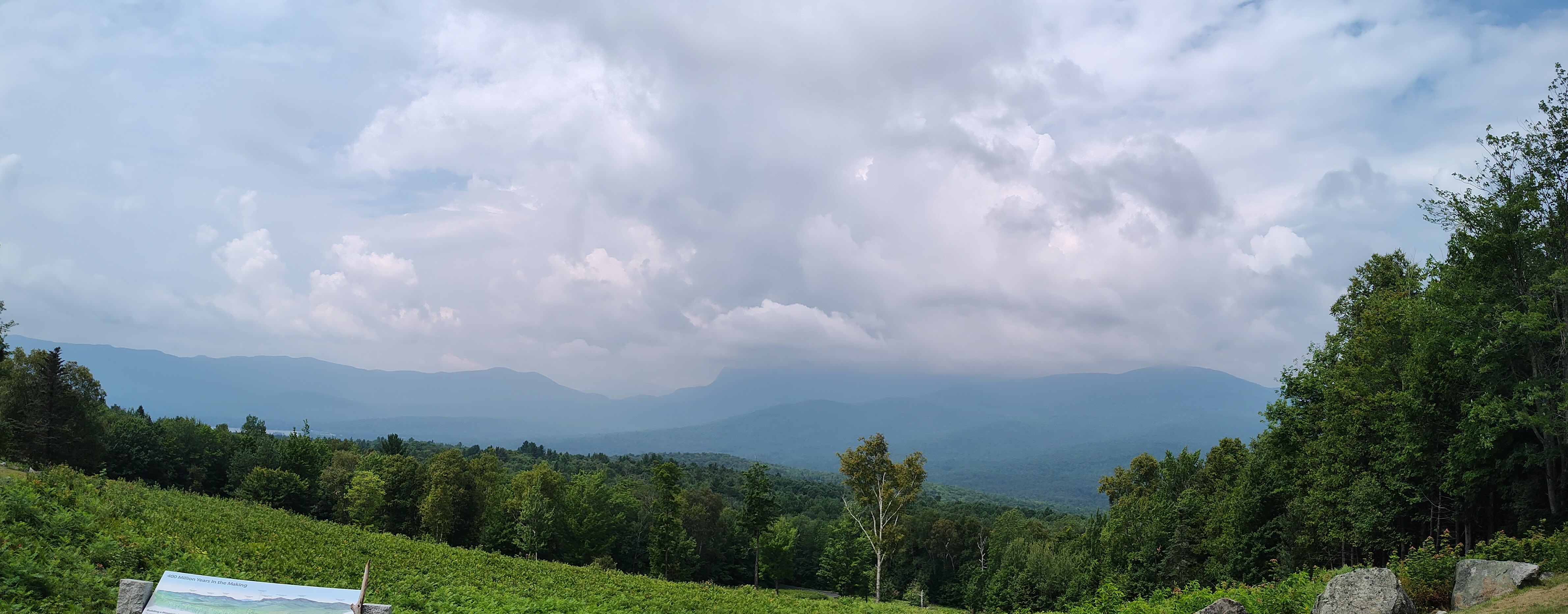
Center Hill panoramaOur two weeks in Maine were nostalgic and new. Old friends, encounters with abundant wildlife, vistas that cause me to catch my breath at any moment around any corner.
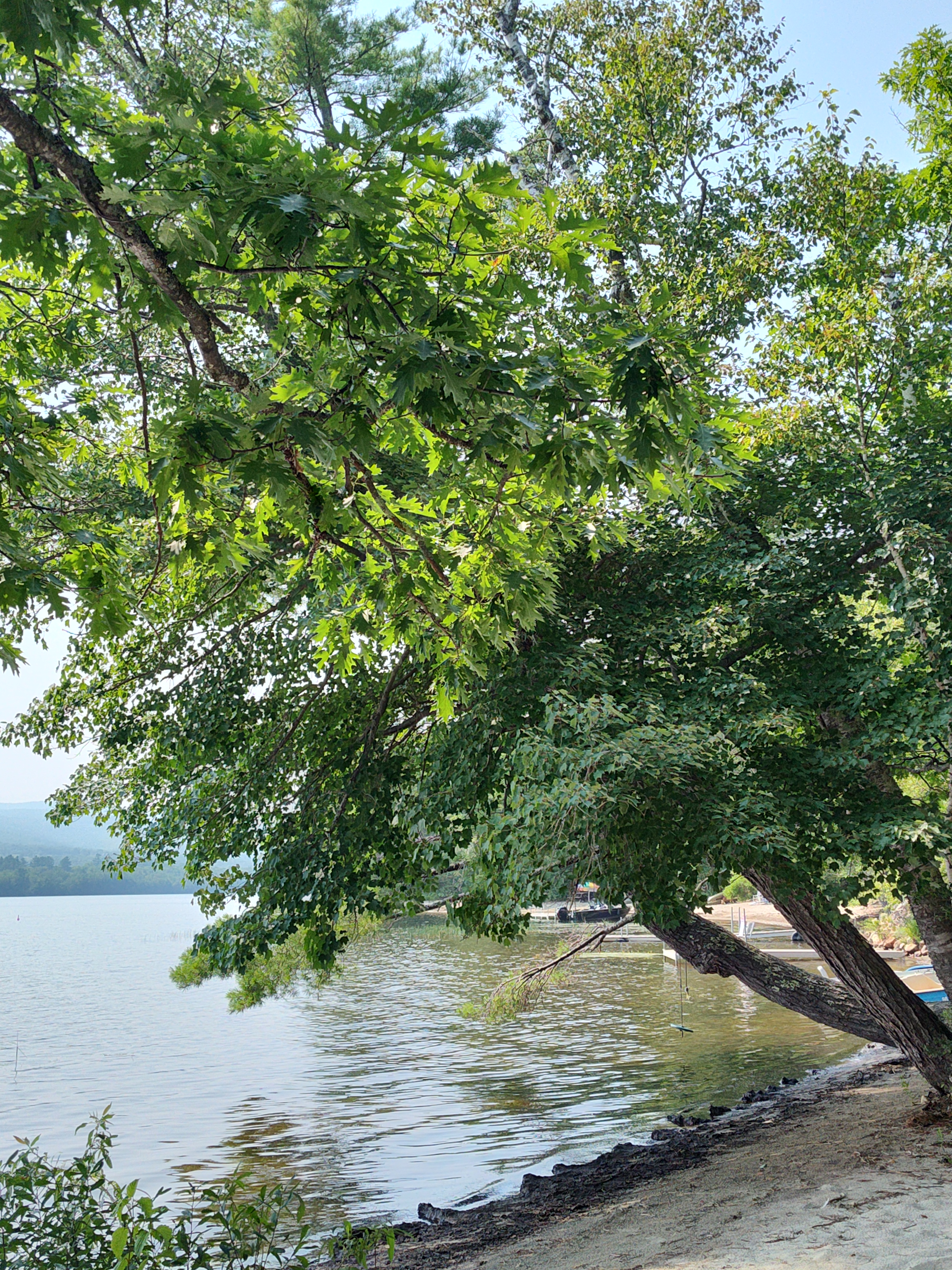
Early one morning we were sitting with three of our granddaughters on the little beach on Webb Lake in front of their camp, when all three yelled out something like “Whoa.” A bald eagle was pumping hard and powerfully to regain altitude with water dripping from its wingtips, rising from the lake with a fish in its talons. One of the many of various species of ducks we like watching there was beating wings furiously in the other direction from the same point of origin, clearly panicked. I wasn’t sure of the species since it was moving away with undue haste. The duck flew startlingly fast and low, barely clearing the water’s surface.

The girls told us the eagle had stolen the fish from the duck. Probably it was a merganser if that was what happened, since they will eat larger than the other common ducks on the lake like mallards and wood ducks.  The eagle may have plunged while hunting right next to the shocked duck. Mary told us from “Wild Kratts”[i] that bald eagles prefer fish above all other prey. The duck was fortunate that the eagle’s culinary preferences did not include waterfowl that morning, and a full grown duck would be a talon full for an eagle. Eagles don’t often miss what they spot to eat. Their diving into the water is fast and deadly. It was an indelible moment, unrecorded as my phone was back in the camp. That’s all right, maybe as it should be. The image remains.

A couple of evenings later we were driving back from our almost nightly visit to Center Hill lookout over the lake (panorama above); as we were passing through the center of town (one store), a pair of white tail deer jumped in front of us. We always travel slowly while going through town and were easily able to avoid a collision. The buck with the rack was chasing the doe; neither were as large as they can be. But perfect, tawny, sinewy, beautiful. We looked over to the small field adjacent to the house on our right. The flirting couple were dancing, bumping, playing, cavorting, four legged straight up hops in sheer fun, oblivious to our observing them.  It was a joyful moment but remains unrecorded as my phone was in my pocket. That’s all right, maybe as it should be. The image remains.

“I ain’t got no window, ain’t got no door

But I can feel sun shinin’ where it’s never shined before, never shined before

Feel sun shinin’ where it’s never, never shined before

But I’m still climbing up the mountain side

You can’t count me out

Long as I got my heart and soul

I got everything, I got everything I need

Everything I need.”  Keb’ Mo’, “Everything I Need”

The temptation is to idealize Maine and idealizing is not without some justification, but that would be trivializing and unfair. Unfair to the wonder of the place and the variety of its people, unfair to anyone reading this. Like most stories, it’s more complicated than that.

Cannabis stores seem to be everywhere now. I counted at least two dozen of them. In the city. In small towns. Along country roads. Most of them look shiny, have professional logos and signage, and have more than a few cars in the parking lot. When we lived here so many years ago, weed was illegal, and weed was everywhere too, but it was in service of a rebellious panache, a naïve ‘rebellion.’ Many I knew grew their own in their garden or up in a hidden clearing behind the house. Almost everyone I knew rolled a joint or picked one out of a bowl at a party from time to time: back to the land hippies, local town young people, artisans, poets, and professionals. So did I, for a while, but I gave it up in my late twenties; an occasional recreational hobby began in Boulder a couple of thousand miles west of Maine and ended in Mount Vernon. No single, articulated reason to stop; it just didn’t seem worth the lethargy in the morning. A casual quit.

 Now that cannabis is commercialized on nearly every corner, smoking weed has lost its outlaw attraction and sunk into just another way to get high on Saturday night. Or Tuesday. Along streets in clapped out mill towns that no longer have a mill, next to the prosperous cannabis storefronts, idle men and women slump on the wooden stairways of three story faded tenements with despairing faces staring vacantly back – prematurely aged with few signs of hope.

“I guess there’s nothing left for me to do but go get stoned

Let the past paint pictures through my head

Might drink a fifth of Thunderbird and try to write a sad song

Tell me baby why you been gone so long.”

“Why You Been Gone So Long,” Mickey Newbury, Eleven Hundred Springs

On a whim coming back to the lake from church, we decided to explore some roads we hadn’t driven in decades, taking a longer way home through the hills. We took the Temple Road, and dead reckoning navigation told me that we could find a shorter way home from Temple once we got there.

But I’ve grown citified and dead reckoning made me nervous where once it would not have been so. Google Maps solved that, and sure enough it highlighted the most direct route back to Webb Lake. We struck out resolutely on the Intervale Road, turned north on Day Mountain Road, which ran into Jackson Mountain Road. Somewhere along the Day Mountain Road, we ran out of pavement, but that didn’t discourage us. Roads in Maine in rural areas frequently turn to well-maintained gravel roads where cars routinely travel at forty five miles per hour.

Unfortunately, that wasn’t Jackson Mountain Road. Hard packed smooth gravel road became loose gravel road, washed out in ten foot fissures, but able to be negotiated on one side or the other at ten miles per hour – too narrow for two cars to safely pass. Then more washed out, but barely navigable with great care. Five miles per hour.  The slope got close to forty five degrees-not straight up, but it felt like it. The camps were fewer and sketchier or abandoned. Finally, the camps ran out and a handwritten “dead end” sign was tacked to a tree.

My trust in Google Maps was shaken, but not stirred. It was always reliable, right? I was still on the blue lighted way. Local signage must be wrong or outdated. What do people who live here know that surpasses the AI wizard behind the black curtain? I kept going. Rita was increasingly skeptical. Finally at the top of a very steep almost impassible run of a quarter mile, a culvert was completely gone, replaced by a four foot drop across the road. Fortunately backing down the hill fifty feet or so, there was a turnaround. Slowly back to Intervale Road and turned left towards the town of Strong. A bit to eat at the good general store there across from the large factory making fuel for pellet stoves. Finally, paved state highway two lane roads all the way to the north end of Webb Lake.

Rita, as I have often given her cause to be, was patient, albeit with a sly smile or two on the way back.

“Then we’re rollin’ on

Rollin’ on

Feeling, better

Than we did last night

Rollin’ on rollin’ on

It’s hard sometimes, but

Pretty much it’s alright.”  “Rollin’ On,” Emmylou Harris and Mark Knopfler


The day before we packed up for home, we drove over more excellent back roads to our old hometown in Mount Vernon, about a fifty minute pretty ride through hills, farms, and lake country.  I was reminded of why I love this place so much.  On the shore of Lake Minnehonk downtown in the building where we once went to pick up our mail, there now is the Post Office Café and Bakery. We met friends from nearly fifty years ago, Alan and Donna, for breakfast. An outstanding place, we sat at a clear finished maple table by the back windows and looked where I walked out one frozen night to do battle in what became known as the Swordfight on the Lake.[ii]

We are decades older now than when Donna used to come over to our place to watch our kids for a few hours two afternoons a week. Rita was working as a labor and delivery nurse forty minutes away in Augusta part time from three to eleven. I was on the road for a commercial lumber company and got home about six most nights. Donna’s kids, Autumn and Oak, would play with our first two, Amy and Gabriel, while Donna lovingly minded everyone at our house until I pulled in. Autumn was the plague of Gabe’s elaborate Lego creations. She delighted in destroying them. Good memories now.

At the Post Office Café, two hours passed in a moment, the conversation picked up as if it was forty years ago. Alan is a successful serial entrepreneur who grew up in Mount Vernon. Back in the seventies, he had a chainsaw and a log cutting business with skidders and trucks. Buying the rights to clear somebody’s woodlot and selling the product to local sawmills and paper mills. Poplar to the paper mills, hemlock, spruce, and pine to be sawn into boards. Hard work. Brutal work only for the strong. Later he slightly altered course and became a skilled contractor. Alan still builds custom homes for folks in the area. He starts with a wooded, difficult lot, and ends with a beautiful structure to provide shelter for his clients.

We laughed, got quiet, remembered, talked again. Caught up. Told stories. One favorite was about the time Alan came into Rita’s flu clinic when she was serving as the town health officer. A rough flu year, and the vaccine was causing some severe and notorious reactions that year. All the old folks in the folding chairs were nervous. Alan, who looked like he could bench press a Buick, lined up, got jabbed, took two steps, spun around, and dramatically crashed through some chairs to the floor in front of the horrified onlookers. Rita ran over to him. Only she recognized that prostrate Alan was quivering, and his shoulders were shaking. As he laughed. She compounded the confusion in the room by kicking him and calling him a decidedly uncivil name.

We talked of kids and grandkids, joys and disappointments. About local people we once knew well, many no longer above the ground. Nostalgic and new. Enjoyed the food and the company immensely. Reconnected seamlessly.

“It is one of the blessings of old friends that you can afford to be stupid with them.” Ralph Waldo Emerson

[1] “Anecdote” is derived from the Greek “anekdota” meaning “things unpublished.

[i] For those without kids around, “Wild Kratts” is a popular partially animated children’s program that teaches them love for and knowledge of many wildlife species.

[ii] https://quovadisblog.net/2022/09/18/swordfight-on-the-lake-redux/

2 Comments

Filed under Maine Tales

Summer Kitchens

“In Maine we have a saying that there is no point in speaking unless you can improve the silence.” Ed Muskie

Not sure this improves the silence, but…

Maine road hazard

When we drive up the dirt road from the camp on Webb Lake to turn east on Wilton Road to Farmington for church or groceries, there are Maine houses along the way that we remember with affection and respect. Old houses, generations old. Practical houses for pragmatic people who avoid many things that don’t make sense and do many things that do. Center chimney capes are common, and there are larger colonials with integrated additions for various purposes and perhaps extra kids.

Maine fosters eccentricity and a vast collection of creative architectural solutions; many varied attempts with mixed success to survive long snowy winters are everywhere in evidence. Homes along the rural roads are scattered with large dooryards, and the inexorable forest threatens to encroach on the fields that are left. Old, barely habitable double-wide faded mobile homes sit on overgrown once cleared lots with a motley collection of partially cannibalized pickups and campers up on blocks – ten foot tall poplars and alders growing through perforated flatbeds. A deserted small John Deere tractor with a flat tire disconsolately rusts out. Rural poverty with stove pipes sticking out through the walls of shacks sided with boards and wind torn Tyvek house wrap. A few are abandoned with collapsed roofs; others look like they should be but aren’t.

A quarter of the mile down the road an impeccable modular cape or ranch sits proudly on a small hill, carefully, lovingly landscaped with a paved, sealed driveway, a small flagpole and new flag in front, and a lawn that looks like it was trimmed with barber scissors. A modest vegetable garden grows fifty feet from the house, often surrounded by a wood pole and galvanized wire perimeter to discourage the deer and rabbits. Hopeful tomato plants, green beans, corn, potatoes, peppers, and some greens – spinach, beets, or Swiss chard, zucchini and summer squash, maybe a pumpkin or watermelon vine spreading along the rich soil, growing so fast the bottom of the fruit is drag worn and discolored.

Certain features identify my favorite species of farmhouse, and there are sadly fewer of them than fifty years ago when we lived here. Some of them are deteriorating and returning slowly to the earth. Some are re-tasked into apartments. Some are meticulously maintained, but there are a couple of overhead garage doors installed where large paned wood windows or homemade matched pine board doors once adorned the facade.

Frequently they have metal roofs that are loud in a downpour. Like sleeping in a tin tent, but comforting, steady protection from nature in a four season environment. Metal roofs with a steep pitch to shed snow easily. We had such a house with a metal roof when we lived in Farmington forty years ago. No gutters to be torn off with ice dams and snow slides, just a two foot cantilever to push the gushing rainwater and melted snow away from the house. Diverters or a small additional extension over the front door with the granite threshold protect visitors and residents opening the door. Sensible roofs that can last for at least a generation for a harsh climate with deep snow in the winter.

A barn that was once for farm animals, and still is for a few, remains attached to some of these homes. Hay in the loft. Stalls and laying nests for the hens, vegetable and egg stands out by the road. Grain in the large wood feed box. Chickens, goats, a milk cow, perhaps some calves for future milk or steaks, and a deadly, half feral, symbiotic barn cat or two to control the mice and rats. Barns are sometimes connected to the family home through that most sensible extra room – a summer kitchen. Much more than a breezeway connecting to a two car garage, a summer kitchen is like many things in Maine – it has more than one useful purpose.

Harsh winters are interrupted by glorious springs that also harken the arrival of mud and black fly season. Time to plant and begin the arduous process of splitting next winter’s firewood. In winter and spring, it’s prudent to have a connection to the barn that doesn’t include wading through drifts or shoveling a path.

When the heat of a six week summer hits, there are abundant lakes, rivers, streams, and for those fortunate coastal dwellers, saltwater beaches. But it’s a time for summer kitchens too.

A summer kitchen serves several critical purposes besides connecting to the barn for winter access to animals needing attention. A summer kitchen lessens July and August heat building up in the house for cooking in the main kitchen, heat rising to the bedrooms to make sleeping a sweaty project even when the screens aren’t torn. A sound wood stove in the summer kitchen is good for the long boils for lobster or sugar corn on the cob and baking bread or canning later in the summer and fall. Summer kitchens by design are practical, built for storage and work with only stone counter workspace and maybe a stool or two without adornment or pictures on the wall. Oftentimes they lack plastered and insulated walls like the barn they connect. Simple and perfect for their purpose.

The kitchen hospitality so common and welcome for Maine visitors planned or unplanned is reserved for the in-house winter kitchen where the family table and chairs are set up. With sugar bowl, creamer, mugs and whatever muffins or scones or cookies are in the pantry at the ready.

Summer kitchens are beneficial, intelligent, thoughtful, sensible things, a symbol for me of a beneficent, thoughtful, and intelligent people with generations of experience and hospitality in a challenging climate.

“Maine is a joy in the summer. But the soul of Maine is more apparent in the winter.” Paul Theroux

Here we are once again after forty or fifty years of enjoying Lake Webb in an old camp – a rare place in west central Maine lakes country. Surrounded by hills and mountains: Mount Blue, Tumbledown, Bald Mountain, Big Jackson, Little Jackson, Blueberry Mountain. Sunsets beyond my ability to describe them. Clean, clear water constantly refreshed with nine streams feeding Webb and one large outlet into the Weld River that flows unimpeded alongside State Highway 142 to the Androscoggin River and on to the Atlantic. Once it was a major logging route with the native tall white pines, spruce, and hemlocks abundant in the eighteenth and nineteenth centuries. Wood to build the houses. Wood to build the ships at Bath. Planks, boards, masts.

Webb trees

More power boats now than our first years here, but mostly on the weekend. Since the beginning occasional water skiers and tubers have circled the five mile long, twenty seven hundred acres lake. But jet skis are a relatively recent, unwelcome, and loud intrusion that terrifies the loons and herds them into the outflow end of the lake. I wonder sadly when the last loon will seek a refuge in another lake farther from the yahoos. That will be a heartbreaking loss. One would think thrill chasers could find a quieter, less obnoxious way of feeling power between their legs. There are plenty of other places to play man-boy. Not this little bit of remaining retreat and haven. That’s why God made Harley’s for crying out loud.

During the week though, there are still mostly single sail wind powered silent boats, canoes, kayaks, and an occasional small flat bottomed fishing boat trawling at a very low speed. The sound of children playing and laughing on a still morning can carry more than the half a mile that separates us from the state beach on the opposite side the lake. Those are welcome sounds. We can see the splashes when they jump off the “Big Rock” about three quarters of the way across. We make at least one pilgrimage ourselves in the canoe. The outcropping juts about four feet above the surface with a straight drop into deep water. The Mount Blue State Park side of the rock is fifteen feet of gradual gentle slope of granite at about a four pitch, perfect for dragging a canoe to rest while we dive, jump, and swim.

“Did you ever see a place that looks like it was built just to enjoy? Well, this whole state of Maine looks that way to me.” Will Rogers

Sunday Mass for us is at St. Joseph Church in Farmington about forty minutes east first up, then down an elevation past Bald Mountain, a winding road with switchbacks and vistas that pops my ears. St. Joe’s is the parish that welcomed us back to the Church half a century ago: the happy event that saved our marriage. There we formed lifelong friendships. The current pastor, Father Paul, recognizes us now with a smile and greeting. As he does greet our daughter and her family with five children who stay at the camp where we stayed with her as an infant so many years ago. The screened in porch sits fifteen feet from the water’s edge. (see picture above for a view from the porch)

The former pastor at St. Joe’s from fifty years ago, Father Joe McKenna, is retired and ninety three, living in Portland. A most welcome visit and meal with him on the way north is something we always look forward to and are grateful for. He still retains his lively, unconventional intelligence, acute insights, fighting spirit, and wry sense of Irish humor. A natural storyteller, he is always delightful company.

The couple that owns the only remaining store in Weld converted it from the last elementary school here; they always greet us as well as old friends. We can get most everything really needed by way of groceries there. Downeast coffee, lunch and breakfast too at the counter in the adjacent old classroom. Good breakfasts with fresh eggs, bacon, toast and home fries. Burgers, fries, hot dogs, sandwiches, pizza, it’s open most summer days from six in the morning until early evening. A small playground next to the parking lot still entertains the kids, albeit with gravel on the ground, not ground up rubber stuff. A single clay tennis court remains well maintained at the bottom of the hill next to the Weld Community Center. Sweep the court, brush clean the lines when done, and wear shoes that won’t tear up the court are the only rules.

The entertainments of screens or city are scraggly substitutes for these simple pleasures. They may bring titillation, but the consolations of woods, fields, mountains, lakes, and time to read are healing. Screens and entertainments bring commotion and distraction from our troubles, but not restoration. Only places like this restore.

“Maine is a beautiful place that I paradoxically want to hoard to myself and share with everyone I meet.” John Hodgman

We know that there will be a last visit someday to our treasured Maine woods. The camp will change hands from the family we have known and liked here for four decades, or we will become too infirm to make the trip. We may not know it when our final visit ends, but I have no regrets, only gratitude for our many irreplaceable memories that will console us for the rest of our lives.

“I would really rather feel bad in Maine than feel good anywhere else.” E.B. White

  • Images: Top: Common Maine road hazard
    • Middle: View at the camp porch of Webb Lake
    • Bottom: View from nearby Center Hill near the spring where we get our water

View from Center Hill

2 Comments

Filed under Maine Tales, Personal and family life

Swordfight On the Lake Redux

For a second week I’ll repost a very slightly edited ten-year-old edition of this blog. After many thousands of visits, many of the readers today were not around when it started. This is one of the early Maine Tales, a time which redefined our lives if you care to look back at that topic.

Once again, this week, the prompting for this choice was that my friend Rick, who has since passed away and was an early reader, commented on the post. If you want to get to know him, last week’s post introduces him and included a link to his work.  Here is a link to the original post, so you can read his comment if you’d like to. I always get hit emotionally when I read them: https://quovadisblog.net/2012/05/06/maine-tales-iii-swordfight-on-the-lake/

Pam Jones, who played an irreplaceable role in our lives, makes a brief appearance in this post. She has since joined Rick, and we will miss her as well. Our last few visits with her were in a nursing home north of Portland where we reminisced and laughed a lot.

I had a good friend from those days tell me once that we were not respecting the good men of the Mount Vernon Fire Department in this post. If that is how it comes across, I apologize, but I’ll let it stand as it was. They gave of themselves, their time, and put their lives at risk for no pay to be there for the rest of us. That they were underfunded, lacked all the equipment of a city, and could only train on their own time off, usually on weekends, was a function of living in a town of 600 souls, men, women, and children. They made the most of what they had and always showed up to help others deal with their tragedy. The good folks of Mount Vernon, Maine were among the finest I ever encountered. Or ever expect to.

They changed us in ways we could never have anticipated.

***********************************************************

Swordfight on the Lake Redux  

HouseFire_2The red pumper bounced onto the driveway of the large ante bellum colonial with siren blaring.  The house had once served as an inn, and currently was occupied by a half dozen mostly benign refugees from other late sixties communes.  The flames fully engaged the structure and were seen through the windows.  Everyone got out.

The source of the fire was a fifty-gallon drum woodstove laid on its side with a fire door kit cut in one end and a stove pipe emerging from the top, not an unusual heating system for rural Maine that can be assembled from a kit for under $100.  If it was a typical set up, sand would cover the bottom to keep the coals from burning through.  Overheated, it could glow cherry red.  Something had gone amiss.Oil Drum Woodstove from kit

A small fleet of private pickup trucks driven by the rest of the fire department followed the pumper.  The chief’s truck had a prominent flashing light bar on the roof.  A 3” hose with a nozzle was quickly deployed, but the tank rapidly depleted and the stream of water dwindled to a dribble.  An intake hose was unfurled, and several fire fighters started rolling it out towards a source of supplementary water, coupling on more hoses as they went.  Back at the truck end, the chief, Dana, bent to hook up to the intake valve and discovered the others were approaching the lake 500 yards away with the wrong end of the hose.  By the time things were reversed, the fire broke through the roof, which fell into the basement a half hour later.  These men were dedicated and courageous; they had saved lives, but all were volunteers, and practiced as they could.  Practice was customarily followed by much truck polishing, hose rolling and beer drinking at the station. Occasionally, they got to burn down a condemned barn to work on their skills. Common wisdom was to get out of the house, and then call your insurance agent and the fire department from a neighbor’s house – in that order. Town residents were fond of saying that the Mount Vernon Fire Department had never lost a foundation.

Official authority and municipal services in a small rural town are a unique experience.  In Mount Vernon circa 1976, there was no police department.  A local constable appointed by the court would serve subpoenas and divorce papers.  The nearest law enforcement was a Maine State Police trooper, who lived 15 miles away in the next town, Readfield.  Once when Rita was involved in a car accident, he came to our house the next evening dressed in jeans to help us fill out the paperwork.  Things were casual.  Only the game warden had true authority.  He was known to shoot a dog if they packed up with others and ran deer.  No appeal, no live trap, no deliberation whether it was a mutt or a Golden Retriever with papers: justice was swift, administered uniformly and accurate.

The only time I remember talk about engaging the police was on the Fourth of July during the bicentennial celebration in 1976.  Other than a few bottle rockets and cherry bombs from New Hampshire, there were no fireworks.  Jeff, a young twenty something native Mount Vernonite, took to drinking beer with a truck full of buddies and dragging an old car hood behind his pickup up and down the roads.  The hood presented an impressive display of sparks and plenty of noise, augmented by custom horns that sounded like a submarine klaxon dive alarm, mounted on the cab roof.  After three hours or so into the wee hours, some of the more sedate residents had had enough.  No one called the cops though; one of the dairy farmers who had to get up in the morning told Jeff he would shoot the engine block of the pickup.  We weren’t sure if he had the firepower or the marksmanship, but neither was Jeff, so he pulled the truck into the fire station and drank some more beer.

Bowie Knife A “domestic disturbance” was treated like this: no police involvement because they were too far away to help.  Bia, a recent resident, had moved into an apartment next to a small store front downtown, where she opened up a sheet metal artisan shop, welding and cutting small decorative pieces sold at craft fairs.  Her boyfriend was an odd, slender, bearded, pony tailed archetype prone to buckskin jackets, cowboy hats, silver buckles and a 14” Bowie knife carried in a sheath on his belt.  Bia’s daughter was my daughter’s age, and they became friends during the few months since Bia arrived in town.  In January, our phone rang about eleven one weeknight, long after our bedtime.  She called because we were one of the few she had gotten to know.  The boyfriend, whose name fades, let’s call him Jim, was drinking, smoking dope and hitting her.  Could I come down to help?  Sure, I agreed, groggily.
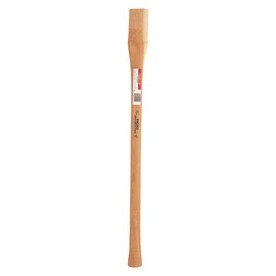
 As a twenty-nine-year-old, fit, tree climber, I had an exaggerated confidence in my own invulnerability; I grabbed a three-foot hickory handle half whittled down to fix my splitting axe and jumped on my trustyHickory axe handle steed, well actually, an F150.  What could be better for a chainsaw guy than getting to play knight errant?  On the way to her place, I practiced some tough threat lines involving emergency rooms, reconstructive dentistry and eating through a straw, all of which turned out quickly to be completely inadequate to the situation.  The denouement was less than noteworthy.  Jim had fled out the back door on the snow over the ice of Lake Minnehonk.  I followed his tracks into the dark, axe handle in hand, and found him seventy yards out on the ice in a tee shirt disconsolately sitting and shivering in the snow, his knife still in its sheath.  I asked him if he had a place to go.  He said he did, in Waterville.  I told him that’s where he would be staying.  He started to cry.  Bia packed a duffle bag into his dented Saab with Boulder County Colorado plates, and that was the last anyone ever saw of him.  I went home to bed; Rita was glad to see me.

Thirty years later, we were visiting an old friend, Pam Jones, who still lived near Lou’s store, which was now not Lou’s store.  Bia had long since moved out, but we learned for the first time that a local legend had grown around the “Swordfight On The Lake” with much dramatic license taken. Pam laughed huskily in her smoker’s voice telling us about it.  Entertainment and storytelling are at a premium in a small town.

I hate small towns because once you’ve seen the cannon in the park there’s nothing else to do.
Lenny Bruce. (Mr. Bruce obviously never actually lived in a small town. There’s a lot to do.)

1 Comment

Filed under Maine Tales, Personal and family life

Scarborough Marsh

“The total size is approximately 3,000 acres making it Maine’s largest contiguous saltmarsh. It is fed by three major tributaries: the Scarborough, Nonesuch, and Libby Rivers.” Audubon Society website[i]

Continue reading

1 Comment

Filed under Background Perspective, Maine Tales

Mist

“What was full was not my creel, but my memory. Like the white-throats, I had forgotten it would ever again be aught but morning……”  Sand County Almanac, Trout fishing in June, Aldo Leopold, 1948

When I served on the Mount Vernon Conservation Commission in Maine, we had been charged by the Planning Board to recommend either authorizing or proscribing development along the boundaries of the dozen or so lakes and ponds that shared all or some of their shoreline in our town. The State of Maine legislature determined that the only way to change the ways of recalcitrant landowners, sometimes four generations into their titles on the land, was to force the issue by mandating that absent local zoning rulings by the Planning Board, all lakeshore was to be “resource protected,” which meant no development, no digging, no brush or tree cutting, no dredged sand to make it easier on swimmer’s feet, no septic systems, no camps, no anything. This served to give the local authorities some cover dealing with that contingent of land owners which held fiercely to the rule of ownership. Zoning was akin to usurpation, and land use regulations were the stuff of the politburo.

Moose Pond, Taylor Pond, Minnehonk Lake, Hopkins Pond, Doloff Pond, Parker Pond, Flying Pond, Inghan Pond, Long Pond, Echo Lake, Torsey Lake. Each had some or all its shoreline in Mount Vernon, and each had to be assessed.  Each one recalls pleasant memories. The Planning Board was elected; the Conservation Commission was not, so the heat could fall on us without repercussions at the polling place. The Planning Board would submit the zoning plan to the state, but the Conservation Commission would provide the maps. In a small town, it was a true town meeting democracy, and all who served on their boards and commissions were paid the same. Less than nothing because we all incurred some costs as well as donated sometimes significant hours of our time. So, if it got nasty, and we got fired, we were ahead financially.

Few enterprises are as dedicated as unpaid volunteer labor, and we rose early on many weekends to study and map the soil types, vegetation and slopes of the land surrounding each of our clean water responsibilities.  Eastern White Pine, Canoe Birch or Alder; Swamp Maple or Burr Oak. Each could tell a tale of its favored soil and how it may absorb or run off, how it would, in the parlance of the septic system builders, “perc.”  Willows, River Birch or Silver Maple might indicate too much clay in the soil, so effluence would run off too quickly, would not “perc,” and a septic system might leach into the lake. Too steep a slope would do the same thing. We pored over topographical maps to locate shoreline of special concern.

 Too much organic matter from run off, be it from human or farm waste, could prompt algae blooms or promote growth of invasive plants, choking off the healing sun, defeating aerobic natural cleansing, lowering oxygen levels and degrading the balance of the many species which dwelt in and around the lakes and ponds. If bad enough, it could kill the pond, turning it into a foul-smelling hazard. What was precious to life and beautiful to the spirit could be lost.

Getting it right was important. Too many restrictions would be unfair to land owners and buyers of dreams with their waterfront year-round or vacation homes. Too few or missed frontage could mean ruin for the source of those dreams.

We would unstrap our canoes from pickup truck or car roof and put them in early in the morning Saturday. The town provided us with good geodetic survey topographical maps that we would rely on for slope calculations. After our on-site inspections and map study, we would color code lakes with our invented zoning mark ups to present to the board. We’d crumple the soil in our hands, write notes on trouble signs like pipes running into the water from camps, notate streams, marshes and runoff to identify vulnerabilities to the complex ecosystems. While not professional ecologists, we had training in biology and forestry and did our best to accurately map them out in a good faith effort.

“A dawn wind stirs on the great marsh. With almost imperceptible slowness it rolls a bank of fog across the wide morass…. A single silence hangs from horizon to horizon……. A sense of time lies thick and heavy on such a place.” “Sketches Here and There, Wisconsin, Marshland Elegy” Aldo Leopold

While no money changed hands, there was more valuable compensation for the work. When intermittent rain puddled in low places and small dry streambeds bubbled to life, mist sometimes clung to the low hills – gossamer gray with persistent tendrils that unlike fast wind driven clouds remained as unchanging as a watercolor. Mothers and baby wood ducks ignored us if we were still, as did pairs of loons with their plaintive cries. The ducks and loons feed early among the reeds in shallow waters, as they, like serene, entitled nobility have ignored those that present no threats or promise no meals for millennia on these ponds and lakes. Occasionally a moose with similar disregard for human trespassers would wade into the water plants to graze, or perhaps swim a half mile across the pond without seeming effort to seek more promising forage. The flat still surface of the lake was broken only by a bullfrog jumping from its stone perch or a lake trout (called togue in Maine) or land locked salmon rising to surprise an unlucky water bug or dragonfly larvae. Although they prefer the abundant smelt, they are voracious eaters and, in the spring, when the water is still cold, these species will feed opportunistically near the surface. When a duck or a Great Blue Heron took wing to pursue some necessary purpose, the energetic beating was clearly heard as only profound quiet will disclose, yet the silence remained undisturbed.

 “Joe Leaphorn still remembered not just the words but the old man’s face when he said then: ‘I think from where we stand the rain seems random. If we could stand somewhere else, we would see the order in it.’”  Coyote Waits, Tony Hillerman 1990


1 Comment

Filed under Maine Tales

Beer Cans, Sandwich Wrappers and Other Flotsam

“Beauty is the battlefield where God and Satan contend for the hearts of men.”  The Brothers Karamazov,  Fyodor Dostoevsky

Sunset from Dummer’s Beach campground, Webb Lake

When our son Gabe was seven or eight, we were driving back from Portland to our home in Farmington, Maine. At some point on Route 202 near Winthrop, he rid himself of a pesky bit of trash out the open back window of our Ford. In Maine, then as now, littering is a hanging offense, and a state trooper spotted the infraction and did a quick U turn behind us. A mile or so down the road, he pulled us over.  He politely asked if I knew what we had perpetrated, and I pleaded ignorance. He instructed me on the serious nature of our offense. Gabe in our backseat looked like a puppy who just ate the stew meat off the kitchen table.

I asked the trooper, who understood exactly what had happened, if Gabe would have to go to prison or just work off his fine in home confinement until he was twenty-one. We negotiated a just settlement, and the trooper took me at my word we would reverse course, find the offending litter and retrieve it, which we promptly did with no Maine State Police vehicle following us. Gabriel learned from his experience, and it was many years before he had to spend a night in jail.

We’ve noticed on our bike rides here in Maine that roadside litter is much rarer than in Rhode Island, where it is a plague – an occasional yahoo beer can on these rural roads in Maine, but if we see three in a mile, it is unusual. In Rhode Island, just past the welcome to beautiful Rhode Island signs, the mess begins along the road, even on the beaches after hours. I’ve often wondered what combination of neglectful parenting, ignorance and arrogance prompts passersby to believe it is someone else’s job to clean up after them.

I think the lack of jeopardy may account for some of it in Rhode Island-I’ve never seen littering laws enforced; and in Maine residents and visitors alike harbor a respect, almost a reverence, for the beauty around nearly every turn.

“Late have I loved thee, Beauty ever old, ever new; late have I loved thee. Lo, you were within, but I was outside, seeking there for you, and upon the shapely things you have made I rushed headlong.”  Confessions of St. Augustine [i]

 As we stood silently for long minutes watching the sunset just to the south of Tumbledown across Webb Lake, I was struck anew with the gratuitous beauty of sun, clouds, mountains and water. Why was nature made beautiful instead of pallid and enervating? Why are human beings such that their senses and spirits perceive the beauty? What grace and gift is at work here? The same grace and gift moves artists of music, form and hue to create as best we can a reflected beauty. And, most importantly, what Truth is to be found congruent with the Beauty?

When we fail to ask such questions, when we persist without respite in the endless business of commerce and noise, amusements and entertainments precisely to avoid asking such questions, we dodge not just blundering through some sophomoric speculations, but hazard missing why we are on this big blue beautiful ball hurtling at unimaginable speed around the galaxy and through the void: we risk missing the entire point. We fail to pay attention to the jeopardy of forgetting our teleology, the end for which we exist as separate from the other creatures on this fragile planet, and perhaps from the other creatures (if there are any) in this universe.

In an Associated Press syndicated technology article this week in the Lewiston Sun Journal, the latest “big leap” in Apple technology was lauded. “Augmented reality” (AR) will be rolled out in the next iteration of software for iPads and iPhones with built in capability for entrepreneurial “killer apps” to layer on enhancement to our staid, just plain old reality. Related to virtual reality, it will feature the ability, like the washed-up “Pokemon Go” phenomenon, to allow us to visualize in our surroundings magical apparitions that aren’t there. Millions will be able to spend billions of their finite, irreplaceable hours distracting themselves with these wonderful apparitions because, apparently, we don’t have enough distraction already. Facebook, Google and Microsoft are frantically working to roll out their own AR versions. Tim Cook, Apple CEO, hailed AR as “profound technology.” Indeed. “I am so excited about it, I just want to yell and scream!” exclaimed Mr. Cook.  Exactly so, I say; I have a similar urge. [ii]

I would make a modest proposal to Mr. Cook and to you, dear reader. Perhaps we could better spend a little time undistracted, unentertained, without a screen, with some unaugmented reality. And in that quiet without noise and interruption, without beer cans and roadside trash, ask ourselves some questions. I would suggest that a sunset over Webb Lake, looking towards Mount Blue and Tumbledown might be a good place to start.

“We’re all haunted by (death) in one way or another. And it’s the easiest thing in the world to push away, you just get a cappuccino. But, yes, you’re haunted by it in a different way (as you get older).  I feel its presence. I feel it in my sleep, in dreams, in waking.” Sam Shepard, who died this week at 73.


[i] Quotes from Dostoevsky and Augustine were cited in “Strangers in a Strange Land” by Charles Chaput, Archbishop of Philadelphia. In writing about these things, Archbishop Chaput quotes some lines from “Evening,” a poem by Rainier Maria Rilke and continues with his own comments:

Slowly now the evening changes his garments

held for him by a rim of ancient trees;

you gaze: and the landscape divides and leaves you

one sinking and one rising toward the stars.


And you are left, to none belonging wholly,

not so dark as a silent house, nor quite

so surely pledged unto eternity

as that which grows to star and climbs the

night.


To you is left (unspeakably confused)

your life, gigantic, ripening, full of fears,

so that it, now hemmed in, now grasping

all,

is changed in you by turns to stone and

stars.

 Philosophers and psychologists have offered many different theories about the nature of the human person. But few have captured the human condition better than Rilke does in those twelve lines. We are creatures made for heaven, but we are born of this earth. We love the beauty of this world, but we sense that there’s something more behind that beauty. Our longing for that “something” pulls us outside of ourselves.

 [ii] Why Our Screens Make Us Less Happy, TEXx talk, Adam Alter

3 Comments

Filed under Culture views, Maine Tales, Personal and family life

Milk Run

“There is no better way to understand an animal than to milk a cow twice a day. Every day.” Anonymous

 cows-loungingRay Hall was a spare, reticent, tall man, slightly stooped with practical plastic framed sturdy eye glasses and a baseball cap. He was a dairy farmer on the North Road in Mount Vernon, Maine, who, when he chose to deploy it on necessary occasions, had a warm smile. His farm was clean, well-organized, closely scheduled and had many cows with breeds I can’t remember; I think Guernsey and Holstein. They decorated the fields and hills behind the barn in paintable pastoral beauty.

The Halls were generations deep in Mount Vernon; Ray’s son built a ranch house on the property with his wife, preparing to continue the traditions. Milk was collected each day in a separate small room off the big barn into a spotless chilled stainless steel tank that had an interior slowly rotating mixer to keep the cream from separating. Fresh cold milk has the improved character that new eggs with tiny feathers stuck to them have for those who have raised hens (as we have) or have had the good fortune to live near an egg farm. The taste, the color, the wholesomeness is qualitatively better than the stored, pasteurized, homogenized factory product.

Several of us might gather in Ray’s milk room and catch up on gossip while we waited our turn to refill our bottles. In a town like Mount Vernon, we enjoyed every opportunity to stay current with the goings on of our neighbors; most of the talk was benign. Folks wanted to be able to help if needed, or at least be aware of the sensibilities.

Ray sold his milk to Cumberland Farms, which would send the tank truck to haul off the day’s production for processing and bottling. For the locals, however, who brought their own clean bottles, there was a spigot on the tank and an honor system cash box nearby. Seventy-five cents a gallon, as I remember, but it was a long time ago. The milk had to be shaken before pouring to blend the cream back in unless we let it rise to the top and skimmed some for coffee or whipping or recipes. We’ve never had better milk before or since.

 “My father..liked to be a farmer. He enjoyed his dairy farm and felt the calling. So there was a dedication. I was dedicated as a child to the service of God, and so there was this continual centering of a greater purpose than your own.”  Phil Jackson

In the spring of 2010, armed federal marshals and state troopers raided the Amish dairy farm of Dan Allgyer called Rainbow Acres. Almost a year of expensive investigation preceded the raid. The customers were not deceived, understood the potential risks, trusted the farmer and made the informed decision that raw milk unprocessed by machinery was healthier and tasted better; some people cannot drink milk that has been heated, bagged and tagged in a factory. The Federal government thought differently, showed up with a warrant, then bagged and tagged Dan instead.

Two aspects of this struck me; they are closely related, perhaps ‘inextricably entwined:’

We have been distanced incrementally from the sources of our food and consequently from authenticity. We are increasingly an X Box, artificial intelligence (oxymoron?), virtual reality culture. Rita’s grandparents on both sides raised their own vegetables and fruit, made their own wine, raised, slaughtered and dressed chickens and an annual pig, making sausage, bacon, hams and the thin sliced cured ham miracle called prosciutto; neighbors would line up at their house for it. The skills commonly known to our grandparents to milk cows, grow gardens, hunt or raise our own animal protein or merely wander at leisure in fields and forests are being stripped away to be replaced with LED screens and speakers. Much time and energy is spent to entertain and distract ourselves from the human contact, work and real life dirt, calluses and sweat necessary to sustain us.

 bureaucracy-cartoonSecondly, we surrender ourselves and even welcome a self-perpetuating huge bureaucratic Federal apparatus which has been granted more and more free rein to rein us in. The monolith desires to protect us from any freedom that could possibly cause us harm as perceived by a progressive nanny state. We far too frequently don’t get to decide what level of risk we are willing to pursue to live more closely in touch with real things, events and places. In this usurpation of liberty, we drift ever closer to the Borg and distance ourselves ever further from the vision of the Founding Fathers for an independent, virtuous and knowledgeable electorate.

Journey down to Washington, DC and walk past the astonishingly large gray office buildings housing the minions and machinery of the bureaucracy. It just might give you pause.

“The greatest evil is not now done in those sordid “dens of crime” that Dickens loved to paint… But it is conceived and ordered (moved, seconded, carried and minuted) in cleaned, carpeted, warmed and well lighted offices, by quiet men with white collars and cut fingernails and smooth-shaven cheeks who do not need to raise their voice. Hence, naturally enough, my symbol for Hell is something like the bureaucracy…” C.S. Lewis, “The Screwtape Letters.”

3 Comments

Filed under Maine Tales

Christmas Trees

“Christmas is a season not only of rejoicing but of reflection.” Winston Churchill

Our first Christmas tree was not quite a year after we were married. Finishing up my last year at U Mass, I bought our first small tree in Northampton and dragged it up the stairs to our third story walk up railroad apartment. Rita remembers still the sound of the needles rubbing against the narrow stair and hallway walls. We set it up in an alcove off the main hall of our apartment, the only space that had room for one. Our decorations were minimal; they later accrued over the many years-some homemade by our parents or children, some gifts, some bought one by one in small shops or fairs. We still break them out once a year.

Our habit has been to put a tree up later in the Advent season and leave it up past Epiphany. Too late, and we miss the piney smell through the run up to Christmas; too early, and it is a fire hazard by the end.  A sadness overtakes me when I see Christmas trees put out for trash pickup on the twenty sixth like checking off a box, another season survived and behind us.

One of our early Christmases we were living on Mashnee Island on Cape Cod. We had little money, but decided we wanted a live tree that would get another chance the following spring. I took my pickup to Hog Island, state owned, uninhabited, and the site of a large navigational warning sign at the north end of Cape Cod Canal. The sand while frozen was easily broken, and I dug out a small pitch pine, usually called a scrub pine, Charlie Brown never had a sparser specimen. After cutting out a large root ball, I wrapped it in burlap and brought it home. We put it in a large steel washtub in the living room of our rented cottage, kept the tree watered, and hoped when we resettled it after Christmas, the pine would survive the midwinter thawing. When I checked it early in June back on Hog Island, it was green and supple.

“It still feels weird to spend money on Christmas trees. Back when Mom was alive, we’d go out “tree hunting.” That’s what she called it, anyway. I think other people might use the word “trespassing.” Jenny Han, Fire with Fire

The ten years we spent in Maine provided us with many memorable Christmas trees. When our two older children, Amy and Gabe, were still small, I would load them on a sled, put on my bear-paw snowshoes, and we would go tree hunting. We first cut on the five acres surrounding our first Mount Vernon house, and later found our trees on the hundred acres we bought with a friend in New Sharon. I preferred Balsam Fir, but once settled on a Canadian hemlock and only once on a Norway spruce. Neither one kept its needles long enough for our preferred elongated season; when we finally took them down, threadbare and forlorn, we had a lot of sweeping and vacuuming to do.

Many years the highest temperature of tree harvesting day would remain resolutely in single digits, but bundled up with big mittens, the kids would complain only if I trudged too deep into the woods and took too long in our quest for the perfect tree. Tree cutting was always followed by hot chocolate back by the wood stove. Decorating was done in stages after we’d get the tree up: a couple of days with the tree in its natural state of beauty, the scent filling the house. The tree would draw up large amounts of our doctored water, feeding and bringing it back to life until the branches fell to their accustomed levels. Next came a day or two of just lights, then another day or two of our favorite decorations and candy canes, and finally the addition of strung together popcorn or cranberries. We eschewed tinsel of any kind, preferring to leave the tree unconcealed, not hidden behind manufactured glittery shininess. The evergreen foreshadows life eternal, renewed each day and year.

“I will honor Christmas in my heart and try to keep it all the year.” Charles Dickens, A Christmas Carol

Papa Jack hanging Christmas lights in our first house in Maine

Papa Jack hanging Christmas lights in our first house in Maine

One of my most enduring memories of Christmas was our second in our first house in Mount Vernon. That year’s tree was a monster, rising almost to the cathedral ceiling in our dining room, a full twelve feet. I had cut a large Balsam fir. We used the lower branches for other decorations and the eight-inch trunk of the tree was used in the spring to help construct the pole barn woodshed I built. But the top twelve feet somehow were pushed through the front door and stood upright against the window.

My folks came up for a pre-Christmas visit. A half a dozen years prior to my father’s passing, he remained a vigorous sixty, and my mother still an Irish beauty. As was their custom with little room in our small converted barn, they preferred to rent a room in nearby Mrs. Hall’s bed and breakfast and not climb a ladder into one of our sleeping lofts.

We celebrated my mother’s birthday on St. Nicolas Day. She had begun work on the hand painted ceramic Nativity set that still adorns our Christmas celebrations. The first year brought us Mary, Joseph and the baby Jesus. Eventually there was the full panoply of kings, shepherd, sheep, camels and a cow. She made several figures every year as Christmas gifts. Each year we carefully unwrap them from their newspaper protectors and set them out again in a central spot in our home. The carefully made wood manger itself was designed and crafted by Rita’s father, Dave, a skilled woodworker and furniture maker. The combination of the two – figures and crèche are treasured and a symbol to us of the permanent marriage of our two families.

That year after overcoming Rita’s objections to the giant tree and the extra sets of lights, in the end, our perfect Balsam fir is an indelible remembrance. After we got it in the house with much effort, trying to save as many needles as possible in the narrow entryway, my father insisted on climbing the ladder and helping with the decorating up high, including the angel at the top. I will not forget him doing this while Christmas persists in our hearts.

 “…freshly cut Christmas trees smelling of stars and snow and pine resin – inhale deeply and fill your soul with wintry night…”  John Geddes, A Familiar Rain

5 Comments

Filed under Maine Tales, Personal and family life

Of Winter and Circus Wagons

“Winter is a season of recovery and preparation.” Paul Theroux

Our first winter in Maine came on us suddenly and without adequate groundwork. We had purchased our somewhat renovated post and beam barn on five mostly wooded acres in Mount Vernon. Sagely we thought, our family planned to move from Cape Cod in the spring, so we rented the house out to a couple of single young men we met briefly. In January, they stopped paying rent and moved out without notice. Didn’t return phone calls either. Since we couldn’t afford the new Maine house and our rental house on Mashnee Island, in late February we moved.

The property boasted pristine spring water which gravity fed the house over a drop of about fifty feet of elevation through a five-hundred-foot underground pipe from our spring enclosure in the woods. Even flatlanders like us took only our first day to discover that an unused pipe barely clearing ledge eighteen inches below the soil in late January freezes solid. We were lucky; it didn’t split open. But neither did it deliver water until May.

Digging out the septic tank with shovel and pick to expose the cover, we bought an indoor Sears chemical toilet that I emptied daily. A forty gallon galvanized wash tub, a wood stove to heat up the kettles and multiple trips to the spring with a couple of two gallon buckets took care of the bathing. Drinking, cooking and incidental washing cost a few more trips a day. After a few spills of water on the hill, it became a slippery and occasionally painful adventure to fetch water. I had no idea how much wood we needed, so we quickly ran out, and Maine is not an easy place for strangers to find firewood for our principal source of heat in February. Every week, I would take our Ford F-150 to a birch toothpick and dowel sawmill factory and fill it with burlap bags of dowel ends and bark trimmings.

When a twenty-four-hour stomach bug ripped through the family, the Sears chemical toilet proved to be a sad, inadequate resource. But, Rita didn’t leave me, and we muddled through the rest of the first winter. At least the twenty below nights were behind us with the ascent of the February sun. We were in our first house, sleeping in an overhead loft on a mattress jammed up tight against the roof at the edges, and while the Maine winter soon made mock of any romantic notions, the loft was warm, and we made it until the blackflies and mud season signaled spring.

“By suffering comes understanding.” (toi pathei mathos), Ancient Greek saying.

The townspeople, who were welcoming, but reserved, tried to help us prepare for our second (and first full) winter as best they could; locals retain a wait and see attitude towards newcomers until they prove they can stay the course. Snow started in earnest before Thanksgiving, but happily relented around Easter. Sort of. I observed, asked questions, built a small pole barn wood shed with spruce cut out back and filled it with five cords of dry hardwood I split by hand. Working together, Rita and I wrapped the entire perimeter of the house to about a foot above the stone foundation with black plastic secured with wood lathe and roofing nails, then laid bales of hay against it to keep out the floor drafts. I made a matched spruce board storm door, weather-stripped to seal out more leaks. Large double-hung salvaged windows looked north, providing a house selling view of the adjacent field and mountains beyond, but they squandered heat and rattled in the wind. Tacked up clear plastic inside storm windows helped. Rita’s dad came for a visit and helpfully suggested we give the house back to the bank. So we awaited the onslaught, seemingly much better prepared than our first winter.

Circus wagonNothing could prepare us, however, for weeks that never went above zero and snow that drifted up against the house covering the lower half of the windows on the north and east end. On the south side of the house, we were in perpetual shade, which cooled us in the summer, but the snow shed from the roof built up against the back of the house, covering all but the top eight inches of the windows in the kid’s bedroom. In front the snow packed down under snowshoes and boots, and when our children looked out to see Dad hauling wood from the woodshed, only my legs trudging past the windows were visible. The entire interior of the house was painted a solid white semi-gloss, no doubt purchased on sale in five gallon buckets from the Sherman Williams store in Augusta.

On days with a higher sun and no wind Rita would sometimes bundle up the kids and take them on a lunch picnic in the back of the truck. I worked late too many nights trying to establish my company’s business in new territory. After one particularly isolating week in Mount Vernon of white out and cold, I came home after an overnight in Aroostook County to find the living room and dining room (both had sleeping lofts) transformed. The décor was early circus wagon. Gold yellow walls and red painted posts up to the bottom horizontal beam and the cathedral ceilings. Preparation ill-advised or perceptive cannot cover all contingencies; sometimes you’ve just got to go with your gut.

“He who is best prepared can best serve his moment of inspiration.” Samuel Taylor Coleridge


9 Comments

Filed under Maine Tales, Personal and family life