
“It’s been rough and rocky travelin’
But I’m finally standin’ upright on the ground
After takin’ several readings
I’m surprised to find my mind’s still fairly sound.” Willie Nelson, “Me and Paul”
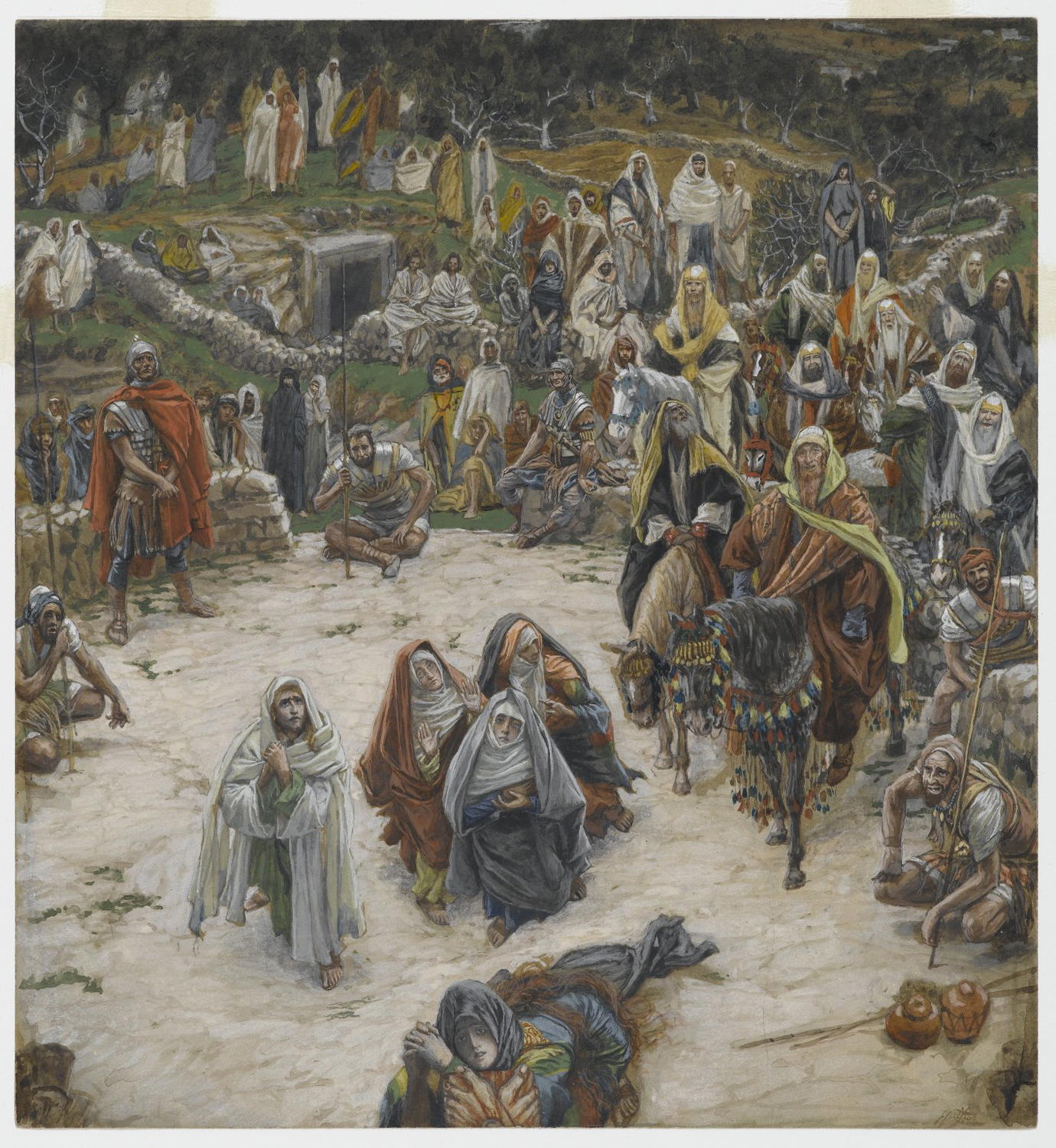
[i]A quote ascribed to G.K. Chesterton may or may not be apocryphal, but it is characteristic of his honesty and faith. The story goes that the London Times editor asked some famous writers and thinkers of his time to answer the question, “What is wrong with the world?” His answer, or at least the one attributed to him, was uncharacteristically laconic,
“Dear Sir,
I am.
Yours, G. K. Chesterton.”
If indeed his, the point is clear and perfectly Chestertonian. There are other writers who have conveyed similar ideas that collide with our contemporary “I’m OK, You’re OK” widely held sentiments. Such ideas contest the other popular refrain on social media and in our understanding of what’s wrong with the world. No matter which side of the cultural divide of dueling populisms we occupy, it’s not the other tribe, and scapegoats do not let us off the hook. No, you’re not OK, and neither am I.
Father Zosima in Dostoevsky’s “The Brothers Karamazov” states it this way: “Each of us is guilty before everyone, for everyone and everything, and I more than the others.” Russians, at least some of them, seem to understand this better than Americans. Quoting from Paul Kingsnorth in “Wild Christianity” in First Things[ii]: “When the twentieth-century Russian spiritual leader Father Arseny was asked, in the depths of a Soviet prison camp, who was responsible for the catastrophe of communism, he didn’t blame the camp guards, the politburo, or Stalin. ‘Among us Russian people,’ he said, ‘many have lost the faith, lost respect for our past. We lost much of what was precious and good. Who is at fault? The authorities? No, we are at fault ourselves; we are only reaping what we ourselves have sown.’”
In a final Russian allusion, I have quoted before this timeless Aleksandr Solzhenitsyn quote from “Gulag Archipelago,” “The line separating good and evil passes not through states, nor between classes, nor between political parties either—but right through every human heart.”
Lest we despond, there is serviceable relief and a solution for our burden and our troubled times, and we have known it for centuries. We have always known it. In Sermon 80, §8, St. Augustine wrote: “Bad times, hard times, this is what people keep saying; but let us live well, and times shall be good. We are the times: such as we are, such are the times.”
“She said “Well what’re you thinkin’?
I’m just a-wonderin’, is it somethin’ that I did?”
I said, “It’s nothin’, just somethin’
I picked up as a kid.” John Prine, “No Ordinary Blue”

The tragic abandonment of the doctrine of The Fall is one of the victims of the sort of utopian Pelagianism and universalism that helps inform our times. What is he talking about now?, you might ask. Pelagius was a British monk who lived around the same period as St Augustine in 400 AD. To oversimplify, he got in trouble when he overemphasized the goodness of man, free choice, and muddied the water that sin is a condition from which we need a Savior. Sin is not, as many would have it, an occasional lapse, a mishap, a miscue that a little tweaking and will power will straighten out. No Fall, no Savior. No Fall, no need for Christianity. A pernicious heresy developed that plagued St Augustine and others for centuries. Still does.
In our day we have reframed those arguments, and it goes something like this: “I’m OK, You’re OK.” I just need to be a nice guy and the bar for that moves steadily lower. “Nice” is the new criteria and bland uncertainty that sets us cheerfully free from a response to our mortality and our condition. Everyone dies and goes to a happy place unless maybe you are a serial killer or Hitler or mean to dogs, and we need not inconvenience ourselves too much over the details. If there is a god, he requires very little of us and probably doesn’t pay attention at all to our minor transgressions, especially our favorite ones.
This all came to mind a couple of weeks ago when the Sunday gospel was taken from Matthew 20: 1-16 and the parable Jesus taught about the extravagant abundance and generosity of God’s grace:[iii]
“For the kingdom of heaven is like a householder who went out early in the morning to hire laborers for his vineyard. After agreeing with the laborers for a denarius (a normal day’s wage) a day, he sent them into his vineyard. And going out about the third hour he saw others standing idle in the marketplace; and to them he said, ‘You go into the vineyard too, and whatever is right I will give you.’ So they went. Going out again about the sixth hour and the ninth hour, he did the same. And about the eleventh hour he went out and found others standing; and he said to them, ‘Why do you stand here idle all day?’ They said to him, ‘Because no one has hired us.’ He said to them, ‘You go into the vineyard too.’
And when evening came, the owner of the vineyard said to his steward, ‘Call the laborers and pay them their wages, beginning with the last, up to the first.’ And when those hired about the eleventh hour came, each of them received a denarius. Now when the first came, they thought they would receive more; but each of them also received a denarius. And on receiving it they grumbled at the householder, saying, ‘These last worked only one hour, and you have made them equal to us who have borne the burden of the day and the scorching heat.’ But he replied to one of them, ‘Friend, I am doing you no wrong; did you not agree with me for a denarius? Take what belongs to you and go; I choose to give to this last as I give to you. Am I not allowed to do what I choose with what belongs to me? Or do you begrudge my generosity?’ So, the last will be first, and the first last.”
We certainly could infer (and should) that God will not be outdone in generosity, and our lives are adventures of second chances. What I took also from this beautiful parable is something not immediately apparent; I experienced being impelled with a renewed urgency to evangelize those I encounter and especially those I love with words and actions. How is that?, you might reasonably ask.
Two certainties arise. The first is that right until we all run out of time, the opportunity exists for not only reconciliation with God’s grace but the fullness of life within Him. For me, for you, for everyone you encounter. Think of the good thief Dismas on the cross next to Jesus. “Today you will be with me in paradise.” The second is that the workers in the vineyard so surprisingly rewarded did something. They made decisions to stand and wait for the necessary work all day. They didn’t hang out on the couch waiting for work to come to them. And then they worked.
Now, I don’t know what my work is to be today or where and when the whispers will call me to do it. But the call will come if I listen. To rely on another metaphor from Biblical thought, I don’t know if today I will be gently reminded to plant a seed, water another one, clear out a little brush around another and let in some light or merely point out that the tiny seedling is emerging. I need to be attentive to the whispers of the day.
What I do know is as the days grow shorter and colder, the leaves stop producing chlorophyll, the green fades, brilliant colors emerge, and eventually every one of those miracle leaves will brown and fall to the ground.
“Why wait any longer for the world to begin?” Bob Dylan
[i] Image from Wikimedia Commons, open source. Brooklyn Museum, James Tissot, “View from the Cross”
[ii] Paul Kingsnorth, First Things March 2023, “A Wild Christianity”
[iii] Revised Standard Version, Catholic Edition

